
U.S. National Parks study guide · Lesson 5 of 27
Lesson 5: Flora & Ecosystems
Record-Breaking Plants · Life Zones & Ecosystems
This is the lesson's study guide from the FlashFeed app, plus its key facts and a self-test.
What you'll be able to do
- Identify the record-breaking trees by their superlative and size.
- Match record-breaking plants to the parks that protect them.
- Explain life zones and how elevation stacks ecosystems on a single mountain.
- Match signature ecosystems to their parks and define a temperate rainforest.
Record-Breaking Plants
Some of the most superlative living things on Earth grow inside America's national parks — the biggest tree, the tallest tree, the oldest tree, and the strange green giants of the deserts. This part introduces five of them and ties each to the park that protects it.
General Sherman the Giant Sequoia
Giant sequoias (Sequoiadendron giganteum) are the largest trees on Earth measured by sheer volume of wood — not the tallest, but the most massive. The champion is General Sherman in Sequoia NP, the largest single-stem living tree on the planet: roughly 52,500 cubic feet of wood, about 275 feet tall, with a base around 36 feet across. It is estimated to be 2,200–2,700 years old, meaning it was already a mature tree when Rome was founded. Giant sequoias grow naturally in only one place on Earth — scattered groves on the western slope of the Sierra Nevada — and they are famously dependent on fire. The heat of a wildfire dries and opens their cones to release seeds, and clears away competing brush so seedlings get light. Decades of fire suppression actually hurt the species, a lesson that reshaped how parks manage fire.
The Tallest Trees on Earth
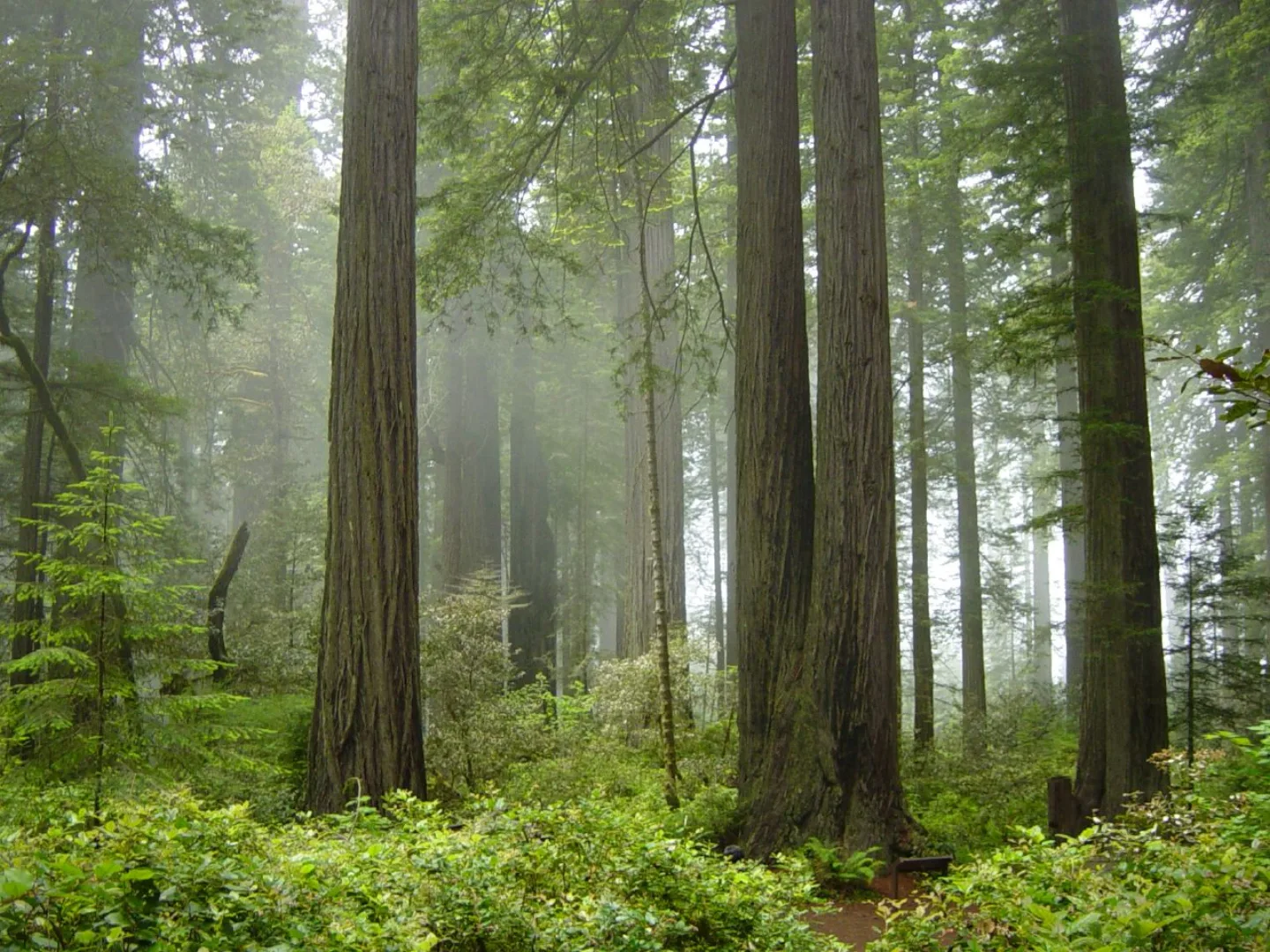
If sequoias win on bulk, their cousins the coast redwoods (Sequoia sempervirens) win on height — they are the tallest living things on the planet. The record holder, Hyperion in Redwood NP, reaches about 380 feet, taller than the Statue of Liberty stacked nearly twice. Redwoods grow tall and slender rather than massive, and they survive by drinking coastal fog, combing moisture directly out of the marine air that rolls over California's far north coast. That fog belt is why redwoods cluster in a narrow coastal strip rather than spreading inland.
Bristlecone Pine the Ancient One
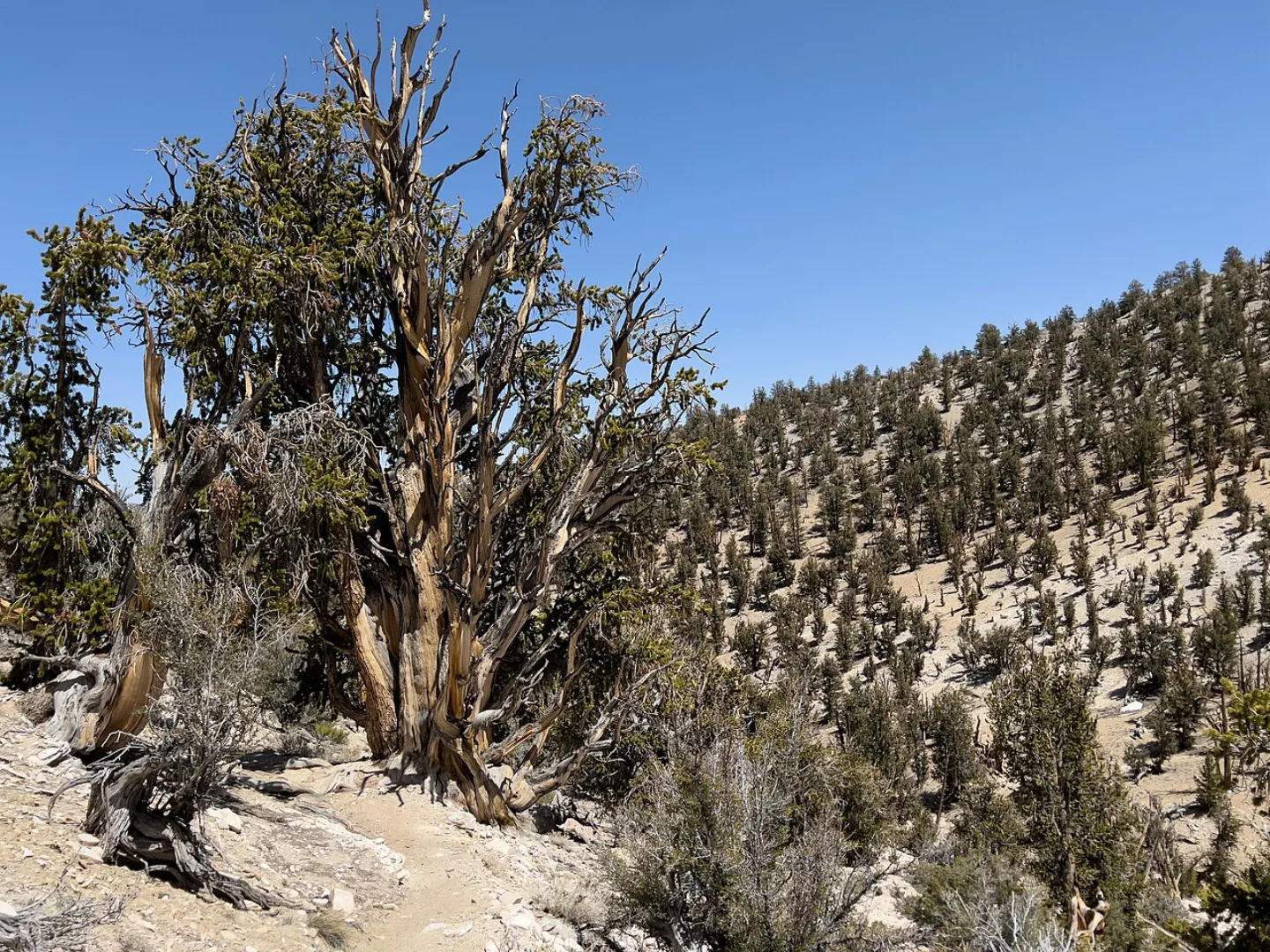
For sheer age, nothing non-clonal beats the Great Basin bristlecone pine (Pinus longaeva). A tree named Methuselah is about 4,850 years old, and an even older bristlecone in the Great Basin / White Mountains region has been dated near 5,070 years — older than the Egyptian pyramids. Their secret is hardship: they grow excruciatingly slowly in cold, dry, windswept high country, producing dense, resin-rich wood that resists rot, insects, and weather. Great Basin NP in Nevada protects ancient groves of them on the flanks of Wheeler Peak.
The Saguaro Cactus
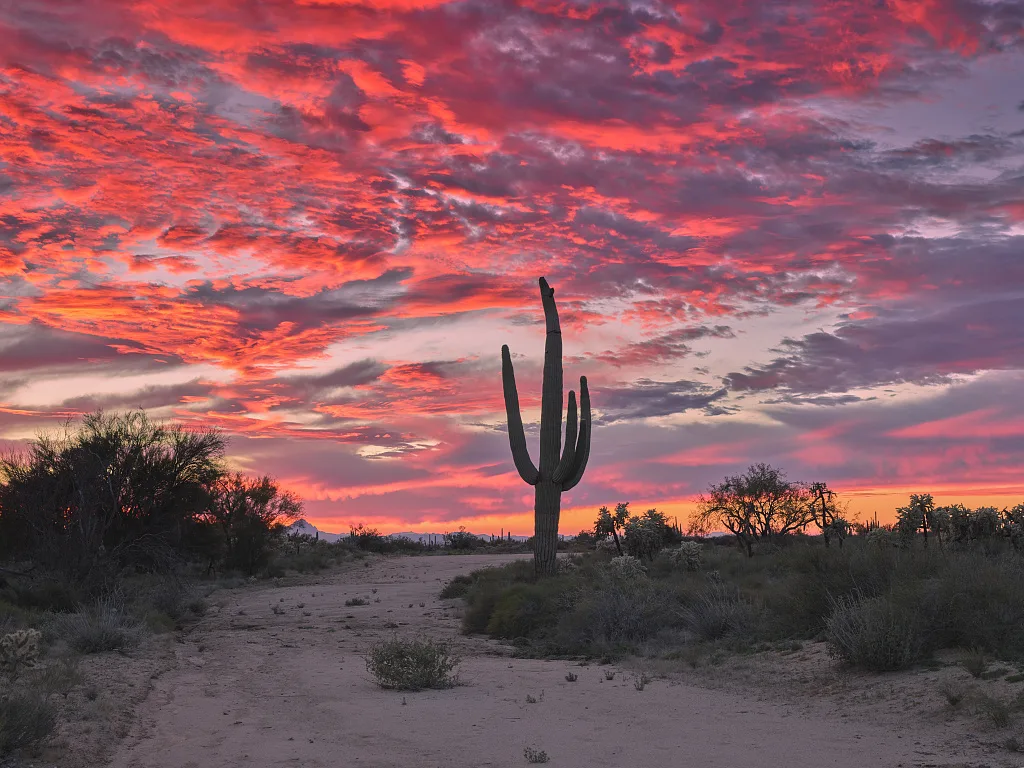
The giant columnar saguaro is the living emblem of Saguaro NP in Arizona and grows wild only in the Sonoran Desert. A saguaro can live 150–200 years and rise over 40 feet, but it is in no hurry — it may not sprout its first arm until it is 50–75 years old. Mature saguaros become desert high-rises, their cavities hollowed out and nested in by gila woodpeckers, elf owls, and other wildlife.
The Joshua Tree
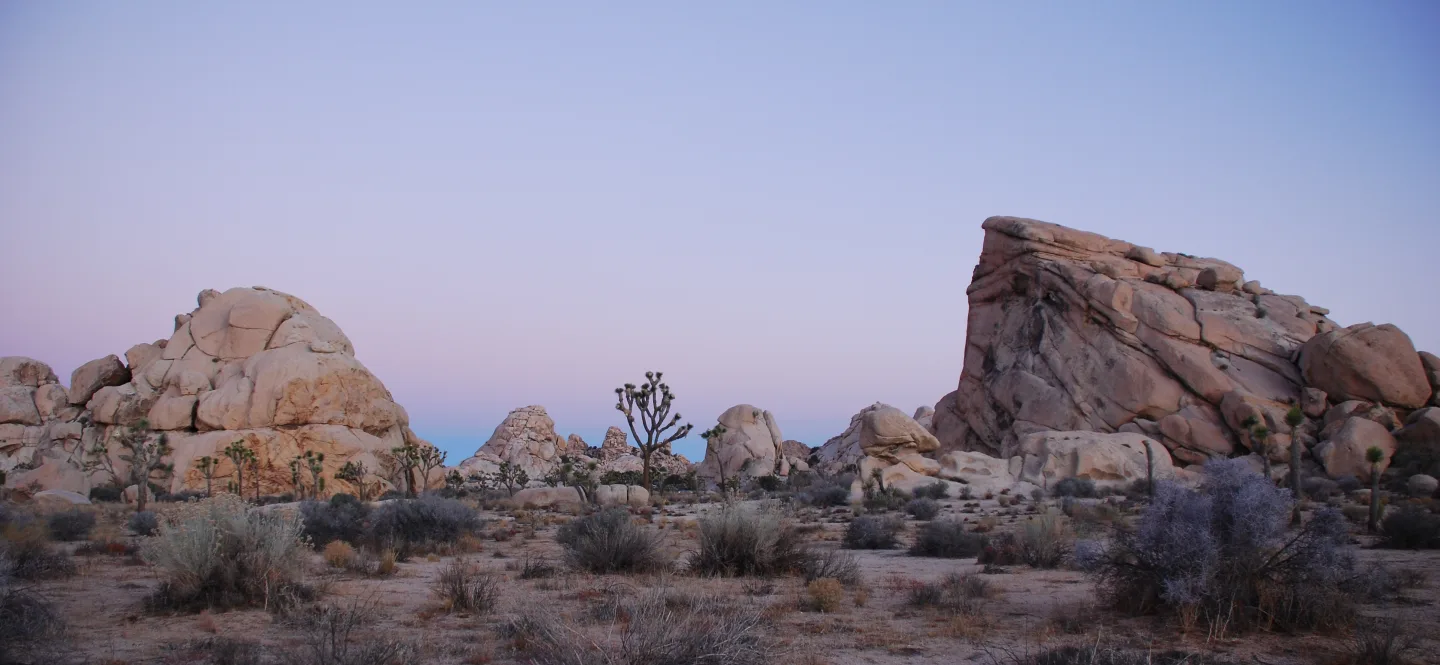
The Joshua tree (Yucca brevifolia) is a giant yucca and the spiky symbol of the Mojave Desert. Joshua Tree NP sits right where two deserts meet — the higher, cooler Mojave and the lower, hotter Colorado. The tree depends entirely on one partner, the yucca moth, the only animal that pollinates it: the moth deliberately packs pollen into the flowers and lays its eggs inside. No moth, no Joshua trees — a tidy example of how tightly park species can be bound together.
Life Zones & Ecosystems
Plants don't grow at random — they sort themselves by climate. This part covers the single most useful idea in park ecology, the way elevation stacks ecosystems, and then tours four signature systems: alpine tundra, subtropical wetland, temperate rainforest, and one of the last great intact ecosystems on Earth.
Climbing Through Climate Zones
As you climb a mountain, the air cools by about 3–5°F for every 1,000 feet of elevation. The classic rule of thumb is that climbing 1,000 feet up is roughly like traveling 600 miles north. Because climate changes so fast with height, a single tall park can stack whole life zones on top of one another — desert at the base, then montane forest, then subalpine, then alpine tundra near the summit. This banding, formalized as the Merriam life zones, is dramatic in Grand Canyon, Rocky Mountain, and Sequoia, where a day's drive or hike passes through ecosystems that would otherwise take a continental road trip to see. A life zone is exactly that: a band of plant and animal communities tied to a particular elevation and climate. The same logic produces alpine tundra — a treeless zone of low, hardy cushion plants above the point where trees can survive, famously crossed by Rocky Mountain NP's Trail Ridge Road.
The River of Grass
The Everglades is the great surprise of American ecosystems: it is not a swamp but a river — a sheet of water up to 60 miles wide and only inches deep, flowing imperceptibly south across Florida. The writer Marjory Stoneman Douglas named it the "river of grass," and the phrase stuck because it's literally true: the water moves through endless sawgrass. This subtropical wetland braids sawgrass marsh, mangrove forests, and cypress stands into a system found nowhere else in the United States, and the slow flow of clean water is what keeps the whole thing alive.
Olympics Temperate Rainforest
A temperate rainforest is a cool, extremely wet forest of the middle latitudes — not a tropical jungle, but just as lush. The signature American example is Olympic NP's Hoh Rain Forest, which receives roughly 12–14 feet of rain a year, among the wettest places in the contiguous United States. The downpour produces a dripping green world: towering spruce and hemlock with trunks and branches draped in moss and ferns, and fallen "nurse logs" that sprout whole straight rows of seedlings as they decay. It's the visual opposite of the desert parks — and a reminder that "rainforest" is about rainfall, not latitude.
The Greater Yellowstone Ecosystem
Beyond single zones, some regions function as one connected whole. The Greater Yellowstone Ecosystem — spanning Yellowstone, Grand Teton, and the surrounding national forests across Wyoming, Montana, and Idaho — is one of the largest nearly intact temperate-zone ecosystems left on Earth. Its scale is the point: it is big enough to sustain free-roaming grizzlies, wolves, and bison across their natural ranges, something almost no other place in the lower 48 can still do. It shows why conservation increasingly thinks beyond park boundaries to whole ecosystems.
Key terms
- Life zone
- A band of plant and animal communities set by elevation and climate, so a single mountain stacks several from base to summit — the idea behind Merriam’s classic elevation bands.
- Temperate rainforest
- A cool, very wet forest of the middle latitudes, fed by heavy rain or coastal fog, lush with mosses and ferns — as seen in Olympic's Hoh, not in the tropics.
Key concepts
General Sherman
- This living giant is the most massive single tree on Earth, measured by sheer volume of wood.
- It holds roughly 52,500 cubic feet of wood, stands about 275 feet tall, and is 2,200–2,700 years old.
- It is the champion giant sequoia, protected in Sequoia National Park.
Hyperion
- This is the single tallest living thing on the entire planet.
- A coast redwood, it survives by combing moisture straight out of the coastal fog.
- Rising about 380 feet in Redwood National Park, it stands nearly twice as tall as the Statue of Liberty.
Methuselah
- For sheer age, no non-clonal tree on Earth outlasts this one.
- A Great Basin bristlecone pine, it endures by growing painfully slowly in cold, windswept heights.
- Dated near 4,850 years old, it was already ancient long before the pyramids rose.
Joshua tree
- This spiky desert plant is a giant yucca and the living symbol of the Mojave.
- It depends entirely on one partner — the yucca moth, the only creature that pollinates it.
- Its namesake park sits where the higher, cooler Mojave meets the lower, hotter Colorado desert.
Key facts
The Tallest Trees on Earth
Coast redwoods are the tallest living things on the planet. Hyperion, a redwood in Redwood NP, reaches about 380 feet — taller than a 35-story building and the Statue of Liberty stacked nearly twice. Unlike their bulkier sequoia cousins, redwoods grow tall and slender, and they drink from coastal fog, combing moisture straight out of the air along California's foggy north coast.
Bristlecone Pine, the Ancient One
Great Basin bristlecone pines are the oldest known non-clonal living organisms on Earth. One tree named Methuselah is about 4,850 years old, and an even older bristlecone in the Great Basin / White Mountains region has been dated near 5,070 years — alive before the pyramids were finished. They survive by growing slowly in harsh, windswept high country, their gnarled wood dense and weather-hardened. Great Basin NP protects ancient groves of them.
The Saguaro Cactus
The giant columnar saguaro, emblem of Saguaro NP in Arizona, grows only in the Sonoran Desert. A saguaro can live 150–200 years and stand over 40 feet tall, but it grows agonizingly slowly — it may not sprout its first arm until it is 50–75 years old. Those arms, and the cactus itself, become high-rise homes for desert birds like the gila woodpecker and elf owl.
The Joshua Tree
The Joshua tree is a giant yucca and the spiky emblem of the Mojave Desert. Joshua Tree NP sits exactly where two deserts meet — the higher, cooler Mojave and the lower, hotter Colorado. The tree has one indispensable partner: the yucca moth, the only creature that pollinates it, deliberately packing pollen into its flowers and laying eggs inside. No moth, no Joshua trees.
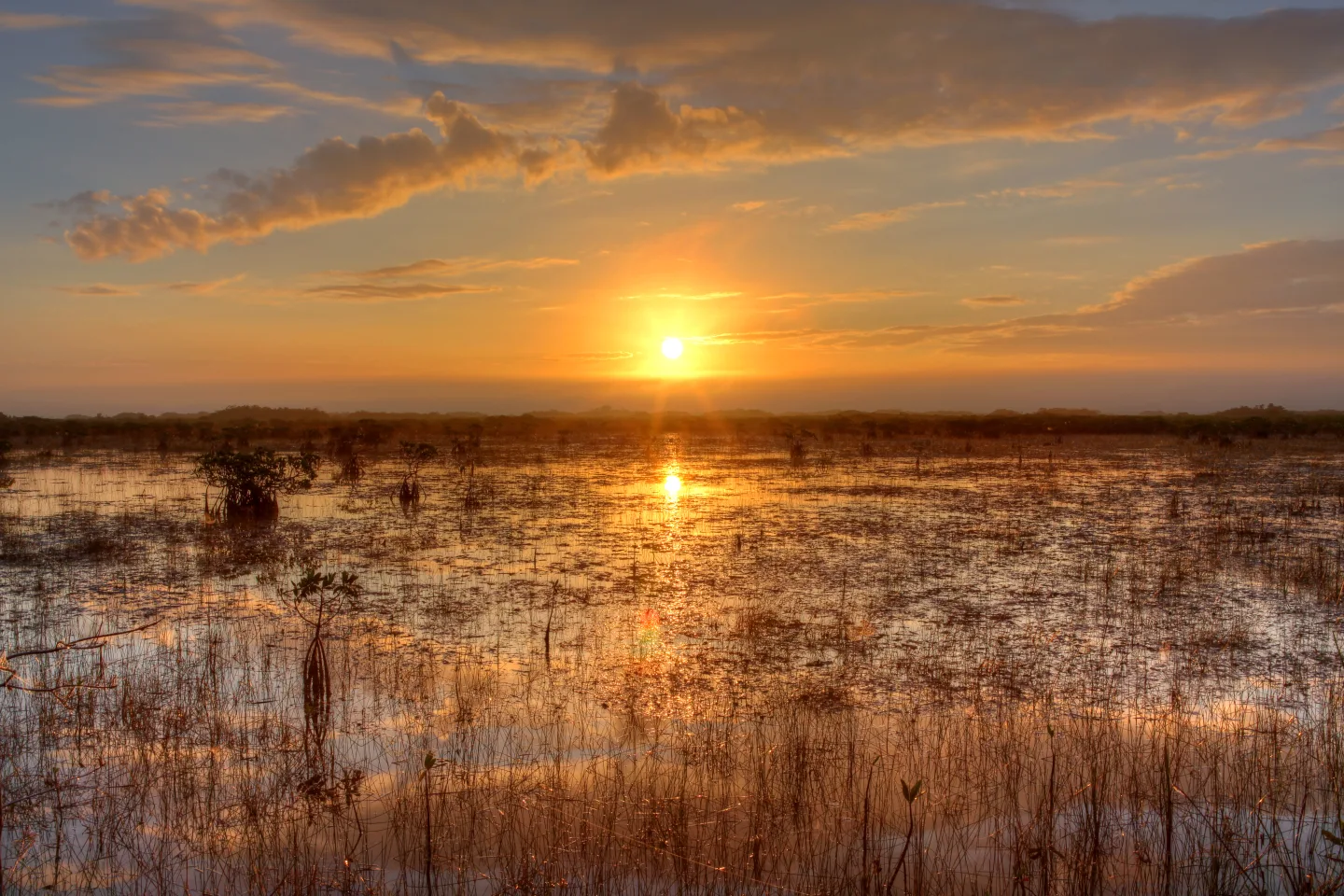
The River of Grass
The Everglades is not a swamp but a river — a sheet of water up to 60 miles wide and only inches deep, flowing imperceptibly south across Florida through endless sawgrass. Writer Marjory Stoneman Douglas named it the "river of grass." This subtropical wetland weaves sawgrass marsh, mangrove forests, and cypress stands into one of the most distinctive ecosystems in North America.
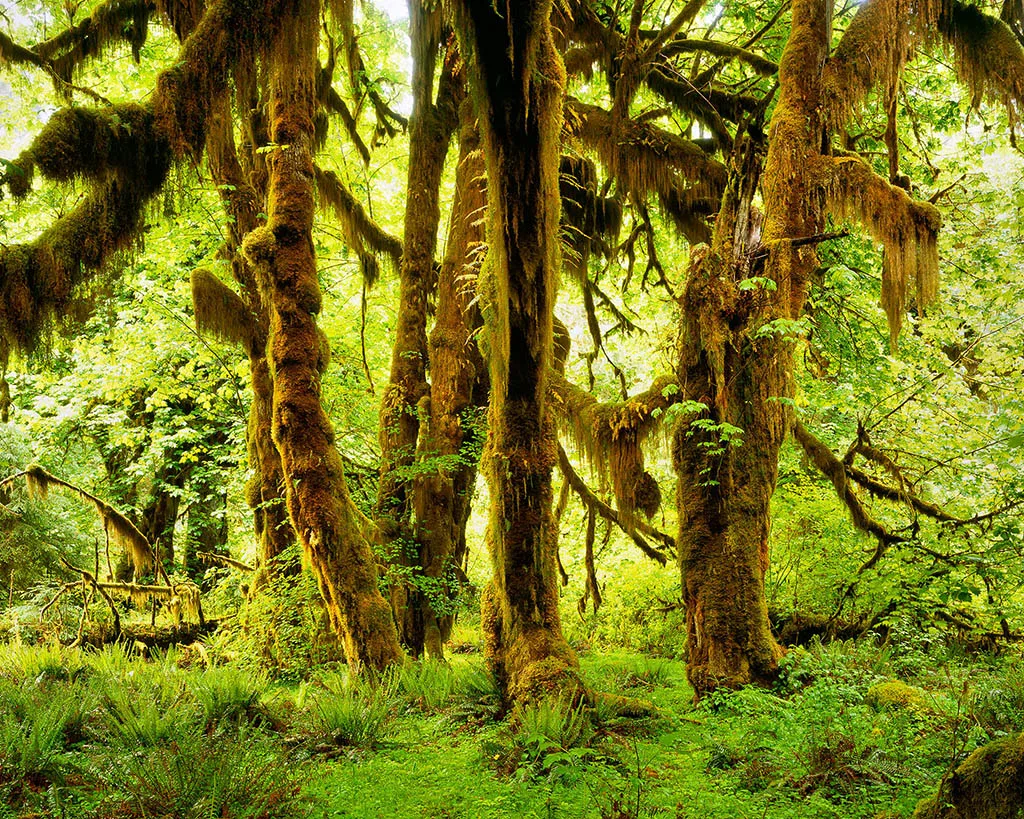
Olympic's Temperate Rainforest
Olympic NP's Hoh Rain Forest is a true temperate rainforest, receiving roughly 12–14 feet of rain a year — among the wettest places in the contiguous United States. The result is a green, dripping world: towering spruce and hemlock, trunks and branches draped in thick moss and ferns, and fallen "nurse logs" sprouting whole rows of new trees.
Merriam's Bands
In park ecology, a life zone is a band of plant and animal communities tied to a particular elevation and climate. The concept, based on Merriam's classic bands, explains why a single tall mountain can stack several distinct zones.
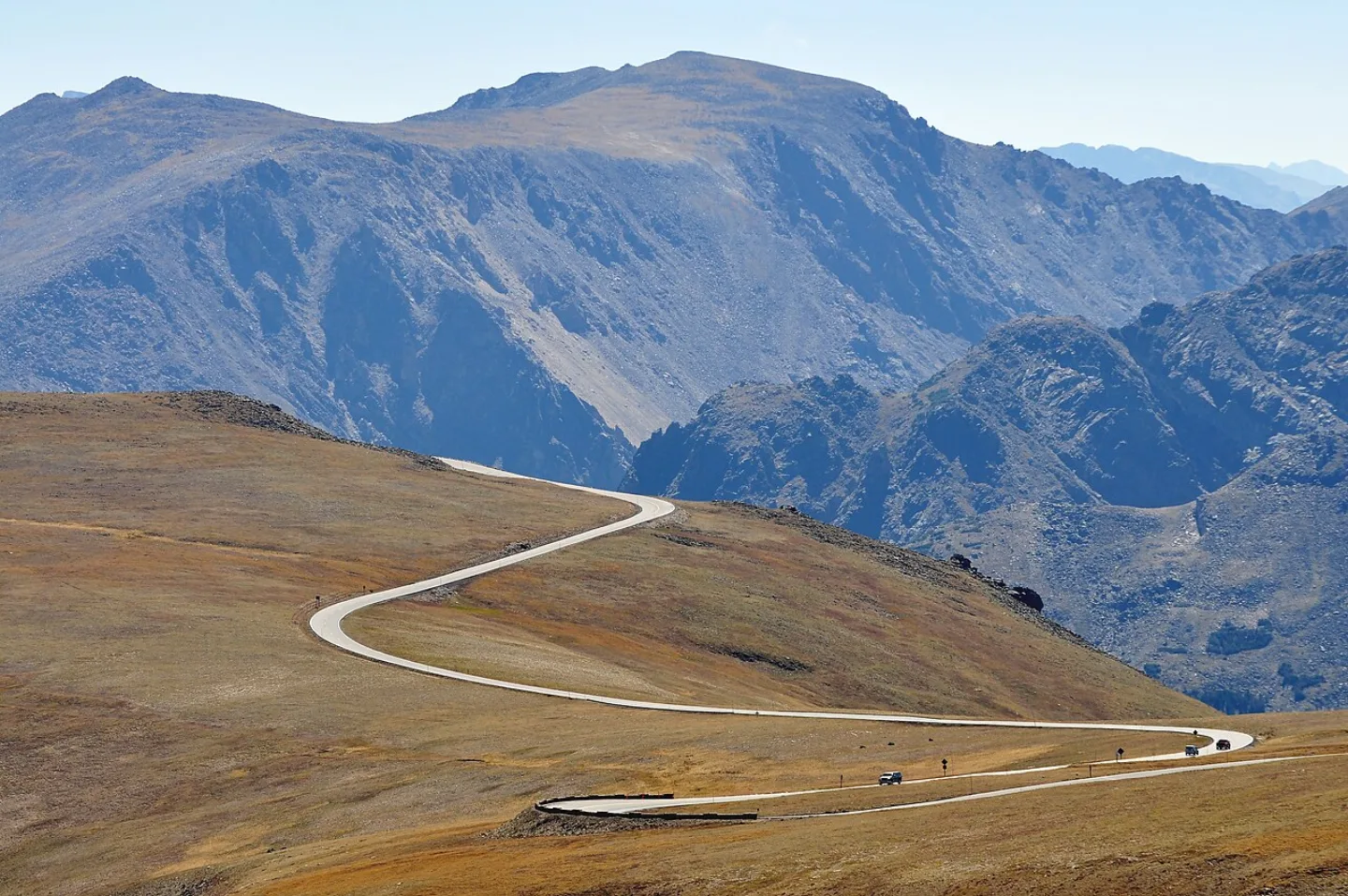
Trail Ridge Road
Alpine tundra is a treeless life zone of low, hardy cushion plants found above the tree line. Rocky Mountain National Park's Trail Ridge Road is famous for crossing straight through it.
By the numbers
- About how tall is General Sherman, the giant sequoia, in feet?
- 275 ft
- About how tall is Hyperion, the tallest coast redwood, in feet?
- 380 ft
- About how old is Methuselah, the famous bristlecone pine, in years?
- 4850 years
- A mature saguaro cactus can grow to over how many feet tall?
- 40 ft
- About how many feet of rain does Olympic's Hoh Rain Forest receive per year (upper end)?
- 14 ft
Matched pairs
Each item on the left goes with the one on the right.
- Giant sequoia (General Sherman)
- Sequoia NP
- Coast redwood (Hyperion)
- Redwood NP
- Ancient bristlecone pine
- Great Basin NP
- Saguaro cactus
- Saguaro NP
- Joshua tree (giant yucca)
- Joshua Tree NP
- Subtropical sawgrass wetland ("river of grass")
- Everglades NP
- Temperate rainforest (Hoh)
- Olympic NP
- Alpine tundra (Trail Ridge Road)
- Rocky Mountain NP
Self-test
Answer each question from memory, then check your work against the answer key.
1. General Sherman, a giant sequoia in Sequoia NP, holds the record as the largest tree on Earth measured by what?
- ATotal volume of wood
- BAge
- CHeight
- DWidth of its trunk at the very base
2. About how tall is General Sherman, the giant sequoia and largest single-stem tree on Earth?
- AAbout 500 feet
- BAbout 180 feet
- CAbout 275 feet
- DAbout 380 feet
3. Hyperion, the tallest living tree on Earth, reaches about how tall?
- AAbout 250 feet
- BAbout 450 feet
- CAbout 275 feet
- DAbout 380 feet
4. About how old is Methuselah, the famous Great Basin bristlecone pine?
- AAbout 8,000 years
- BAbout 4,850 years
- CAbout 2,700 years
- DAbout 1,500 years
5. Among the record-breaking trees, which is celebrated as the tallest living thing on Earth?
- ACoast redwood (Hyperion)
- BGiant sequoia (General Sherman)
- CJoshua tree
- DGreat Basin bristlecone pine (Methuselah)
6. Which national park protects General Sherman, the giant sequoia?
- ARedwood NP
- BGreat Basin NP
- CSequoia NP
- DYosemite NP
7. Hyperion, the record-holding coast redwood, is found in which national park?
- ASequoia NP
- BRedwood NP
- COlympic NP
- DKings Canyon NP
8. Ancient bristlecone pines like Methuselah are protected in which national park?
- ARocky Mountain NP
- BJoshua Tree NP
- CSaguaro NP
- DGreat Basin NP
9. The giant saguaro cactus, emblem of Saguaro NP, grows wild only in which desert?
- ASonoran Desert
- BMojave Desert
- CChihuahuan Desert
- DColorado Desert
10. Which plant-to-park pairing is INCORRECT?
- ASaguaro cactus — Saguaro NP
- BCoast redwood — Sequoia NP
- CJoshua tree — Joshua Tree NP
- DGiant sequoia — Sequoia NP
11. By the classic rule of thumb in park ecology, climbing 1,000 feet up a mountain is roughly like traveling how far northward?
- AAbout 1,500 miles
- BAbout 150 miles
- CAbout 600 miles
- DAbout 60 miles
12. What is a 'life zone' in park ecology?
- AA cool, very wet forest of the middle latitudes
- BThe desert that always sits at a mountain's base
- CA fenced boundary marking a park's protected area
- DA band of plant and animal communities set by elevation and climate
13. As you climb a mountain, the air cools by roughly how much for every 1,000 feet of elevation?
- AAbout 3–5°F
- BAbout 10–15°F
- CAbout 20°F
- DAbout 1°F
14. Climbing a tall park from base to summit, in what order do the life zones typically stack?
- AAlpine tundra, subalpine, montane forest, desert
- BSubalpine, desert, alpine tundra, montane forest
- CMontane forest, desert, alpine tundra, subalpine
- DDesert, montane forest, subalpine, alpine tundra
15. Which best describes the alpine tundra life zone?
- AA fog-fed forest of towering moss-draped redwoods
- BThe hot desert band at a mountain's base
- CA treeless zone of low, hardy plants above where trees can survive
- DA subtropical wetland of sawgrass and mangrove
16. The subtropical 'river of grass' sawgrass wetland is the signature ecosystem of which park?
- AOlympic NP
- BEverglades NP
- CBiscayne NP
- DCongaree NP
17. The Hoh Rain Forest, a temperate rainforest, is protected in which national park?
- ARedwood NP
- BSequoia NP
- COlympic NP
- DMount Rainier NP
18. Alpine tundra crossed by the high Trail Ridge Road is a signature ecosystem of which park?
- ARocky Mountain NP
- BYellowstone NP
- CGrand Canyon NP
- DSequoia NP
19. What defines a temperate rainforest?
- AA treeless high-elevation zone of cushion plants
- BA subtropical marsh of sawgrass and mangrove
- CA hot, humid jungle near the equator
- DA cool, very wet forest of the middle latitudes fed by heavy rain or fog
20. Olympic's Hoh Rain Forest, one of the wettest places in the contiguous US, receives roughly how much rain a year?
- AAbout 30–40 feet
- BAbout 12–14 feet
- CAbout 6–7 feet
- DAbout 2–3 feet
Go deeper
- WatchBiggest, Tallest, Oldest The largest single-stem tree on Earth is General Sherman, a giant sequoia: about 52,500 cubic feet of wood.
- Watch1,000 Feet Up, 600 Miles North Climb 1,000 feet up a mountain, and the air cools by about 3 to 5 degrees Fahrenheit.
- StudyU.S. National Parks in the FlashFeed app
Answer key
- 1. A Total volume of woodGiant sequoias win on bulk, not height. General Sherman is the largest single-stem tree by wood volume (~52,500 cubic feet). Coast redwoods are the tallest trees, and bristlecone pines the oldest.
- 2. C About 275 feetGeneral Sherman stands roughly 275 feet tall with ~52,500 cubic feet of wood. The taller 380-foot figure belongs to Hyperion the coast redwood; sequoias win on bulk, not height.
- 3. D About 380 feetHyperion, a coast redwood in Redwood NP, tops out near 380 feet — taller than the Statue of Liberty stacked nearly twice. General Sherman the sequoia is only ~275 feet.
- 4. B About 4,850 yearsMethuselah is about 4,850 years old — older than the pyramids. The 2,200–2,700 range describes General Sherman the sequoia, a much younger (though larger) tree.
- 5. A Coast redwood (Hyperion)Coast redwoods grow tall and slender, making Hyperion the tallest tree (~380 ft). The giant sequoia wins on wood volume and the bristlecone pine on age, not height.
- 6. C Sequoia NPGeneral Sherman grows in Sequoia NP on the western slope of the Sierra Nevada. Redwood NP protects the tall coast redwoods; Great Basin protects bristlecone pines.
- 7. B Redwood NPHyperion, the tallest tree on Earth, grows in Redwood NP along California's far north coast, where coastal fog sustains the redwoods. Sequoia NP protects the bulkier giant sequoias.
- 8. D Great Basin NPGreat Basin NP in Nevada protects ancient bristlecone groves on the flanks of Wheeler Peak. Joshua Tree and Saguaro protect desert plants, not high-country pines.
- 9. A Sonoran DesertThe saguaro grows wild only in the Sonoran Desert of Arizona. The Mojave is the Joshua tree's home; the Colorado Desert is the lower, hotter zone meeting the Mojave at Joshua Tree NP.
- 10. B Coast redwood — Sequoia NPCoast redwoods belong to Redwood NP, not Sequoia NP. Sequoia NP protects the giant sequoias; the other three pairings are all correct.
- 11. C About 600 milesBecause air cools about 3–5°F per 1,000 feet, gaining elevation mimics heading toward the poles — 1,000 ft up ≈ 600 miles north. That's why one tall park can stack desert, montane, subalpine, and alpine tundra life zones.
- 12. D A band of plant and animal communities set by elevation and climateA life zone is a band of plant and animal communities tied to a particular elevation and climate — the idea behind Merriam's classic bands. That's why one tall mountain can stack several.
- 13. A About 3–5°FAir cools about 3–5°F per 1,000 feet gained. This rapid cooling is why climbing 1,000 feet up mimics traveling roughly 600 miles north and lets one park stack multiple life zones.
- 14. D Desert, montane forest, subalpine, alpine tundraBecause it cools with height, a tall park stacks desert at the base, then montane forest, then subalpine, then treeless alpine tundra near the summit — coldest zones highest.
- 15. C A treeless zone of low, hardy plants above where trees can surviveAlpine tundra is a treeless zone of low, hardy cushion plants above tree line, famously crossed by Rocky Mountain NP's Trail Ridge Road. The other options describe wetland, rainforest, and desert.
- 16. B Everglades NPEverglades NP is the 'river of grass' named by Marjory Stoneman Douglas — a shallow sheet of water flowing through sawgrass, mangrove, and cypress found nowhere else in the US.
- 17. C Olympic NPOlympic NP's Hoh Rain Forest is the signature American temperate rainforest, soaked by 12–14 feet of rain a year and draped in moss and ferns.
- 18. A Rocky Mountain NPRocky Mountain NP's Trail Ridge Road famously crosses treeless alpine tundra. Grand Canyon and Sequoia stack life zones too, but the tundra-and-Trail-Ridge pairing is Rocky Mountain's.
- 19. D A cool, very wet forest of the middle latitudes fed by heavy rain or fogA temperate rainforest is a cool, extremely wet forest of the middle latitudes — 'rainforest' refers to rainfall, not latitude. Olympic's Hoh is the classic American example, not a tropical jungle.
- 20. B About 12–14 feetThe Hoh gets roughly 12–14 feet of rain a year, producing its dripping, moss-draped canopy — among the wettest spots in the contiguous United States.
Sources
- U.S. National Parks — Flora & Ecosystems
Image credits
- The Tallest Trees on Earth: Michael Schweppe · CC BY-SA 2.0 — commons.wikimedia.org/wiki/File:Redwood_National_Park,_fog_in_the_forest.jpg
- Bristlecone Pine, the Ancient One: Z3lvs · CC0 — commons.wikimedia.org/wiki/File:Ancient_Bristlecone_Pine_Forest_04_30_2022_30.jpg
- The Saguaro Cactus: Library of Congress · Sunset silhouettes a saguaro cactus in the Sonoran Desert, n · No known restrictions (verify at source) — www.loc.gov/item/2018703803/
- The Joshua Tree: Wikimedia Commons · Jarek Tuszyński · CC BY-SA 3.0 — commons.wikimedia.org/wiki/File:Joshua_Tree_-_Cyclops_%2B_Potato_Head_-_Sunrise.jpg
- The River of Grass: Wikimedia Commons · Everglades NPS from Homestead, Florida, United States · Public domain — commons.wikimedia.org/wiki/File:Sunset_over_the_River_of_Grass,_NPSphoto,_G.Gardner_(9255157507).jpg
- Olympic's Temperate Rainforest: Wikimedia Commons · Doug Dolde · CC BY-SA 3.0 — commons.wikimedia.org/wiki/File:BIG_LEAF_MAPLES_HOH.jpg
- Trail Ridge Road: NPS Photo · Public domain — commons.wikimedia.org/wiki/File:Cars_driving_Trail_Ridge_Road_(0260dcbe-1dd8-b71b-0bf5-9143a72c59ba).jpg


