
U.S. National Parks study guide · Lesson 7 of 27
Lesson 7: Visiting the Parks
Sites & Experiences · Timing & Safety · The Park Lexicon
This is the lesson's study guide from the FlashFeed app, plus its key facts and a self-test.
What you'll be able to do
- Match iconic scenic roads and seasonal events to their parks.
- Apply the parks' core safety rules for water, wildlife distance, and hazards.
- Distinguish park designations: national park, monument, wilderness, and preserve.
- Define the backcountry and trail vocabulary of the park lexicon.
- Match the visitor-facility terms of the park lexicon.
Sites & Experiences
Some park memories aren't a single overlook — they're an experience you plan a whole trip around. This part gathers the must-dos: the legendary roads, the dark skies, the ranger who makes it all make sense, and the little card that opens every gate.
Going-to-the-Sun Road
Glacier National Park's 50-mile marvel is one of the great drives on Earth. It crosses the Continental Divide at Logan Pass (6,646 ft), carved straight into cliff faces with waterfalls spilling onto the asphalt and switchbacks that took roughly two decades of dangerous work to complete in 1932. The catch is snow: plows fight drifts dozens of feet deep each spring, so the full road typically opens only from late June or July through mid-October. Driving it is the headline event of a Glacier visit — and a reminder that the most beautiful routes are rarely the easy ones.
Trail Ridge Road
In Rocky Mountain National Park, Trail Ridge Road is the highest continuous paved road in the United States, cresting at 12,183 feet. For miles it runs above treeline through fragile alpine tundra, where marmots whistle, elk graze, and the thin air makes a short walk feel like work. Snow seals it for much of the year, so it's usually open only from late May to late October. Two seasonal cousins round out the high-country drives: Yosemite's Tioga Road, which crests Tioga Pass at 9,943 feet, and Shenandoah's 105-mile Skyline Drive, a fall-foliage icon. Acadia's Cadillac Mountain Road reaches a summit that, from early October to early March, is the first place in the U.S. to see the sunrise.
Dark Skies
Get far enough from city light and the night sky becomes a destination of its own. Many parks are certified International Dark Sky Parks — Big Bend, Death Valley, Capitol Reef, Bryce Canyon, Great Basin, Joshua Tree, and Canyonlands among them. On a clear, moonless night the Milky Way arcs overhead like a luminous river, and thousands of stars appear that most Americans, under light-polluted skies, will never see. A few parks add rarer spectacles still: Yosemite's Firefall, when Horsetail Fall glows orange at sunset in mid-to-late February, and the lottery-access synchronous fireflies of Great Smoky Mountains in early June.
Ranger Programs
The flat hat is an invitation. National Park Service rangers lead free guided walks, evening campfire talks, and night-sky programs that turn a pretty overlook into a story — about deep time, fire, wolves, and the people who fought to protect the place. The programs cost nothing and need no special gear. Kids can earn a Junior Ranger badge by completing an activity booklet and reciting a pledge to help protect the park, a small ceremony many adults remember decades later.
America the Beautiful Pass
One 80 annual pass covers entrance to every national park and federal recreation site for a full year — a clear bargain if you'll visit more than two or three. It's free for fourth-graders (part of the Every Kid Outdoors program), and discounted for seniors (80 lifetime or $20 annual), military members, and visitors with disabilities. Buying one is often the first, simplest step in planning a season of park trips.
Timing & Safety
A great park trip is half timing and half humility. Go at the right moment and you'll trade gridlock for solitude; respect the heat, the height, and the wildlife and you'll come home with stories instead of a rescue report.
Timed-Entry Reservations
As visitation surged, the most popular parks ran out of room — so they added timed-entry or vehicle reservation systems in peak season. In recent years these have applied at Arches, Rocky Mountain, parts of Glacier, Yosemite during peak periods, Zion's shuttle and the Angels Landing trail, Mount Rainier, Haleakalā for sunrise, and Acadia's Cadillac sunrise. The crucial thing to know is that the rules change every year: a system that existed last summer may shift dates, hours, or vanish entirely. Always check Recreation.gov and the specific park's website before you travel, and book early — popular slots can disappear within minutes of release.
When to Go
Peak season is June through August, with July often the single busiest month, and the marquee parks the most crowded of all. The shoulder seasons — May and September through October — are the connoisseur's choice: thinner crowds, cooler air, fall foliage, and the autumn rut when elk bugle and wildlife is active. Winter transforms parks entirely. High roads close (Trail Ridge, Going-to-the-Sun, Tioga), and Yellowstone's interior becomes reachable only by snowcoach or snowmobile, a hushed, steaming world few visitors ever see.
Wildlife Distances
The NPS rule is easy to remember: stay 100 yards from bears and wolves, and 25 yards from bison, elk, and other large animals — roughly a football field and two bus lengths, respectively. Counterintuitively, bison injure more Yellowstone visitors than any other animal, almost always people who edged too close for a photo. A bison can outrun a person and pivots on a dime. In grizzly country, carry bear spray, keep it accessible, and know how to use it. And one rule has no exceptions: never feed wildlife. A fed animal becomes a bold, dependent, often doomed one.
Heat, Altitude, and Water
In the desert parks, heat is the quiet killer — more lethal to Southwest park visitors than nearly any other hazard. The defenses are simple: hike before 10 a.m., avoid midday exertion, and carry a full gallon of water per person per day. At elevation — above about 8,000 feet on Trail Ridge, in Yellowstone, or in the Sequoia high country — acute mountain sickness is a real risk; ascend gradually, hydrate, and watch for headache and nausea. At the Grand Canyon, the mantra is "down is optional, up is mandatory": most rescues involve hikers who descended too far in the heat and couldn't climb back out.
Before any serious day hike, pack the Ten Essentials — navigation, sun protection, insulation, illumination, first aid, fire, a repair kit, extra nutrition, extra hydration, and emergency shelter. It's a decades-old checklist built on a simple idea: be ready for the day to go sideways.
The Park Lexicon
Every world has its own words, and the parks are no exception. Learn a handful and the maps, signs, and ranger talks suddenly snap into focus. These terms fall into three families: what a place is designated as, how it's managed, and what you'll meet out on the trail.
National Park
The headline designation, and the hardest to earn. A national park is a protected area created by an act of Congress, generally barring hunting and resource extraction in favor of preservation and public enjoyment. There are 64 of them, the crown jewels of a much larger federal system.
National Monument
A national monument is a protected site that the president can proclaim directly under the Antiquities Act of 1906 — no act of Congress required. That speed has saved countless landscapes from development, and many of today's beloved national parks, including the Grand Canyon, began life as monuments before Congress upgraded them. A related designation, the national preserve, is a protected unit that may permit some hunting or resource extraction; several places are combined "Park & Preserve" units.
Wilderness Area
Wilderness is the strictest federal land protection there is. A designated wilderness area bars roads, motor vehicles, and permanent development, with the goal of keeping the land — in the language of the 1964 Wilderness Act — "untrammeled by man." Much of the acreage inside the big parks carries this extra layer of protection.
Backcountry
The backcountry is the remote, undeveloped interior of a park, beyond the roads and the front-country facilities like visitor centers and lodges. You reach it on foot, by horse, or by boat, and an overnight stay there usually requires a permit. It's where the wilderness words below come into their own.
Switchback
A switchback is a sharp zigzag turn in a trail or road that tames a steep slope. By lengthening the route and easing the grade, switchbacks let hikers and vehicles climb terrain that would be impossible to ascend straight on — the secret behind roads like Going-to-the-Sun.
Cairn
A cairn is a deliberate stack of stones that marks a route across bare rock or open terrain where no worn path shows the way. Follow the cairns and you stay found; the rule is to use them, not build rogue ones, since false cairns can lead hikers astray.
Inholding
An inholding is privately owned land that sits within a park's boundaries — a leftover from before the park was drawn, which can complicate management and access. Two more management terms round out the vocabulary: a gateway town is the community at a park's entrance that feeds and beds its visitors, and a concessioner is a private company licensed to run the lodges, tours, and services inside the park itself. Out at the start of any trail, you'll also meet the trailhead — simply the point where a trail begins.
Key terms
- National Park
- A protected area created by an act of Congress, generally barring hunting and resource extraction — the highest-profile designation in the federal system.
- National Monument
- A protected site that the president can proclaim directly under the Antiquities Act of 1906, without waiting for Congress — often later upgraded to full park status.
- Wilderness Area
- The strictest federal land protection, barring roads, vehicles, and development so the land stays untrammeled by people.
- Backcountry
- The remote, undeveloped interior of a park beyond roads and front-country facilities, usually reached on foot or by boat and often requiring an overnight permit.
- Switchback
- A sharp zigzag turn in a trail or road that eases a steep climb by lengthening the route and softening the grade.
- Cairn
- A deliberate stack of stones used to mark a route across rock or open terrain where no worn path is visible.
- Inholding
- Privately owned land that sits within the boundaries of a park, sometimes complicating management and access.
Key concepts
Going-to-the-Sun Road
- This 50-mile marvel is counted among the great drives anywhere on Earth.
- Carved into cliff faces with waterfalls spilling onto the asphalt, it took about two decades to finish in 1932.
- It crosses the Continental Divide at Logan Pass and is the headline event of a Glacier visit.
Trail Ridge Road
- This is the highest continuous paved route in the entire United States.
- Cresting at 12,183 feet, it runs for miles above treeline through fragile alpine tundra.
- Marmots whistle and elk graze beside it in Rocky Mountain National Park.
Tioga Road
- This seasonal high-country drive is sealed shut by snow for much of the year.
- It crests its namesake pass at 9,943 feet.
- It is the drive that climbs into the high country of Yosemite.
Skyline Drive
- This 105-mile route is beloved as a fall-foliage icon.
- Its many overlooks blaze with color once autumn arrives.
- It traces the entire length of Shenandoah National Park.
Cadillac Mountain Road
- This short climb leads to a summit prized above all for one fleeting daily moment.
- From early October to early March, its summit is the first place in the U.S. to see the sunrise.
- It ascends to the highest point in Acadia National Park.
Key facts
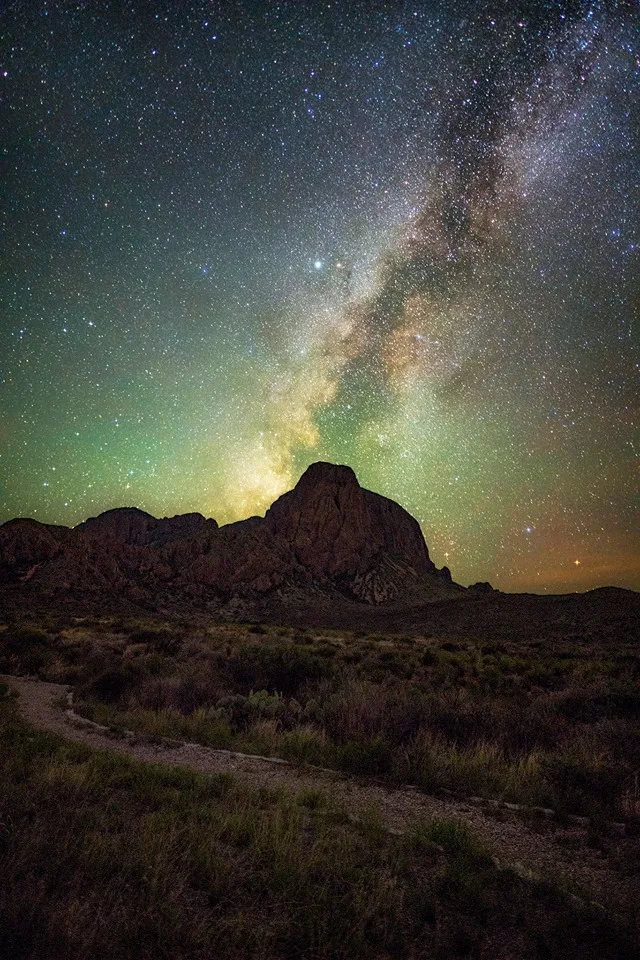
Dark Skies
Far from city glow, many parks are certified International Dark Sky Parks — Big Bend, Death Valley, Capitol Reef, Bryce Canyon, Great Basin, Joshua Tree, and Canyonlands among them. On a moonless night the Milky Way arcs overhead like a river of light, and thousands of stars appear that most Americans never see.
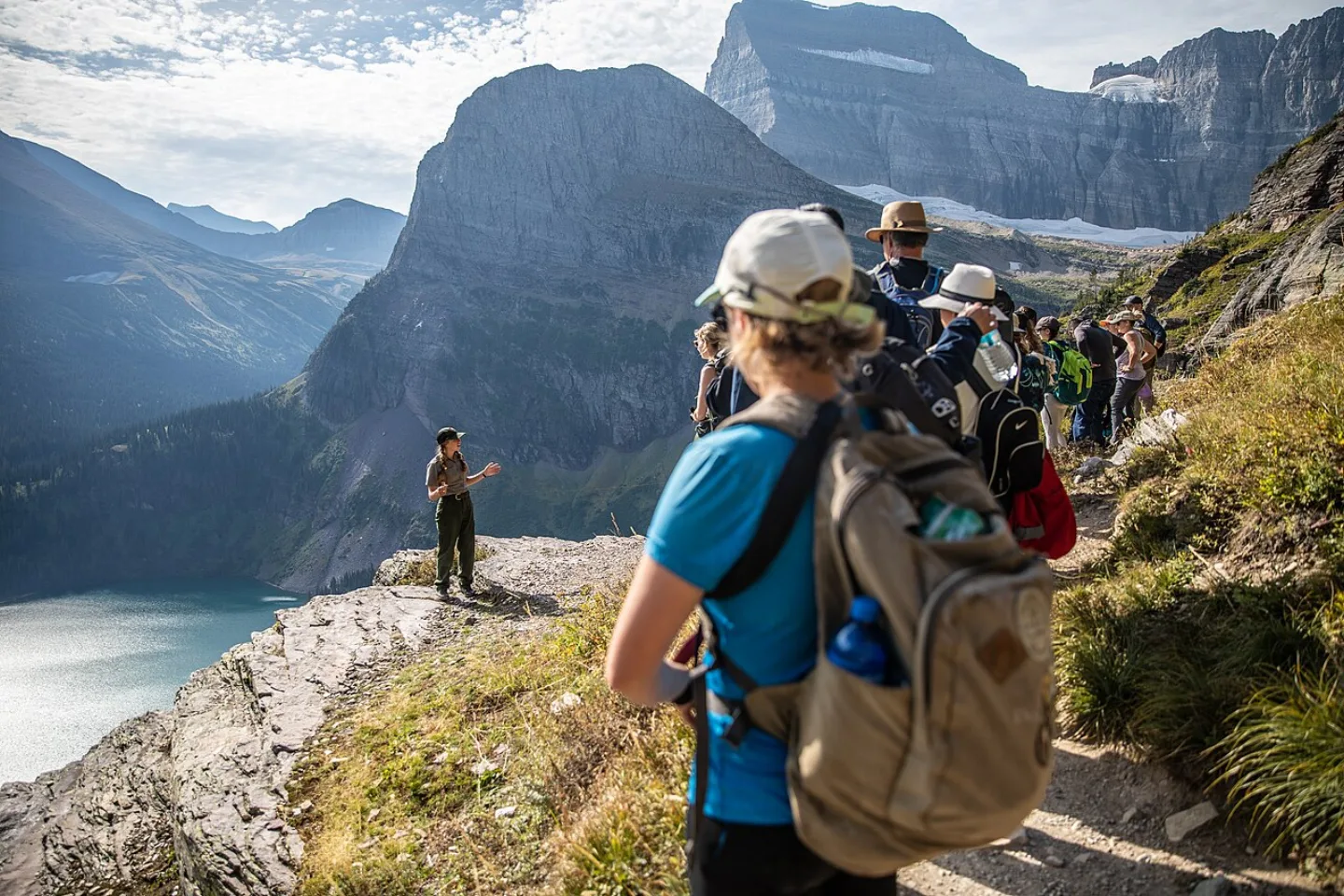
Ranger Programs
The flat hat is an invitation. Park rangers lead free guided walks, evening campfire talks, and night-sky programs, turning a scenic overlook into a story about deep time, wildlife, and people. Kids can earn a Junior Ranger badge by completing an activity booklet and reciting a pledge to protect the park.
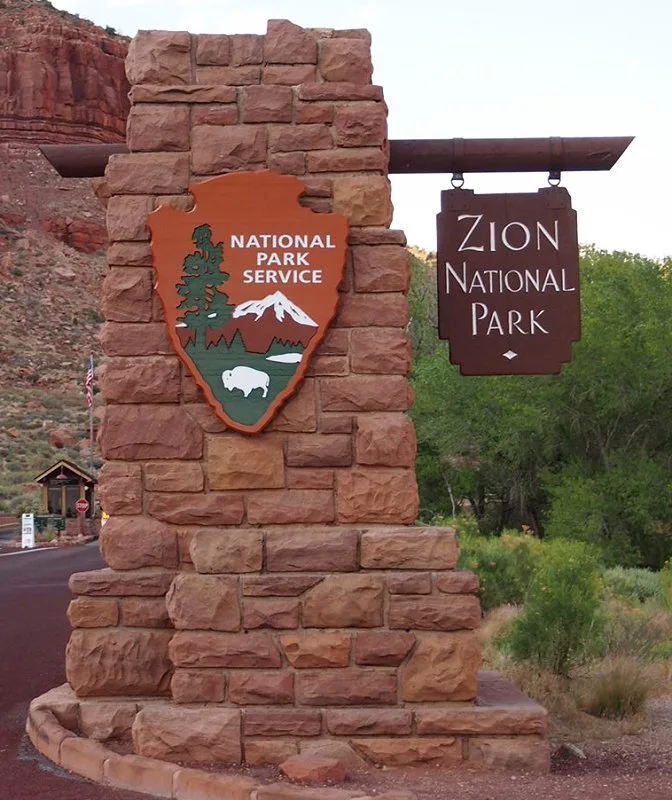
America the Beautiful Pass
One 80 annual pass covers entrance to every national park and federal recreation site for a full year — a bargain if you'll visit more than two or three. It's free for fourth-graders, and discounted for seniors (80 lifetime or $20 annual), military, and visitors with disabilities.
Timed-Entry Reservations
As crowds swelled, the busiest parks added timed-entry or vehicle reservations in peak season — Arches, Rocky Mountain, parts of Glacier, Yosemite at peak periods, Zion's shuttle and Angels Landing, Mount Rainier, Haleakalā sunrise, and Acadia's Cadillac sunrise. The systems change yearly, so always check Recreation.gov and the park website before you go.
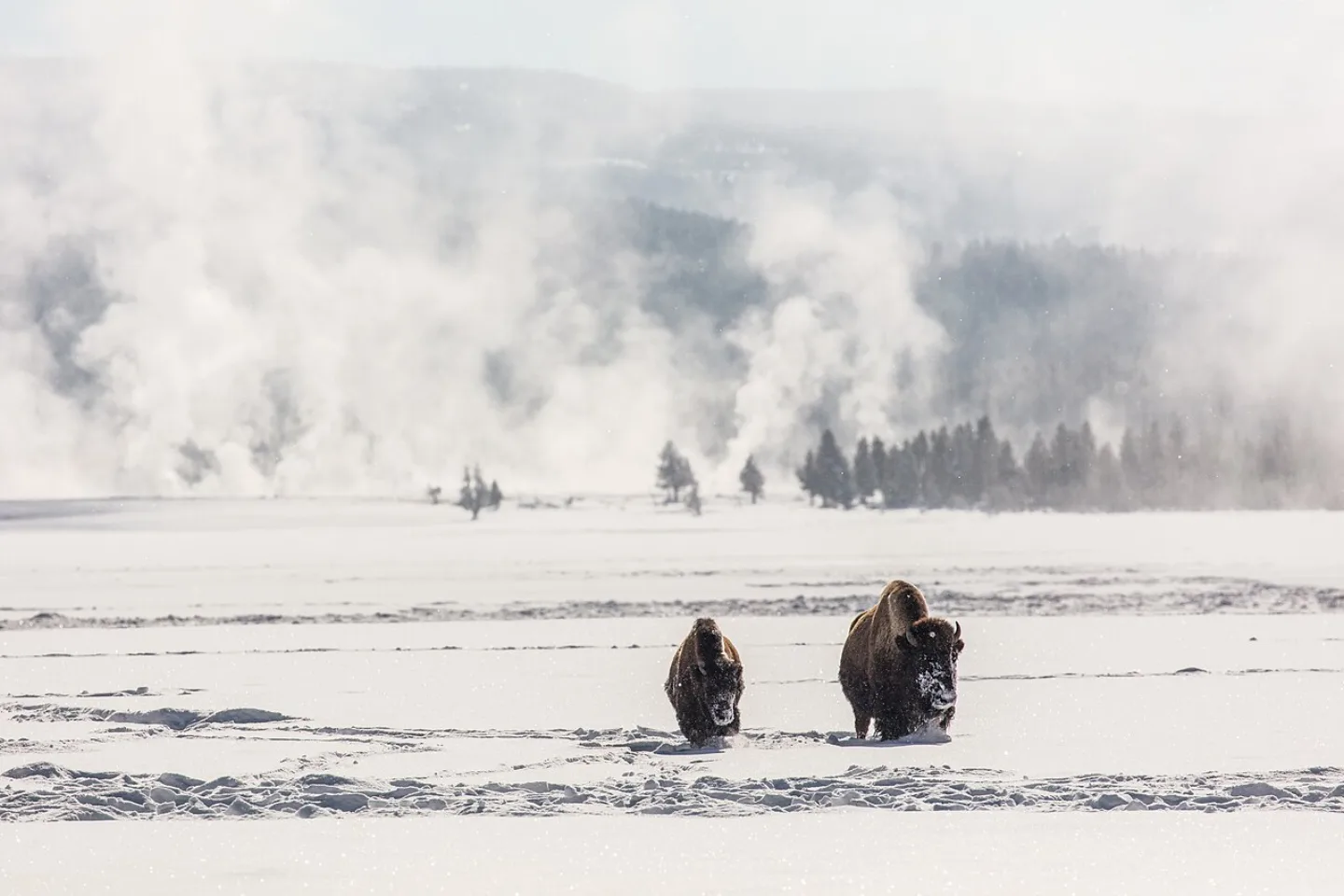
When to Go
Peak season is June through August, with July often the single busiest month — and the marquee parks the most jammed. The shoulder seasons, May and September–October, reward you with thinner crowds, cooler air, fall foliage, and the autumn rut. Winter transforms parks entirely: Yellowstone's interior is reachable only by snowcoach or snowmobile.
Heat, Altitude, and Water
In desert parks, heat kills more visitors than almost any other hazard: hike before 10 a.m. and carry a gallon of water per person per day. Above 8,000 feet, altitude sickness is real — ascend gradually and hydrate. And at the Grand Canyon, remember the mantra: "down is optional, up is mandatory."
Not the Bears
Despite bears' fearsome reputation, bison injure more Yellowstone visitors than any other animal, almost always people who edged too close for a photo. Because a bison can outrun a person and pivot instantly, the NPS rule is to stay 25 yards back.
By the numbers
- How many gallons of water per person per day does the NPS recommend in desert parks?
- 1 gallons
- How many yards should you stay back from bears and wolves?
- 100 yards
Matched pairs
Each item on the left goes with the one on the right.
- Tioga Road
- Yosemite (crests Tioga Pass, 9,943 ft)
- Skyline Drive
- Shenandoah (105 miles of fall foliage)
- Cadillac Mountain Road
- Acadia (first U.S. sunrise, early Oct–early Mar)
- Firefall (Horsetail Fall glows orange)
- Yosemite (mid-to-late February)
- Synchronous fireflies (lottery event)
- Great Smoky Mountains (early June)
- Trailhead
- The point where a trail begins
- Gateway town
- A community at a park's entrance serving visitors
- Concessioner
- A private company licensed to run lodges and tours inside a park
- National Preserve
- A protected unit that may allow some hunting or extraction
Self-test
Answer each question from memory, then check your work against the answer key.
1. Trail Ridge Road in Rocky Mountain National Park holds what national distinction?
- AThe highest continuous paved road in the United States
- BThe steepest paved road in the United States
- CThe first paved road built in the National Park System
- DThe longest paved road in any national park
2. Tioga Road, which crests Tioga Pass at 9,943 feet, is a seasonal high-country drive in which park?
- AKings Canyon
- BYosemite
- CGlacier
- DRocky Mountain
3. Going-to-the-Sun Road, crossing the Continental Divide at Logan Pass, is the headline drive of which park?
- AGrand Teton
- BYellowstone
- CNorth Cascades
- DGlacier
4. The lottery-access synchronous fireflies of early June are a signature spectacle of which park?
- AShenandoah
- BMammoth Cave
- CGreat Smoky Mountains
- DCongaree
5. Which scenic road is NOT correctly matched to its park?
- ASkyline Drive — Shenandoah
- BCadillac Mountain Road — Acadia
- CTrail Ridge Road — Rocky Mountain
- DGoing-to-the-Sun Road — Yosemite
6. Yosemite's 'Firefall,' when Horsetail Fall glows orange at sunset, occurs during which window?
- AMid-to-late February
- BEarly June
- CPeak summer (July)
- DAutumn (October)
7. The lottery-access synchronous fireflies display takes place in which national park?
- AAcadia
- BGreat Smoky Mountains
- CYosemite
- DShenandoah
8. Counterintuitively, which animal injures more Yellowstone visitors than any other?
- AGrizzly bears
- BWolves
- CBison
- DElk
9. In desert parks, how much water does the NPS recommend carrying per person per day?
- AHalf a gallon
- BOne quart
- COne gallon
- DTwo gallons
10. How far back does the NPS rule say to stay from bears and wolves?
- A25 yards
- B50 yards
- C10 yards
- D100 yards
11. Which action best follows NPS guidance for surviving desert-park heat?
- AStart at noon when the trails are least crowded
- BHike before 10 a.m. and avoid midday exertion
- CRest in the sun to let your body acclimate
- DSave most of your water for the hike back
12. Which of these is NOT one of the parks' core safety rules?
- AFeed wildlife small, natural snacks
- BNever feed wildlife
- CCarry bear spray in grizzly country
- DStay 100 yards from bears and wolves
13. Which park designation can the President create directly, without an act of Congress?
- AWilderness area
- BNational monument
- CNational park
- DNational preserve
14. A national park is a protected area created by what?
- AA Wilderness Act designation
- BA state legislature
- CAn act of Congress
- DA presidential proclamation
15. Which designation is the strictest federal land protection, barring roads, vehicles, and permanent development?
- ABackcountry
- BNational Preserve
- CNational Monument
- DWilderness Area
16. Which designation is a protected unit that may permit some hunting or resource extraction?
- ANational Preserve
- BWilderness Area
- CNational Park
- DNational Monument
17. Which statement about park designations is FALSE?
- AA national park generally bars hunting and extraction
- BThe Grand Canyon began life as a national monument
- CA national monument requires an act of Congress
- DA national preserve may permit some hunting
18. What is the defining feature of a designated Wilderness Area under the 1964 Wilderness Act?
- AIt bars roads, motor vehicles, and permanent development
- BIt permits regulated hunting and mineral extraction
- CIt can be proclaimed directly by the President
- DIt requires an act of Congress to establish a park
19. In its own language, what state does the 1964 Wilderness Act aim to keep protected land in?
- A"Open for multiple use"
- B"Reserved for future development"
- C"Managed for maximum yield"
- D"Untrammeled by man"
20. What term names the remote, undeveloped interior of a park beyond roads and front-country facilities?
- AInholding
- BBackcountry
- CWilderness Area
- DFrontcountry
21. A sharp zigzag turn in a trail or road that eases a steep climb by lengthening the route is a:
- ATraverse
- BSwitchback
- CCutback
- DCairn
22. A deliberate stack of stones that marks a route across bare rock where no worn path shows is a:
- ATrailhead
- BInholding
- CCairn
- DSwitchback
23. Privately owned land that sits within a park's boundaries is called an:
- AInholding
- BEasement
- CGateway
- DConcession
24. Which trail term is INCORRECTLY defined?
- ASwitchback — a zigzag turn easing a steep climb
- BCairn — a stack of stones marking a route
- CInholding — private land within park boundaries
- DBackcountry — a park's developed visitor-center area
25. What term names the point where a trail begins?
- ACairn
- BTrailhead
- CBackcountry
- DGateway
26. A community at a park's entrance that feeds and beds its visitors is a:
- AConcessioner
- BTrailhead
- CInholding
- DGateway town
27. A private company licensed to run the lodges, tours, and services inside a park is a:
- ARanger station
- BInholding
- CConcessioner
- DGateway town
28. Which facility term is correctly matched to its meaning?
- AConcessioner — a private company running park lodges and tours
- BInholding — a community at a park's entrance
- CGateway town — the point where a trail begins
- DTrailhead — private land inside a park
29. Which facility term is INCORRECTLY described?
- AGateway town — a community at a park's entrance serving visitors
- BTrailhead — the point where a trail begins
- CConcessioner — a community at a park's entrance serving visitors
- DInholding — privately owned land within a park
Go deeper
- WatchGoing-to-the-Sun Road Going-to-the-Sun Road crosses Glacier National Park for 50 miles. At Logan Pass, it crosses the Continental Divide at 6,646 feet.
- Watch100 Yards, 25 Yards The National Park Service rule is easy to remember. Stay 100 yards from bears and wolves: roughly a football field.
- WatchPark or Monument A national park is created by an act of Congress. There are 64 of them.
- StudyU.S. National Parks in the FlashFeed app
Answer key
- 1. A The highest continuous paved road in the United StatesTrail Ridge Road crests at 12,183 feet, making it the highest continuous paved road in the U.S. It runs for miles above treeline through fragile alpine tundra and stays snow-closed for much of the year.
- 2. B YosemiteTioga Road crosses Tioga Pass (9,943 ft) in Yosemite. Trail Ridge Road is Rocky Mountain's high road and Going-to-the-Sun is Glacier's, so those are the tempting mix-ups.
- 3. D GlacierThe 50-mile Going-to-the-Sun Road climbs to Logan Pass (6,646 ft) in Glacier National Park, completed in 1932. The other Rockies-region parks lack this specific road.
- 4. C Great Smoky MountainsGreat Smoky Mountains hosts the lottery-access synchronous firefly event in early June. Yosemite's mid-February Firefall is the other rare seasonal spectacle mentioned.
- 5. D Going-to-the-Sun Road — YosemiteGoing-to-the-Sun Road is in Glacier, not Yosemite (whose seasonal high road is Tioga Road). The other three pairings are correct.
- 6. A Mid-to-late FebruaryHorsetail Fall's Firefall effect happens only in mid-to-late February, when sunset light hits the water just right.
- 7. B Great Smoky MountainsGreat Smoky Mountains hosts the lottery-access synchronous fireflies event each early June.
- 8. C BisonDespite bears' fearsome reputation, bison injure the most Yellowstone visitors — almost always people who edged too close for a photo. A bison can outrun a person and pivot on a dime, so the NPS rule is to stay 25 yards back.
- 9. C One gallonThe guidance is a full gallon of water per person per day in desert heat, paired with hiking before 10 a.m. and avoiding midday exertion.
- 10. D 100 yardsStay 100 yards (about a football field) from bears and wolves. The 25-yard rule applies to bison, elk, and other large animals.
- 11. B Hike before 10 a.m. and avoid midday exertionHeat is the desert's quiet killer, so hike early and avoid midday exertion. Rationing water or starting at noon invites heat illness.
- 12. A Feed wildlife small, natural snacksFeeding wildlife any snacks breaks the one rule with no exceptions — never feed wildlife — since a fed animal becomes bold, dependent, and often doomed. The other three are genuine NPS rules.
- 13. B National monumentA national monument can be proclaimed by the President under the Antiquities Act of 1906 — no act of Congress needed. That speed saved many landscapes; several, like the Grand Canyon, were monuments before Congress upgraded them to full parks.
- 14. C An act of CongressNational parks are created by an act of Congress and generally bar hunting and extraction. A presidential proclamation instead creates a national monument.
- 15. D Wilderness AreaA designated wilderness area is the strictest protection, keeping land 'untrammeled by man' under the 1964 Wilderness Act. A preserve is the loosest, permitting some hunting.
- 16. A National PreserveA national preserve may allow some hunting or extraction; several places are combined 'Park & Preserve' units. National parks and wilderness areas bar such uses.
- 17. C A national monument requires an act of CongressA national monument needs no act of Congress — the president can proclaim it directly under the 1906 Antiquities Act. The other three statements are true.
- 18. A It bars roads, motor vehicles, and permanent developmentWilderness Areas bar roads, vehicles, and development, keeping land 'untrammeled by man' per the 1964 Wilderness Act.
- 19. D "Untrammeled by man"The 1964 Wilderness Act's goal is land kept 'untrammeled by man' — no roads, vehicles, or permanent development.
- 20. B BackcountryThe backcountry is the remote interior, reached on foot, horse, or boat, with overnight stays usually needing a permit. Wilderness is a legal protection layer, not this term.
- 21. B SwitchbackA switchback softens the grade so hikers and vehicles can climb slopes impossible to ascend straight on — the secret behind roads like Going-to-the-Sun.
- 22. C CairnA cairn marks the way across rock or open terrain. The rule is to follow existing cairns, not build rogue ones, since false cairns can lead hikers astray.
- 23. A InholdingAn inholding is private land inside park boundaries — a leftover from before the park was drawn — that can complicate management and access.
- 24. D Backcountry — a park's developed visitor-center areaBackcountry is the remote, UNdeveloped interior beyond the roads and visitor centers — the opposite of a developed front-country area. The other three definitions are correct.
- 25. B TrailheadThe trailhead is simply where a trail starts. A gateway town is the community at a park's entrance, and a cairn marks a route across open rock.
- 26. D Gateway townA gateway town sits at a park's entrance serving visitors. A concessioner, by contrast, is a company operating services inside the park itself.
- 27. C ConcessionerA concessioner is licensed to run lodges and tours inside the park. A gateway town is the outside community at the entrance, not an in-park operator.
- 28. A Concessioner — a private company running park lodges and toursOnly the concessioner pairing is right. A trailhead is where a trail begins, an inholding is private in-park land, and a gateway town is the entrance community.
- 29. C Concessioner — a community at a park's entrance serving visitorsA concessioner is a private company running lodges and tours inside a park — not the entrance community, which is the gateway town. The other three are correct.
Sources
- U.S. National Parks — Recreation & Sites
- U.S. National Parks — Timing & Safety
- U.S. National Parks — Glossary
Image credits
- Dark Skies: Viktorwills · CC BY-SA 4.0 — commons.wikimedia.org/wiki/File:Chisos_Mountains_Milky_Way_August_2018.jpg
- Ranger Programs: GlacierNPS · Public domain — commons.wikimedia.org/wiki/File:Ranger_Talking_to_Visitors_(48920675641).jpg
- America the Beautiful Pass: McGhiever · CC BY-SA 3.0 — commons.wikimedia.org/wiki/File:Zion_South_Entrance_sign.jpg
- When to Go: Jacob W. Frank · Public domain — commons.wikimedia.org/wiki/File:Bison_in_Lower_Geyser_Basin_in_winter_(23083167-da9c-4996-933f-daf3c107234b).jpg


