
U.S. National Parks study guide · Lesson 24 of 27
Spotlight: Denali
The High One · Subarctic Wilderness · Visiting Denali
This is the lesson's study guide from the FlashFeed app, plus its key facts and a self-test.
What you'll be able to do
- Explain the peak's height, how its federal name changed in 2015 and 2025, and its greatest-rise record.
- Identify the Alaska Range, the peak's other name (Mount McKinley), and the park's Big Five animals.
- Describe Denali's subarctic ecosystems and the Big Five it protects.
- Plan a Denali visit around the bus, the weather, and the seasons.
The High One
Some mountains are tall. Denali is overwhelming — a single mass of rock and ice that owns the horizon of interior Alaska and the very top of the continent.
Denali
At 20,310 feet, this is the highest peak in North America. It anchors the Alaska Range, the arcing chain of mountains that sweeps across the state's interior, and it stands inside a park of roughly six million acres of subarctic wilderness. The peak has two names, and both are old. Denali is Koyukon Athabascan for "the high one" (or "the tall one"), the name Alaska Native peoples used for generations before a prospector attached the name Mount McKinley in 1896. Alaska made Denali its official state name in 1975, and in 2015 the federal government followed, changing the peak's official name from Mount McKinley to Denali. In January 2025 an executive order sent the federal name back to Mount McKinley, which is the peak's official federal name today. The park's name did not change: it is still Denali National Park and Preserve. In February 2025 the Alaska Legislature asked the federal government to keep the name Denali, so you will see both names in use. Whichever name you use, the mountain is the same: so big it generates its own weather, and far more often than not it hides itself in cloud.
Denali's Base-to-Summit Rise
Here is the statistic that sets Denali apart. Everest is higher above sea level — but Everest begins on a high plain, so its climb from its own base is shorter. Denali begins near the tundra, at roughly two thousand feet above sea level, and climbs in one unbroken sweep to its glaciated summit. That gives it a base-to-summit rise of about 18,000 feet, or roughly three and a half miles — a mile taller than Everest from base to summit, according to the National Park Service. You are not looking at a peak poking above a high plateau; you are looking at the entire mountain, floor to ceiling, all at once. That is why Denali feels bigger than its elevation suggests.
The range itself rides the Denali Fault, one of the great fracture lines in the Earth's crust, which has slowly shoved these mountains skyward over millions of years.
A Brutal Climb
Denali's far-northern latitude makes it one of the hardest high-altitude climbs on Earth — harder, in real terms, than its elevation alone would predict. Air pressure falls faster toward the poles, so the effective altitude a climber's body experiences near Denali's summit is closer to that of a much taller equatorial peak. Add savage cold and the storms the mountain brews for itself, and a Denali ascent becomes a serious mountaineering expedition, not a hike. Most climbers spend weeks on the mountain, hauling and acclimatizing, and many turn back at the weather's command.
Key numbers: summit 20,310 ft; base-to-summit rise ~18,000 ft (from a base near 2,000 ft); federal name changed to Denali 2015, back to Mount McKinley 2025; first protected 1917. Worth knowing: Denali = "the high one" (Koyukon), the park's name and the name Alaska has used officially since 1975; Mount McKinley = the peak's federal name until 2015 and again since 2025; the Alaska Range = its home, rising along the Denali Fault.
Subarctic Wilderness
Beyond the mountain spreads the real Denali: six million acres of open, animal-rich, road-thin wilderness where you watch the land breathe through one short, blazing summer.
The Big Five
Denali's signature animals are the Big Five: grizzly bears, caribou, moose, Dall sheep, and gray wolves. This is one of the best places in North America to see large mammals behaving naturally, and there is a reason. The park was established in 1917 specifically to protect Dall sheep — the white, curl-horned wild sheep of the high slopes — from market hunters supplying the era's mining camps. Hunting has been barred in the core park ever since, so the animals here are neither tame nor terrified; they simply live. The open tundra helps too: there are few trees to hide behind, so a patient rider on the park bus can spot a grizzly digging roots a hillside away, or a bull moose wading a pond, or a wolf trotting the gravel.
A Subarctic World
Denali's climate is subarctic — long, dark, deeply cold winters and a brief, intense summer of near round-the-clock daylight when the whole land hurries to flower, feed, and breed. Two ecosystems stack by elevation. In the valleys grows taiga, the northern boreal forest of spruce and birch. Above the tree line stretches alpine tundra, treeless and low-growing, carpeting the slopes in dwarf shrubs that flare red and gold each autumn. The short growing season governs everything: when the caribou calve, when the berries ripen, and the narrow window in which the park road can carry visitors at all.
One Road, Wonder Lake, and the Scale of It
A single road, about 92 miles long, is the only route into this six-million-acre wilderness — a park larger than the state of New Hampshire. Deep along that road lies Wonder Lake, a still tundra lake famous for holding a perfect mirror image of Denali on a calm morning, the whole snow giant doubled in the water. Reaching it is a long day, and it is the kind of place that rewards travelers who came for more than a roadside photo. Everything about Denali is built around this restraint: one road, few vehicles, and a vast wild left mostly to the animals it was created to protect.
Key numbers: road length ~92 miles; park size ~6 million acres; established 1917. Worth knowing: taiga = boreal spruce-birch forest; alpine tundra = treeless ground above the tree line; Dall sheep = the animal Denali was first created to protect; Wonder Lake = the Denali-reflecting lake deep in the park.
Visiting Denali
Denali rewards patience and punishes assumptions. Plan around the bus, the weather, and the season, and the mountain will eventually give you its best.
The 30% Club
Denali is so massive it manufactures its own weather, wrapping itself in cloud even on days that are clear everywhere else. The result is humbling: only about 30% of summer visitors ever actually see the full peak. Those lucky enough to catch it are unofficially inducted into the "30% Club." The practical lesson for any traveler is simple — give yourself several days, not a single afternoon. Treat a clear view of Denali as a gift, not a guarantee, and you will both manage your expectations and dramatically improve your odds of joining the club.
The Sled Dog Kennel
Denali runs the only working sled-dog kennel in the entire National Park System. This is not a tourist novelty; it is how the park is run. In deep winter, when snow shuts the road to every vehicle, rangers patrol the wilderness by dog team exactly as they have for roughly a century — quiet, reliable, and perfectly suited to the cold. In summer, the friendly Alaskan huskies become ambassadors, meeting visitors at daily kennel demonstrations. They are a living link between modern Denali and the way this enormous country was first explored and protected.
Getting There: Buses, Seasons, and Aurora
Denali's access runs on restraint. Private vehicles are limited to the first stretch of the road; beyond that, nearly everyone travels by park bus. It sounds like a constraint, but it is the secret to the experience — light traffic, calmer wildlife, and a window seat you can watch instead of a road you have to drive. Time your trip for the best season, mid-June to early September, when the road is open and summer is at full strength. (Note that a 2021 landslide at Pretty Rocks has limited travel on part of the road, so always check current status.) Come instead in the dark shoulder months, and the prize changes entirely: clear, black northern skies can light up with the aurora, the green curtains of the northern lights rippling over the Alaska Range.
Key numbers: summit-seen rate ~30%; first established 1917. Worth knowing: park bus = how most visitors travel (private cars limited); best season = mid-June to early September; aurora season = the dark shoulder months for northern lights.
Key concepts
Alaska Range
- This arcing chain of mountains sweeps across the interior of the 49th state.
- It is anchored by 'the high one,' North America's highest peak, and rides a great fracture line named for that summit.
Mount McKinley
- In 1896 a prospector attached this U.S. president's name to North America's highest peak.
- The federal government used this name until 2015, switched to the mountain's Koyukon name, Denali, and returned to this name in 2025.
Dall sheep
- A white, curl-horned mammal of Denali's high, rocky slopes — one of the park's 'Big Five.'
- Market hunters supplying the era's mining camps once threatened it, and protecting this animal was the very reason the park was founded in 1917.
moose
- One of Denali's 'Big Five' — a large mammal of the open subarctic country, often spotted from the park bus.
- Picture a bull of this species wading a pond out in the open tundra.
caribou
- One of Denali's 'Big Five' large mammals of the open tundra, best watched from a window seat on the park bus.
- The brief subarctic summer sets the timing of this animal's spring calving.
Wonder Lake
- Deep along Denali's single 92-mile road lies this still body of water surrounded by tundra.
- On a calm morning it holds a perfect mirror image of the snow-covered peak, the whole giant doubled on its surface.
Key facts
20,310 Feet
At 20,310 feet, Denali's summit is the highest point in North America. That figure is its elevation above sea level, separate from its roughly 18,000-foot rise from base to summit.
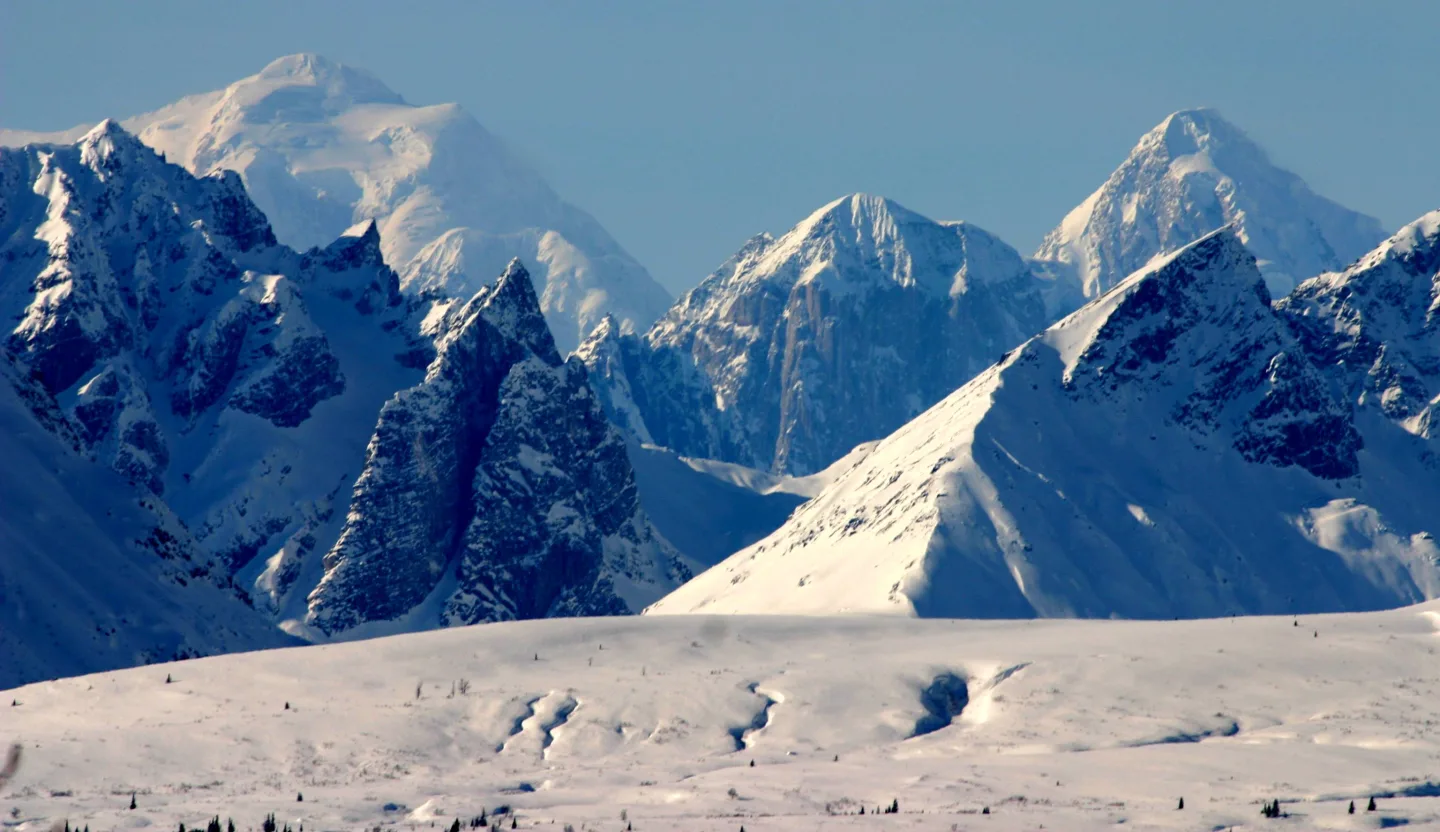
The Alaska Range
Denali anchors the Alaska Range, the arcing mountain chain that rises along the Denali Fault and sweeps across Alaska's interior.
Two Names for One Peak
Mount McKinley was the peak's official federal name until 2015, when Denali became official. A January 2025 executive order changed the federal name back to Mount McKinley; the park is still Denali National Park and Preserve.
A Subarctic World
Denali's climate is subarctic: long, dark, deeply cold winters and brief, intense summers when the land erupts in wildflowers and round-the-clock daylight. Spruce-birch taiga blankets the valleys; above the tree line stretches open alpine tundra. This short growing season shapes everything — from when the caribou calve to when the park road can carry visitors.
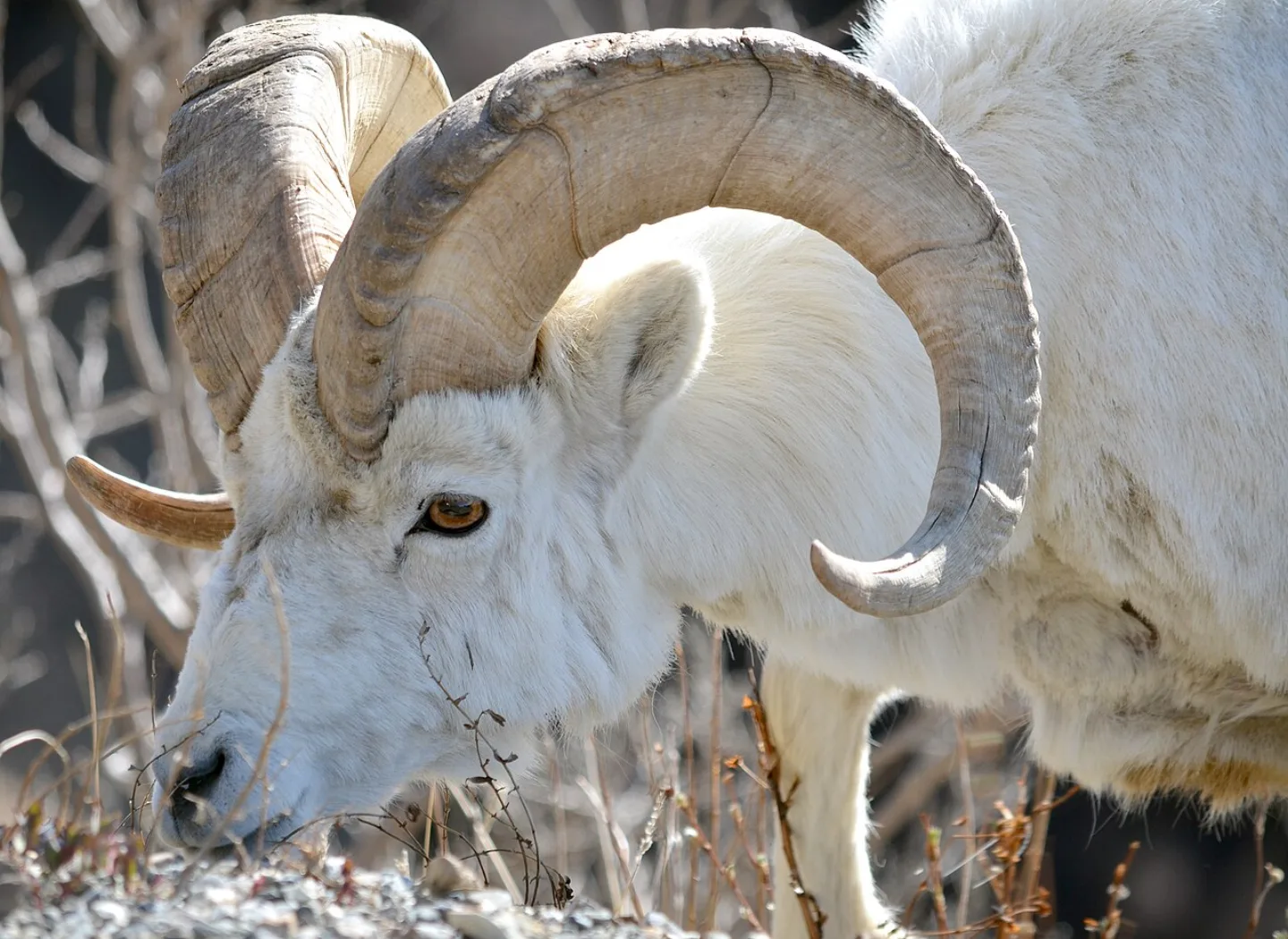
Denali's First Purpose
Denali was first set aside in 1917 as a refuge for Dall sheep, whose herds were being thinned by market hunters supplying nearby mining camps.
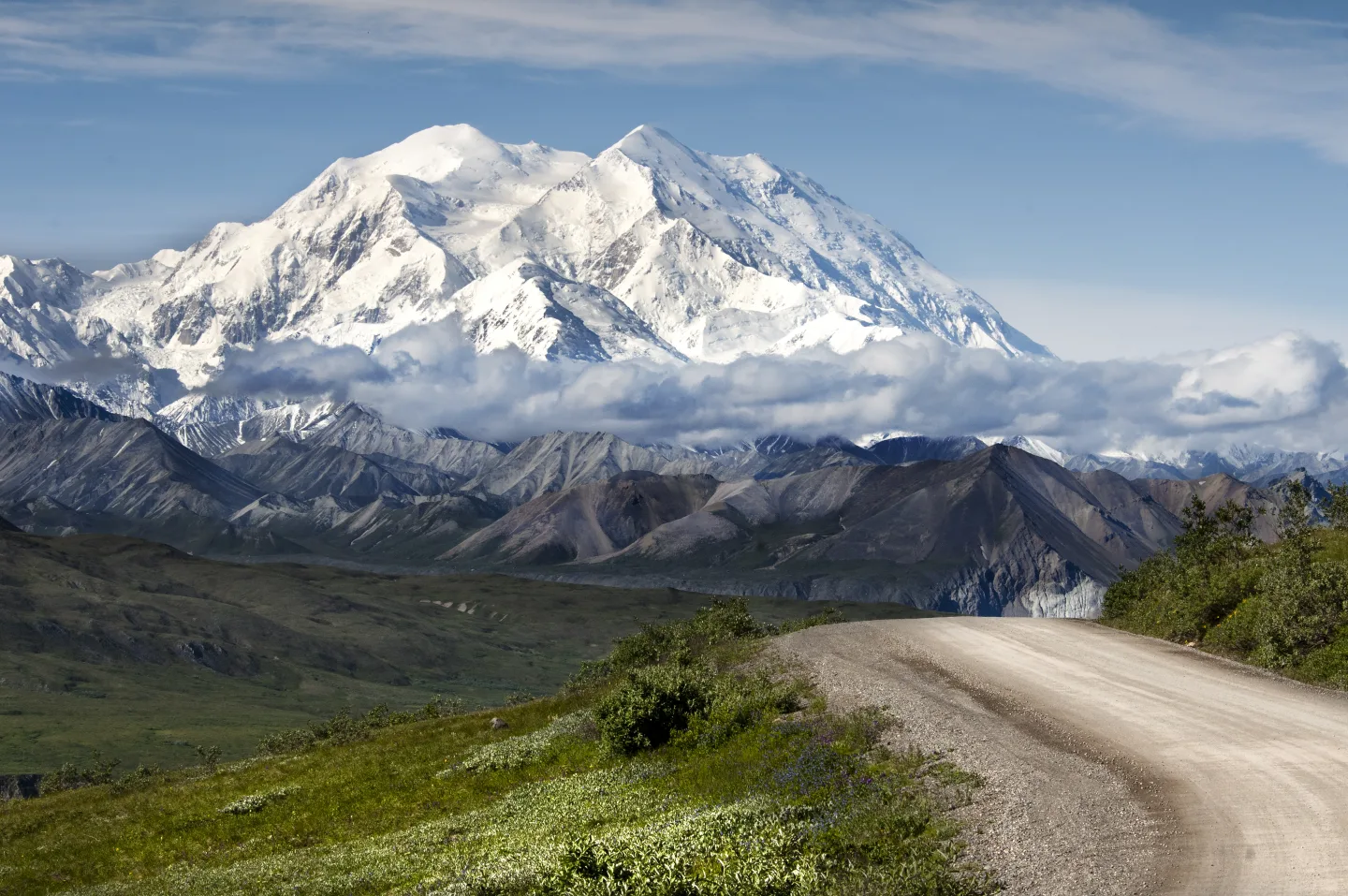
Just One Road
A single road roughly 92 miles long is the only route into Denali's roughly six-million-acre wilderness.
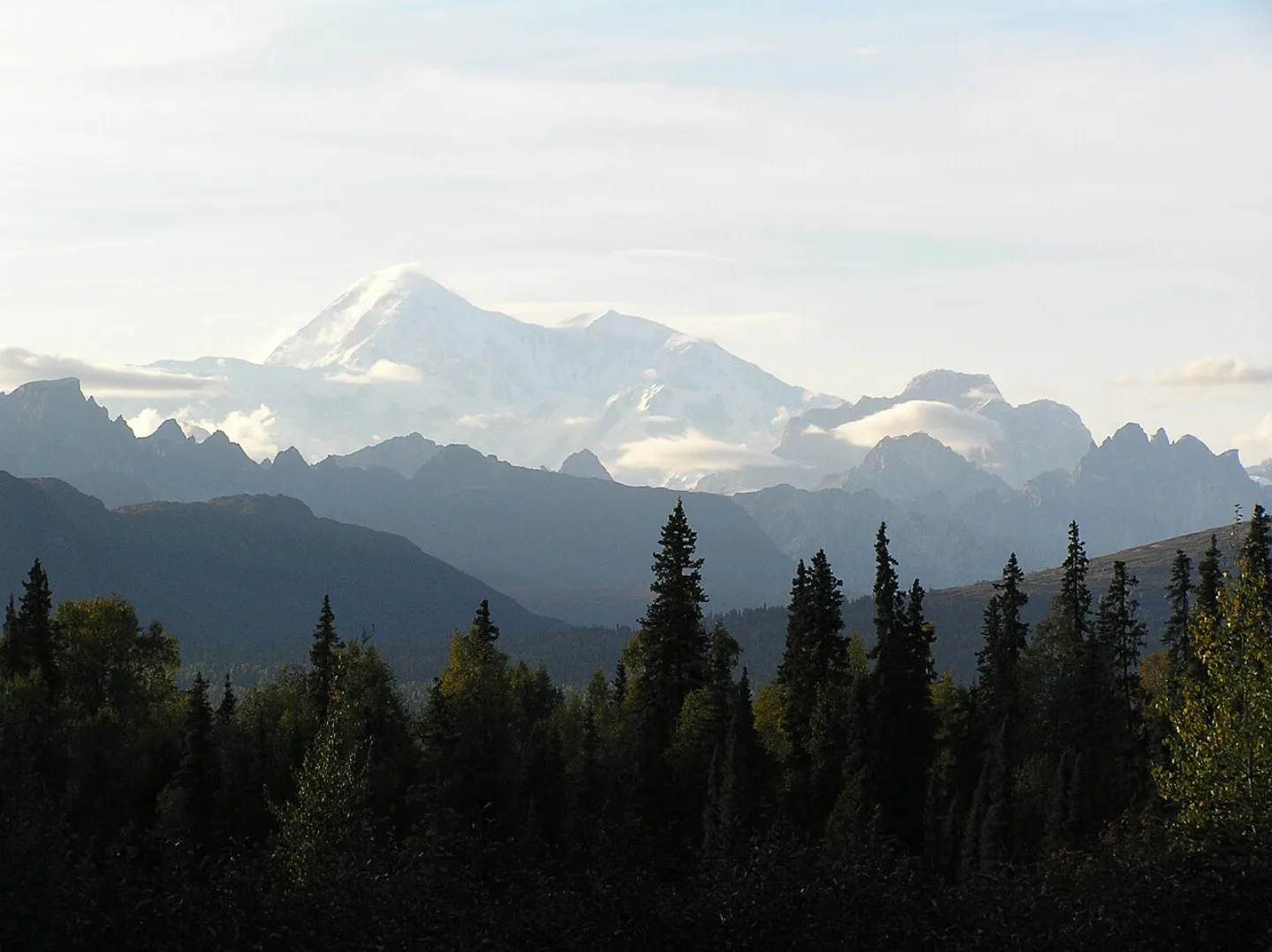
Bigger Than New Hampshire
Denali covers roughly six million acres of subarctic wilderness, an area larger than the state of New Hampshire.
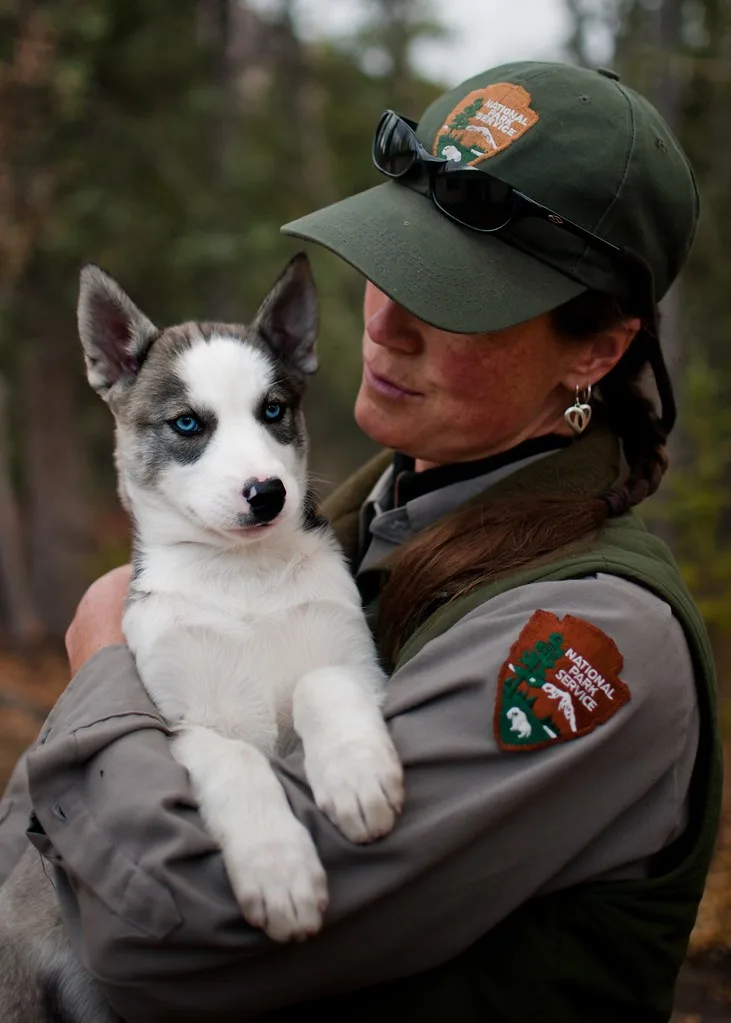
The Sled Dog Kennel
Denali runs the only working sled-dog kennel in the entire National Park System. In winter, when the snow shuts out vehicles, rangers patrol the wilderness by dog team just as they have for a century. In summer, the friendly Alaskan huskies meet visitors at daily kennel demonstrations — a living link to how this country was first managed.
Keeping Wildlife Calm
Private vehicles on the Denali park road are limited to its first stretch; beyond that, nearly everyone travels by park bus, which keeps traffic light and wildlife calm.
Hidden by Daylight
Denali's dark shoulder-season skies offer the best chance to catch the northern lights over the Alaska Range, since midsummer's round-the-clock daylight hides the aurora.
When the Road Opens
To catch the park road open and summer at full strength, the recommended window for a Denali visit is mid-June to early September.
By the numbers
- How tall is Denali's summit, the highest point in North America?
- 20310 ft
- Roughly how great is Denali's base-to-summit rise?
- 18000 ft
- In what year did the federal government officially rename Mount McKinley as Denali?
- 2015 year
- About how long is the single road that runs into Denali's wilderness?
- 92 mi
- About how many acres does Denali National Park and Preserve cover?
- 6000000 acres
- About what percent of summer visitors actually see Denali's summit?
- 30 percent
- In what year was the park first established (as Mount McKinley National Park)?
- 1917 year
Matched pairs
Each item on the left goes with the one on the right.
- Denali
- Koyukon Athabascan for "the high one" — the park's name, and the peak's federal name from 2015 to 2025
- Mount McKinley
- The peak's federal name until 2015, and again since 2025
- Alaska Range
- The arcing mountain chain, crowned by Denali, that rises along the Denali Fault
- Alpine tundra
- Treeless, low-growing ground above the tree line — much of Denali's open terrain
- Taiga
- The northern spruce-and-birch boreal forest of Denali's lower elevations
- Dall sheep
- White, curl-horned wild sheep of high slopes — the animal Denali was first created to protect
- Wonder Lake
- A still lake deep in the park famed for mirror reflections of Denali
- Park bus
- How most visitors travel the road — private vehicles are limited past the first stretch
- Best season
- Mid-June to early September, when the road is open and summer peaks
- Aurora season
- Late shoulder months, when dark skies bring the northern lights over the range
Self-test
Answer each question from memory, then check your work against the answer key.
1. What is the elevation of Denali's summit, the highest point in North America?
- A18,000 feet
- B14,411 feet
- C20,310 feet
- D29,032 feet
2. In the Koyukon Athabascan language, what does the name 'Denali' mean?
- AThe high one
- BThe great ice
- CFather of rivers
- DThe white peak
3. In what year did the Interior Department officially change the mountain's federal name from Mount McKinley to Denali?
- A1980
- B1917
- C1896
- D2015
4. Roughly how far does Denali climb from base to summit?
- AAbout 20,310 feet
- BAbout 18,000 feet
- CAbout 12,000 feet
- DAbout 29,000 feet
5. Everest rises higher above sea level, yet by the National Park Service's measure Denali is a mile taller. Why?
- AIts base-to-summit rise is greater (~18,000 ft); Everest sits on an already-high plateau
- BIt covers more ground area than any other mountain
- CIts summit is actually farther from Earth's center than Everest's
- DIt contains more rock and ice by total volume than Everest
6. Denali is the crowning peak of which mountain chain that sweeps across Alaska's interior?
- AThe Brooks Range
- BThe Chugach Mountains
- CThe Rocky Mountains
- DThe Alaska Range
7. Which official name did the federal government use for North America's highest peak until 2015, and use again from 2025?
- AMount Rainier
- BMount Whitney
- CMount McKinley
- DMount Elias
8. Which animal is NOT one of Denali's 'Big Five'?
- AGray wolf
- BElk
- CGrizzly bear
- DCaribou
9. Which large mammal IS one of Denali's 'Big Five'?
- AMountain goat
- BMoose
- CBison
- DElk
10. Which of the Big Five is a white, curl-horned wild sheep of Denali's high slopes?
- AMoose
- BGray wolf
- CCaribou
- DDall sheep
11. Which animal was Denali originally established in 1917 to protect?
- ACaribou
- BGrizzly bear
- CDall sheep
- DGray wolf
12. What is the name for the spruce-and-birch boreal forest that grows in Denali's valleys?
- ATaiga
- BAlpine tundra
- CSteppe
- DChaparral
13. Above Denali's tree line stretches treeless, low-growing terrain known as what?
- AWetland marsh
- BAlpine tundra
- CBoreal forest
- DTaiga
14. About how many miles long is the single road that runs into Denali's wilderness?
- AAbout 500 miles
- BAbout 20 miles
- CAbout 92 miles
- DAbout 250 miles
15. Denali National Park and Preserve covers roughly how much land?
- AAbout 6 million acres
- BAbout 20 million acres
- CAbout 1 million acres
- DAbout 500,000 acres
16. Since Denali so often wraps itself in cloud, what is the smartest way to improve your odds of seeing the full peak?
- APlan one visit at midday
- BCome only in deep midwinter
- CStay in your vehicle the whole trip
- DGive yourself several days rather than a single afternoon
17. About what share of summer visitors actually get to see Denali's full peak?
- AAbout 10%
- BAbout 60%
- CAbout 30%
- DAbout 90%
18. How do most visitors travel the Denali park road beyond its first stretch?
- ABy private car
- BBy rental RV
- COn foot only
- DBy park bus
19. When are visitors most likely to catch the aurora over the Alaska Range?
- AThe dark shoulder months
- BLate June
- CThe busiest weeks of summer
- DPeak midsummer
20. To catch the park road open and summer at full strength, when should you time a Denali visit?
- AMid-July to late November
- BMid-June to early September
- CLate September to October
- DEarly May to mid-June
Go deeper
Answer key
- 1. C 20,310 feetDenali's summit stands at 20,310 ft. 18,000 ft is its base-to-summit rise, not its elevation; 29,032 ft is Everest, which is higher above sea level.
- 2. A The high oneDenali is Koyukon Athabascan for 'the high one' (or 'the tall one'), the name Alaska Native peoples used long before it was called Mount McKinley.
- 3. D 2015Interior made Denali the official federal name in 2015 (a January 2025 executive order later changed it back to Mount McKinley). In 1896 a prospector attached 'Mount McKinley'; 1917 is when the park was first established.
- 4. B About 18,000 feetDenali rises about 18,000 ft from near-tundra to summit. 20,310 ft is its elevation above sea level, not its rise above its own base.
- 5. A Its base-to-summit rise is greater (~18,000 ft); Everest sits on an already-high plateauEverest begins on a high plain, so its climb from its own base is shorter. Denali starts near 2,000 ft and rises about three and a half miles (about 18,000 ft) to its summit — a mile more than Everest's rise, by the Park Service's count.
- 6. D The Alaska RangeDenali anchors the Alaska Range, the arcing chain that rises along the Denali Fault across the state's interior.
- 7. C Mount McKinleyMount McKinley was the official federal name until 2015, when Denali became official; a January 2025 executive order changed it back. The park is still Denali National Park and Preserve.
- 8. B ElkDenali's Big Five are grizzly bears, caribou, moose, Dall sheep, and gray wolves. Elk is not among them.
- 9. B MooseDenali's Big Five are grizzly bears, caribou, moose, Dall sheep, and gray wolves. Moose is one of them; bison, mountain goats, and elk are not.
- 10. D Dall sheepDall sheep are the white, curl-horned wild sheep of the high slopes, and the animal Denali was first created to protect.
- 11. C Dall sheepThe park was first set aside as a refuge for Dall sheep, whose herds were being thinned by market hunters supplying mining camps.
- 12. A TaigaTaiga is the northern boreal forest of spruce and birch in the valleys. Alpine tundra is the treeless ground above the tree line.
- 13. B Alpine tundraAlpine tundra is the treeless, low-growing ground above the tree line, carpeted in dwarf shrubs. Taiga is the spruce-birch forest below it.
- 14. C About 92 milesOne road, about 92 miles long, is the only route into the roughly six-million-acre wilderness.
- 15. A About 6 million acresThe park spans about six million acres of subarctic wilderness, larger than the state of New Hampshire.
- 16. D Give yourself several days rather than a single afternoonOnly about 30% of summer visitors ever see the full peak, so the advice is to give yourself several days and treat a clear view as a gift, not a guarantee.
- 17. C About 30%Only about 30% of summer visitors ever see the full peak, since the mountain wraps itself in cloud; the lucky ones join the '30% Club.'
- 18. D By park busPrivate vehicles are limited to the first stretch of road; beyond that, nearly everyone travels by park bus, which keeps traffic light and wildlife calm.
- 19. A The dark shoulder monthsThe dark shoulder months bring clear black skies for the northern lights. Midsummer's round-the-clock daylight hides the aurora.
- 20. B Mid-June to early SeptemberMid-June to early September is Denali's best season, when the road is open and summer is at full strength.
Sources
- U.S. National Parks — Denali
Image credits
- The Alaska Range: Wikimedia Commons · Frank K. from Anchorage, Alaska, USA · CC BY 2.0 — commons.wikimedia.org/wiki/File:Peaks_of_the_Alaska_Range_(1).jpg
- Denali's First Purpose: Denali National Park and Preserve · Public domain — commons.wikimedia.org/wiki/File:Dall_Sheep_in_Denali_(29353389038).jpg
- Just One Road: Wikimedia Commons · Denali National Park and Preserve · Public domain — commons.wikimedia.org/wiki/File:Every_Road-_Denali_(7945497984).jpg
- Bigger Than New Hampshire: Wikimedia Commons · Dubhe · CC BY 2.5 — commons.wikimedia.org/wiki/File:0634_-_mckinley.jpg
- The Sled Dog Kennel: Mind on Fire Photography (Openverse) · by-sa 2.0 — www.flickr.com/photos/55284268@N05/15257937401


