
U.S. National Parks study guide · Lesson 19 of 27
Spotlight: Grand Teton
A Range Without Foothills · Wildlife, Icons & Visiting
This is the lesson's study guide from the FlashFeed app, plus its key facts and a self-test.
What you'll be able to do
- Explain the Tetons' fault-block geology and why they rise without foothills.
- Identify the string of glacial lakes at the foot of the range.
- Recognize the Tetons' iconic viewpoints, barns, and wildlife.
- Explain the Rockefeller land gift and the parkway linking Grand Teton to Yellowstone.
A Range Without Foothills
Most mountain ranges ease you in. The Tetons do not. They are the rare range that rises like a wall straight out of flat ground — and the reason is written in young, restless geology.
A Range Without Foothills
Stand on the sagebrush floor of Jackson Hole and the Teton Range climbs roughly 7,000 vertical feet above you with nothing in between — no foothills, no gentle ramp of ridges. It is one of the most abrupt mountain fronts in North America. The crown of the range is Grand Teton at 13,775 ft, a sharp granite pyramid that gives the park its name. The effect is theatrical: low flat valley, then sheer peaks, with almost no transition. That missing band of foothills is not an accident of erosion — it is a direct fingerprint of how these mountains were made.
The Youngest Rockies
The Tetons are fault-block mountains, built along the Teton Fault over roughly 10 million years — geologically young, which makes them one of the youngest ranges in the Rocky Mountains. The mechanism is a seesaw: as the fault slips, the block on the mountain side tilts up while the block on the valley side drops down. So the peaks rose and Jackson Hole sank, at the same time, along the same fracture. That is why there are no foothills — the valley floor is literally the down-dropped half of the same structure. More recently, Ice Age glaciers flowed down the range, gouging out the U-shaped canyons, scooping the high cirques, and leaving the rubble that would dam the lakes.
The vocabulary is worth holding onto. Jackson Hole is the flat valley that dropped as the peaks rose. A fault-block range is mountains lifted along a fault as one block tilts up and another drops. Together they explain the whole skyline.
A String of Glacial Lakes
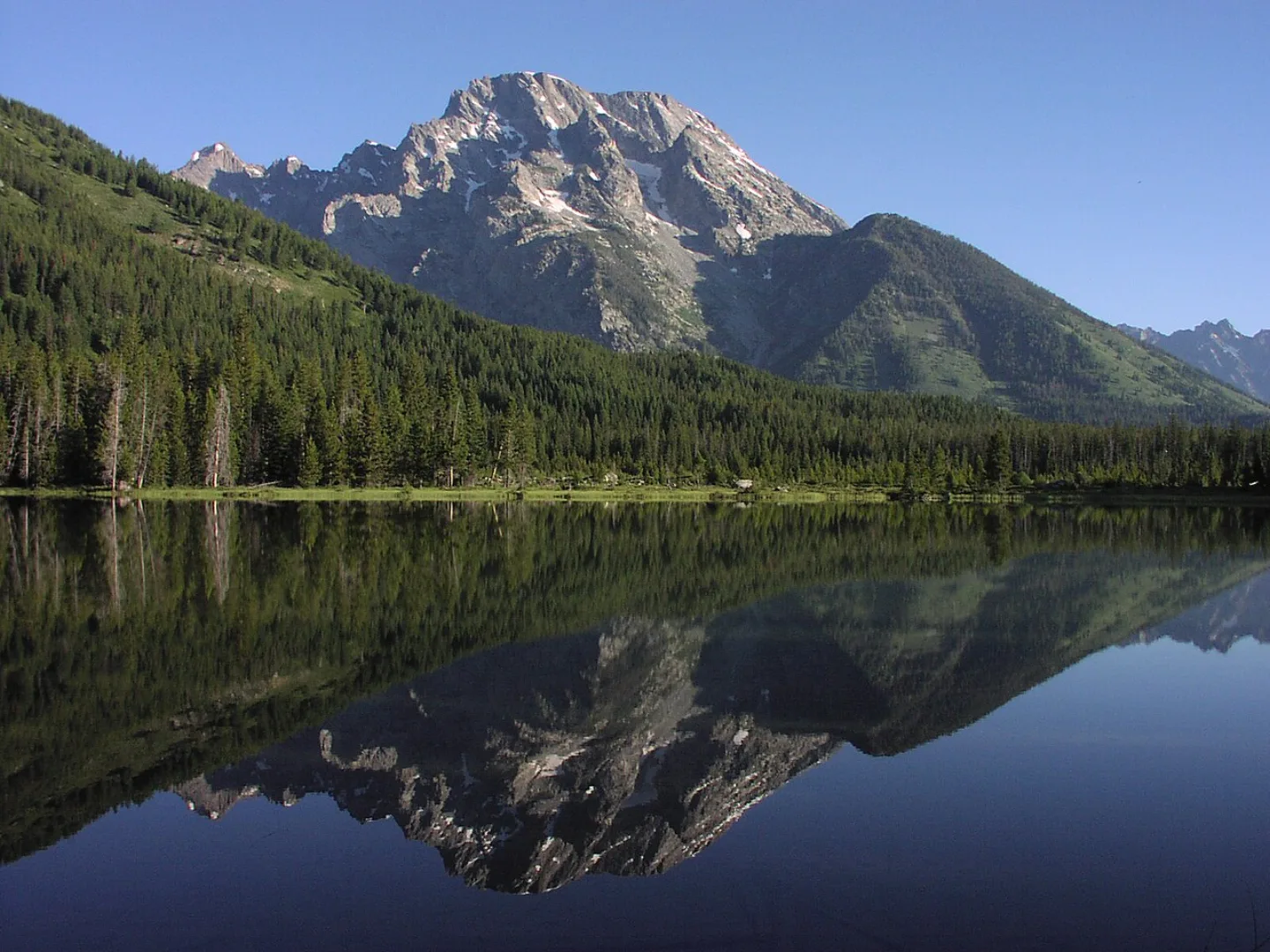
Where each canyon glacier reached the valley, it paused, melted, and dumped its load of ground-up rock. Those rubble piles — moraines — became natural dams, and behind them pooled a string of glacial lakes strung along the base of the range: Jenny, Jackson, Leigh, and String among them. Jackson Lake is the largest, spreading beneath Mount Moran. Jenny Lake is the most photographed and the most useful: a boat shuttle ferries hikers across it to the mouth of Cascade Canyon, turning a long approach into a short one. The lakes are cold, clear, and mirror-still on calm mornings — the range doubled in the water.
Put the three ideas in a row and the park snaps into focus. A young fault lifts a block of granite while the valley beside it sinks, erasing any foothills. Glaciers then carve the peaks and leave a necklace of lakes at their feet. Everything you see from the valley floor — the wall of mountains, the missing foothills, the line of lakes — comes from those two forces, working one after the other.
Wildlife, Icons & Visiting
The Tetons supply the backdrop; the foreground is where the park earns its fame — a weathered barn, a famous river bend, great herds of elk, and the gold light of September.
Mormon Rows Moulton Barn
On a dirt lane called Mormon Row, Latter-day Saint homesteaders settled the sagebrush flats in the early 1900s, digging irrigation ditches and raising barns. The pioneers are long gone, but their T.A. Moulton Barn still stands — a gabled wooden silhouette framed by the full sweep of the Teton Range, and often called one of the most photographed barns in America. It is the human note in a wild composition: proof that people once tried to make a living in the shadow of these peaks, and a reminder of how hard that was.
The Ansel Adams Shot
A few miles north, Snake River Overlook offers the park's most famous view: the river curling in a great silver bend through dark timber toward the wall of the Tetons. Ansel Adams photographed it in 1942, and his black-and-white image became one of the defining pictures of the American West — so iconic that a copy rode aboard the Voyager spacecraft as one of humanity's images sent toward the stars. The cottonwoods have grown taller since, partly hiding the river, but the view still stops cars cold. Nearby, the quiet beaver ponds of Schwabacher Landing give the other classic shot: the peaks mirrored in glassy water at sunrise.
Grizzlies Moose and Elk
Grand Teton sits inside the Greater Yellowstone Ecosystem, one of the last large intact temperate ecosystems on Earth, and the wildlife shows it. Grizzly and black bears roam the slopes; moose wade the willow flats; pronghorn and bison range the sage. The signature animal is the elk. Each winter the National Elk Refuge, just south of the park near the town of Jackson, shelters roughly 7,000 to 10,000 elk driven down from the high country by deep snow — one of North America's great seasonal gatherings of large mammals.
September Gold
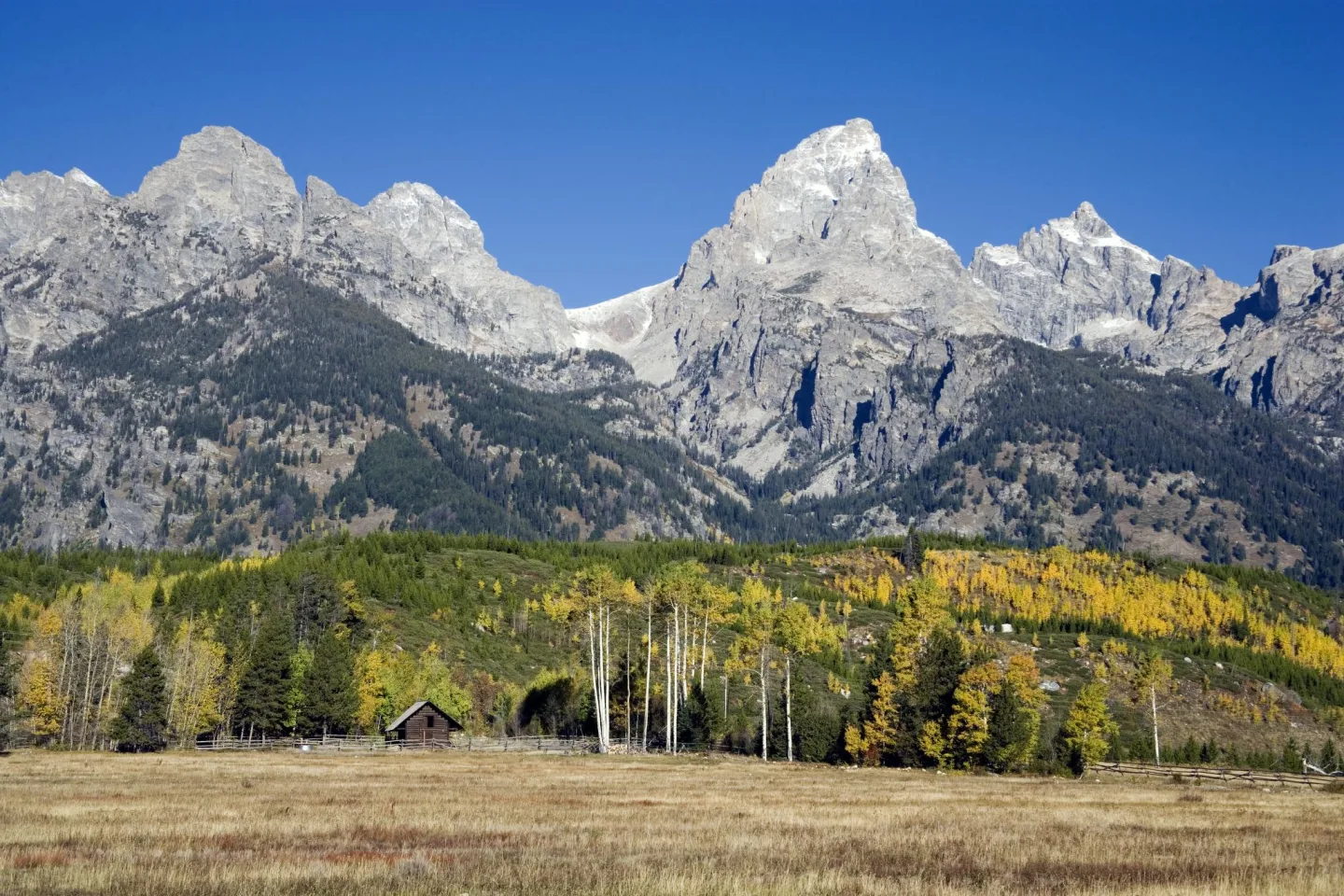
Summer into early fall is the window, but September is the month locals wait for. The aspen groves turn molten gold against the granite, and the elk rut fills the valley with the eerie, whistling bugles of bull elk competing for mates. Mornings turn crisp, the light goes long and warm, and the whole valley feels charged.
Two of the park's best hikes reward the effort. Cascade Canyon is a moderate 9–10 mile walk reached by the Jenny Lake boat shuttle, climbing into a glacier-carved cleft. Delta Lake is the strenuous prize: an off-trail scramble gaining about 2,300 ft to a startlingly turquoise lake fed by glacial flour, right under the face of Grand Teton.
The Rockefeller Connection
The park owes much of its size to John D. Rockefeller Jr., who quietly bought up Jackson Hole ranchland and donated it; a 1950 expansion folded that land into the park established in 1929. His name lives on in the John D. Rockefeller Jr. Memorial Parkway, the land corridor that links Grand Teton north to Yellowstone, stitching the two parks into a single wild route. Little wonder the Tetons draw about 3.5 million visitors a year.
Key concepts
Jenny Lake
- One of a string of cold, clear glacial lakes strung along the base of the Teton Range.
- Mirror-still on calm mornings, it is the most photographed and most useful of the park's lakes.
- A boat shuttle ferries hikers across it to the mouth of Cascade Canyon.
Jackson Lake
- One of the glacial lakes dammed by moraines along the foot of the Teton Range.
- It is the largest lake in the park.
- Its broad waters spread directly beneath the summit of Mount Moran.
Delta Lake
- A high lake reached not by maintained trail but by a steep off-trail scramble.
- The strenuous route gains about 2,300 feet to reach it.
- Fed by glacial flour, it glows a startling turquoise right under the face of Grand Teton.
Snake River Overlook
- A roadside viewpoint of the park's most famous vista, a river curling in a silver bend toward the peaks.
- Ansel Adams photographed the scene here in 1942, creating a defining image of the American West.
- A copy of that black-and-white photo rode aboard the Voyager spacecraft toward the stars.
Mormon Row
- A dirt lane on the sagebrush flats where Latter-day Saint homesteaders settled in the early 1900s.
- The pioneers dug irrigation ditches and raised barns in the shadow of the peaks.
- Its T.A. Moulton Barn is often called one of the most photographed barns in America.
Key facts
A String of Glacial Lakes
Glaciers flowing out of the canyons left a string of jewel-like lakes along the base of the range — Jenny, Jackson, Leigh, and String among them. Each sits where a glacier paused and dumped its load of rubble, damming the meltwater behind it. Jackson Lake is the largest; Jenny is the most photographed, its boat shuttle the gateway to Cascade Canyon.
13,775 Feet
Grand Teton, the sharp granite pyramid that gives the park its name, rises to 13,775 feet — the tallest summit in the range.
The Teton Fault
As the Teton Fault slips, the mountain block tilts upward while the valley block drops down — a geologic seesaw that is exactly why the range has no foothills.
Grizzlies, Moose, and Elk
Grand Teton sits in the wildlife-rich Greater Yellowstone Ecosystem: grizzly and black bears, moose wading the willow flats, pronghorn on the sage, and one of North America's great elk migrations. Each winter the National Elk Refuge just south of the park shelters roughly 7,000–10,000 elk, drawn down from the high country by snow.
September Gold
Summer into early fall is prime time, but September is the magic month: the aspen groves turn molten gold, and the elk rut fills the valley with the eerie, whistling bugles of bull elk. Crisp mornings, golden light, and the great cycle of the wild on full display under the peaks.
The Jackson Hole Buyer
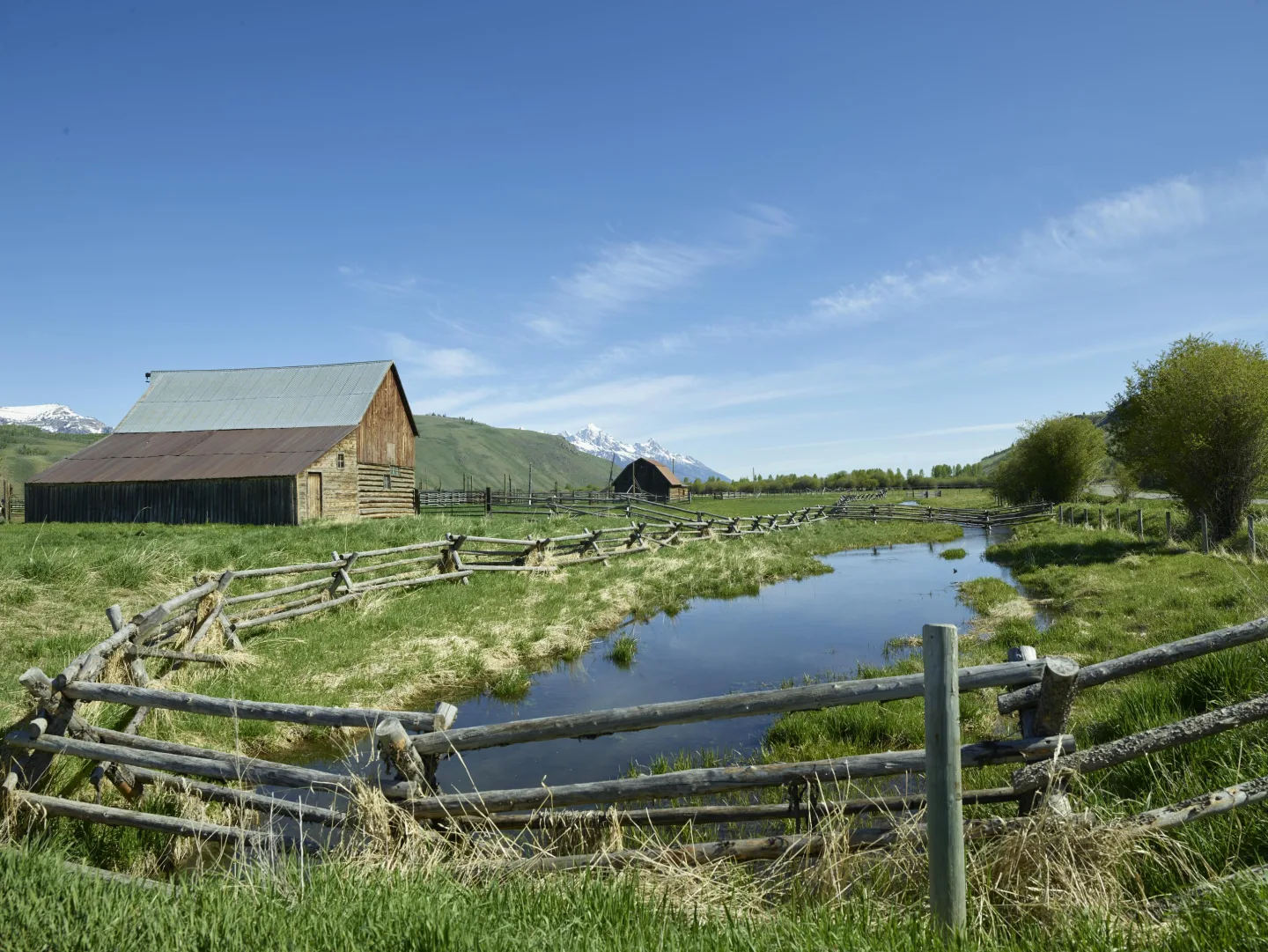
John D. Rockefeller Jr. quietly bought up ranch land in Jackson Hole and donated it, and a 1950 expansion folded that land into Grand Teton National Park — the Rockefeller Parkway still bears his name.
By the numbers
- How high is Grand Teton, the range's tallest peak?
- 13775 ft
- About how many vertical feet does the Teton Range rise above the valley floor?
- 7000 ft
- Over roughly how many millions of years has the Teton Fault uplifted the range?
- 10 million years
- About how many people visited Grand Teton in 2024?
- 3500000 visitors
- About how many elk winter on the National Elk Refuge just south of the park (upper estimate)?
- 10000 elk
Matched pairs
Each item on the left goes with the one on the right.
- Jackson Hole
- The flat valley below the Tetons that dropped as the peaks rose
- Fault-block range
- Mountains lifted along a fault as one block tilts up and another drops
- Jenny Lake
- Glacier-carved lake at the foot of Cascade Canyon, with a boat shuttle
- Jackson Lake
- The largest of the park's lakes, beneath Mount Moran
- Delta Lake
- Strenuous off-trail climb to a turquoise glacier-fed lake (~2,300 ft gain)
- Cascade Canyon
- Moderate ~9–10 mi hike reached via the Jenny Lake boat shuttle
- Schwabacher Landing
- Quiet Snake River beaver ponds famous for mirror reflections of the peaks
- John D. Rockefeller Jr. Memorial Parkway
- The land corridor that links Grand Teton north to Yellowstone
Self-test
Answer each question from memory, then check your work against the answer key.
1. What makes the Tetons unusual among Rocky Mountain ranges?
- AThey were built by colliding glaciers
- BThey are the oldest range in the Rockies
- CThey are made entirely of volcanic ash
- DThey are among the youngest, with no foothills
2. How high does Grand Teton, the range's tallest peak, crest?
- A13,775 ft
- B12,183 ft
- C10,000 ft
- D14,505 ft
3. The Teton Range climbs roughly how many vertical feet straight out of Jackson Hole?
- A3,000 ft
- B7,000 ft
- C13,775 ft
- D10,000 ft
4. As the Teton Fault slips, how do the two blocks move?
- ABoth blocks push upward together
- BTwo blocks slide sideways past each other
- CThe mountain block tilts up while the valley block drops down
- DThe valley rises as the peaks erode away
5. Over roughly how long has the Teton Fault uplifted the range, making it one of the youngest Rockies?
- A500,000 years
- B1 billion years
- C10 million years
- D100 million years
6. Which is the largest lake in the park, spreading beneath Mount Moran?
- AJackson Lake
- BLeigh Lake
- CJenny Lake
- DString Lake
7. A boat shuttle ferries hikers across which lake to the mouth of Cascade Canyon?
- AJackson Lake
- BString Lake
- CLeigh Lake
- DJenny Lake
8. What did each canyon glacier leave behind that dammed the meltwater into lakes?
- ALimestone reefs
- BMoraines — piles of ground-up rock
- CFresh lava flows
- DWind-blown sand dunes
9. Which of these is NOT one of the string of glacial lakes along the base of the range?
- ALeigh Lake
- BCrater Lake
- CJackson Lake
- DJenny Lake
10. Along with Jenny and Jackson, which two lakes are part of the string at the range's base?
- ABear and Trout
- BCrater and Tahoe
- CLeigh and String
- DLouise and Moraine
11. Which weathered landmark on Mormon Row is called one of the most photographed barns in America?
- AMenor's Ferry
- BCunningham Cabin
- CChapel of the Transfiguration
- DT.A. Moulton Barn
12. Whose famous 1942 black-and-white photograph immortalized the view from Snake River Overlook?
- AAnsel Adams
- BCarleton Watkins
- CDorothea Lange
- DEdward Weston
13. Which animal gathers by the thousands on the refuge south of the park each winter, driven down by deep snow?
- AElk
- BBison
- CMoose
- DPronghorn
14. The strenuous off-trail scramble to Delta Lake ends at a lake of what startling color, from glacial flour?
- ADark navy
- BMilky white
- CSlate gray
- DTurquoise
15. Which spot is known for quiet beaver ponds that mirror the peaks at sunrise?
- ACascade Canyon
- BSchwabacher Landing
- CMormon Row
- DSnake River Overlook
16. Which animal is Grand Teton's signature species, famed for its September rut and bugling calls?
- AMoose
- BPronghorn
- CElk
- DBison
17. Which animal wades the willow flats of Grand Teton?
- ABison
- BPronghorn
- CMoose
- DGrizzly bears
18. Whose 1929-established donation of land greatly expanded Grand Teton in 1950?
- AAndrew Carnegie
- BJohn D. Rockefeller Jr.
- CTheodore Roosevelt
- DHenry Ford
19. The John D. Rockefeller Jr. Memorial Parkway links Grand Teton north to which neighboring park?
- AYellowstone
- BZion
- CGlacier
- DRocky Mountain
20. In what year did the expansion fold Rockefeller's donated ranchland into Grand Teton National Park?
- A1929
- B1916
- C1972
- D1950
21. How did John D. Rockefeller Jr. help enlarge Grand Teton?
- AHe quietly bought up Jackson Hole ranchland and donated it
- BHe funded mapping of the Teton Fault
- CHe lobbied Congress to raise entry fees
- DHe built the Jenny Lake boat shuttle
22. Which statement about the Rockefeller connection to Grand Teton is NOT true?
- ARockefeller quietly bought up Jackson Hole ranchland
- BThe parkway links Grand Teton north to Yellowstone
- CA 1950 expansion folded his donated land into the park
- DThe Rockefeller Parkway is a scenic railroad line
Go deeper
- WatchNo Foothills The Teton Range has no foothills. It rises roughly 7,000 vertical feet, straight out of flat ground.
- WatchSnake River Overlook A photo of the Tetons rode aboard the Voyager spacecraft. It was one of humanity's images sent toward the stars.
- StudyU.S. National Parks in the FlashFeed app
Answer key
- 1. D They are among the youngest, with no foothillsUplifted along the Teton Fault over only ~10 million years, the Tetons are one of the youngest Rocky ranges — and they rise straight from the valley with no foothills.
- 2. A 13,775 ftGrand Teton crests at 13,775 ft — the sharp granite pyramid that gives the park its name.
- 3. B 7,000 ftThe range rises ~7,000 vertical feet with no foothills — one of the most abrupt mountain fronts in North America. 13,775 ft is Grand Teton's summit height, not the relief.
- 4. C The mountain block tilts up while the valley block drops downIt is a seesaw along one fault: the peaks rose as Jackson Hole sank, which is exactly why there are no foothills.
- 5. C 10 million yearsBuilt along the Teton Fault over roughly 10 million years, the Tetons are geologically young for the Rocky Mountains.
- 6. A Jackson LakeJackson Lake is the largest, beneath Mount Moran; Jenny is smaller but the most photographed.
- 7. D Jenny LakeJenny Lake, the most photographed, has a boat shuttle that turns the long approach to Cascade Canyon into a short one.
- 8. B Moraines — piles of ground-up rockGlaciers dumped rubble piles called moraines, which acted as natural dams behind which the lakes pooled.
- 9. B Crater LakeJenny, Jackson, Leigh, and String line the range's base; Crater Lake is in Oregon, not the Tetons.
- 10. C Leigh and StringJenny, Jackson, Leigh, and String are among the necklace of glacial lakes; Crater, Tahoe, Louise, and Moraine lie in other regions entirely.
- 11. D T.A. Moulton BarnThe T.A. Moulton Barn on Mormon Row, framed by the full sweep of the Tetons, is famously one of America's most photographed barns.
- 12. A Ansel AdamsAnsel Adams photographed the Snake River bend in 1942; a copy later rode aboard the Voyager spacecraft toward the stars.
- 13. A ElkRoughly 7,000–10,000 elk winter on the National Elk Refuge near Jackson — one of North America's great seasonal mammal gatherings.
- 14. D TurquoiseDelta Lake glows turquoise from suspended glacial flour, reached by a strenuous ~2,300-ft off-trail climb under Grand Teton.
- 15. B Schwabacher LandingSchwabacher Landing's glassy Snake River beaver ponds give the classic mirror reflection of the Tetons at sunrise.
- 16. C ElkElk are the park's signature animal; each September, bulls fill the valley with whistling bugles during the rut.
- 17. C MooseMoose wade the willow flats of Grand Teton, part of the wildlife-rich Greater Yellowstone Ecosystem.
- 18. B John D. Rockefeller Jr.Rockefeller quietly bought up Jackson Hole ranch land and donated it; a 1950 expansion folded it into the park. The Rockefeller Parkway still bears his name.
- 19. A YellowstoneThe parkway is a land corridor stitching Grand Teton to Yellowstone into a single wild route.
- 20. D 1950The park was established in 1929; a 1950 expansion added Rockefeller's quietly purchased Jackson Hole land.
- 21. A He quietly bought up Jackson Hole ranchland and donated itRockefeller quietly purchased Jackson Hole ranchland and gave it to the park; the parkway still bears his name.
- 22. D The Rockefeller Parkway is a scenic railroad lineThe parkway is a land corridor, not a railroad. Rockefeller did quietly buy and donate Jackson Hole ranchland, added by the 1950 expansion, and the parkway links the park to Yellowstone.
Sources
- U.S. National Parks — Grand Teton
Image credits
- A String of Glacial Lakes: S. Zenner · Public domain — commons.wikimedia.org/wiki/File:String_Lake_Grand_Teton_National_Park.jpg
- September Gold: Library of Congress · Grand Teton National Park, Wyoming · No known restrictions (verify at source) — www.loc.gov/item/2010630937/
- The Jackson Hole Buyer: Library of Congress · Ranch fencing in Jackson Hole, locals' term for a valley, in · No known restrictions (verify at source) — www.loc.gov/item/2017884248/
