
U.S. National Parks study guide · Lesson 22 of 27
Spotlight: Sequoia
The Biggest Trees on Earth · Roof of the Lower 48 · Visiting Sequoia
This is the lesson's study guide from the FlashFeed app, plus its key facts and a self-test.
What you'll be able to do
- Explain what makes giant sequoias and General Sherman the biggest trees on Earth.
- Identify Sequoia's high country, from Mount Whitney to Moro Rock and Crystal Cave.
- Plan a Sequoia visit around its trails, quirks, and season.
The Biggest Trees on Earth
Some places impress with height, others with age. Sequoia National Park impresses with sheer mass — it protects the most colossal living things that have ever grown. Established in 1890 as the country's second national park, it exists chiefly to guard one kind of tree: the giant sequoia.
The Giant Sequoia
Giant sequoias are the largest living things on Earth measured by volume. They are not the tallest trees — that title goes to their coastal cousins, the coast redwoods — nor the oldest, which are the gnarled bristlecone pines. What sets a giant sequoia apart is bulk: a single mature tree can weigh more than a thousand tons and live two to three thousand years. They grow naturally in only one place on the planet, the western slopes of California's Sierra Nevada, in scattered groves perched roughly between 4,500 and 7,000 feet of elevation. Their fibrous, cinnamon-red bark can grow a foot or more thick.
General Sherman
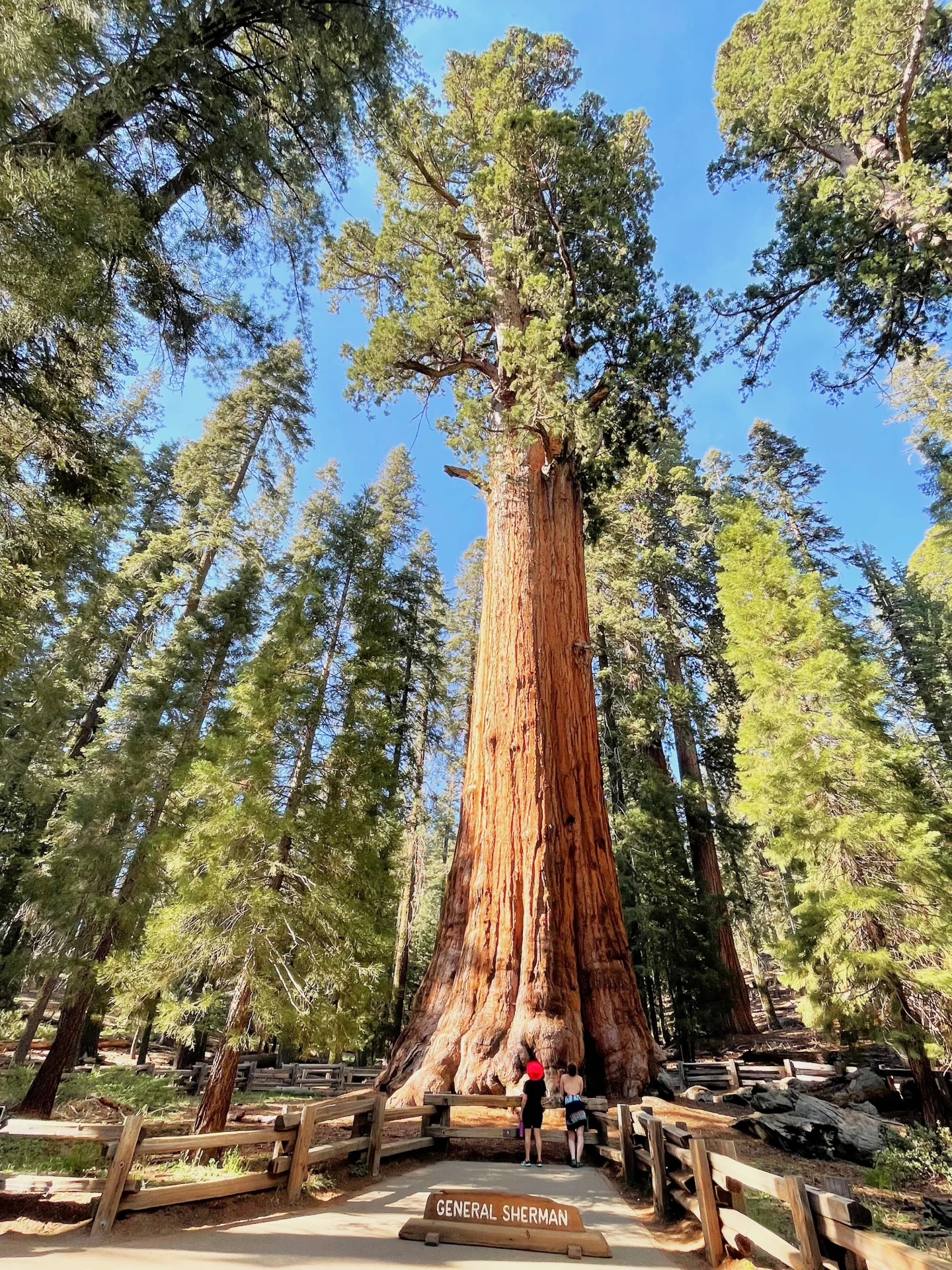
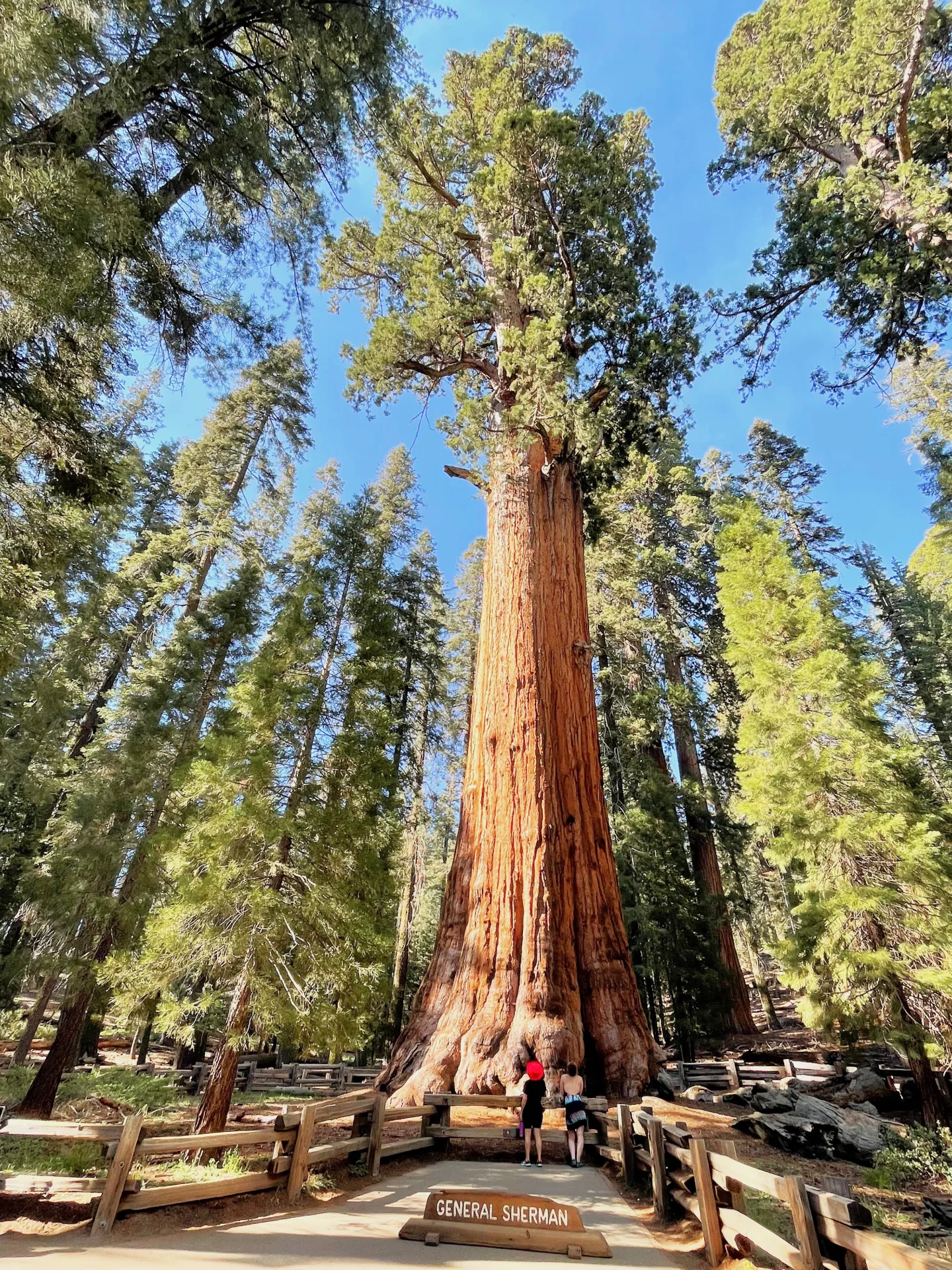
The single most famous tree in those groves is General Sherman, the largest single-stem tree on Earth by volume — about 52,500 cubic feet of wood. It stands roughly 275 feet tall, carries a base diameter near 36 feet, and is estimated to be around 2,200 years old, meaning it was already a sapling centuries before the Roman Empire fell. It is neither the tallest tree alive nor the widest, but no other living thing concentrates so much wood into one trunk. A low railing now keeps admirers from compacting the soil over its shallow roots.
The Giant Forest
General Sherman doesn't stand alone. It anchors the Giant Forest, the park's premier grove and home to five of the ten largest trees on Earth. The naturalist John Muir walked into it in 1875 and named it, judging it the grandest sequoia grove he had ever seen. A web of trails — most famously the paved Congress Trail — lets visitors wander among the giants, passing named clusters that stand shoulder to shoulder like assemblies of ancient elders.
Trees That Need Fire
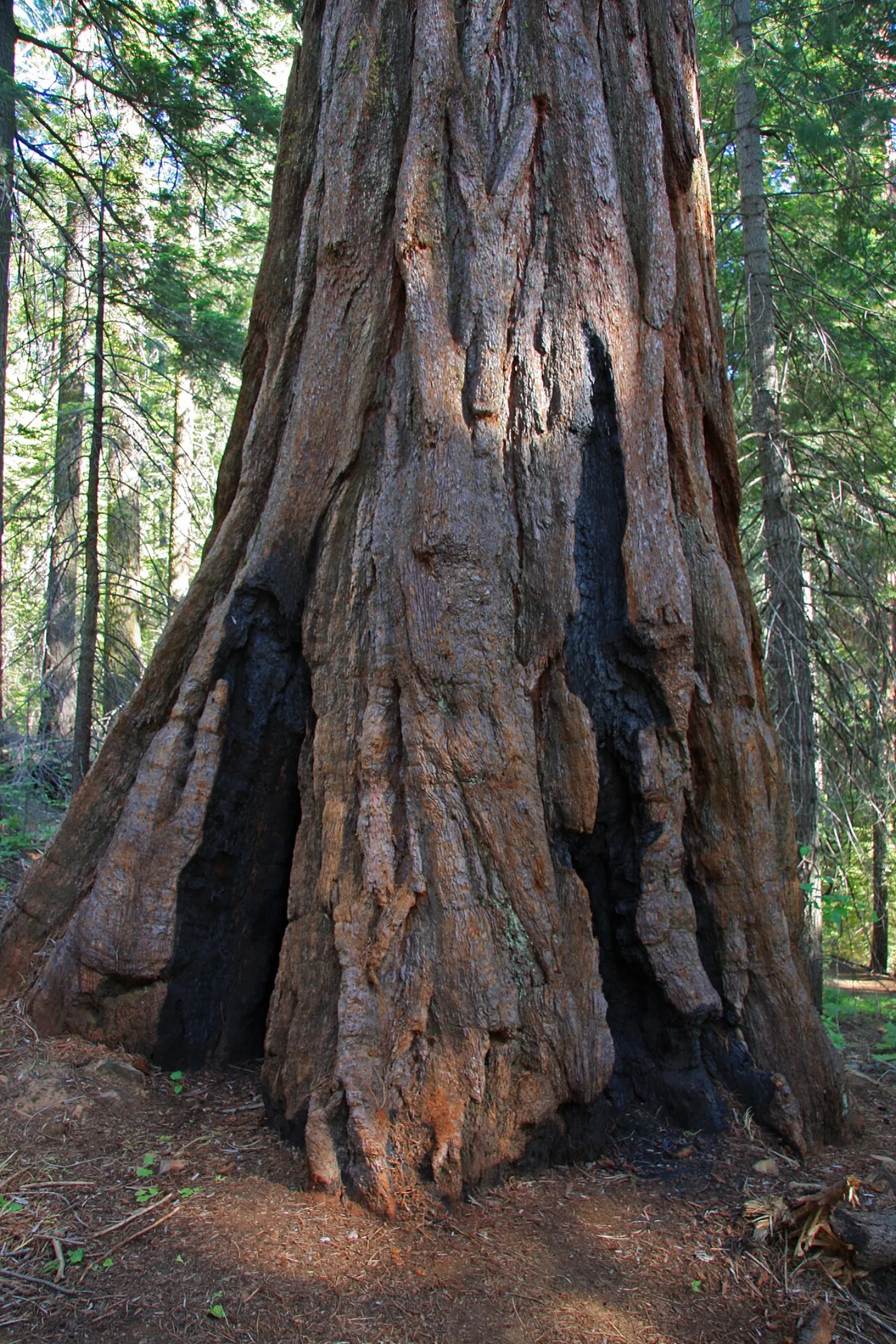
The strangest fact about these giants is that they depend on fire. Their thick, tannin-rich bark makes them nearly fireproof, and a passing wildfire does them a favor: its heat dries and cracks open their tightly sealed cones, scattering seeds onto bare, ash-cleared soil where sunlight reaches the ground and seedlings can take hold. For much of the twentieth century, well-intentioned fire suppression kept flames out of the groves — and the giants stopped reproducing. That hard lesson reshaped how the parks manage fire, bringing controlled burns back to the forest floor.
Together these facts make Sequoia's first lesson: this is a park built around trees that are biggest by volume, ancient beyond easy imagining, and quietly reliant on the very fire that seems most likely to destroy them.
Roof of the Lower 48
Sequoia is famous for its trees, but look up from the groves and the land keeps climbing — past forest, past treeline, all the way to the highest ground in the contiguous United States. This part follows the park upward, from hot foothills to bare alpine granite, with a marble cavern hidden in between.
Mount Whitney
On Sequoia's eastern boundary rises Mount Whitney, 14,505 feet — the highest peak in the contiguous United States, the literal roof of the lower 48. Its summit is bare granite, the high point of the vast Sierra Nevada batholith that forms the range's backbone. Reaching the top is a serious undertaking: the classic route runs about 22 miles round trip and demands a wilderness permit that is awarded by a competitive lottery. The mountain sits on the park's edge, so its summit looks east out of Sequoia entirely, toward the deserts of the Owens Valley far below.
Moro Rock
Closer to the groves, Moro Rock offers a summit almost anyone can earn. It is a great granite dome bulging from a forested ridge, and a stairway of more than 350 steps — carved and built into the stone by Civilian Conservation Corps crews in the 1930s — climbs its flank. The trail is only about half a mile, but it delivers a sweeping panorama over the Great Western Divide and the deep canyon of the Middle Fork Kaweah River. Few short hikes anywhere repay the effort so richly.
Crystal Cave
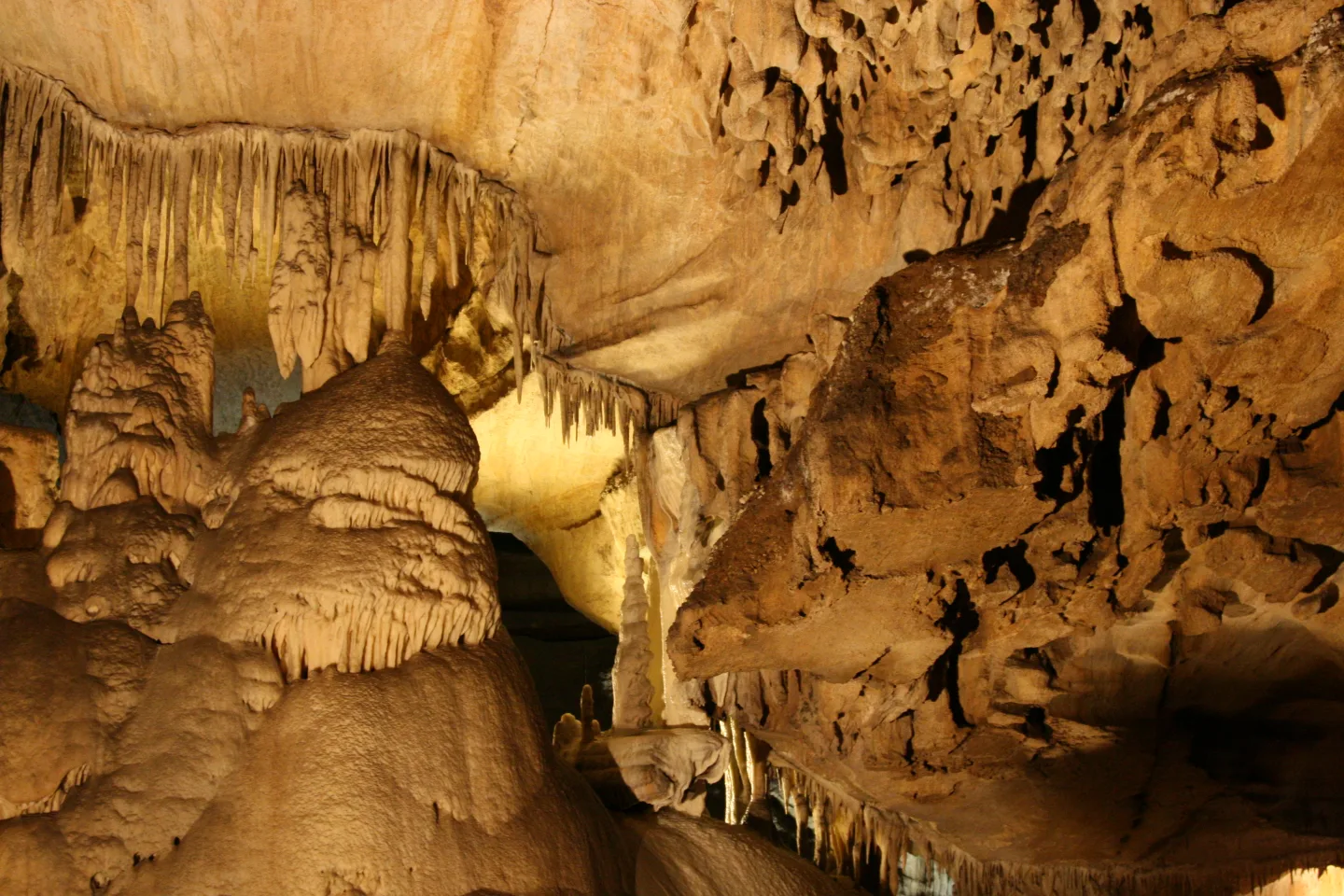
Beneath the granite peaks lies a different kind of wonder. Crystal Cave is a cool marble cavern dissolved by water through karst rock, its chambers polished smooth and hung with stalactites, stalagmites, and draped flowstone. It is a startling counterpoint to the world above — fiery red sequoias and sun-bleached alpine granite give way underground to pale, glistening stone. The cave is open seasonally and visited only by guided tour, which keeps its delicate formations intact.
Foothills to Alpine
What ties all of this together is range — vertical range. Sequoia climbs from roughly 1,300 feet in its hot, dry foothill chaparral, up through the giant sequoia montane forest, to the bare alpine summit of Mount Whitney at 14,505 feet. That is a rise of more than 13,000 feet within a single park. The gradient stacks entire ecosystems atop one another: oak and yucca scrub at the bottom, ancient conifers in the middle, and lichen-crusted granite swept by wind at the top. Travel from the entrance to the high country and you pass through climate zones that, at sea level, would be separated by thousands of miles of latitude.
The roof of the lower 48, a stone stairway to a dome-top view, a marble cave, and an ecosystem ladder over two and a half vertical miles — Sequoia's high country is every bit as superlative as its trees.
Visiting Sequoia
Knowing what Sequoia protects is one thing; knowing how to walk among it is another. This part is the practical guide — the trails that put you beside the giants, the quirks worth a photo, the seasons that open the high country, and the etiquette that keeps both you and the park's bears safe.
The Congress Trail
Almost every visit begins at General Sherman, and the natural next step is the Congress Trail, a paved loop of about two miles through the heart of the Giant Forest. It threads past named clusters of giants — the House and the Senate, where sequoias stand packed shoulder to shoulder — and the towering President Tree. The path is gentle and well graded, making it the easiest way on Earth to walk among the largest living things on the planet. Go early, before the crowds, and the grove feels like a cathedral.
Tunnel Log
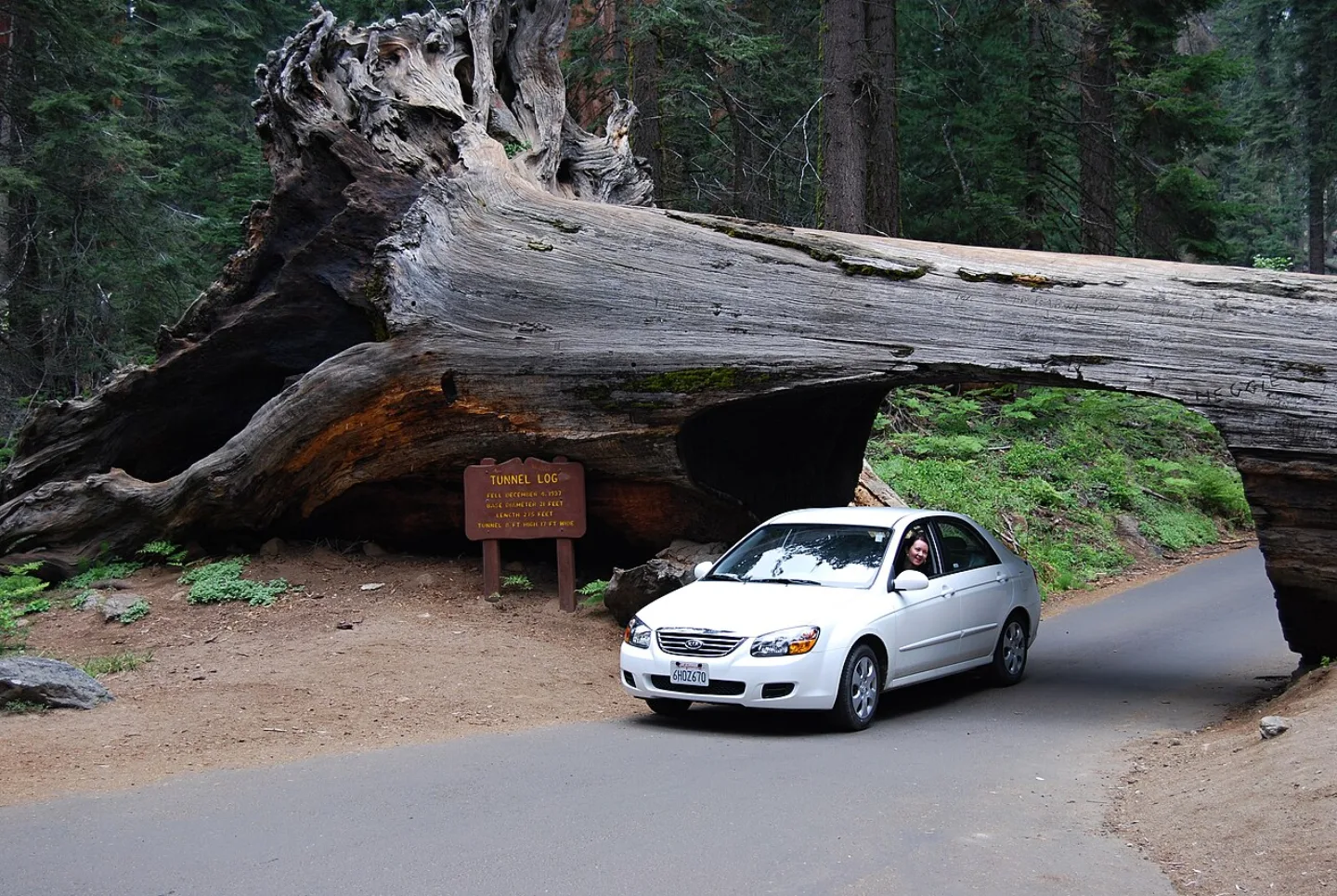
One of Sequoia's most beloved curiosities was an accident. In 1937 a giant sequoia — about 275 feet tall — toppled across a park road. Rather than haul it away, crews cut a passage straight through the fallen trunk: the Tunnel Log, an opening about 8 feet tall and 17 feet wide. Visitors still steer their cars beneath it for one of the park's classic photographs, a small car framed inside the body of a tree.
Black Bears and Food Storage
Sequoia's forests are black bear country, and bears have an extraordinary nose for anything that smells like food. The park requires that food, trash, and all scented items be locked in steel bear boxes or approved canisters — never left in a parked car, where a determined bear can peel a door open for a cooler. This isn't bureaucracy; it's protection. A bear that learns to raid cars becomes a danger and often has to be killed. Proper food storage keeps the bears wild and visitors safe.
Planning your visit
A few practical notes round out a trip. Moro Rock's stairway climbs more than 350 steps to its viewpoint, a short but breath-stealing effort at altitude. The summit of Mount Whitney, by contrast, is a roughly 22-mile round-trip expedition requiring a permit — a goal for serious hikers, not a casual afternoon. For timing, the high country is best from summer to early fall, once snow has cleared; the Giant Forest stays accessible most of the year, though tire chains may be required in winter. And remember that Sequoia is managed jointly with neighboring Kings Canyon National Park to the north — one continuous wild landscape under two names, easily explored together on a single trip.
Walk the Congress Trail, drive through a fallen tree, lock up your snacks, climb a dome of stairs, and time it for summer: that is how you meet Sequoia on its own grand terms.
Key concepts
Giant Forest
- The park's premier sequoia grove, home to five of the ten largest trees on Earth.
- The naturalist John Muir walked into it in 1875 and judged it the grandest grove he had ever seen.
- General Sherman anchors it, and the paved Congress Trail winds among its towering trunks.
Mount Whitney
- On Sequoia's eastern boundary rises the literal roof of the lower 48.
- At 14,505 feet, it is the highest peak in the contiguous United States.
- Its bare granite summit, reached by a ~22-mile round trip and a lottery permit, looks east over the Owens Valley.
Moro Rock
- A great granite dome bulging from a forested ridge, a summit almost anyone can earn.
- A stairway of more than 350 steps, built by Civilian Conservation Corps crews in the 1930s, climbs its flank.
- The half-mile climb opens a panorama over the Great Western Divide and the Middle Fork Kaweah River.
Crystal Cave
- A cool underground wonder dissolved by water through karst rock beneath the granite peaks.
- Its polished marble chambers are hung with stalactites, stalagmites, and draped flowstone.
- Open only seasonally and by guided tour, it is a pale counterpoint to the red sequoias above.
Congress Trail
- A paved loop of about two miles through the heart of the Giant Forest.
- It threads past named clusters called the House and the Senate, where sequoias stand shoulder to shoulder.
- Starting at General Sherman, it passes the towering President Tree — the easiest walk among Earth's largest living things.
Key facts
The Giant Forest
The Giant Forest is Sequoia's crown jewel of groves — home to five of the ten largest trees on Earth, including General Sherman. Naturalist John Muir named it in 1875, calling it the grandest sequoia grove he had seen. A network of trails, including the Congress Trail, threads among these ancient giants.
Trees That Need Fire
Giant sequoias are nearly fireproof — their thick, tannin-rich bark resists flame — and they actually depend on fire to survive as a species. Heat from a passing wildfire dries and opens their cones, releasing seeds onto bare, ash-cleared soil where seedlings can take root. Decades of well-meaning fire suppression starved the groves of new growth, a lesson that reshaped how the parks manage fire.
Not Even the Tallest
The General Sherman Tree stands roughly 275 feet tall, but height isn't its record — coast redwoods grow taller. What makes it the largest tree on Earth is the sheer volume of wood packed into its single trunk.
Moro Rock
Moro Rock is a great granite dome jutting from the forested ridge, reached by a stairway of more than 350 steps carved and built into the stone in the 1930s. From the top, a sweeping panorama opens over the Great Western Divide and the deep canyon of the Middle Fork Kaweah River — a half-mile climb that rewards far beyond its length.
Crystal Cave
Beneath Sequoia's granite peaks hides Crystal Cave, a cool marble cavern carved by water through karst rock. Its polished chambers are draped with stalactites, stalagmites, and flowing formations — a striking contrast to the fiery red sequoias and bare alpine granite above ground. The cave is open seasonally by guided tour.
Foothills to Alpine
Few parks span so much vertical world. Sequoia climbs from about 1,300 feet in its hot foothill chaparral, up through the giant sequoia montane forest, to the bare alpine summit of Mount Whitney at 14,505 feet — a rise of more than 13,000 feet. That gradient stacks ecosystems on top of one another, from oak and yucca to ancient conifers to lichen-crusted granite.
Over 350 Steps
During the New Deal in the 1930s, Civilian Conservation Corps crews carved and built the more-than-350-step stairway into Moro Rock's granite dome, opening a half-mile climb to sweeping views of the Great Western Divide.
Tunnel Log
When a giant sequoia fell across a park road in 1937, crews didn't haul it away — they cut a drive-through tunnel through its fallen trunk. Today's visitors steer their cars beneath the Tunnel Log, an 8-foot-tall, 17-foot-wide passage carved through a tree that stood about 275 feet tall, for one of the park's most beloved photo stops.
Black Bears and Food Storage
Black bears roam Sequoia's forests, and they have keen noses for anything that smells like a meal. The park requires food, trash, and scented items to be locked in steel bear boxes or canisters — never left in a car, where a determined bear can peel a door open. Proper food storage keeps both bears and visitors safe.
The Visiting Window
Sequoia's high country stays snowed in for much of the year, opening up only in summer and early fall. The Giant Forest itself stays accessible most of the year, though chains may be required in winter.
One Landscape, Two Names
Sequoia and Kings Canyon are run together as one continuous wild landscape under two separate names, making it easy to explore both parks on a single trip.
By the numbers
- How tall is the General Sherman Tree?
- 275 ft
- About how old is the General Sherman Tree, in years?
- 2200 years
- Roughly how much wood, in cubic feet, makes up the General Sherman Tree?
- 52500 cubic feet
- In what year was Sequoia established as a national park?
- 1890 year
- How high is Mount Whitney, the tallest peak in the contiguous US?
- 14505 ft
- About how low, in feet, does Sequoia's elevation drop in its foothills?
- 1300 ft
- About how many steps climb the Moro Rock stairway?
- 350 steps
- About how long, in miles, is the round-trip hike to Mount Whitney's summit?
- 22 miles
Matched pairs
Each item on the left goes with the one on the right.
- General Sherman
- Largest single-stem tree on Earth by volume
- Giant Forest
- Grove holding 5 of the 10 biggest trees on Earth
- Mount Whitney
- Highest peak in the contiguous US (14,505 ft)
- Crystal Cave
- Underground marble cavern of stalactites
- Moro Rock
- Granite dome climbed by 350+ stone steps
- Kings Canyon
- Neighbor park managed jointly with Sequoia
- Tunnel Log
- Drive-through tunnel cut in a fallen sequoia
Step by step
How a wildfire helps giant sequoias reproduce
- A wildfire passes through the grove
- Heat dries and cracks open the sealed cones
- Seeds scatter onto bare, ash-cleared soil
- Sunlight reaches the ground and seedlings take root
Decades of fire suppression broke this chain, and the groves stopped producing seedlings until controlled burns returned.
Self-test
Answer each question from memory, then check your work against the answer key.
1. What record do giant sequoias hold among all the trees on Earth?
- ALargest by volume (most massive)
- BTallest
- COldest
- DWidest trunk
2. Roughly how tall does the General Sherman Tree stand?
- A350 feet
- B500 feet
- C275 feet
- D145 feet
3. About how much wood, by volume, makes up the General Sherman Tree?
- A275,000 cubic feet
- B5,250 cubic feet
- C14,505 cubic feet
- D52,500 cubic feet
4. What distinction does Sequoia's Giant Forest hold among sequoia groves?
- AIt is the oldest grove of bristlecone pines
- BIt holds five of the ten largest trees on Earth
- CIt is the only grove outside California
- DIt is the tallest stand of coast redwoods
5. Which statement about the giant sequoia is NOT true?
- AIts cinnamon-red bark can grow over a foot thick
- BIt grows naturally only in California's Sierra Nevada
- CIt is the largest living thing by volume
- DIt is the tallest tree species on Earth
6. Moro Rock is climbed by a stairway of more than 350 steps built into its granite dome. Who constructed it, and when?
- AU.S. Army engineers in the 1910s
- BThe Civilian Conservation Corps in the 1930s
- CJohn Muir's trail crews in the 1870s
- DThe Works Progress Administration in the 1950s
7. How high is Mount Whitney, the highest peak in the contiguous United States?
- A14,000 feet
- B12,505 feet
- C14,505 feet
- D20,320 feet
8. Which best describes Sequoia's Crystal Cave?
- AA marble cavern of stalactites carved by water through karst
- BA granite dome climbed by stone steps
- CA grove of the park's largest sequoias
- DThe summit of the Sierra Nevada batholith
9. Which best describes Moro Rock?
- AA granite dome reached by a stairway of 350+ stone steps
- BAn underground marble cavern of stalactites
- CA drive-through passage cut in a fallen tree
- DThe highest granite peak in the lower 48
10. From its foothills near 1,300 feet up to Mount Whitney, Sequoia climbs a vertical range of more than how many feet?
- A5,000 feet
- B13,000 feet
- C8,000 feet
- D22,000 feet
11. When is the best time to explore Sequoia's high country?
- ALate autumn
- BMidwinter
- CEarly spring
- DSummer to early fall
12. What is the Congress Trail that most Sequoia visitors walk after seeing General Sherman?
- AThe guided tour route inside Crystal Cave
- BThe stone stairway up Moro Rock
- CA paved ~2-mile loop through the Giant Forest
- DThe ~22-mile route to Mount Whitney's summit
13. What is Sequoia's Tunnel Log?
- AA natural rock arch over a park road
- BA passage cut through a fallen sequoia that cars drive under
- CA highway tunnel bored through a granite ridge
- DA living tree with a hole carved through its standing trunk
14. How does Sequoia require visitors to store food and scented items in bear country?
- ASealed in a cooler inside a parked car
- BBuried a short distance from camp
- CHung from a high tree branch
- DLocked in steel bear boxes or approved canisters
15. Sequoia is managed jointly with which neighboring national park to its north?
- AYosemite
- BDeath Valley
- CKings Canyon
- DLassen Volcanic
Go deeper
Answer key
- 1. A Largest by volume (most massive)Giant sequoias are the most massive trees on Earth by volume. They aren't the tallest (that's the coast redwoods) nor the oldest (bristlecone pines) nor the widest — their record is sheer bulk of wood.
- 2. C 275 feetGeneral Sherman stands about 275 feet tall. Its record isn't height — coast redwoods are taller — but the sheer volume of wood packed into its single trunk.
- 3. D 52,500 cubic feetGeneral Sherman holds roughly 52,500 cubic feet of wood — the most of any single-stem tree on Earth, which is exactly what makes it the largest tree by volume.
- 4. B It holds five of the ten largest trees on EarthThe Giant Forest, named by John Muir in 1875, is home to five of the ten largest trees on Earth, including General Sherman. Bristlecones and redwoods are different species entirely.
- 5. D It is the tallest tree species on EarthGiant sequoias are the most massive trees but not the tallest — that record belongs to the coast redwoods. The other three statements are all accurate.
- 6. B The Civilian Conservation Corps in the 1930sNew Deal Civilian Conservation Corps crews carved and built the 350-plus-step stairway into Moro Rock in the 1930s. The half-mile climb opens a sweeping view over the Great Western Divide and the Kaweah canyon.
- 7. C 14,505 feetMount Whitney rises 14,505 feet on Sequoia's eastern boundary — the roof of the lower 48. (20,320 feet is closer to Denali in Alaska.)
- 8. A A marble cavern of stalactites carved by water through karstCrystal Cave is a cool marble cavern dissolved through karst rock, hung with stalactites and flowstone — a stark contrast to the granite peaks above. The dome is Moro Rock.
- 9. A A granite dome reached by a stairway of 350+ stone stepsMoro Rock is a granite dome climbed by a stairway of more than 350 steps for a panorama over the Great Western Divide. The cavern is Crystal Cave; the peak is Mount Whitney.
- 10. B 13,000 feetRising from about 1,300 feet to Whitney's 14,505-foot summit is a gain of more than 13,000 feet, stacking whole ecosystems from foothill chaparral to alpine granite.
- 11. D Summer to early fallThe high country opens up in summer and early fall once snow clears; the Giant Forest stays accessible most of the year (chains may be required in winter).
- 12. C A paved ~2-mile loop through the Giant ForestThe Congress Trail is a paved two-mile loop through the Giant Forest past clusters like the House and Senate — the easiest way to walk among the giants. The Whitney and Moro routes are separate.
- 13. B A passage cut through a fallen sequoia that cars drive underAfter a sequoia fell across a road in 1937, crews cut an 8-by-17-foot passage through the fallen trunk — the Tunnel Log — which visitors still drive beneath. The tree is down, not standing.
- 14. D Locked in steel bear boxes or approved canistersThe park requires food, trash, and scented items to be locked in steel bear boxes or approved canisters. A determined bear can peel open a car door for a cooler, so cars are not allowed.
- 15. C Kings CanyonSequoia and Kings Canyon are run together as one continuous wild landscape under two names, easily explored on a single trip. The other parks are elsewhere in California.
Sources
- U.S. National Parks — Sequoia National Park
Image credits
- The Giant Forest: Wikimedia Commons · Marty Aligata · CC BY-SA 4.0 — commons.wikimedia.org/wiki/File:General_Sherman_Tree_in_Sequoia_National_Park_-_June_2022.jpg
- Trees That Need Fire: Dcrjsr · CC BY 3.0 — commons.wikimedia.org/wiki/File:Fire_scars_in_sequoia_trunk.jpg
- Crystal Cave: Wikimedia Commons · Vgane at English Wikipedia · CC BY 2.5 — commons.wikimedia.org/wiki/File:CrystalCave_vgane.JPG
- Tunnel Log: Pavel Špindler · CC BY 3.0 — commons.wikimedia.org/wiki/File:Sequoia_N.P._-_Tunnel_Log_-_panoramio.jpg
- The Visiting Window: Wikimedia Commons · Marty Aligata · CC BY-SA 4.0 — commons.wikimedia.org/wiki/File:General_Sherman_Tree_in_Sequoia_National_Park_-_June_2022.jpg


