
Philosophy: The Big Questions study guide · Lesson 5 of 15
Early Modern Philosophy
Rationalism · Empiricism · Kant & the Social Contract
This is the lesson's study guide from the FlashFeed app, plus its key facts and a self-test.
What you'll be able to do
- Explain rationalist metaphysics: Descartes' dualism, Spinoza and Leibniz
- Trace empiricism: Locke's blank slate, Berkeley's idealism, Hume on causation
- Explain Kant's a priori epistemology and his Categorical Imperative in ethics
- Identify Hobbes and Rousseau and explain Rousseau's general will
- Recall the publication years of Leviathan, Locke's Essay, and Kant's Critique
The 17th century reopened philosophy's oldest question with new force: where does genuine knowledge come from? The Rationalists answered with one word — reason. Inspired by the certainty of mathematics, they trusted pure thought over the wobbly evidence of the senses. This part follows that confidence from its most famous starting point, Descartes' attempt to doubt his way down to bedrock, out to the bold systems Spinoza and Leibniz built on reason alone.
Reason as the Source of Truth
Rationalism holds that reason, not sense experience, is the primary source of knowledge. Its three giants — Descartes, Spinoza, and Leibniz — believed the mind contains innate ideas and can reach certain truths by thinking alone, the way geometry proves theorems from self-evident axioms without measuring anything. The senses, they warned, deceive: sticks look bent in water, dreams feel real. Only reason is steady enough to anchor knowledge. This trust in deduction set them against the Empiricists, who insisted all ideas must enter through the senses.
Descartes' Radical Doubt
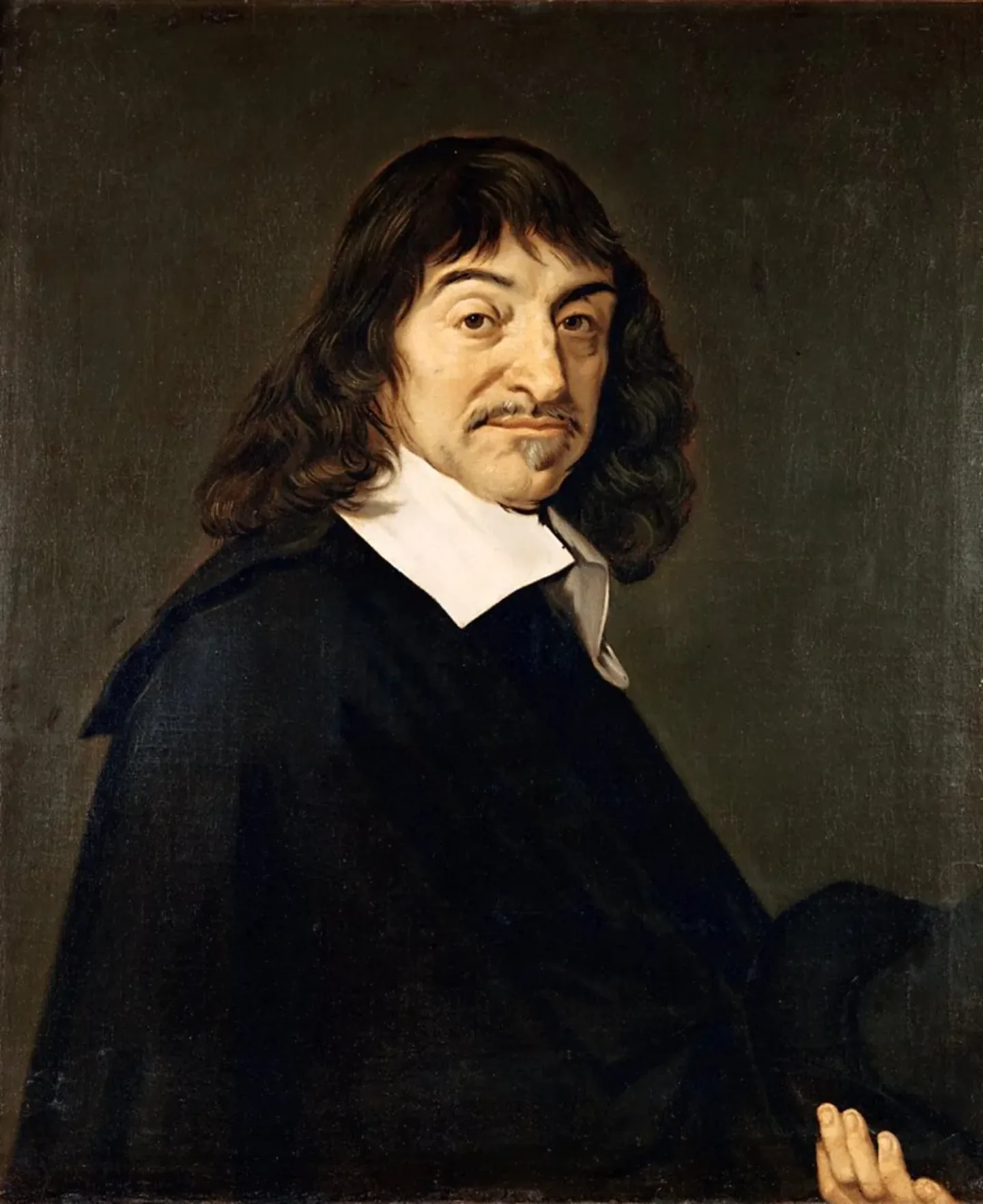
René Descartes (1596–1650) wanted to rebuild knowledge from scratch on an unshakable foundation. His method was deliberately extreme: doubt everything that can possibly be doubted, and keep only what survives. He first targeted the senses — since they sometimes mislead (the bent stick, vivid dreams), they cannot be a secure base. A single proven deception was enough for him to set them aside entirely. This is "methodical" doubt: not despair, but a tool for finding certainty by stripping away everything uncertain.
The Evil Demon
To push doubt to its limit, Descartes imagined an all-powerful, malicious demon bent on deceiving him about everything — faking the physical world, other people, his own body, even making him believe 2 + 2 = 5. It is a stress test: if anything can survive this, it is truly certain. The Evil Demon is the direct ancestor of modern "brain in a vat" and Matrix scenarios, and it sets up the dramatic turn of the cogito.
"I Think, Therefore I Am"
Here is Descartes' escape. Even if the demon deceives him about everything, there must still be a "him" being deceived. Doubting is a form of thinking, and thinking needs a thinker. The demon cannot deceive a non-existent mind. So the act of doubt proves the doubter exists: cogito ergo sum — "I think, therefore I am." Trying to doubt it only confirms it. On this single certainty Descartes attempted to rebuild all the rest of knowledge.
Mind-Body Dualism
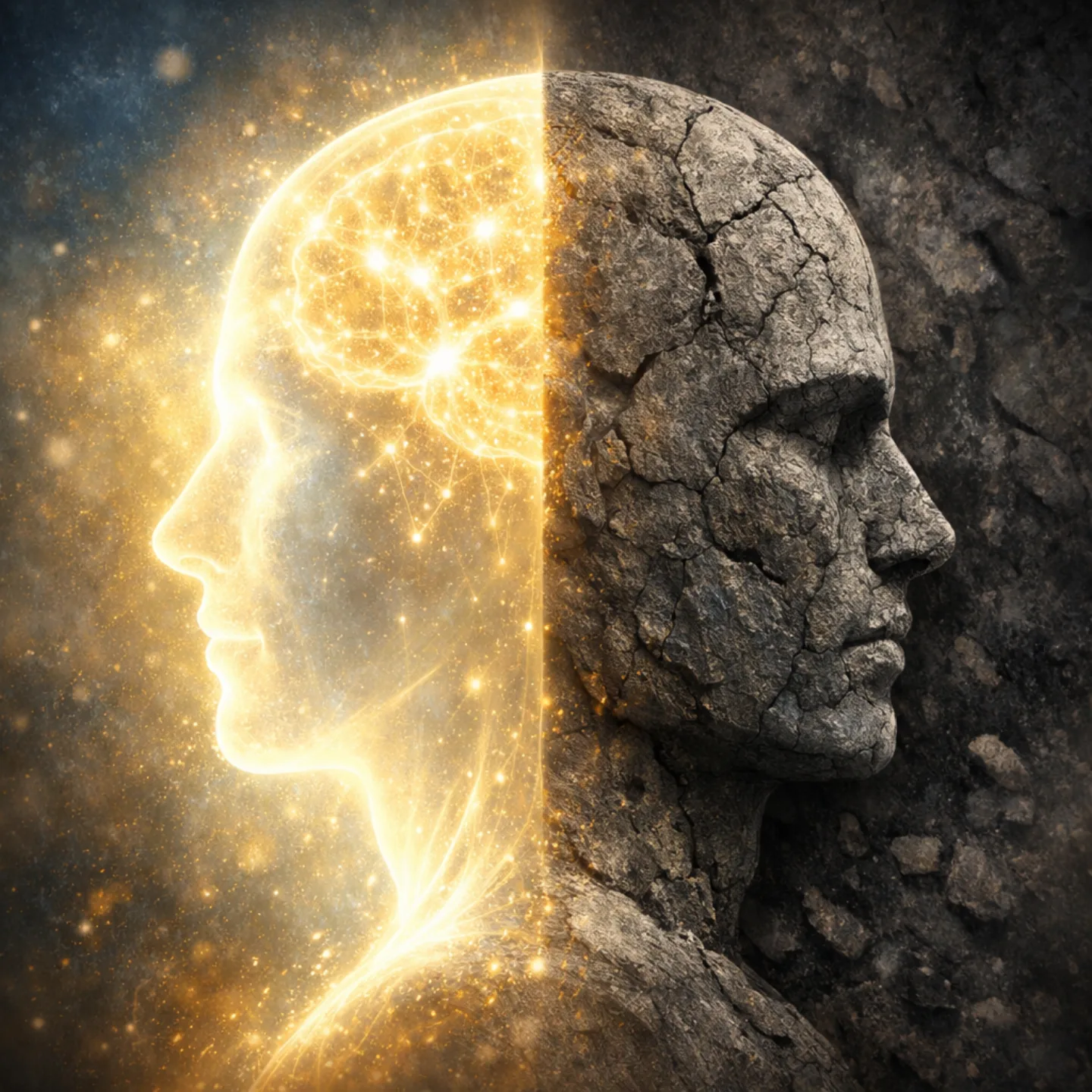
The cogito tells Descartes he is essentially a thinking thing (res cogitans), distinct from his body, an extended thing occupying space (res extensa). Mind and matter are two completely different substances — this is dualism. But it births a notorious puzzle: how can two such different kinds of stuff interact? How does a weightless thought lift an arm? This mind-body problem has never been solved and remains alive in philosophy of mind today.
Spinoza: God Is Nature
Baruch Spinoza (1632–1677) took rationalism somewhere radical. In his Ethics, written as geometric proofs, he argued there is only one substance: "God, or Nature" (Deus sive Natura). God is not a person beyond the world but the single infinite reality everything belongs to — a view called pantheism that got him expelled from his community. It made him a strict determinist: all things follow necessarily from God's nature, so freedom means understanding necessity, not escaping it. Leibniz, the third rationalist, built a different system of mind-like units called monads and called ours "the best of all possible worlds."
If the Rationalists trusted reason, the Empiricists trusted the senses. Mostly British — Locke, Berkeley, Hume — they argued that all knowledge enters through experience, and they followed that principle to surprising and sometimes unsettling conclusions. This part traces empiricism from Locke's hopeful "blank slate" through Berkeley's idealism to Hume's quiet bombshell: that even cause and effect may be a habit of the mind rather than a fact of the world.
Knowledge from Experience
Empiricism holds that sense experience, not reason alone, is the primary source of knowledge. There are no innate ideas; whatever is in the mind got there through the senses. Reason can sort and combine that material, but it cannot manufacture content from nothing. This made empiricism the natural partner of the new experimental science, which prized observation over speculation. The empiricists' shared starting point set the stage for their disagreements about how far the senses can actually take us.
Locke's Blank Slate
John Locke (1632–1704) opened his Essay Concerning Human Understanding (1689) by rejecting innate ideas. The mind at birth, he said, is a blank slate — tabula rasa — with no built-in knowledge at all. Every idea is written onto it by experience, through sensation (what the senses report) and reflection (the mind watching its own operations). A child raised in total darkness would have no idea of color. We are shaped, for Locke, by what we encounter — a profoundly egalitarian thought about human potential.
Locke and Natural Rights
Locke also founded political liberalism. He argued that people hold natural rights — to life, liberty, and property — that exist prior to any government and that no ruler may justly violate. Government is legitimate only by the consent of the governed, and exists to protect those rights; one that tramples them may rightfully be resisted. These ideas flowed almost directly into the American Declaration of Independence ("life, liberty, and the pursuit of happiness") nearly a century later.
Hume's Billiard Balls
David Hume (1711–1776) drove empiricism to its sharpest edge. Watch one billiard ball strike another that then rolls away. What did you actually perceive? Only this: first one ball moved and touched the second; then the second moved. You never see a necessary connection — a hidden force making the second ball move. We feel certain causation is there, but the senses never deliver it. George Berkeley (1685–1753), the third great empiricist, had pushed in a different direction: "to be is to be perceived," holding that objects exist only as ideas in minds.
The Problem of Induction
The billiard balls open onto a deeper crisis. We expect the sun to rise tomorrow because it always has — but this assumes the future will resemble the past. How do we know that? Only from past experience, which is exactly what's in question, so the reasoning is circular. Hume concludes there is no purely rational justification for induction; we rely on habit and custom, not proof. Since all of empirical science rests on induction, this quietly shakes its foundations — and famously "woke Kant from his dogmatic slumber."
Two grand projects close the early modern era. Immanuel Kant brokered a peace between rationalism and empiricism by relocating the action from the world to the mind itself — a move he likened to Copernicus turning astronomy inside out. Meanwhile the social contract tradition asked a separate question: why should anyone obey the state? Hobbes, Locke, and Rousseau gave three rival answers that still shape political argument today.
Kant's Copernican Revolution
Immanuel Kant (1724–1804) synthesized the two warring camps. Before him, philosophers assumed the mind passively receives knowledge — the world stamps itself on us. Kant inverted this, his "Copernican revolution": the mind actively structures experience. Space, time, and causality are not things we find in the world but the lenses through which we are built to perceive anything. We therefore never know things "in themselves," only as they appear through these forms. This answered Hume: causality is genuine for us because it is how any mind must organize experience.
The Categorical Imperative
Kant's supreme moral law turns on one test: Can I will that my maxim become a universal law for everyone? Consider the lying promise: you need money and plan to promise repayment you know is impossible. Universalize the rule — if everyone made false promises, no one would trust a promise, so promising itself would collapse and your scheme couldn't even work. The maxim self-destructs when universalized, so it is forbidden. Morality, for Kant, lies in the form of our reasoning and binds regardless of consequences — the approach called deontology.
Treat humanity as an end
Kant gave a second formulation of the same law: "Act so that you treat humanity, whether in your own person or that of another, always as an end and never as a means only." To lie to or manipulate someone is to use them as a mere tool, bypassing their rational agency — their capacity to decide for themselves with the facts. This is why such acts are wrong in themselves, not merely because of their results. People are ends in themselves, never just instruments for our purposes.
A priori knowledge
Kant relied on a key distinction. A priori knowledge holds independently of experience, graspable by thought alone — that 7 + 5 = 12, or that every event has a cause. A posteriori knowledge comes only from observing the world. Crossing this with another pair — analytic truths (true by definition, "all bachelors are unmarried") versus synthetic truths (which add new information) — Kant asked his central question: are there synthetic a priori truths, substantive claims knowable before experience? He thought mathematics and the principle of causality were exactly that.
Hobbes: Escaping the State of Nature
Thomas Hobbes (1588–1679) imagined life with no government — the state of nature — and found it terrifying: a "war of all against all" where life is "solitary, poor, nasty, brutish, and short." To escape, rational people strike a social contract, surrendering near-absolute power to a sovereign — his Leviathan (1651) — in return for security. Even a harsh ruler, Hobbes held, beats the chaos of none. Authority rests not on divine right but on this rational bargain among the governed.
Rousseau and the General Will
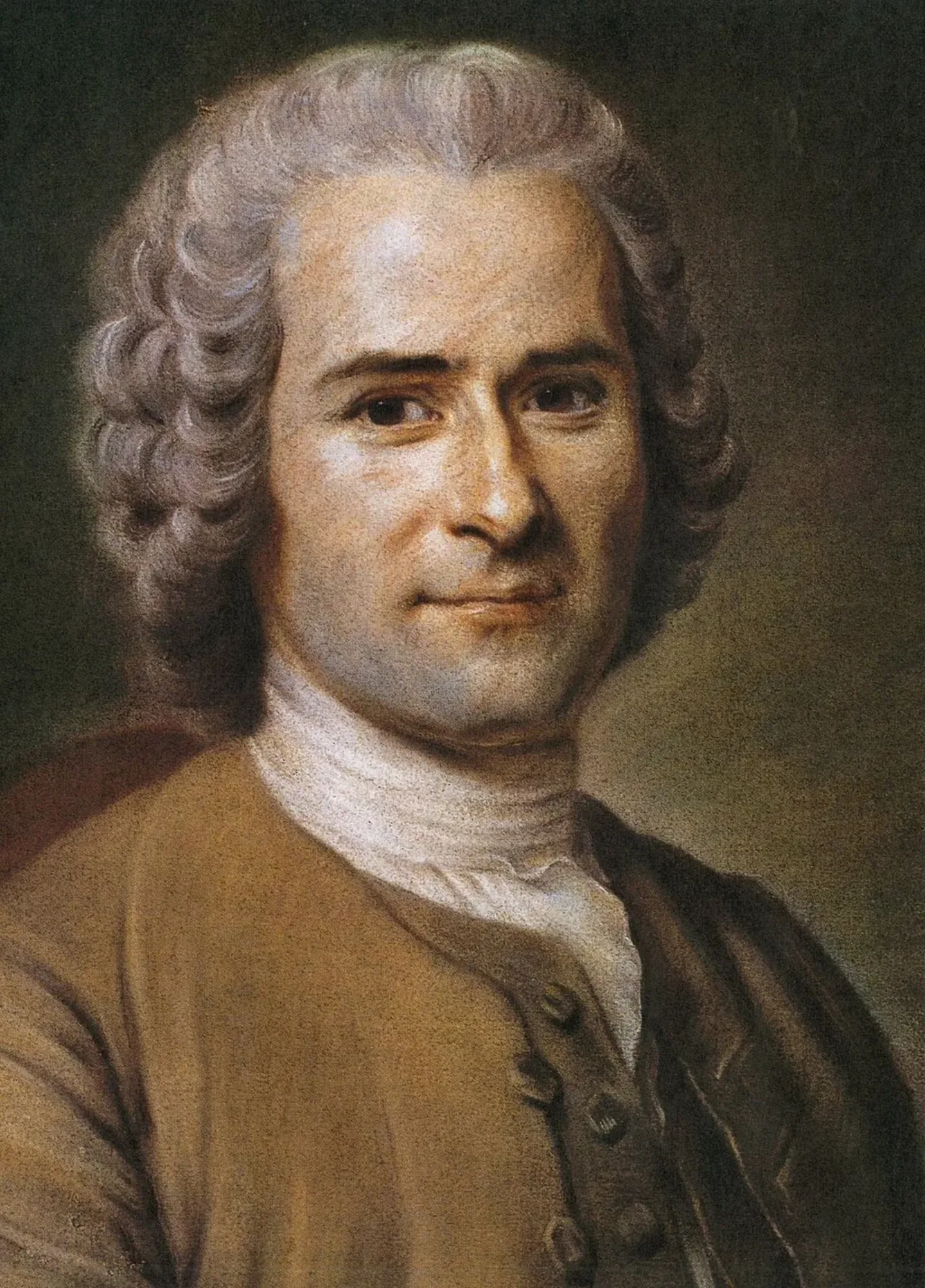
Jean-Jacques Rousseau (1712–1778) reversed Hobbes. Humans in their natural state were free and basically good — nearer the "noble savage" — and society corrupted them: "Man is born free, and everywhere he is in chains." His remedy was a contract in which citizens govern themselves by the general will: what the community truly wills for the common good, not the mere sum of private wants. Obeying the general will, he argued, is how we remain free under law. Locke offered the middle path — government by consent, bound to protect natural rights. Rousseau's vision helped ignite the French Revolution.
Key terms
- Constant conjunction (Hume)
- The mere repeated observation of one type of event regularly followed by another — all we actually perceive of "cause and effect." After enough repetitions the mind forms a habit of expecting the second event, and mistakes that habit for a real necessity in the world.
- A priori knowledge
- Knowledge that holds independently of experience, graspable by thought alone — for example that 7 + 5 = 12, or that every event has a cause. Contrasted with a posteriori knowledge, which can only be gained by observing the world.
Key concepts
Spinoza
- A 17th-century rationalist who wrote his masterwork in the form of geometric proofs.
- He argued there is only one substance, which he called 'God, or Nature,' a pantheism that got him expelled from his community.
- A strict determinist, he held that all things follow necessarily from that single infinite reality, so freedom means understanding necessity.
Locke
- A British empiricist who flatly denied there are any innate ideas.
- He held the mind at birth is a blank slate, a tabula rasa, written on only by experience.
- He also founded political liberalism, arguing for natural rights to life, liberty, and property, and government by the consent of the governed.
Berkeley
- One of the three great British empiricists, he pushed the movement toward idealism.
- He held that objects exist only as ideas within minds.
- His slogan captures it: 'to be is to be perceived.'
Hobbes
- An early modern thinker who imagined human life with no government at all, and found it terrifying.
- He called that condition a 'war of all against all,' where life is 'solitary, poor, nasty, brutish, and short.'
- His remedy, argued in Leviathan, was a social contract handing near-absolute power to a sovereign in return for security.
Rousseau
- An early modern thinker who reversed the gloomy view of humanity's natural state.
- He held that people were free and basically good by nature, nearer the 'noble savage,' and that society corrupted them.
- Famous for 'Man is born free, and everywhere he is in chains,' he grounded legitimate rule in the general will.
Key facts
Reason as the Source of Truth
The 17th century opened a great divide over a single question: where does knowledge come from? The Rationalists — Descartes, Spinoza, Leibniz — answered: from reason. The mind contains innate ideas and can reach certain truth by pure thinking, the way mathematics proves theorems without ever consulting the senses. Geometry was their ideal: start from self-evident axioms, deduce the rest. The senses, they warned, are unreliable; only reason is trustworthy enough to build knowledge on.
Descartes' Radical Doubt
René Descartes (1596–1650) set out to rebuild all knowledge from scratch. His method: doubt everything that can possibly be doubted, and see what — if anything — survives. He noticed the senses sometimes deceive (a stick looks bent in water; dreams feel real while we sleep). If the senses can mislead us even once, he reasoned, they cannot be a secure foundation. So he set them aside and pushed his doubt as far as it could go.
Mind-Body Dualism
From the cogito Descartes drew a sweeping conclusion: he is fundamentally a thinking thing (res cogitans), while his body is an extended thing (res extensa) — matter occupying space. These are two completely different substances. But this creates a famous puzzle: how do two utterly different kinds of stuff interact? How does a weightless thought move a physical arm? This is the mind-body problem, and after four centuries it has never been solved — it remains central to philosophy of mind today.
Spinoza: God Is Nature
Baruch Spinoza (1632–1677) took rationalism to a startling conclusion. In his Ethics — written like a geometry textbook, with definitions, axioms and proofs — he argued there is only one substance, which he called "God, or Nature" (Deus sive Natura). God is not a person outside the world but the single infinite reality of which everything is a part. This pantheism got him expelled from his Amsterdam Jewish community. It also made him a strict determinist: everything follows necessarily from God's nature, so true freedom is understanding that necessity, not escaping it.
Knowledge from Experience
Against the Rationalists stood the Empiricists — Locke, Berkeley, Hume — mostly British, who answered the same question very differently: knowledge comes from sense experience, not from reason alone. There are no innate ideas; everything in the mind got there through the five senses. Reason can shuffle and combine what experience supplies, but it cannot conjure new content from nothing. This emphasis on observation over speculation made empiricism the natural philosophy of the new experimental science.
Locke's Blank Slate
John Locke (1632–1704) opened his Essay Concerning Human Understanding (1689) by denying innate ideas outright. The mind at birth, he said, is a "blank slate" — tabula rasa — with no built-in knowledge whatsoever. Every idea is written onto it by experience: by sensation (what the senses report) and reflection (the mind observing its own operations). A child raised in total darkness and silence would have no ideas of color or sound. We are, for Locke, made by what we encounter.
Locke and Natural Rights
Locke was also a founder of political liberalism. He held that people possess natural rights — to life, liberty, and property — that exist before any government and that no ruler may justly violate. Government is legitimate only by the consent of the governed, and its job is to protect those rights; a regime that tramples them may rightfully be resisted. These ideas flowed almost word-for-word into the American Declaration of Independence ("life, liberty, and the pursuit of happiness") a century later.
The Problem of Induction
Hume's billiard balls lead to a deeper crisis. We believe the sun will rise tomorrow because it always has. But notice the hidden assumption: the future will resemble the past. How do we know that? Only from past experience — which is exactly what's in question. The reasoning is circular. Hume's verdict: there is no purely rational justification for induction. We rely on the future matching the past out of habit and custom, not proof. This quietly destabilizes the foundations of all of science — and "woke Kant from his dogmatic slumber."
Kant's Copernican Revolution
Immanuel Kant (1724–1804) fused rationalism and empiricism and changed philosophy forever. Before him, thinkers assumed the mind passively receives knowledge — the world impresses itself on us. Kant inverted this, his own "Copernican revolution": the mind actively structures experience. Space, time, and causality are not features we discover out there; they are the lenses through which we are built to see anything at all. We never know things "in themselves," only as they appear. This answered Hume: causality is real for us because it is how the mind must organize experience.

The Categorical Imperative
Kant's supreme moral law turns on one test: Can I will that my maxim become a universal law for everyone? Take the lying promise: you need money and plan to promise repayment you know you can't make. Now universalize the rule — what if everyone made false promises? Promising itself would collapse; no one would believe a promise, so yours couldn't work either. The maxim self-destructs when made universal — which means it is morally forbidden. For Kant, morality is about the form of our reasons, binding regardless of consequences (this is deontology).
Hobbes: Escaping the State of Nature
Thomas Hobbes (1588–1679) asked what life would be like with no government at all — the "state of nature." His answer was bleak: a "war of all against all," in which life is "solitary, poor, nasty, brutish, and short." To escape this terror, rational people agree to a social contract: they hand near-absolute power to a sovereign — his Leviathan (1651) — in exchange for security. For Hobbes, even a harsh ruler is better than the chaos of having none. Political authority rests not on divine right but on this rational bargain.
Rousseau and the General Will
Jean-Jacques Rousseau (1712–1778) flipped Hobbes. Humanity in its natural state, he suggested, was free and basically good — closer to the "noble savage" — and it was society that corrupted us: "Man is born free, and everywhere he is in chains." His remedy was a contract of a different kind: citizens unite and govern themselves according to the general will — what the community genuinely wills for the common good, not the mere sum of selfish wants. Obeying the general will, Rousseau argued, is how we stay free even under law. His ideas helped fire the French Revolution.
A Priori: Knowing Without Experience
In Kant's epistemology, a priori knowledge—like 7 + 5 = 12—holds independently of experience and is graspable by thought alone, unlike knowledge gained by observing the world.
By the numbers
- Year Kant published the Critique of Pure Reason
- 1781 year
- Year Hobbes published Leviathan
- 1651 year
- Year Locke published his Essay Concerning Human Understanding
- 1689 year
Matched pairs
Each item on the left goes with the one on the right.
- Res cogitans (Descartes)
- The "thinking thing" — the immaterial mind, whose essence is thought
- Res extensa (Descartes)
- The "extended thing" — physical matter, whose essence is occupying space
- Leibniz
- Rationalist who held reality is built from indivisible mind-like units (monads) and that this is "the best of all possible worlds"
- Tabula rasa (Locke)
- The mind at birth is a "blank slate" — all knowledge comes from experience
- Berkeley: "To be is to be perceived"
- Idealism — physical objects exist only as ideas in minds; there is no mind-independent matter
- Treat humanity as an end, never merely as a means (Kant)
- Always respect people as rational agents with their own ends — never use them as mere tools for your purposes
- Analytic vs. synthetic (Kant)
- Analytic: true by definition ("all bachelors are unmarried"). Synthetic: adds new information ("the cat is on the mat")
- The general will (Rousseau)
- What the whole community truly wills for the common good — not just the sum of individuals' private wants
Step by step
Descartes' method of finding one certainty
- Resolve to doubt everything that can possibly be doubted
- Notice the senses sometimes deceive, so reject them as a foundation
- Suppose an evil demon fakes even mathematics and the external world
- Notice that doubting is itself a kind of thinking
- Realize that thinking requires a thinker who exists
- Conclude: "I think, therefore I am"
Self-test
Answer each question from memory, then check your work against the answer key.
1. What is the famous "mind-body problem" that Descartes' dualism creates?
- AWhether a demon — all-powerful and malicious — could fake the body itself
- BHow two completely different substances — mind and matter — can interact
- CWhether the senses — once caught deceiving — can ever anchor knowledge
- DHow a thinker — deceived about everything else — can still know it exists
2. In Descartes' dualism, what is 'res cogitans'?
- AThe thinking thing, whose essence is thought
- BThe infinite thing, whose essence is nature
- CThe extended thing, whose essence is occupying space
- DThe deceiving thing, whose essence is illusion
3. Which thinker wrote his Ethics in the form of geometric proofs?
- ADescartes
- BLocke
- CSpinoza
- DHume
4. Spinoza argued there is only one substance, which he called 'God, or Nature.' What is this view called?
- AAtheism
- BIdealism
- CDualism
- DPantheism
5. Which rationalist held that reality is built from mind-like units called 'monads' and that ours is 'the best of all possible worlds'?
- ADescartes
- BSpinoza
- CLeibniz
- DBerkeley
6. According to Hume, what do we actually perceive when we watch one billiard ball strike another?
- AOne event followed by another — never the necessary connection between them
- BA logical proof that the second ball must move — not a mere expectation
- CThe hidden force that makes the second ball move — not merely its motion
- DThe mind's own expectation that it will move — not the ball's actual motion
7. Locke's 'tabula rasa' or blank slate claims that at birth the mind has what?
- AA full set of innate ideas; experience merely awakens them
- BNo built-in knowledge; every idea comes from experience
- CSpace, time, and causality as lenses; experience fills them
- DInnate truths of reason; the senses cannot add to them
8. Which philosopher held 'to be is to be perceived' — that objects exist only as ideas in minds?
- ADescartes
- BHume
- CLocke
- DBerkeley
9. What is the central claim of empiricism?
- AInnate ideas are the primary source of knowledge
- BUnaided reason is the primary source of knowledge
- CMemories from before birth are the primary source of knowledge
- DSense experience is the primary source of knowledge
10. Hume's 'problem of induction' concludes that our belief the future will resemble the past rests on what?
- AHabit and custom formed by repetition
- BMemory of a single vivid impression
- CDirect perception of a necessary connection
- DDeductive proof from self-evident premises
11. How does the Categorical Imperative show that making a false promise is wrong?
- ASummed across society, it lowers the total — each lie subtracts from happiness
- BWeighed by its results, it fails the test — the liar soon loses others' trust
- CUniversalized, it self-destructs — if everyone lied, promising itself would collapse
- DChecked against scripture, it stands condemned — divine law forbids deceit
12. What is the core of Kant's 'Copernican revolution' in epistemology?
- AThe world directly stamps space, time, and causality onto a receptive mind
- BThe mind actively structures experience through space, time, and causality
- CThe mind gradually derives space, time, and causality from repeated experience
- DThe mind fully knows things in themselves through space, time, and causality
13. What is a priori knowledge?
- AKnowledge that reaches things as they are in themselves, apart from appearances
- BKnowledge that is true merely by the definition of its terms, settled by analysis
- CKnowledge that comes only from observing the world, delivered by the senses
- DKnowledge that holds independently of experience, graspable by thought alone
14. Kant's second formulation says to treat humanity always as an end and never merely as what?
- AA means — a mere tool for your purposes
- BA body — a mere extended thing in space
- CA rival — a mere competitor for security
- DA case — a mere instance of a universal law
15. Kant held morality lies in the form of our reasoning and binds regardless of consequences. What is this approach called?
- AVirtue ethics
- BDeontology
- CCare ethics
- DUtilitarianism
16. How did Hobbes describe life in the 'state of nature' with no government?
- AFree, peaceful, innocent, and basically good
- BServile, unequal, and everywhere in chains
- CSolitary, poor, nasty, brutish, and short
- DOrderly, lawful, and governed by consent
17. What did Rousseau mean by the 'general will'?
- AWhat the wisest few discern for the good of the whole community
- BWhat the whole community truly wills for the common good
- CWhat the sovereign wisely wills for the security of the whole
- DWhat each citizen sincerely wills for their own household's good
18. Who wrote 'Man is born free, and everywhere he is in chains,' viewing society as corrupting a naturally good humanity?
- ALocke
- BMarx
- CRousseau
- DHobbes
19. Which claim reflects Hobbes rather than Rousseau?
- APeople are born free yet live everywhere in chains
- BSociety, not nature, corrupts an originally good humanity
- CObeying the general will keeps citizens free under law
- DLife without government is a war of all against all
20. A town sets aside private preferences to fund a park that benefits everyone. Which concept does this best illustrate?
- ARousseau's general will
- BHobbes's social contract
- CKant's categorical imperative
- DLocke's consent of the governed
21. In what year did Hobbes publish Leviathan?
- A1660
- B1629
- C1651
- D1642
22. In what year did Locke publish his Essay Concerning Human Understanding?
- A1671
- B1683
- C1695
- D1689
23. In what year did Kant publish the Critique of Pure Reason?
- A1781
- B1790
- C1785
- D1770
24. Kant's Critique of Pure Reason, his Copernican revolution in philosophy, appeared in which year?
- A1637
- B1781
- C1689
- D1651
25. Which work-and-year pairing is correct?
- AKant's Critique — 1859
- BHobbes's Leviathan — 1781
- CLocke's Essay — 1689
- DMill's On Liberty — 1651
26. In what year did Hobbes publish Leviathan?
- A1781
- B1651
- C1689
- D1637
27. Hobbes's Leviathan, which set out his social contract theory, appeared in which year?
- A1651
- B1637
- C1689
- D1781
28. In what year did Locke publish An Essay Concerning Human Understanding?
- A1651
- B1637
- C1781
- D1689
29. Locke's Essay Concerning Human Understanding, which rejected innate ideas, was published in which year?
- A1781
- B1651
- C1637
- D1689
30. In what year did Kant publish the Critique of Pure Reason?
- A1637
- B1781
- C1689
- D1651
Go deeper
- WatchThe Evil Demon In the 1600s, René Descartes tried to doubt everything that could be doubted.
- WatchKant's Test and the Social Contract Kant's moral test: could your rule become a law for everyone?
- WatchHume's Billiard Balls Watch one billiard ball strike another. What do you actually see?
- StudyPhilosophy: The Big Questions in the FlashFeed app
Answer key
- 1. B How two completely different substances — mind and matter — can interactIf mind and matter are wholly different substances, it becomes mysterious how a non-physical thought could move a physical body — a problem still unsolved.
- 2. A The thinking thing, whose essence is thoughtRes cogitans is the immaterial mind whose essence is thought; res extensa is the body, the extended thing occupying space. The two are distinct substances in Descartes' dualism.
- 3. C SpinozaSpinoza's Ethics is laid out as geometric proofs, deducing his one-substance system the way geometry derives theorems from axioms. Descartes, the other Rationalist here, rebuilt knowledge through methodical doubt; Locke and Hume were Empiricists.
- 4. D PantheismIdentifying God with the single infinite reality of Nature is pantheism, which got Spinoza expelled from his community. Dualism (Descartes) posits two substances, not one.
- 5. C LeibnizLeibniz built a system of indivisible mind-like units (monads) and coined 'the best of all possible worlds.' Berkeley was an empiricist, not a rationalist.
- 6. A One event followed by another — never the necessary connection between themWe see only constant conjunction — one thing then another. The "necessary connection" is a habit of expectation the mind projects onto the world.
- 7. B No built-in knowledge; every idea comes from experienceTabula rasa means the mind starts empty and is written on by experience through sensation and reflection. Locke explicitly rejected innate ideas.
- 8. D BerkeleyBerkeley's idealism denies mind-independent matter: things exist only as ideas being perceived. Locke and Hume accepted an external world reported by the senses, and Descartes held mind and matter to be two distinct substances.
- 9. D Sense experience is the primary source of knowledgeEmpiricism holds all ideas enter through the senses; reason only sorts that material. Innate ideas and reason-alone knowledge are the rationalist position it opposes.
- 10. A Habit and custom formed by repetitionJustifying induction by past experience is circular, so Hume says we rely on habit and custom, not reason. We never perceive a necessary connection — only constant conjunction — and one impression, however vivid, builds no expectation; only repetition does.
- 11. C Universalized, it self-destructs — if everyone lied, promising itself would collapseKant's test is universalizability, not consequences: a maxim that cannot coherently be willed as a universal law is forbidden. "Everyone makes false promises" destroys the very institution of promising.
- 12. B The mind actively structures experience through space, time, and causalityKant inverted the old picture: the mind supplies the forms (space, time, causality) through which we perceive anything, so we never know things in themselves. The forms are neither stamped on us by the world nor learned from repeated experience — they are what any mind brings to experience.
- 13. D Knowledge that holds independently of experience, graspable by thought aloneA priori knowledge (e.g., 7 + 5 = 12) holds independently of experience. Knowledge from observing the world is a posteriori; truth-by-definition is analytic, a different distinction; and things in themselves lie beyond knowledge of either kind.
- 14. A A means — a mere tool for your purposesTo lie to or manipulate someone uses them as a mere means, bypassing their rational agency. Treating them as an end and respecting their agency is exactly what Kant demands.
- 15. B DeontologyDeontology grounds morality in duty and the form of the maxim, not outcomes. Utilitarianism judges acts by their consequences for happiness; virtue ethics asks what a person of good character would do; care ethics grounds morality in relationships and attention to concrete context.
- 16. C Solitary, poor, nasty, brutish, and shortHobbes saw ungoverned life as a war of all against all — 'solitary, poor, nasty, brutish, and short.' The rosy view of natural humanity belongs to Rousseau, who blamed servility and chains on society rather than nature; government by consent is Locke's civil order, not anyone's state of nature.
- 17. B What the whole community truly wills for the common goodThe general will is the community's shared will aimed at the common good — not just an aggregate of private preferences, which is the distinction Rousseau stresses. Nor is it a sovereign's decree, as in Hobbes, or the judgment of a wise few: for Rousseau the citizens govern themselves.
- 18. C RousseauRousseau held humanity was free and good in nature — the 'noble savage' — and society corrupted it. Hobbes held the opposite bleak view of the state of nature; Locke grounded legitimate government in consent; and Marx's later target was class exploitation, not society as such.
- 19. D Life without government is a war of all against allThe 'war of all against all' is Hobbes's grim picture of the state of nature. The other three are Rousseau's: humanity born free but chained by society, society rather than nature corrupting a good humanity, and freedom under law through the general will.
- 20. A Rousseau's general willWilling the common good over private wants is exactly Rousseau's general will. Hobbes's contract surrenders power to a sovereign in return for security, Locke's consent concerns what makes a government legitimate, and the categorical imperative tests an individual's maxims.
- 21. C 1651Leviathan appeared in 1651, two years after the execution of Charles I. 1642 is the year of Hobbes's De Cive, 1660 the Restoration, and 1629 his translation of Thucydides.
- 22. D 1689Locke's Essay was published in 1689, soon after he returned from exile in Holland. He had begun drafting it in 1671, fled to Holland in 1683, and published The Reasonableness of Christianity in 1695.
- 23. A 1781The Critique of Pure Reason appeared in 1781. 1770 is Kant's Inaugural Dissertation, 1785 the Groundwork of the Metaphysics of Morals, and 1790 the Critique of Judgment.
- 24. B 1781The Critique of Pure Reason was published in 1781.
- 25. C Locke's Essay — 1689Locke's Essay was published in 1689. Leviathan was 1651, Kant's Critique 1781 and Mill's On Liberty 1859 — the other pairings shuffle those years onto the wrong works.
- 26. B 1651Hobbes published Leviathan in 1651, laying out his social contract theory.
- 27. A 1651Leviathan was published in 1651.
- 28. D 1689Locke's Essay Concerning Human Understanding appeared in 1689.
- 29. D 1689Locke's Essay was published in 1689.
- 30. B 1781Kant's Critique of Pure Reason appeared in 1781.
Sources
- Philosophy: A Comprehensive Study Guide
Image credits
- Descartes' Radical Doubt: Wikimedia Commons · After Frans Hals — commons.wikimedia.org/wiki/File:Frans_Hals_-_Portret_van_Ren%C3%A9_Descartes.jpg
- Mind-Body Dualism: AI-generated (gpt-image-1.5)
- The Categorical Imperative: AI-generated (gpt-image-1.5)
- Rousseau and the General Will: Wikimedia Commons · Maurice Quentin de La Tour — commons.wikimedia.org/wiki/File:Maurice_Quentin_de_La_Tour_-_Portrait_de_Jean-Jacques_Rousseau.jpg

