
Philosophy: The Big Questions study guide · Lesson 4 of 15
Medieval & Islamic Philosophy
Faith Meets Reason · Islamic Philosophy (Falsafa)
This is the lesson's study guide from the FlashFeed app, plus its key facts and a self-test.
What you'll be able to do
- Explain Aquinas's Five Ways as cosmological arguments reasoning from the world to God
- Identify the major Latin Scholastic thinkers and their signature contributions
- Define falsafa, the Greek-rooted rational-philosophy tradition of the medieval Islamic world.
- Explain Avicenna's Floating Man and his essence-versus-existence distinction
- Recognize Averroes as 'the Commentator' and his debate with al-Ghazali
When Rome fell, philosophy in the Latin West did not vanish — it moved into the monastery and the cathedral school, and bound itself to Christian theology. For nearly a thousand years its driving question was whether the truths of faith could be squared with the truths of reason. This part follows that project at its height: Anselm's daring attempt to prove God from a definition, Aquinas's grand synthesis of Aristotle and Christianity, and Ockham's lean principle that would outlive the age that made it.
Reconciling Faith and Reason
Medieval philosophy (c. 500–1400 CE) was largely integrated with theology, and its central task was reconciliation. Augustine (354–430) framed the early attitude — credo ut intelligam, "I believe so that I may understand" — pouring Plato into Christian doctrine. The later Scholastics inverted the emphasis: rather than starting from belief, they used disciplined logic, much of it Aristotle's, to demonstrate doctrines that faith already affirmed. Reason was not faith's rival but its servant and witness. This is the tension that gives the whole period its energy — and the assumption that the two could harmonize is exactly what Averroes and the modern era would later strain.
Anselm's Ontological Argument
In 1078 Anselm of Canterbury tried to prove God exists from the concept of God alone, with no appeal to the world — what later thinkers named the ontological argument. Define God as "that than which nothing greater can be conceived." A being that exists in reality is greater than one existing only as an idea. So a merely-imagined God would not be the greatest conceivable being, since a real one would be greater — a contradiction. Therefore God must exist in reality. It is "ontological" because it argues from being (Greek onta) and definition rather than from evidence. Few arguments have been so admired and so attacked; Kant would later reject it for treating existence as a property.
Gaunilo's Perfect Island
The argument was challenged at once. The monk Gaunilo offered a parody: define the "perfect island," the greatest conceivable island — by Anselm's reasoning it too must exist, which is plainly absurd. Anselm's reply drew a crucial distinction: God is a necessary being, whose nature is to exist, while an island is contingent — it merely happens to be, and could just as easily not be. The reasoning, he argued, applies uniquely to God. Whether the reply succeeds is still debated nearly a thousand years on, which is itself a measure of the argument's depth.
Aquinas and the Five Ways
Thomas Aquinas (1225–1274) produced the era's grandest synthesis, fusing the newly recovered Aristotle with Christian theology in his immense Summa Theologica. Unlike Anselm, he argued from the world. His Five Ways are cosmological arguments, each tracing a feature of reality back to God: (1) the Unmoved Mover behind all motion; (2) the First Cause behind all causation; (3) a necessary being behind all contingent things; (4) a maximum of perfection behind our gradations of good and true; (5) an intelligent designer behind nature's purposeful order. Together they reason from effects we observe to a first principle Aquinas identifies as God.
Ockham's Razor
William of Ockham (c. 1287–1347) bequeathed a principle that would later reshape science: "Entities must not be multiplied beyond necessity." When rival explanations fit the same evidence, prefer the simpler. Known as Ockham's Razor, it is a guide to choosing between theories, not a proof that the simplest is true — but it remains a working rule across the sciences. It also hints at a shift away from grand metaphysical systems toward economy and evidence, foreshadowing the empirical temper of the modern age.
As Greek learning thinned in the Latin West, the Islamic world became its great inheritor and interlocutor. From roughly 800 to 1200 CE, falsafa — philosophy in the Greek tradition — flourished across the caliphates. Its thinkers translated and then argued with Aristotle, produced original metaphysics and psychology, and ultimately handed much of this inheritance back to Christian Europe, where it helped ignite the work of Aquinas and others. This part traces that arc: the translation movement, Avicenna's striking case for the soul, and Averroes, the man Europe knew simply as "the Commentator."
The Flowering of Falsafa
For about four centuries (~800–1200 CE), philosophy in the Greek rational tradition thrived in the Islamic world, chiefly by translating and extending Aristotle. These thinkers were not passive curators: they raised new problems in metaphysics, logic, and the philosophy of mind, and disagreed sharply with one another and with the Greeks. Crucially, their commentaries and arguments later reached Christian Europe through Latin translation, where the recovered Aristotle reshaped Scholastic thought. The period is a reminder that the history of philosophy is not a single Western line but a relay across cultures.
The House of Wisdom
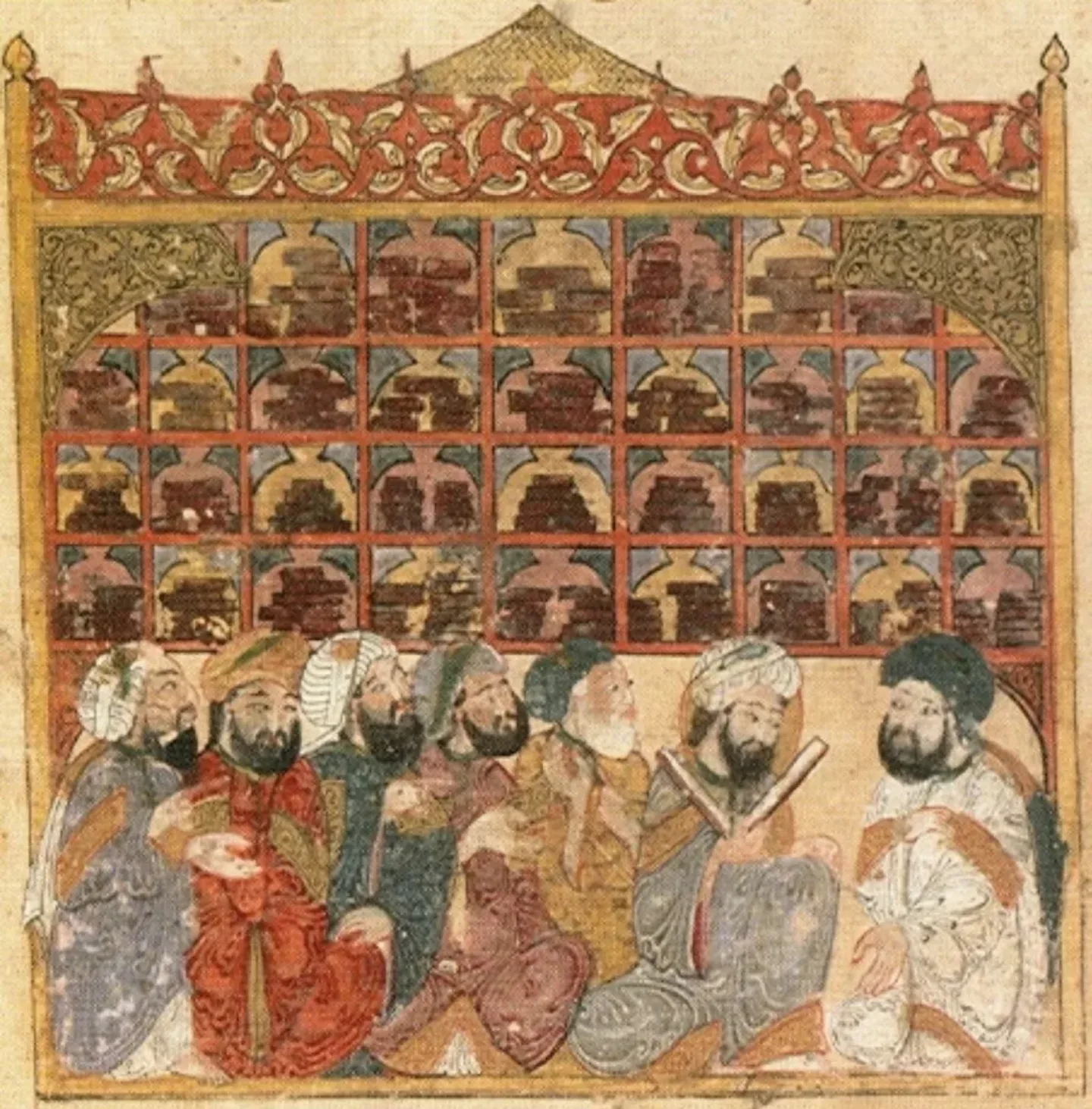
In 9th-century Baghdad, the House of Wisdom (Bayt al-Hikma) anchored one of history's great translation projects. Around 830–870, scholars rendered Greek works — Aristotle, Plato, Euclid, Galen — into Arabic, frequently by way of Syriac. This effort preserved a great deal of ancient philosophy and science that might otherwise have been lost, and gave the Islamic world a living body of Greek reason to build on. It was institutional in scale: patrons funded translators, copyists, and commentators, making Baghdad a hub where Greek, Persian, and Indian learning met.
Avicenna's Floating Man
Avicenna (Ibn Sīnā, 980–1037), a physician and polymath who wrote the influential Canon of Medicine, devised a famous thought experiment for the nature of the self. Imagine a person created fully grown and suspended in empty space with no sensation whatever — unable to see, hear, touch, or even feel the weight of their own body. Would they be aware of anything? Yes, Avicenna argued: they would still be aware of themselves. Since self-awareness survives the total loss of sensation, the soul cannot be derived from the body or the senses — it is prior to and independent of them. A related idea is his distinction between essence (what a thing is) and existence (that it is): for everything but God, the two come apart.
Averroes, "the Commentator"
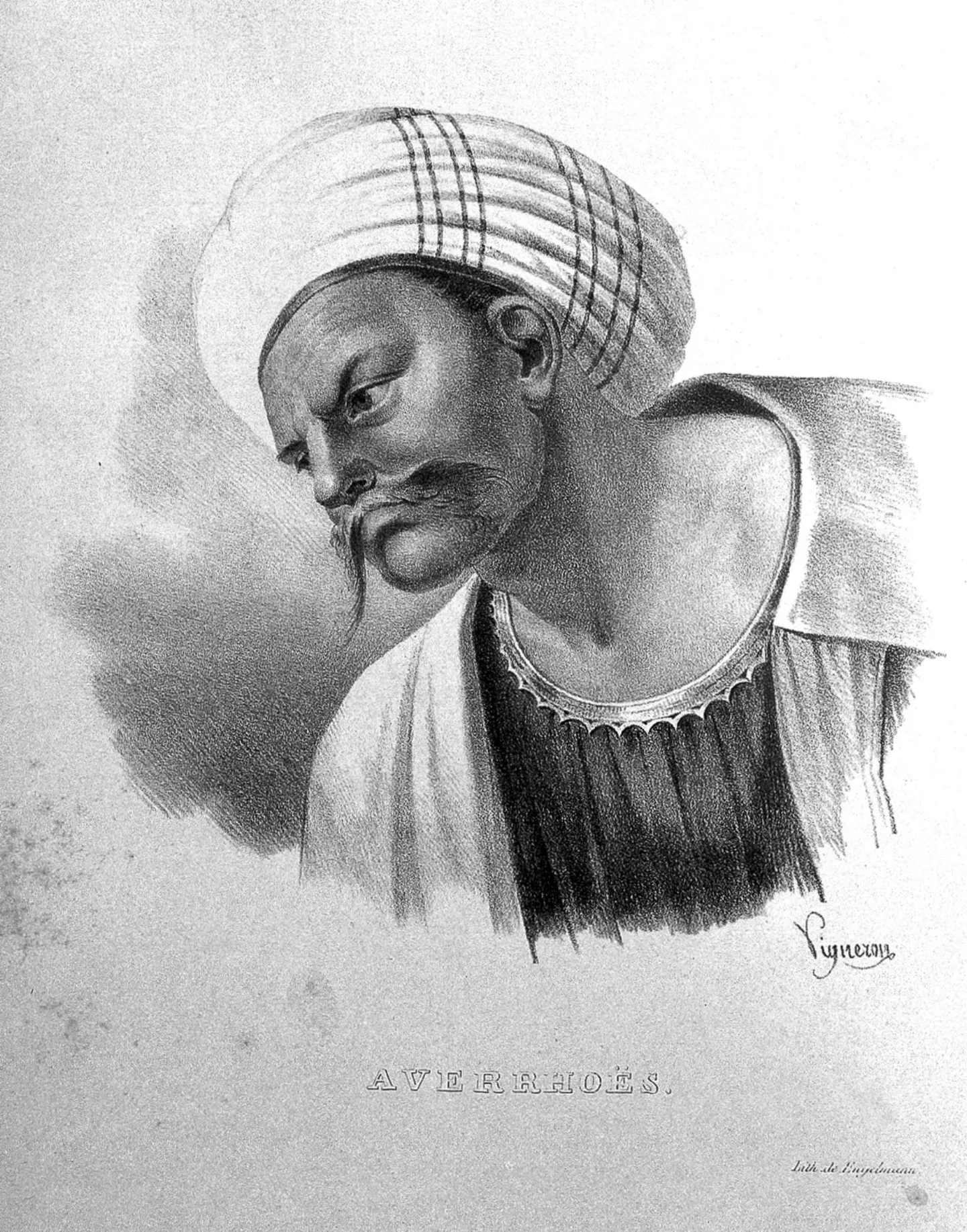
Averroes (Ibn Rushd, 1126–1198) wrote commentaries on Aristotle so thorough that European Scholastics called him simply "the Commentator" — Aristotle being "the Philosopher." Through Latin versions of his work, a fuller Aristotle returned to the Christian West, where Aquinas both drew on and argued against him. Averroes defended philosophy as a legitimate road to truth, holding that careful reason and scripture, rightly read, could not finally conflict.
The Double Truth
Averroes answered al-Ghazali, whose Incoherence of the Philosophers charged that philosophy was incompatible with Islam, with his Incoherence of the Incoherence. He argued that philosophy and revelation are two valid approaches to the same truth. In Europe this was read more provocatively as the "double truth": the notion that reason and faith might reach different conclusions, each valid in its own sphere. "Latin Averroism" embraced the idea that Aristotle might contradict the Church and be right; the Church condemned it as heresy — a sign that the medieval confidence in harmonizing faith and reason was beginning to crack.
Key terms
- Falsafa
- Philosophy in the Greek rational tradition as practiced in the medieval Islamic world — chiefly the study and extension of Aristotle. The word is itself an Arabic borrowing of the Greek "philosophia."
- Essence vs. existence (Avicenna)
- Avicenna's distinction between *what a thing is* (its nature) and *that it is* (the fact that it actually exists). For everything except God, the two come apart — a thing's nature does not guarantee its being.
Key concepts
Anselm of Canterbury
- A medieval Scholastic who tried to prove God exists from a definition alone, with no appeal to the world.
- In 1078 he defined God as 'that than which nothing greater can be conceived,' arguing a real God must be greater than a merely imagined one.
- His reasoning is called the ontological argument; Kant later rejected it for treating existence as a property.
Gaunilo
- A medieval monk best remembered for a sharp objection rather than a system of his own.
- He parodied a famous proof of God by defining the greatest conceivable island and noting it would then have to exist.
- Anselm replied that the reasoning applies only to God, a necessary being, not to a merely contingent island.
William of Ockham
- A 14th-century thinker who bequeathed a principle that would later reshape science.
- He taught that entities must not be multiplied beyond necessity: when rival explanations fit the same evidence, prefer the simpler.
- That rule of economy, still used across the sciences, is remembered as his 'razor.'
al-Ghazali
- An Islamic thinker who leveled a powerful attack on the philosophers of his own tradition.
- His work The Incoherence of the Philosophers charged that Greek-style philosophy was incompatible with Islam.
- Averroes answered him directly with a rebuttal titled The Incoherence of the Incoherence.
Key facts

Reconciling Faith and Reason
For roughly nine centuries (c. 500–1400 CE), philosophy in the Christian West was woven into theology, and its central project was a single tense question: can faith and reason be reconciled? Augustine (354–430) set the tone — "I believe so that I may understand" — fusing Plato with Christian doctrine. Later Scholastics tried the reverse: using rigorous logic, much of it inherited from Aristotle, to demonstrate what faith already held.
Anselm's Ontological Argument
In 1078, Anselm of Canterbury attempted the most audacious proof in philosophy: to demonstrate God's existence from the definition of God alone, with no appeal to the world. Define God as "that than which nothing greater can be conceived." A being that exists in reality is greater than one existing only in the mind. So if God existed only as an idea, we could imagine something greater — a contradiction. Therefore God must exist in reality.

Gaunilo's Perfect Island
The argument drew an instant, famous rebuttal. The monk Gaunilo retorted: by the same logic, define the "perfect island" — the greatest conceivable island — and it too must exist, since a real island beats an imaginary one. Absurd. Anselm's reply: the trick works only for God, a necessary being whose very nature is to exist; islands are contingent — they merely happen to be. The debate has run for nearly a thousand years.
Ockham's Razor
William of Ockham (c. 1287–1347) gave the age a principle that would later reshape science: "Entities must not be multiplied beyond necessity." Don't invent more explanations than the evidence requires — when two theories fit the facts, prefer the simpler. Known as Ockham's Razor, it is a guide to theory choice, not a proof, and it remains a working rule of thumb across the sciences today.
The Flowering of Falsafa
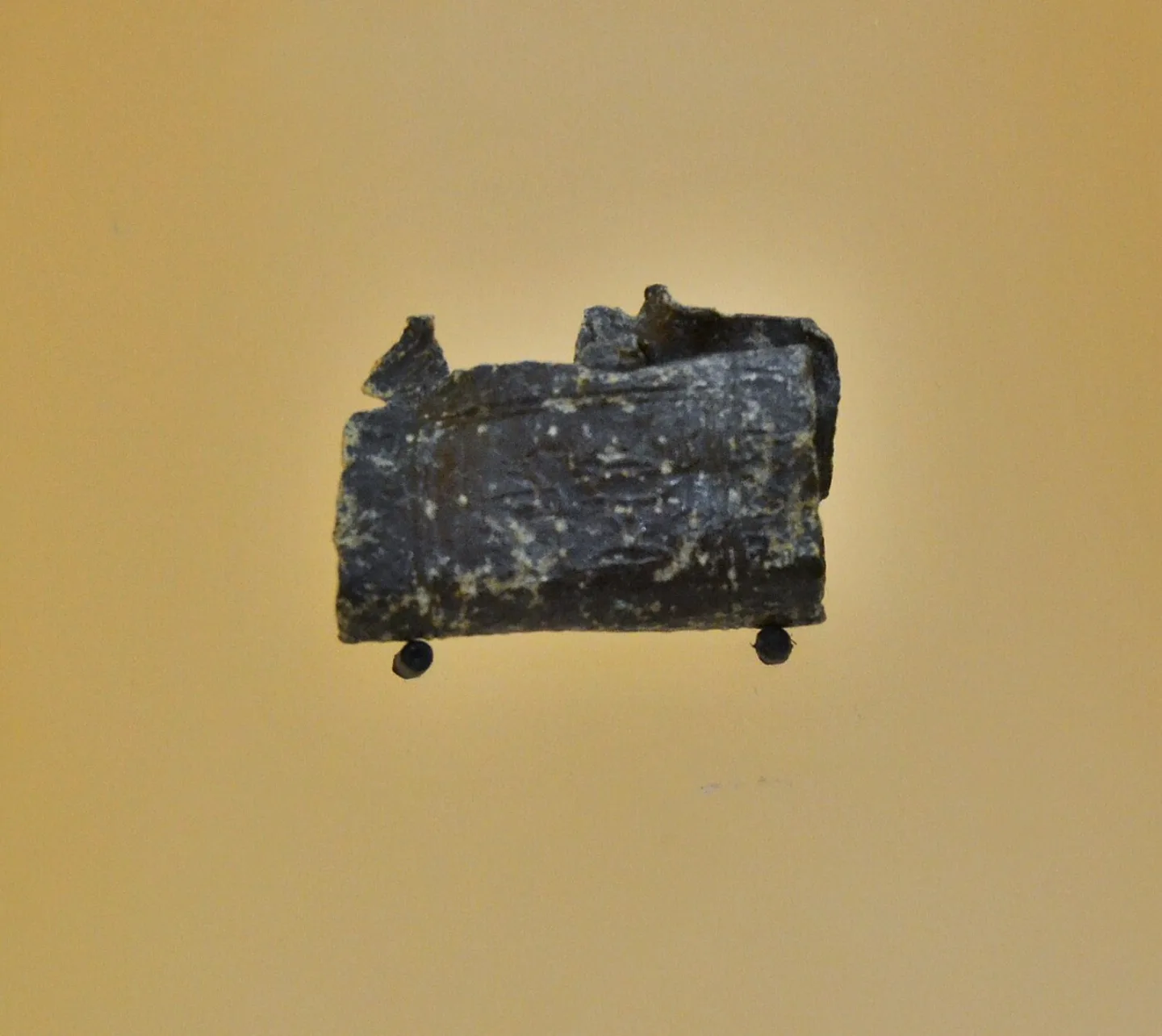
While Western Europe's contact with Greek thought thinned, the Islamic world became its great custodian. From roughly 800 to 1200 CE, falsafa — philosophy in the Greek tradition — flourished across the caliphates, chiefly by translating and extending Aristotle. These thinkers didn't merely preserve the classics; they argued with them, and their commentaries would later ignite philosophy in Christian Europe.
The House of Wisdom
In 9th-century Baghdad, the House of Wisdom (Bayt al-Hikma) ran one of history's great translation projects: scholars rendered Greek works of Aristotle, Plato, Euclid, and Galen into Arabic, often via Syriac. This mass translation (c. 830–870) saved much ancient philosophy and science from being lost — and gave the Islamic world a living inheritance of Greek reason to build on.
Averroes, "the Commentator"
Averroes (Ibn Rushd, 1126–1198) wrote commentaries on Aristotle so thorough and clarifying that European Scholastics simply called him "the Commentator" — Aristotle being "the Philosopher." Through Latin translations of his work, Aristotle returned to the Christian West in force. Averroes defended philosophy as a legitimate path to truth against critics who deemed it a threat to faith.
The "Double Truth"
Defending philosophy against al-Ghazali, whose Incoherence of the Philosophers charged that reason clashed with Islam, Averroes argued that philosophy and revelation are two valid roads to the same truth. This was later read in Europe as the explosive "double truth" — the idea that reason and faith might reach different conclusions, each valid in its own domain. "Latin Averroism" took it up; the Church condemned it as heresy.
Matched pairs
Each item on the left goes with the one on the right.
- The Unmoved Mover (First Way)
- Everything in motion was moved by something else; the chain can't be infinite, so there must be a first mover, itself unmoved — God.
- First Cause (Second Way)
- Every effect has a cause; the chain of causes must have a first, uncaused cause — God.
- Contingency (Third Way)
- Contingent things might not have existed; if all were contingent, nothing would exist, so there must be a necessary being — God.
- Degrees of Perfection (Fourth Way)
- We rank things as more or less good, true, and noble; such gradations imply a maximum, an absolute standard — God.
- Design (Fifth Way)
- Unintelligent natural things act toward ends (an acorn becomes an oak), which implies an intelligent director — God.
- The Floating Man (Avicenna)
- A sensation-deprived person would still be aware of their own existence — proof the soul is independent of the body.
- "The Commentator"
- Averroes (Ibn Rushd) — so named by European Scholastics for his definitive commentaries on Aristotle.
Step by step
Anselm's ontological argument for God's existence
- Define God as "that than which nothing greater can be conceived"
- Note that even an atheist who denies God has this concept in mind
- Observe that existing in reality is greater than existing only in the mind
- Suppose God existed only in the mind — then we could conceive of a greater God, one that also exists in reality
- This contradicts the definition of God as the greatest conceivable being
- Conclude: God must therefore exist in reality
Self-test
Answer each question from memory, then check your work against the answer key.
1. Which is NOT one of Aquinas's Five Ways to prove God's existence?
- AThe Wager: belief is the safest bet
- BThe Unmoved Mover
- CThe argument from Design
- DThe argument from Contingency
2. How do Aquinas's Five Ways differ in method from Anselm's ontological argument?
- AThey reason from belief already held to what reason can then confirm
- BThey reason from the concept of a perfect being to its real existence
- CThey reason from observed features of the world back to God
- DThey reason from the authority of scripture to its doctrines
3. In the Second Way, Aquinas argues the chain of causes must terminate in what?
- AA necessary, eternal being
- BA supreme, perfect being
- CA prime, unmoved mover
- DA first, uncaused cause
4. Which Way reasons that if all things were able not to exist, nothing would exist now?
- AThe First Way (Motion)
- BThe Third Way (Contingency)
- CThe Fourth Way (Perfection)
- DThe Fifth Way (Design)
5. The Fifth Way infers an intelligent designer from which observation?
- AEvery effect depends on some prior cause
- BThings rank as more or less good and true
- CEverything in motion is moved by something else
- DUnintelligent natural things act toward ends
6. Anselm's ontological argument attempts to prove God's existence from what starting point?
- AThe motion observed in nature
- BThe revealed word of God alone
- CThe definition of God alone
- DThe order and design of the cosmos
7. Which principle is credited to William of Ockham?
- AThat than which nothing greater can be conceived
- BEntities must not be multiplied beyond necessity
- CPhilosophy and revelation are two roads to one truth
- DI believe so that I may understand
8. The monk Gaunilo challenged Anselm by arguing the same logic would prove the existence of what?
- AThe perfect island
- BThe perfect city
- CThe perfect mountain
- DThe perfect knight
9. Which Scholastic is celebrated for fusing Aristotle's newly recovered philosophy with Christian theology in the Summa Theologica?
- AAnselm of Canterbury
- BWilliam of Ockham
- CPeter Abelard
- DThomas Aquinas
10. Which pairing of a thinker with his contribution is INCORRECT?
- AAnselm — the ontological argument
- BOckham — the principle of parsimony
- CAquinas — the perfect-island parody
- DAverroes — the Aristotle commentaries
11. What does the term 'falsafa' refer to?
- ATheology in the Latin Scholastic tradition practiced in the cathedral schools of medieval Europe
- BPhilosophy in the Greek rational tradition practiced in the medieval Islamic world
- CReligious law in the Quranic tradition practiced by jurists across the medieval caliphates
- DMystical devotional poetry in the Sufi tradition composed across the medieval Islamic world
12. Falsafa centered chiefly on translating and extending which Greek philosopher?
- AAristotle
- BPythagoras
- CPlato
- DEpicurus
13. The House of Wisdom (Bayt al-Hikma) translation project was centered in which city?
- ABaghdad
- BCordoba
- CDamascus
- DCairo
14. Greek works were frequently rendered into Arabic by way of which intermediary language?
- AHebrew
- BSyriac
- CPersian
- DLatin
15. Which best describes falsafa's place in the history of philosophy?
- AIt extended Plato above all, later restoring him to the Greek-speaking East through Syriac
- BIt fused Persian and Indian learning chiefly, later spreading it west across North Africa and Spain
- CIt preserved and extended Greek thought, later returning it to Christian Europe
- DIt absorbed Greek thought from Latin Europe, later carrying it east into Persia and India
16. Avicenna's Floating Man thought experiment is meant to show that what?
- AThe soul precedes the body yet knows itself only through sensation
- BThe soul emerges once the body's senses begin to work
- CThe soul's essence and its existence are one and the same
- DThe soul is independent of the body and the senses
17. In the Floating Man scenario, the person is imagined in what condition?
- ASuspended in empty space but still able to feel his own limbs
- BSuspended in empty space with no sensation whatever
- CFloating with his eyes open, dimly making out shapes in the dark
- DCreated fully grown but asleep and dreaming as he floats
18. Avicenna's distinction between essence and existence separates which two things?
- AWhat a thing is for from the way it came to be
- BHow a thing looks from how it truly is
- CWhat a thing is from the fact that it is
- DWhat a thing is made of from the form it takes
19. For whom alone, according to Avicenna, do essence and existence NOT come apart?
- AThe prophets
- BThe Floating Man
- CThe human soul
- DGod
20. Even stripped of all sensation, Avicenna says the Floating Man would still be aware of what?
- AHimself, his own existence
- BOther people, minds like his own
- CThe world, its own reality
- DHis body, its weight and warmth
21. Averroes wrote the Incoherence of the Incoherence in reply to whom?
- AAvicenna, his rival physician
- BThomas Aquinas
- CAristotle
- DAl-Ghazali, who had attacked philosophy as incompatible with Islam
22. European Scholastics called Averroes 'the Commentator' for his commentaries on whom?
- AAristotle
- BPlato
- CAugustine
- Dal-Ghazali
23. Al-Ghazali's Incoherence of the Philosophers made what charge?
- AThat philosophy was a threat to the caliphs
- BThat philosophy was garbled in its Arabic translations
- CThat philosophy was incompatible with Islam
- DThat philosophy was built on a misreading of Aristotle
24. As read in Europe, the provocative 'double truth' was the idea that what?
- AReason and faith might correct each other, each supplying what the other lacks
- BReason and faith might reach different conclusions, each valid in its sphere
- CReason and faith might reach the same conclusions, each by its own route
- DReason and faith might answer different questions, each silent on the other
25. What was Averroes's own view of philosophy and revelation?
- ARevelation is merely useful myth
- BThey inevitably contradict each other
- CThey are two valid roads to the same truth
- DPhilosophy must be discarded in favor of faith
Go deeper
- WatchThe Perfect Island In 1078, Anselm of Canterbury tried to prove that God exists from a definition alone.
- WatchThe Floating Man Picture a person created fully grown, floating in empty space. They can't see, hear or touch anything. They can't even feel their own body.
- StudyPhilosophy: The Big Questions in the FlashFeed app
Answer key
- 1. A The Wager: belief is the safest betThe Five Ways are the Unmoved Mover, First Cause, Contingency, Degrees of Perfection, and Design. "The Wager" is Pascal's argument, not one of Aquinas's.
- 2. C They reason from observed features of the world back to GodThe Five Ways are cosmological: they argue from effects we observe (motion, causation, order) to God. Anselm's ontological argument works from the concept of God alone, with no appeal to the world.
- 3. D A first, uncaused causeThe Second Way (First Cause) holds every effect has a cause, and the chain must have a first, uncaused cause — God. The unmoved mover belongs to the First Way (motion), the necessary being to the Third (contingency), and the maximum of perfection to the Fourth.
- 4. B The Third Way (Contingency)The Third Way argues contingent things might not have existed; if all were contingent nothing would exist, so a necessary being must exist — God. The other Ways start from motion, gradation, and order.
- 5. D Unintelligent natural things act toward endsThe Fifth Way (Design) notes that mindless things (an acorn becoming an oak) act toward purposes, implying a director — God. The other options describe the First, Fourth, and Second Ways.
- 6. C The definition of God aloneAnselm argued from the concept 'that than which nothing greater can be conceived,' with no appeal to the world. Design is Aquinas's cosmological route, starting from prior faith is Augustine's credo ut intelligam, and Scripture plays no part in the proof.
- 7. B Entities must not be multiplied beyond necessityOckham's Razor states 'entities must not be multiplied beyond necessity' — prefer the simpler theory. The other slogans belong to Augustine, Anselm, and Averroes.
- 8. A The perfect islandGaunilo's parody defined the greatest conceivable island, which by Anselm's reasoning would have to exist — absurd. Anselm replied that only God is a necessary being, so the logic applies uniquely to God.
- 9. D Thomas AquinasAquinas (1225–1274) produced the age's grandest synthesis, marrying Aristotle to Christian doctrine in the Summa Theologica. Anselm gave the ontological argument, Ockham the Razor, and Augustine (354–430) had poured Plato, not Aristotle, into Christian doctrine centuries before the Scholastics.
- 10. C Aquinas — the perfect-island parodyThe perfect-island parody was Gaunilo's objection, not Aquinas's; Aquinas is known for the Five Ways. The other three pairings are all correct.
- 11. B Philosophy in the Greek rational tradition practiced in the medieval Islamic worldFalsafa is philosophy in the Greek rational tradition as practiced in the medieval Islamic world, chiefly the study and extension of Aristotle. The word itself borrows the Greek 'philosophia.'
- 12. A AristotleFrom roughly 800–1200 CE, falsafa flourished chiefly by translating and extending Aristotle. Averroes's Aristotle commentaries were so central that Europeans called Aristotle 'the Philosopher.'
- 13. A BaghdadThe House of Wisdom operated in 9th-century Baghdad, rendering Aristotle, Plato, Euclid, and Galen into Arabic (c. 830–870) and making the city a hub of Greek, Persian, and Indian learning.
- 14. B SyriacHouse of Wisdom scholars often translated Greek texts into Arabic via Syriac. Latin was the route by which this inheritance later returned to Christian Europe, not the intermediary at Baghdad.
- 15. C It preserved and extended Greek thought, later returning it to Christian EuropeFalsafa preserved and extended Greek reason — chiefly Aristotle — then handed much of it back to Europe through Latin translation, helping ignite Aquinas's work: a relay across cultures, not a single Western line.
- 16. D The soul is independent of the body and the sensesBecause self-awareness survives the total loss of sensation, Avicenna concludes the soul cannot be derived from the body or senses — it is prior to and independent of them, and it knows itself with no sensory report at all.
- 17. B Suspended in empty space with no sensation whateverAvicenna imagines a person created fully grown, floating in empty space, unable to see, hear, touch, or feel their own body — total sensory blankness, not partial sensation or sleep.
- 18. C What a thing is from the fact that it isEssence is what a thing is (its nature); existence is that it is (the fact it actually exists). For everything but God, a thing's nature does not guarantee its being.
- 19. D GodAvicenna holds that for everything except God, essence and existence are distinct — a thing's nature does not entail that it exists. Only in God are the two inseparable.
- 20. A Himself, his own existenceThe whole point is that with no sensory input at all, the person remains aware of themselves — self-awareness that cannot come from the senses, which are switched off in the scenario.
- 21. D Al-Ghazali, who had attacked philosophy as incompatible with IslamAl-Ghazali's Incoherence of the Philosophers charged that philosophy was incompatible with Islam; Averroes answered with the Incoherence of the Incoherence.
- 22. A AristotleAverroes's commentaries on Aristotle were so thorough that Scholastics called him 'the Commentator,' Aristotle being 'the Philosopher.' Through Latin versions, a fuller Aristotle returned to the West.
- 23. C That philosophy was incompatible with IslamAl-Ghazali argued philosophy clashed with Islam; Averroes replied with the Incoherence of the Incoherence, defending reason and revelation as valid roads to one truth.
- 24. B Reason and faith might reach different conclusions, each valid in its sphere'Latin Averroism' read Averroes as claiming reason and faith could reach different, each-valid conclusions — even that Aristotle might contradict the Church and be right. The Church condemned it as heresy.
- 25. C They are two valid roads to the same truthAverroes held that careful reason and scripture, rightly read, could not finally conflict — two valid approaches to one truth. The 'different conclusions' reading was Europe's more provocative distortion.
Sources
- Philosophy: A Comprehensive Study Guide
Image credits
- Reconciling Faith and Reason: AI-generated (gpt-image-1.5)
- Gaunilo's Perfect Island: AI-generated (gpt-image-1)
- The Flowering of Falsafa: Wikimedia Commons · Joanbanjo · CC BY-SA 3.0 — commons.wikimedia.org/wiki/File:Amulet_isl%C3%A0mic_d%27Ifac,_museu_d%27Hist%C3%B2ria_de_Calp.JPG
- The House of Wisdom: Wikimedia Commons · Unknown 13th-century illustrator (Maqamat al-Hariri manuscript, BnF) · Public domain — commons.wikimedia.org/wiki/File:Maqamat_hariri.jpg
- Averroes, "the Commentator": Wikimedia Commons · P. R. Vigneron (lith. Engelmann) · CC BY 4.0 — commons.wikimedia.org/wiki/File:Averroes._Lithograph_by_P._R._Vign%C3%A9ron,_1825._Wellcome_V0000251.jpg


