
Stoicism: A School and Its Sources study guide · Lesson 4 of 7
Lesson 4: Impression, Assent, and Agency
An Impression Is Not Yet an Assent · Agency Within a Causal World
This is the lesson's study guide from the FlashFeed app, plus its key facts and a self-test.
What you'll be able to do
- Distinguish impression, impulse, assent, passion, and good feelings, using the Sphaerus anecdote only as a bounded illustration
- Explain the Stoic compatibilist project and keep its causal and psychological vocabulary distinct
An Impression Is Not Yet an Assent
Stoic psychology distinguishes receiving an impression from giving assent to it. The distinction does not say that a person can prevent every initial appearance or sensation. It separates the occurrence of an impression from a further act of acceptance, which is why it is important not to treat the two terms as synonyms.
In the account summarized by the overview, the Stoic soul forms impressions and impulses, while assent is assigned to the commanding faculty. This is a technical allocation within an ancient psychological account. It is not a promise that every emotion can be controlled, and it does not convert an ancient distinction into a general guarantee about inner experience. The relation among impression, impulse, and assent needs to remain visible if the vocabulary is to retain its explanatory work.
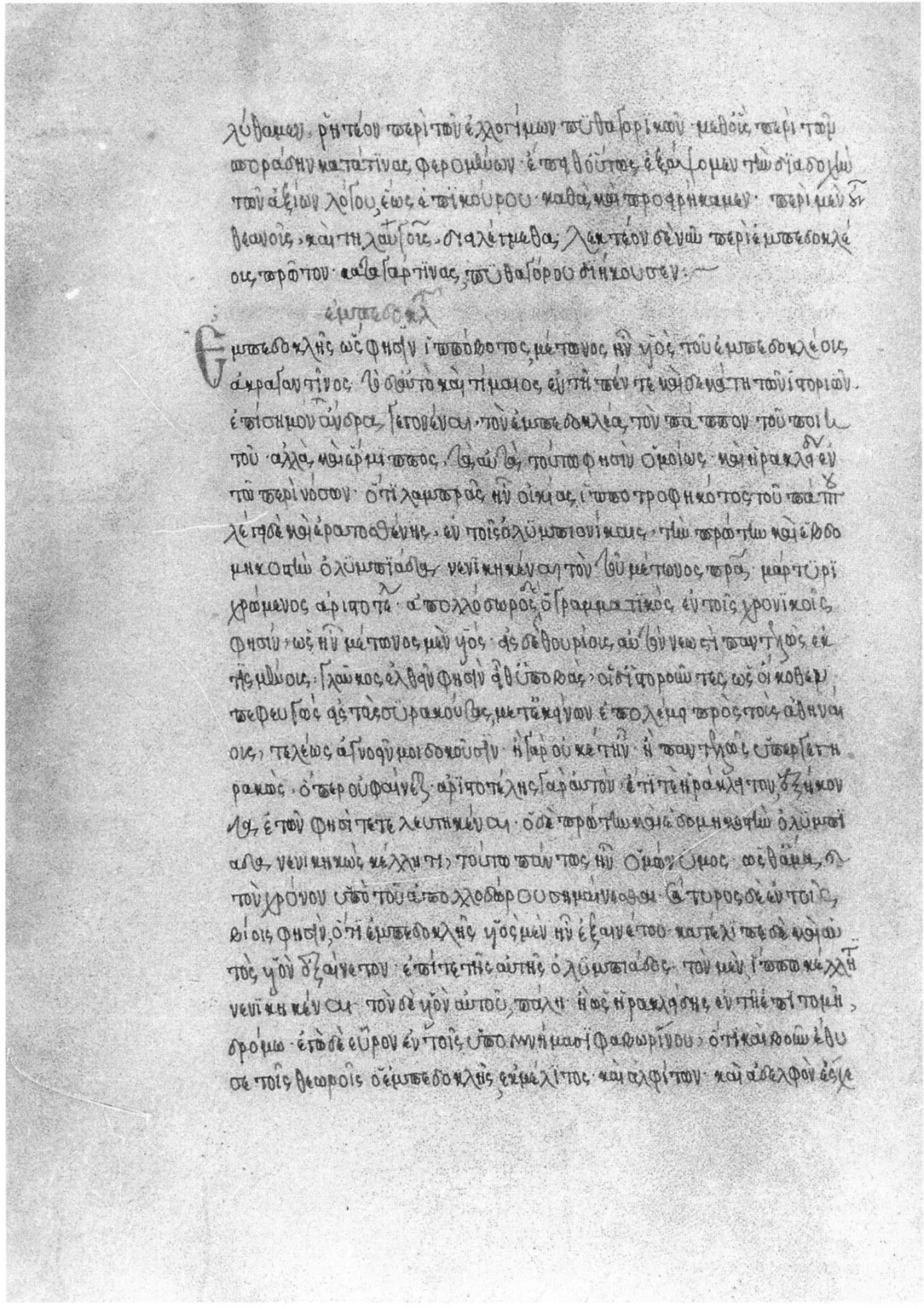
The reported wax-pomegranate episode involving Sphaerus offers a limited illustration. In the story, he distinguishes assenting that objects are pomegranates from assenting that there are good grounds to think they are pomegranates. The difference concerns appearance, evidence, and what is asserted. But the source limit is part of the lesson: this is a later translated anecdote, not a complete surviving account of Sphaerus's philosophy. It can illuminate a narrow distinction without bearing the weight of a full doctrine or biography.
The overview presents Stoic passions as involving judgments and discusses good feelings, eupatheiai, in relation to the sage. Terminology and accounts vary across authors and periods. The point is not that Stoicism supplies a clinical method, but that the simple statement “Stoicism means never feeling anything” is not an accurate summary of the source-supported account. Correcting that caricature should not produce an opposite caricature: the evidence does not show a single, uniform theory shared unchanged by every Stoic, or an endorsement of every emotion.
The ordering of the terms matters. An impression is received; assent is a further element in the technical account; passions are discussed through judgments; and eupatheiai are linked in the overview to the sage. This order is not a universal vocabulary for every Stoic author, but it explains why “never feeling” discards distinctions present in the available evidence.
Sources
Agency Within a Causal World
The Stoics are described in the overview as determinists about causation who also attempted a compatibilist account of responsibility. This identifies an ancient philosophical project; it does not prove that Stoicism settles a modern free-will debate. The scope of the claim is narrower: causal determinism and responsibility were both part of the account being described.
The co-fated doctor example sharpens the issue. It is intended to reject fatalistic inaction by treating the action as part of the causal order. In other words, the example answers the inference that action would be pointless if events are causally ordered. The doctor is a figure in a philosophical illustration, not a source of medical guidance. Its relevance is conceptual: an action can be included within the sequence rather than treated as a missing exception to it.
Several terms must not be collapsed in explaining this position. Impression, assent, impulse, prohairesis, fate, and cause are not interchangeable in a source-aware account of Stoicism. Some belong to the reconstruction of early Stoic doctrine; prohairesis is prominent in Epictetus; and some English labels remain connected with disputed interpretations. A compressed vocabulary may sound tidy, but it can erase distinctions that the sources preserve.
There is also a difference in transmission. Early Stoic doctrine is reconstructed from fragmentary evidence, whereas Epictetus's later teaching reaches readers through works associated with Arrian. This contrast does not produce one unified technical vocabulary for every period. It indicates why statements about an early doctrine, an Epictetan term, and a modern translation need separate evidential labels. The co-fated example, the distinction between impression and assent, and the later Epictetan vocabulary can be studied together, but their source routes remain different.
Two questions remain distinct throughout this topic: what an ancient account says about causation, and how that account reaches modern readers. The first concerns determinism, responsibility, and co-fated action. The second concerns fragmentary reconstruction or Arrian-associated transmission. Joining the questions too quickly can make a source route look like a doctrine, or make a doctrine look uniform across authors and periods.
Sources
Key terms
- Commanding faculty
- The part of the Stoic psychological account to which assent is assigned, as distinct from the soul's forming of impressions and impulses.
- Impulse
- One of the movements the soul is described as forming alongside impressions, in an account that places assent elsewhere.
- Passion
- In the overview's presentation, an affective state that involves judgments; accounts of it vary by author and by period.
- Compatibilist account of responsibility
- The attempt the overview attributes to the Stoics: holding people responsible while remaining determinists about causation.
- Fragmentary evidence
- The state of the surviving record from which early Stoic doctrine has to be reconstructed rather than read continuously.
Key facts
Received, Then Accepted
Stoic psychology draws a line between receiving an impression and assenting to it. Receiving is one event; accepting what the impression presents is a further one, which is why the two words are not synonyms. The distinction does not claim that a person can prevent every initial appearance or sensation, only that appearance and acceptance are separate steps in the account.
Where the Account Puts Assent
In the account summarized by the overview, the Stoic soul forms impressions and impulses, while assent is assigned to the commanding faculty. That is an allocation inside a technical psychological model, a statement about which element of the account does what. It is reported as a source-supported description, not as a promise that every feeling can be controlled.
The Wax Pomegranates
A reported anecdote has Sphaerus confronted with wax pomegranates. In it he distinguishes assenting that the objects are pomegranates from assenting that there are good grounds to think they are. The difference at stake concerns appearance, evidence, and what is actually being asserted.
A Later Witness, Not a System
The wax-pomegranate episode reaches modern readers as a later translated anecdote. That status sets the weight it can carry: a narrow illustration of appearance, evidence, and assertion. It is not a surviving account of Sphaerus's philosophy, and it should not be asked to stand in for one.
Judgments Inside the Passions
The overview presents the Stoic passions as involving judgments, and it discusses good feelings, eupatheiai, in relation to the sage. Both belong to an account of affect that runs through what a person accepts as true. Terminology and detail vary by author and period, and the analysis is not offered as a clinical method.
Where “Never Feeling Anything” Goes Wrong
The line that Stoicism means never feeling anything is not a sound summary of the source-supported account of the passions. That account works through judgments and includes good feelings discussed in relation to the sage. Correcting the caricature does not install its opposite: the evidence does not show Stoics endorsing every emotion, or holding one uniform theory across every period.
Determinism With Responsibility Attached
The overview describes the Stoics as determinists about causation who also attempted a compatibilist account of responsibility. Both halves stand together: the causal order is not dropped, and responsibility is not set aside. This reports an ancient philosophical project; it does not show that the project settles the modern free-will debate.
The Co-Fated Doctor
The co-fated doctor example is aimed at fatalistic inaction, the inference that if events are causally ordered then acting is pointless. It answers by treating the action itself as part of the causal order rather than as an exception standing outside it. The doctor is a figure in a philosophical illustration, and the example carries no medical guidance.
Six Words That Are Not Synonyms
Impression, assent, impulse, prohairesis, fate and cause are not interchangeable in a source-aware account of Stoicism. Some belong to the reconstruction of early Stoic doctrine, prohairesis is prominent in Epictetus, and some English labels remain attached to disputed interpretations. A compressed vocabulary sounds tidy, but it erases distinctions the sources preserve.
Two Routes Into the Record
Early Stoic doctrine is reconstructed from fragmentary evidence, while Epictetus's later teaching reaches readers through works associated with Arrian. The contrast concerns evidential and transmission status rather than who was right. It is why an early doctrine, an Epictetan term, and a modern translation each need their own evidential label.
Arrian's Part in the Transmission
Epictetus's later teaching reaches modern readers through works associated with Arrian. That is a statement about transmission, not a claim that one unified ancient technical vocabulary was preserved. Set beside early doctrine, which has to be reconstructed from fragments, it shows two different evidential routes running into the same topic.
Matched pairs
Each item on the left goes with the one on the right.
- Sphaerus
- Figure in the reported wax-fruit anecdote about grounds for belief
- “Stoicism means never feeling anything”
- A modern caricature the source-supported account of the passions does not bear out
- Prohairesis
- A term prominent in the later teaching, not a synonym for impulse or assent
- Early Stoic doctrine
- Known through fragmentary evidence that has to be reconstructed
Self-test
Answer each question from memory, then check your work against the answer key.
1. In Stoic psychology, what does the distinction between impression and assent separate?
- AWhat the senses report from what reason alone can prove
- BA judgment made in haste from one made after deliberation
- CReceiving an appearance from accepting what it presents
- DPerceiving an object from forming a mental image of it afterwards
2. In the wax-pomegranate story, which two acts of assent does Sphaerus distinguish?
- AAssenting to what he could see, and assenting to what the others present had told him
- BAssenting that they are pomegranates, and assenting that there are good grounds to think so
- CAssenting while the objects were in view, and assenting once they had been taken away
- DAssenting to a claim about the fruit, and assenting to a claim about who had offered it
3. How does the overview present the Stoic passions?
- AAs habits built up by repeated action over a lifetime
- BAs disturbances the body produces before reason can intervene
- CAs sensations that vary only in intensity, never in kind
- DAs states that involve judgments on the person's part
4. Why is “Stoicism means never feeling anything” a poor summary of the account the sources support?
- ABecause the account works through judgments and admits good feelings too
- BBecause the account treats every emotion as worth cultivating once understood
- CBecause feeling is described as wholly outside a person's own control
- DBecause the sources record no discussion of the emotions in the early period
5. According to the overview, what does the Stoic soul form alongside impressions?
- APassion
- BAssent
- CImpulse
- DEupatheiai
6. How does the overview describe the Stoic position on causation and responsibility?
- ADeterminists about causation who denied that anyone could be held responsible
- BDeterminists about causation who also attempted a compatibilist account
- COpponents of causal determinism who defended responsibility on that footing
- DUndecided on causation, treating responsibility as a wholly separate matter
7. What is the co-fated doctor example intended to reject?
- AThe idea that some events happen with no cause standing behind them at all
- BThe idea that a person's character has no bearing on what that person does
- CThe idea that causes arrive all at once rather than running in a sequence
- DThe idea that acting is pointless if events are causally ordered anyway
8. Why should impression, assent, impulse, prohairesis, fate and cause be kept apart?
- AThey sit in different strands: early doctrine, Epictetan usage, disputed labels
- BThey name stages of a single process, so only their order needs remembering
- CThey are technical only in translation; in the original they are ordinary words
- DThey come from one author and one period, so their differences are stylistic
9. In a source-aware account of Stoicism, what does “prohairesis” mark?
- AA word confined to the early doctrine and dropped by later Stoic teachers
- BA synonym the sources allow for impulse whenever the context is practical
- CAn English label that translators agree renders one settled ancient sense
- DA term prominent in the later Roman-period teaching rather than in the reconstructed early doctrine
10. How does the evidential route for early Stoic doctrine differ from Epictetus's?
- AEarly doctrine reaches readers only in translation; the later teaching in the original
- BEarly doctrine is reconstructed from fragments; the later teaching comes via Arrian
- CEarly doctrine survives in complete treatises, while the later teaching is fragmentary
- DBoth reach readers complete, so no transmission question arises for either of them
Go deeper
- ListenLesson 4 episode
- WatchAn Impression Is Not Yet an Assent The Stoics separated two steps: receiving an impression, and giving assent to it.
- WatchThe Co-Fated Doctor If everything is fated, why call a doctor? The worry: in a causally ordered world, action is pointless.
- StudyStoicism: A School and Its Sources in the FlashFeed app
Answer key
- 1. C Receiving an appearance from accepting what it presentsAn impression is received; assent is the further act of accepting what it presents. Keeping them apart is the whole point of the pair of terms.
- 2. B Assenting that they are pomegranates, and assenting that there are good grounds to think soThe anecdote turns on the gap between accepting that the objects are pomegranates and accepting that there are good grounds to think they are: appearance, evidence, and what is asserted.
- 3. D As states that involve judgments on the person's partThe overview presents the passions as involving judgments, and discusses good feelings, eupatheiai, in relation to the sage. Terminology varies by author and period, and none of this makes the analysis a clinical method.
- 4. A Because the account works through judgments and admits good feelings tooThe passions are presented as involving judgments, and good feelings are discussed in relation to the sage, so the slogan discards distinctions the account keeps. The correction does not flip into endorsing every emotion.
- 5. C ImpulseThe soul is described as forming impressions and impulses; assent belongs to the commanding faculty, and passion/eupatheiai are separate elements of the account.
- 6. B Determinists about causation who also attempted a compatibilist accountThe overview describes determinists about causation who also attempted a compatibilist account of responsibility. Both commitments are reported together.
- 7. D The idea that acting is pointless if events are causally ordered anywayThe example rejects fatalistic inaction by treating the action as part of the causal order rather than as an exception to it. It is a philosophical illustration, not medical advice.
- 8. A They sit in different strands: early doctrine, Epictetan usage, disputed labelsSome of these terms belong to the reconstruction of early Stoic doctrine, prohairesis is prominent in Epictetus, and some English labels remain attached to disputed interpretations.
- 9. D A term prominent in the later Roman-period teaching rather than in the reconstructed early doctrineOf the terms held apart here, prohairesis is the one identified as prominent in Epictetus rather than as part of the reconstructed early doctrine.
- 10. B Early doctrine is reconstructed from fragments; the later teaching comes via ArrianEarly Stoic doctrine is reconstructed from fragmentary evidence, whereas Epictetus's later teaching reaches readers through works associated with Arrian. The contrast is about transmission, not about one unified vocabulary.
Sources
- Stanford Encyclopedia of Philosophy — Stoicism; Stoicism — audited source register — plato.stanford.edu/entries/stoicism/
- Diogenes Laertius, Lives of the Eminent Philosophers, Book VII (Sphaerus) — penelope.uchicago.edu/Thayer/E/Roman/Texts/Diogenes_Laertius/Lives_of_the_Eminent_Philosophers/7/Sphaerus%2A.html
- Stanford Encyclopedia of Philosophy — "Epictetus" — plato.stanford.edu/archives/spr2026/entries/epictetus/
Image credits
- A Later Witness, Not a System: Wikimedia Commons · Diogenes Laërtius · Public domain — commons.wikimedia.org/wiki/File:Diogenes_Laertius,_Venice,_Gr._394.jpg
- Where “Never Feeling Anything” Goes Wrong: w_lemay (Openverse) · by-sa 2.0 — www.flickr.com/photos/59081381@N03/53457956484
- The Co-Fated Doctor: mharrsch (Openverse) · by 2.0 — www.flickr.com/photos/44124324682@N01/17615937641
