
Stoicism: A School and Its Sources study guide · Lesson 5 of 7
Lesson 5: Social Concern and Roman Mediation
Oikeiosis, Cosmopolitanism, and Proximity · Roman Transmission, Duty Language, and Source Roles
This is the lesson's study guide from the FlashFeed app, plus its key facts and a self-test.
What you'll be able to do
- Introduce social concern and Hierocles's circles while retaining partial-survival and abstract-only limits
- Explain Cicero's non-Stoic mediation of Stoic theory and connect source roles to social and appropriate-action language
Oikeiosis, Cosmopolitanism, and Proximity
The overview treats oikeiosis and cosmopolitanism as central Stoic ethical topics connected with social concern, human nature, and appropriate action. That connection gives social relations a place within the ethical material; it does not mean that every later figure or modern interpreter develops those topics in the same way. A source-aware account keeps the terms historical and avoids projecting one interpretation unchanged across the school.
Hierocles is identified as a second-century Stoic whose Elements of Ethics is only partially extant. This survival condition matters before any detail is attributed to him. Partial survival permits limited discussion, but it does not provide a complete treatise from which an exact theory can be reconstructed without further evidence.
An opened Oxford abstract describes Hierocles as using an image of concentric circles in relation to social concern. Because the accessible evidence is an abstract rather than the full chapter, this guide does not supply a precise circle diagram, lost wording, or a complete interpretation of the image. The source is enough to identify the image and its subject, not to turn it into a fully recoverable ancient text.
The same abstract warns against treating the circles as absolute impartiality. It describes mutual aid alongside weightier duties toward people who are socially closer. This is a cautious, proximity-sensitive claim about the abstract's presentation, not an uncontested reconstruction of all Stoic social theory. Together, the evidence supports a careful distinction: social concern, cosmopolitanism, and the circles image belong in the historical conversation, while the extant source limits and the abstract-only access boundary constrain how far the interpretation can go.
The evidence in this part has two different levels. The Stoicism overview identifies Hierocles, partial survival, and the larger ethical topics; the Oxford abstract supplies the circles image and its caution about proximity. Neither level supplies a complete recovered text. The resulting account is deliberately modest: it identifies a historical figure and an interpretive image while preserving the limits of the accessible material.
Sources
Roman Transmission, Duty Language, and Source Roles
Cicero did not identify as a Stoic, although he engaged extensively with Stoic theory. That distinction is essential to Roman mediation: a Latin author can be an important conduit for Stoic material without becoming a Stoic by label. It also prevents a reader from treating every Cicero passage as a transparent statement of an early Greek source.
The overview says that Cicero modeled De Officiis on a work by Panaetius. Modeling is a meaningful relationship, yet it does not make Cicero's extant Latin work identical to the fragmentary material associated with Panaetius. The difference is not a minor technicality. It determines what a source can support: a surviving Roman work, a lost earlier work, and a reported relation between them each give access of a different kind.
The broader evidence record distinguishes complete later works from early evidence preserved through later doxographies, hostile-witness philosophers who discussed the Stoics, and fragments quoted within those other works. These are multiple survival routes, not interchangeable windows into a single corpus. The labels identify source conditions rather than a rigid four-part framework that must fit every text. They make clear why an early doctrine may need reconstruction while a later work can be read in a more continuous form.
Within those limits, the research supports a historical claim that Stoic ethics includes accounts of social relation, appropriate action, and cosmopolitan concern. It does not endorse every ancient social practice, and it does not show that Roman texts map cleanly onto modern equality. The value of Cicero in this lesson is therefore evidential and mediating: he helps show how Stoic themes can travel through a non-Stoic Roman author while leaving questions of identity, source role, and historical distance visible.
This is why “Roman mediation” is more exact than simply treating Cicero as an additional Stoic author. The phrase keeps together three supported facts: his non-Stoic identity, his extensive engagement with Stoic theory, and De Officiis' reported model in Panaetius. It also leaves room for the different survival conditions of the materials rather than assuming a direct replacement for a lost source.
Sources
Key terms
- Partially extant
- Said of a text that survives only in part rather than whole. Hierocles' Elements of Ethics is described this way, which permits limited discussion but rules out reconstructing an exact theory from it.
- Oikeiosis
- A term the Stoicism overview places at the centre of Stoic ethics alongside cosmopolitanism, tying it to social concern, human nature, and appropriate action. The overview does not fix one settled meaning for it across every early Stoic.
- Roman mediation
- The passage of Stoic material to later readers through a Latin writer who engaged it extensively without belonging to the school, so that questions of identity, source role, and historical distance stay visible.
- Survival route
- The particular path by which ancient material reaches us: as a complete later work, or as early evidence carried in doxographies, hostile witnesses, and fragments. These paths are not interchangeable.
Key facts
Oikeiosis and Cosmopolitanism
The Stoicism overview treats oikeiosis and cosmopolitanism as central topics within Stoic ethics. It connects them with social concern, human nature, and appropriate action, so relations between people sit inside the ethical material rather than beside it. That framing is the overview's own, and it is offered as a way into the topics rather than a fixed definition of them.
One Framing, Not Every Stoic
Placing oikeiosis and cosmopolitanism at the centre of Stoic ethics is how the overview presents the material, and the claim is held at medium confidence. Later figures and modern interpreters may develop the same two topics in different directions. A source-aware reading therefore keeps the terms historical instead of projecting a single interpretation unchanged across the whole school.
Hierocles and a Half-Surviving Book
Hierocles is identified as a second-century Stoic. His Elements of Ethics is only partially extant, and that survival condition matters before any detail is attributed to him. Partial survival permits limited discussion, but it does not hand over a complete treatise from which an exact theory could be reconstructed.
The Concentric Circles Image
An opened Oxford chapter abstract describes Hierocles as using an image of concentric circles in relation to social concern. Because the accessible evidence is the abstract rather than the full chapter, it identifies the image and its subject and nothing further. It cannot supply an exact diagram, the lost wording, or a settled interpretation of what the image was doing.
Not Absolute Impartiality
The same abstract warns against reading Hierocles' circles as a claim of absolute impartiality. It describes mutual aid alongside duties that weigh more heavily toward people who are socially closer. This is a cautious statement about how the abstract presents the image, not an uncontested reconstruction of all Stoic social theory.
Two Levels of Evidence
The evidence behind Hierocles sits at two different levels. A general Stoicism overview identifies him, the partial survival of his treatise, and the larger ethical topics; an opened chapter abstract supplies the circles image and its caution about proximity. Neither level delivers a recovered text, so the account that follows stays deliberately modest.
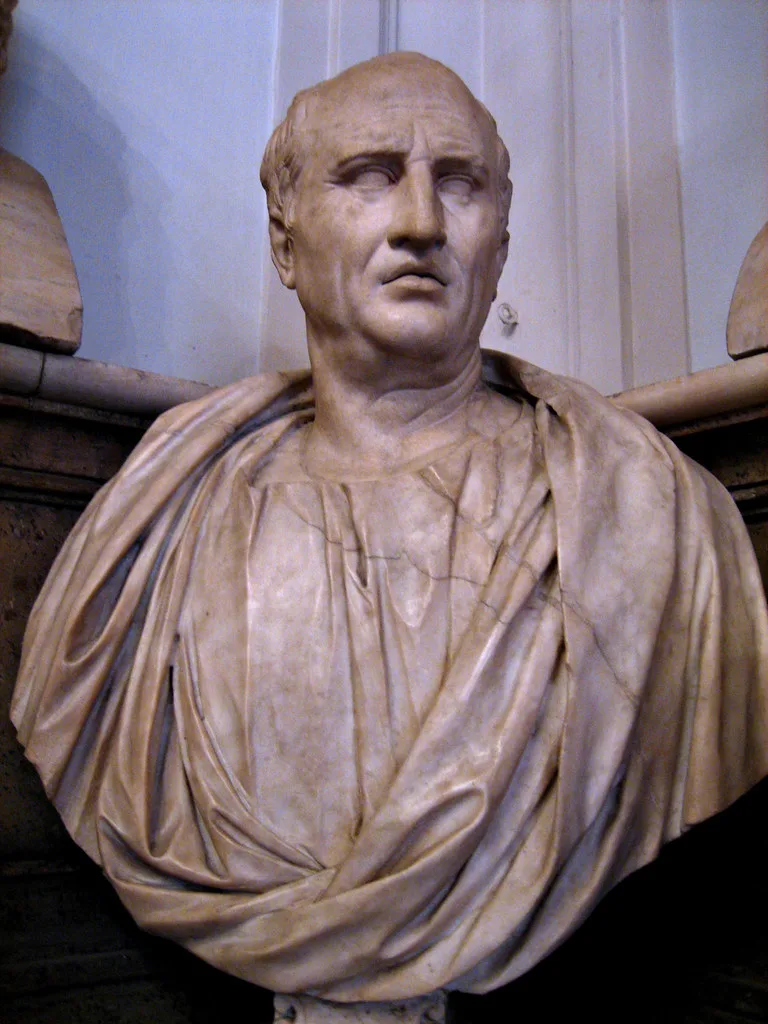
Cicero, Engaged but Not Enrolled
Cicero did not identify as a Stoic, though he engaged extensively with Stoic theory. That distinction is the heart of Roman mediation: a Latin author can be an important conduit for Stoic material without becoming a Stoic by label. It also stops a reader from treating every Cicero passage as a transparent statement of an early Greek source.
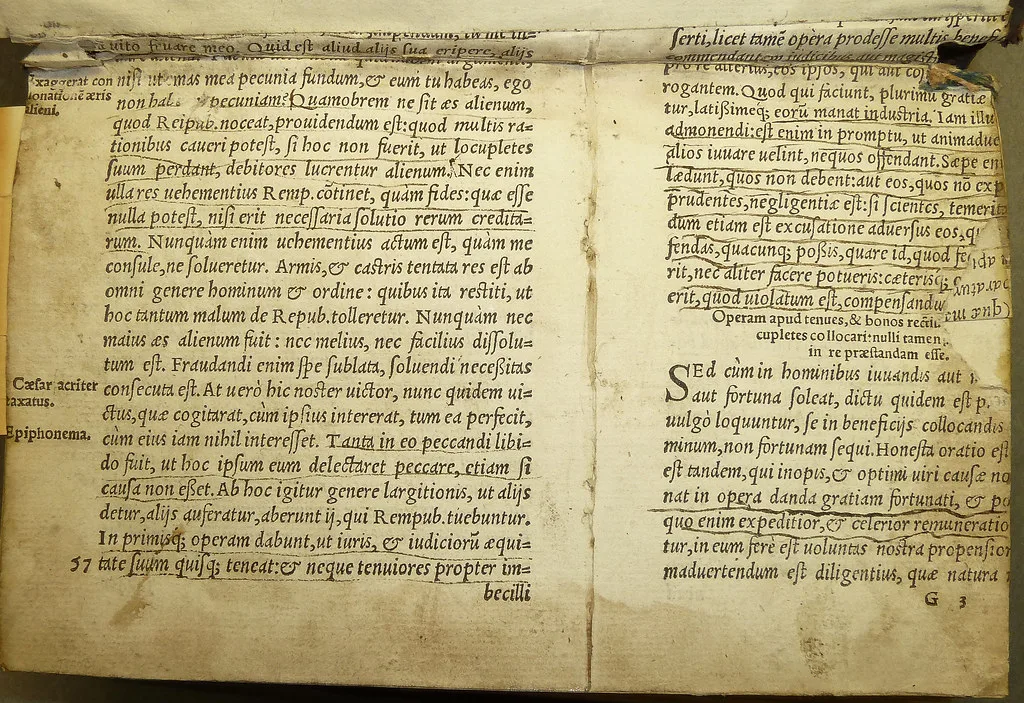
De Officiis and Its Model
The overview says that Cicero modeled De Officiis on a work by Panaetius. Modeling is a meaningful relationship, yet it does not make Cicero's surviving Latin work identical to the fragmentary material associated with Panaetius. A surviving Roman work, a lost earlier work, and a reported relation between them each give access of a different kind.
Different Routes to Survival
The Stoicism overview separates complete later works from early evidence preserved through later doxographies, hostile witnesses, and fragments. These are different survival routes, not interchangeable windows onto one corpus. They help explain why an early doctrine may need reconstruction while a later work can be read in a more continuous form.
A Bounded Historical Claim
The research supports a limited historical claim: Stoic ethics contains accounts of social relation, appropriate action, and cosmopolitan concern. It does not endorse every ancient social practice, and it does not show that Roman texts map cleanly onto modern equality. Keeping the claim bounded is what makes it usable as history.
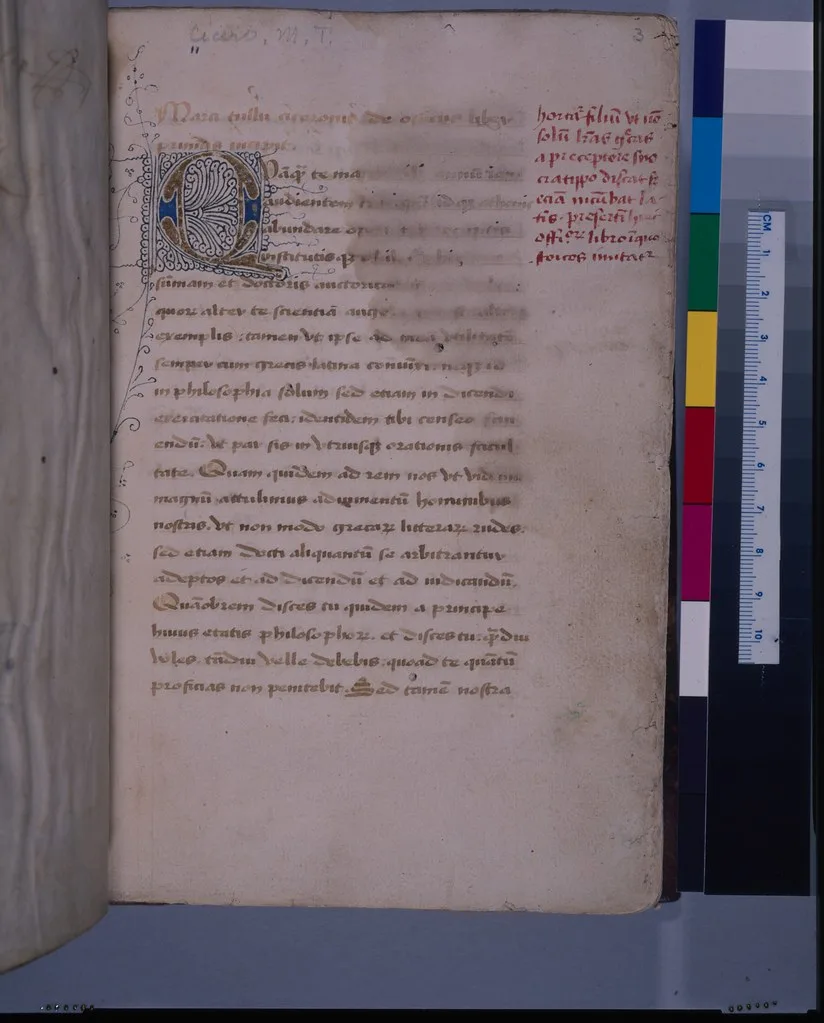
Why the Phrase Roman Mediation
Calling Cicero a Roman mediator of Stoic thought is more exact than adding him to the roster of Stoic authors. The phrase holds three supported points together: he did not identify as a Stoic, he engaged Stoic theory extensively, and De Officiis is reported to be modeled on a work by Panaetius. It also leaves the differing survival conditions of the materials visible rather than assuming a direct replacement for a lost source.
Matched pairs
Each item on the left goes with the one on the right.
- Hierocles
- Second-century Stoic whose Elements of Ethics survives only in part
- Concentric circles
- The image an opened Oxford chapter abstract connects with social concern
- Cicero
- Latin author who engaged Stoic theory extensively without joining the school
- De Officiis
- The Latin work reported to be modeled on a treatise by Panaetius
Self-test
Answer each question from memory, then check your work against the answer key.
1. Which pair of topics does the Stoicism overview treat as central to Stoic ethics, tied to social concern, human nature, and appropriate action?
- AJurisprudence and public rhetoric
- BGrammar and literary criticism
- COikeiosis and cosmopolitanism
- DDivination and ritual practice
2. Why should the overview's treatment of oikeiosis and cosmopolitanism not be projected unchanged onto every early Stoic?
- AThe overview files both topics under physics rather than ethics
- BLater figures and modern readers may develop them differently
- CThe overview treats both topics as marginal rather than central concerns
- DEach of the two topics is attested for only a single named Stoic
3. What follows from Elements of Ethics being only partially extant?
- AIts missing sections can be reconstructed from other surviving treatises
- BThe surviving portion can be read as a complete statement of his ethics
- CThe gaps are recoverable from the overview's own brief summary of the work
- DAttributions to Hierocles stay limited until closer evidence is available
4. How does the Oxford abstract describe the weighting of duties in Hierocles' circles?
- AMutual aid holds, with weightier duties toward closer people
- BDuties fall away entirely beyond the innermost circle of kin
- CDuties are owed identically to all people regardless of relation
- DDuties grow heavier the further out from the self one moves
5. What does the opened Oxford abstract establish about Hierocles' concentric circles?
- AThe lost wording in which the image was originally introduced
- BThe exact number and labelling of the circles in the original text
- CA complete interpretation of the image agreed by modern scholars
- DThat the image is put to work in connection with social concern
6. Which statement about Cicero's relation to Stoicism does the evidence support?
- AHe identified as a Stoic and wrote from inside the school's tradition
- BHe rejected Stoic theory and engaged with it only to refute it
- CHe engaged Stoic theory closely without identifying as a Stoic
- DHe translated Stoic works without commenting on their doctrines
7. What does the Stoicism overview report about the composition of De Officiis?
- ACicero shaped it after an earlier work by Panaetius
- BCicero built it out of Hierocles' surviving chapters
- CCicero wrote it as a reply to earlier Stoic critics
- DCicero translated it straight from a Greek original
8. How does the Stoicism overview describe the shape of the surviving evidence?
- AEarly complete treatises alongside later works surviving in fragments
- BComplete later works alongside early material known only indirectly
- CA body of texts preserved chiefly in inscriptions and public records
- DA continuous corpus running from the earliest Stoics to the Romans
9. Which reading of the overview's evidence categories overstates what they claim?
- AThey explain why early doctrine may need reconstruction from witnesses
- BThey separate later readable works from indirectly preserved material
- CThey form a fixed four-part scheme every Stoic text must be sorted into
- DThey mark the differing conditions under which material happens to survive
10. What does the research support about Stoic ethics and social life?
- AA limited account of social relation, appropriate action, and cosmopolitan concern
- BAn endorsement of the social arrangements that prevailed in the ancient world
- CA complete practical code for ordering relations within the Roman household
- DA demonstration that Roman Stoic texts already anticipate modern equality doctrine
Go deeper
- ListenLesson 5 episode
- WatchCircles of Concern Picture a set of concentric circles. The second-century Stoic Hierocles used that image for social concern.
- WatchNot a Stoic Cicero was an important route for Stoic ideas in Latin. But he did not identify as a Stoic.
- StudyStoicism: A School and Its Sources in the FlashFeed app
Answer key
- 1. C Oikeiosis and cosmopolitanismThe overview puts oikeiosis and cosmopolitanism among the central Stoic ethical topics, connecting them with social concern, human nature, and appropriate action.
- 2. B Later figures and modern readers may develop them differentlyThe claim sits at medium confidence precisely because later figures and modern scholars may develop these topics in different ways, so the overview's framing should not be read back onto the whole school.
- 3. D Attributions to Hierocles stay limited until closer evidence is availablePartial survival permits limited discussion but does not hand over a complete treatise, so what is attributed to Hierocles must stay modest without closer evidence.
- 4. A Mutual aid holds, with weightier duties toward closer peopleThe abstract pairs mutual aid with duties that weigh more heavily toward those who stand socially closer, which is why it resists an absolute-impartiality reading.
- 5. D That the image is put to work in connection with social concernThe abstract is enough to identify the image and its subject, social concern, but not to supply a diagram, the lost wording, or a full interpretation.
- 6. C He engaged Stoic theory closely without identifying as a StoicHis extensive engagement with Stoic theory is well supported, and so is the fact that he did not take the Stoic label; the two have to be held together.
- 7. A Cicero shaped it after an earlier work by PanaetiusThe overview reports that Cicero modeled De Officiis on a work by Panaetius, a real relation of dependence that still leaves the Latin text distinct from the lost Panaetian material.
- 8. B Complete later works alongside early material known only indirectlyThe overview separates complete later works from early evidence that reaches us through later doxographies, hostile witnesses, and fragments.
- 9. C They form a fixed four-part scheme every Stoic text must be sorted intoThe categories identify source conditions; turning them into a rigid four-role framework that every text must fit goes beyond what the overview actually claims.
- 10. A A limited account of social relation, appropriate action, and cosmopolitan concernThe supported claim is historical and bounded: Stoic ethics contains accounts of social relation, appropriate action, and cosmopolitan concern. It neither endorses ancient practice nor maps onto modern equality.
Sources
- Stanford Encyclopedia of Philosophy — Stoicism; Stoicism — audited source register — plato.stanford.edu/entries/stoicism/
- Oxford Academic — Hierocles' Concentric Circles — academic.oup.com/book/46592/chapter-abstract/409999353
Image credits
- Cicero, Engaged but Not Enrolled: antmoose (Openverse) · by 2.0 — www.flickr.com/photos/93226994@N00/84543977
- De Officiis and Its Model: Provenance Online Project (Openverse) · by 2.0 — www.flickr.com/photos/58558794@N07/7822390954
- Why the Phrase Roman Mediation: Special Collections at Johns Hopkins University (Openverse) · by 2.0 — www.flickr.com/photos/41637252@N04/10800762014