
Stoicism: A School and Its Sources study guide · Lesson 6 of 7
Lesson 6: Roman Figures and Textual Forms
Seneca, Musonius, and Cornutus · Epictetus and Marcus Aurelius: Transmission and Self-Address
This is the lesson's study guide from the FlashFeed app, plus its key facts and a self-test.
What you'll be able to do
- Compare surviving Roman textual forms and roles without treating one author or publisher description as the whole school.
- Distinguish Arrian-associated Epictetan transmission from Marcus's self-addressed Meditations and their linked but different contexts.
Seneca, Musonius, and Cornutus
The sources distinguish later Stoic works by Seneca from the fragmentary evidence available for early Stoicism. That contrast concerns survival status, not authority by itself. A later body of surviving writing does not substitute for every early source, and early fragments do not become complete works merely because later authors are easier to read.
The opened index to Seneca's Moral Letters to Lucilius presents numbered letters with headings on subjects including philosophy, virtue, friendship, and wealth. An index is valuable orientation: it identifies the form and topic range of the collection. It does not, by itself, support a detailed claim or quotation from any particular letter. A claim about a specific letter would require a closer locator rather than an unlocated use of the table of contents.
Yale University Press describes Musonius Rufus as a first-century Roman Stoic philosopher and presents a volume of lectures and sayings in Cora Lutz's translation. This supports cautious placement and edition information, not the secure authorship of every saying attributed to Musonius in later circulation. A Cambridge historical overview also identifies Musonius as a teacher of Dio Chrysostom and Epictetus. The opened source is an abstract or summary, so the supported claim is the narrow teacher relation, not a full biography or a detailed curriculum.
Lucius Annaeus Cornutus adds another textual form. A 2018 critical-edition description identifies him as a Roman philosopher who wrote a Greek compendium on Greek gods using etymology and allegory to teach Stoic basics. This is bibliographical and genre evidence. It does not justify a complete Cornutus biography, a general ancient-Stoic theology, or a doctrine beyond what the description supports. Seneca's letter index, the Musonius edition, the teacher relation, and Cornutus's compendium together show why genre and source scope are part of understanding Roman Stoic figures.
The sources in this section therefore carry different evidential loads. The Seneca page is an index; the Musonius page is a publisher description and edition notice; the Cambridge material supports a narrow relation; and the Cornutus page gives bibliographical and genre facts. The contrast is part of the content, because it sets the boundary between a justified orientation and a detailed attribution.
Sources
- Stanford Encyclopedia of Philosophy, “Stoicism”
- Moral Letters to Lucilius
- Yale University Press, That One Should Disdain Hardships
- Cambridge, “Stoic writers of the imperial era”
- Critical-edition description of Cornutus's compendium
Epictetus and Marcus Aurelius: Transmission and Self-Address
The Discourses are traditionally presented as Arrian's record of Epictetus's teaching, and the relation between record and teaching remains a scholarly question. “Epictetus says” can be useful introductory shorthand only when this recording and genre background remains in view. The source is not a simple authorial manuscript that removes every question about transmission.
The opened Encheiridion translation identifies Epictetus and presents numbered sections, making section-based citation possible in that translation. The numbered form is useful for locating a claim. The translator's English wording, however, is not ancient Greek, so a feature of that translation cannot simply be elevated into the original language or a final interpretation of technical vocabulary.
The overview of Marcus Aurelius reports a scholarly consensus that he wrote the Meditations for his own moral improvement; the work is commonly called writings to himself. This supports a self-addressed, reflective genre rather than treating the text as a systematic public textbook or an uncomplicated memoir. Book 1 in the opened George Long translation begins with acknowledgments of what Marcus learned from other people. That is a feature of that named translation and book, not evidence that Long's English is the original text.
A Cambridge overview connects Musonius, Epictetus, and Marcus by identifying Musonius as Epictetus's teacher and Marcus's notebook as influenced by Epictetus's Discourses. The connection is historical, but it does not erase differences in language, audience, genre, or transmission among them. Reading the Discourses, the Encheiridion, and the Meditations with these differences in view gives the figures a real relation without turning their texts into the same kind of source.
The contrast can be stated without ranking the works. An Arrian-associated record raises one transmission question; a numbered English translation makes a particular edition easy to cite but does not replace Greek wording; and self-addressed Meditations has a different genre from a public textbook. The teacher-and-influence relation gives historical connection while preserving those textual differences.
Sources
Key terms
- Locator
- A pointer precise enough to identify where inside a work a claim sits — the number of a letter and the passage within it, rather than the collection's contents page.
- Compendium
- A single volume that gathers and condenses the basics of a subject; the one credited to Cornutus is written in Greek and covers the Greek gods.
- Transmission
- The route by which a teaching reaches the page a reader holds; for the Discourses that route runs through Arrian's record, and how faithfully it does so is still debated.
- Section-based citation
- Pointing to a claim by the numbered section that contains it, which the opened Encheiridion translation makes possible.
- Self-address
- Writing aimed at its own author: the Meditations is commonly called writings to himself, made for Marcus's moral improvement rather than for a readership.
Key facts
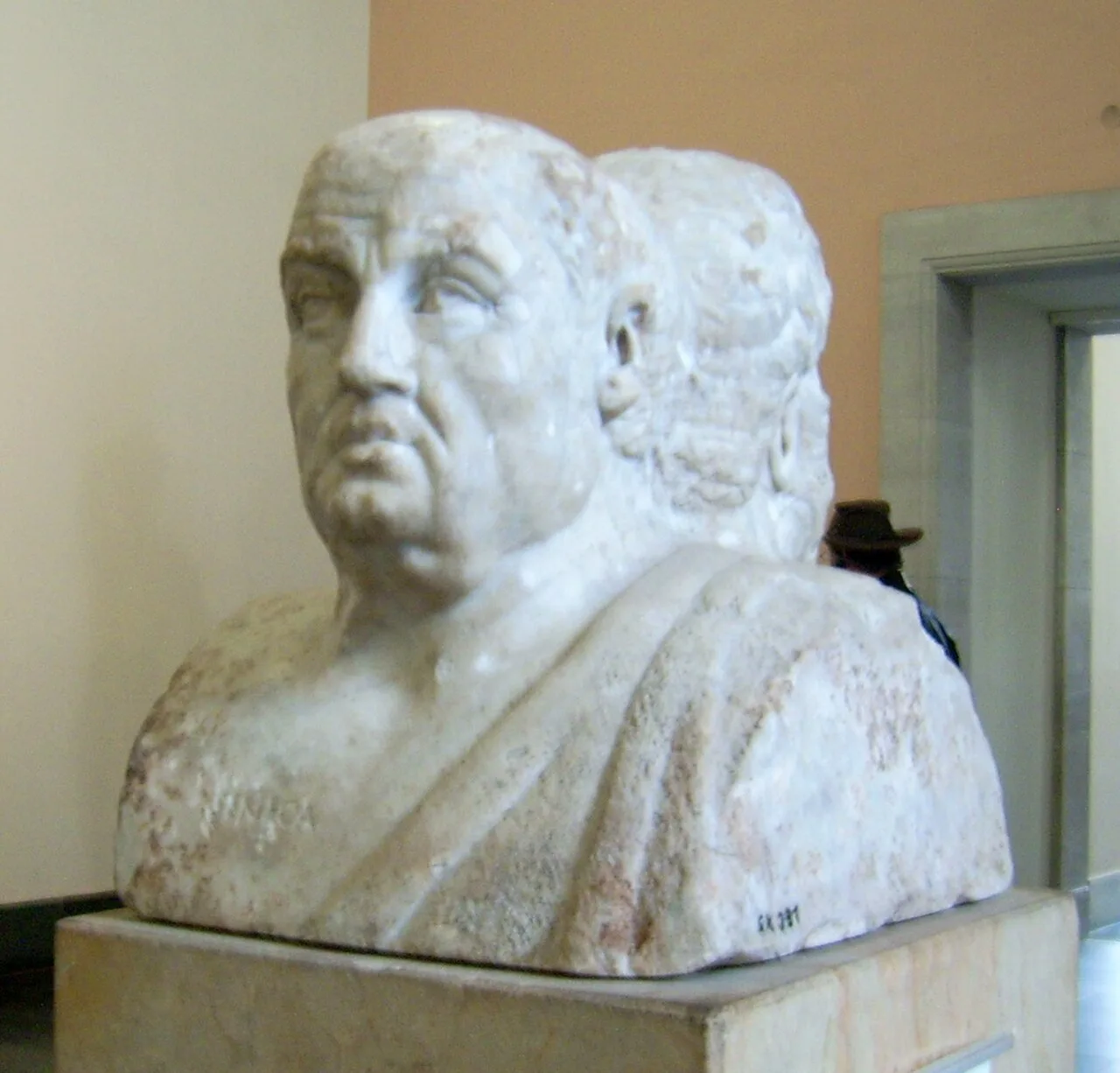
Later Works, Earlier Fragments
A Stanford overview of Stoicism sets later Stoic works by Seneca against the fragmentary evidence available for early Stoicism. The contrast is one of survival status rather than of authority. A shelf of readable later prose does not stand in for the early Stoa's lost books, and fragments do not become whole works because later authors are easier to read.
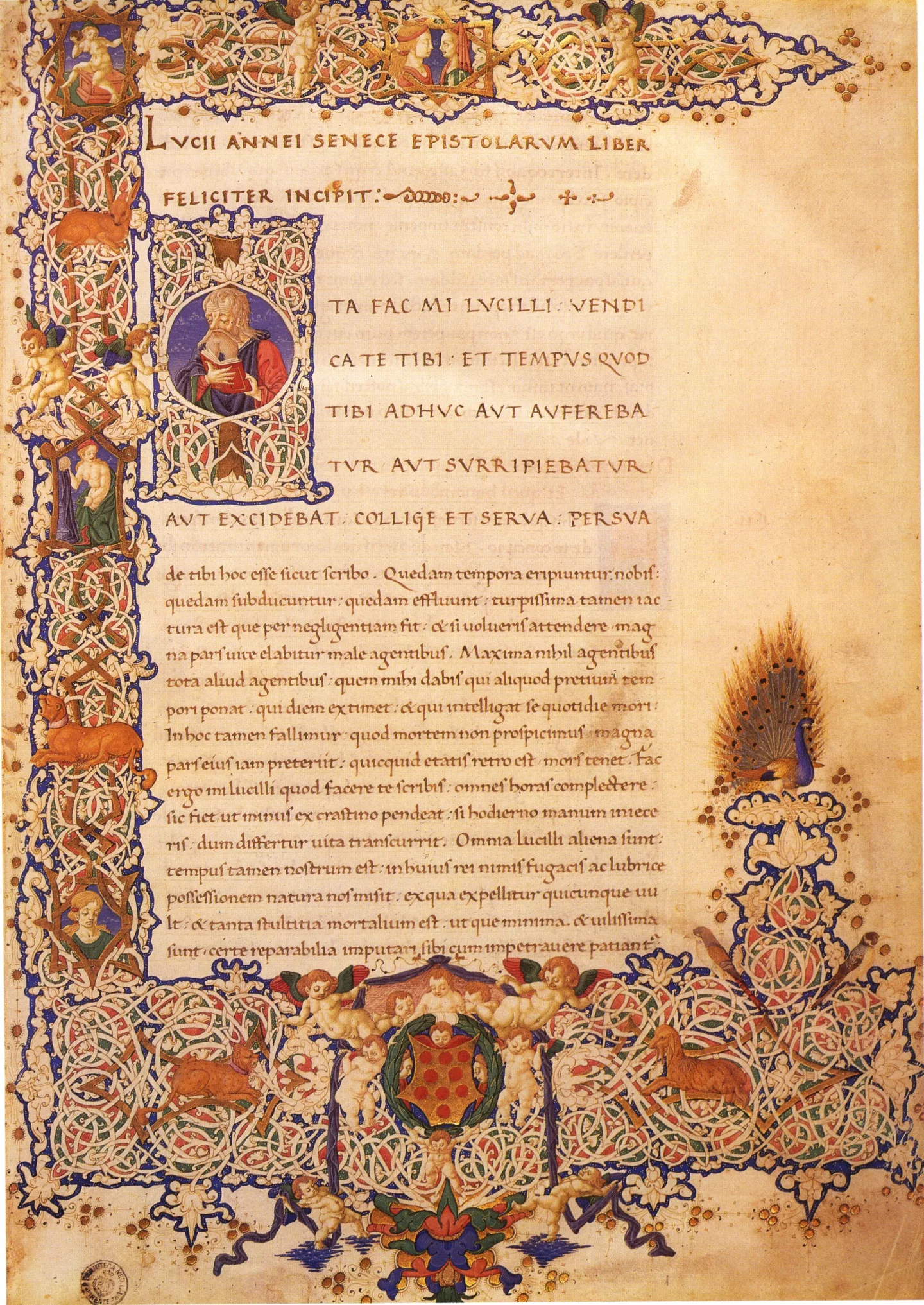
Numbered Letters, Named Topics
The opened index to Seneca's Moral Letters to Lucilius presents the collection as numbered letters, each carrying a heading. Those headings cover subjects including philosophy, virtue, friendship, and wealth. Read this way, the index gives a reliable picture of the collection's form and of the range it covers.
How Far a Contents Page Reaches
An index establishes what a collection looks like: how its letters are numbered and what subjects the headings name. It does not carry a detailed claim about the argument inside any one of those letters. Supporting that would take a locator pointing into the letter itself rather than an unlocated reference to the table of contents.
Musonius Rufus in Translation
Yale University Press describes Musonius Rufus as a first-century Roman Stoic philosopher. Its volume presents his lectures and sayings in Cora Lutz's translation. A publisher description of this kind supports cautious placement of the figure and gives edition information; it does not certify the authorship of every saying that circulates under his name.
A Teacher of Two Named Students
A Cambridge historical overview identifies Musonius Rufus as a teacher of Dio Chrysostom and of Epictetus. What was opened for this claim is an abstract or summary rather than the full chapter. It supports the teaching relation itself, and stops short of a biography or a reconstruction of what he taught them.
Cornutus's Greek Compendium
A 2018 critical-edition description identifies Lucius Annaeus Cornutus as a Roman philosopher who wrote a Greek compendium on the Greek gods. The compendium uses etymology and allegory to teach Stoic basics. This is bibliographical and genre evidence: it fixes the work's language, subject and method without supplying a full life of its author or a general ancient-Stoic theology.
Arrian's Record of Epictetus
The Discourses are traditionally presented as Arrian's record of Epictetus's teaching. The relation between that record and the teaching behind it remains a scholarly question. Saying "Epictetus says" is workable introductory shorthand only while the recording and the genre stay in view; the text is not a plain authorial manuscript.
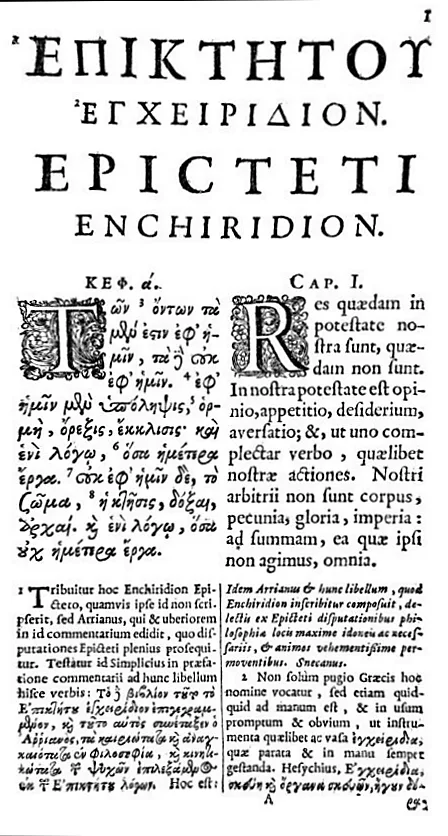
A Text You Can Cite by Section
The opened Encheiridion translation names Epictetus and lays the work out in numbered sections. That numbering makes section-based citation possible in that translation, which is useful for locating a claim. The numbered English is the translator's, so a feature of the rendering should not be promoted into the ancient Greek.
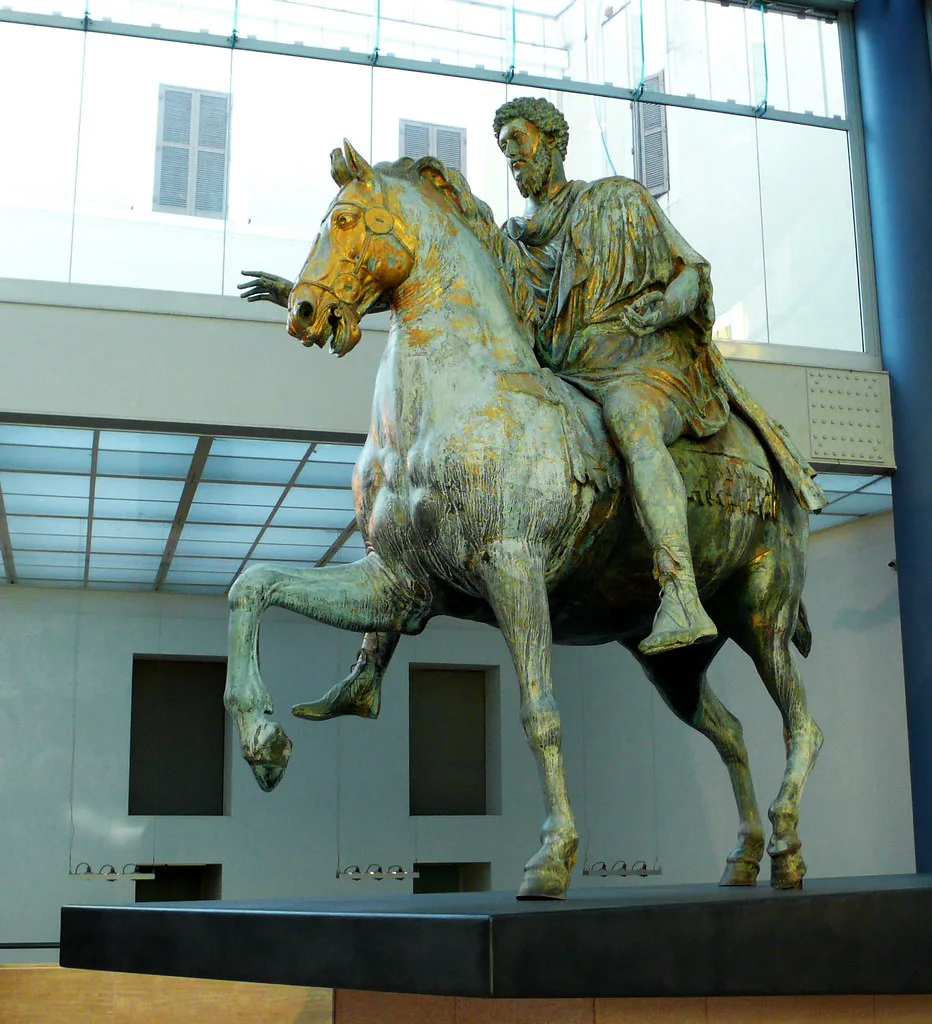
Writings to Himself
An overview of Marcus Aurelius reports a scholarly consensus that he wrote the Meditations for his own moral improvement. The work is commonly called writings to himself. That places it as self-addressed reflective writing rather than a systematic public textbook or a straightforward memoir of a reign.
Book One Opens with Debts
Book 1 of the opened George Long translation of the Meditations begins with acknowledgments of what Marcus learned from other people. The book starts, in other words, by naming what he owed rather than by stating doctrine. This is a feature of that named translation and book; Long's English is not the original text.
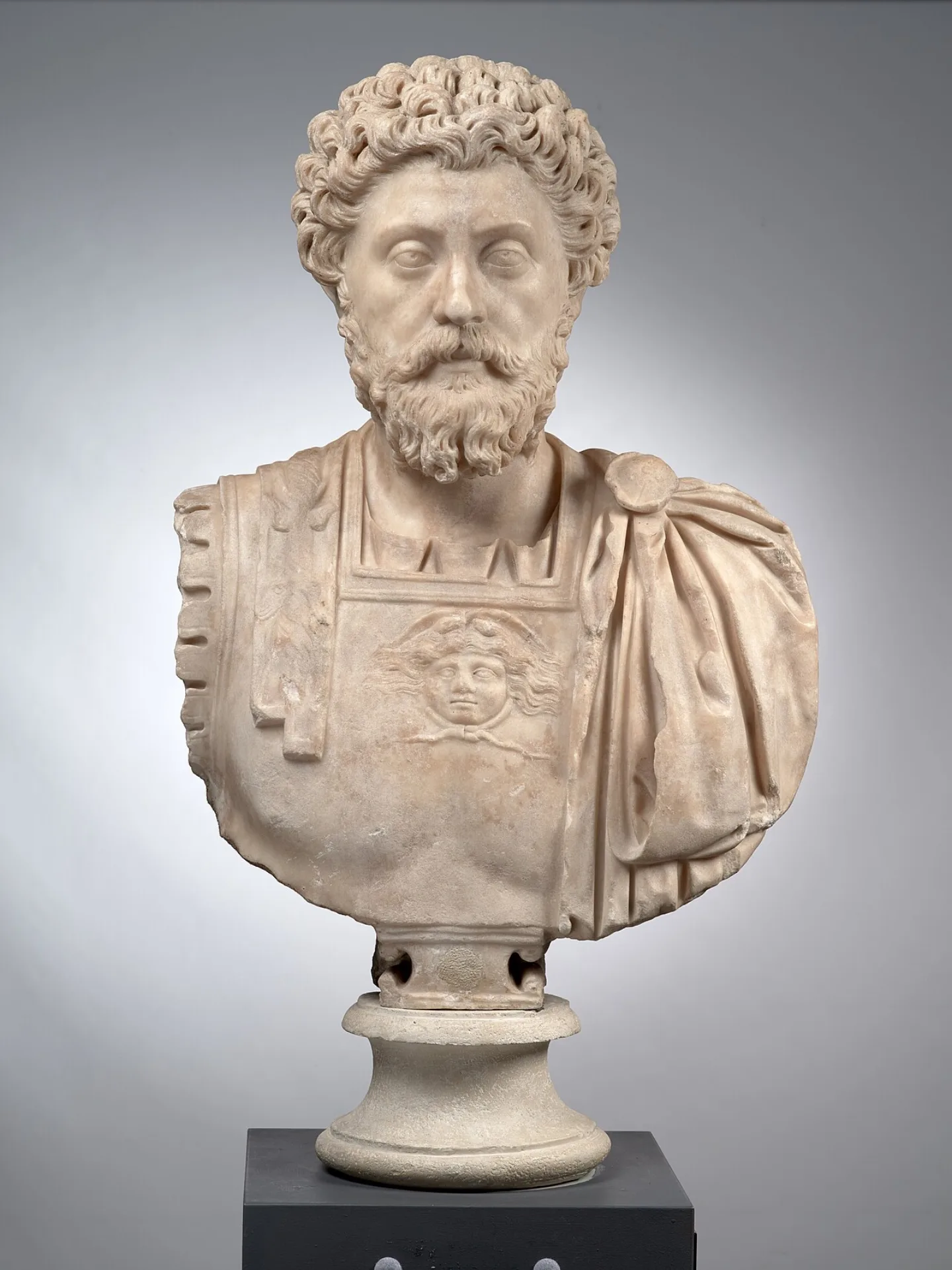
Teacher, Student, and Reader
A Cambridge overview connects Musonius Rufus, Epictetus, and Marcus Aurelius: Musonius is identified as Epictetus's teacher, and Marcus's notebook as influenced by Epictetus's Discourses. The connection is historical and real. It does not flatten the three into one kind of source, since language, audience, genre, and transmission still differ across them.
Matched pairs
Each item on the left goes with the one on the right.
- Cora Lutz
- The translator whose English version of the Musonius lectures and sayings Yale University Press presents.
- Etymology and allegory
- The two methods a 2018 edition credits Cornutus with using to teach Stoic basics in his Greek book on the gods.
- Book 1 of the Long Meditations
- The opening stretch where Marcus sets down what he learned from particular people.
- Musonius Rufus
- The teacher a Cambridge overview places behind Epictetus, the first link in a chain it draws toward Marcus's notebook.
Self-test
Answer each question from memory, then check your work against the answer key.
1. The Stanford overview sets Seneca's works against early Stoicism's fragments. What is that contrast about?
- AWhich authors the Roman state chose to endorse
- BHow much of each period's writing came down to us
- CWhether each period wrote in Greek or in Latin
- DWhich period argued its ethics more rigorously
2. How does Yale University Press describe Musonius Rufus?
- AA second-century Greek grammarian and critic
- BA first-century Roman senator and orator
- CA third-century compiler of Stoic handbooks
- DA first-century Roman Stoic philosopher
3. A Cambridge historical overview, available only as an abstract, supports which claim about Musonius?
- AThat he was exiled and later recalled by an emperor
- BThat he kept a school in Rome for several decades
- CThat he taught Dio Chrysostom and taught Epictetus
- DThat he wrote the lectures Cora Lutz later translated
4. According to the 2018 critical-edition description, what is Cornutus's compendium about, and how does it proceed?
- AThe Greek gods, treated through etymology and allegory
- BRoman religious festivals, arranged as a yearly calendar
- CStoic fate and providence, treated through worked cases
- DGreek grammar and style, arranged as classified rules
5. Seneca's letter index, the Musonius edition notice, and the Cornutus edition description share what limitation?
- AContradiction by newer manuscript discoveries
- BSurvival only as fragments, like early Stoic texts
- CAnonymous authorship with no author ever named
- DBibliographical orientation, not full biography or doctrine
6. What does the traditional account of the Discourses attribute to Arrian?
- AThe Greek prose style in which Epictetus lectured
- BThe record of Epictetus's teaching that it preserves
- CThe choice of topics Epictetus decided to address
- DThe section numbers by which the text is now cited
7. Why does the shorthand "Epictetus says" call for care?
- AThe words reach us through a record whose accuracy is debated
- BThe manuscript behind the text has no known author or date
- CThe teaching was set down long after his students had died
- DThe text survives only in summaries by later Roman officials
8. What does the opened Encheiridion translation make possible for a reader?
- ADating each part of the text to a year of teaching
- BSetting Epictetus's Greek beside Arrian's own Greek
- CCiting a passage by the numbered section holding it
- DTracing the manuscripts behind this printed version
9. How does the Marcus Aurelius overview characterise the Meditations?
- AAs writing made for the sake of his own moral improvement
- BAs a public handbook of Stoic doctrine for Roman officials
- CAs a memoir written to record the events of his reign
- DAs lecture notes taken down by members of his household
10. The Cambridge overview links Musonius, Epictetus, and Marcus. What does that link leave standing?
- AAn agreed order in which the three works are meant to be read
- BReal differences in genre and audience
- COne continuous school curriculum taught in a single classroom
- DA single shared Greek original behind all three bodies of work
Go deeper
- ListenLesson 6 episode
- WatchLetters, Lectures, Gods Roman Stoicism reaches us in very different forms.
- WatchWritings to Himself Marcus Aurelius wrote the Meditations for himself. Scholars broadly agree that it was for his own moral improvement.
- StudyStoicism: A School and Its Sources in the FlashFeed app
Answer key
- 1. B How much of each period's writing came down to usThe overview distinguishes later Stoic works by Seneca from the fragmentary evidence available for early Stoicism. That is a statement about survival, and a fuller surviving body of work does not make Seneca a substitute for the early sources.
- 2. D A first-century Roman Stoic philosopherThe press describes him as a first-century Roman Stoic philosopher and presents his lectures and sayings in Cora Lutz's translation. That is placement and edition information, not a guarantee about every saying attributed to him.
- 3. C That he taught Dio Chrysostom and taught EpictetusThe opened material is an abstract or summary, and what it supports is the teaching relation: Musonius as a teacher of Dio Chrysostom and of Epictetus. Anything fuller would need more than a summary.
- 4. A The Greek gods, treated through etymology and allegoryThe description identifies a Greek compendium on the Greek gods that uses etymology and allegory to teach Stoic basics. It fixes the work's subject, language and method.
- 5. D Bibliographical orientation, not full biography or doctrineEach gives bounded, bibliographical or genre evidence about form, edition, or subject. None of them licenses a full biography, doctrine, or standing in for the whole school.
- 6. B The record of Epictetus's teaching that it preservesThe Discourses are traditionally presented as Arrian's record of Epictetus's teaching. How closely that record tracks the teaching remains a scholarly question.
- 7. A The words reach us through a record whose accuracy is debatedThe Discourses are traditionally Arrian's record, and the relation between record and teaching remains a scholarly question. The shorthand works as an introduction only when that background stays in view.
- 8. C Citing a passage by the numbered section holding itThe page identifies Epictetus and presents numbered sections, which makes section-based citation possible in that translation.
- 9. A As writing made for the sake of his own moral improvementThe overview reports a scholarly consensus that Marcus wrote the Meditations for his own moral improvement, and that the work is commonly called writings to himself. That is a self-addressed reflective genre, not a public textbook or a straightforward memoir.
- 10. B Real differences in genre and audienceThe overview identifies Musonius as Epictetus's teacher and Marcus's notebook as influenced by Epictetus's Discourses. The relation is historical; it does not erase differences of language, audience, genre, or transmission.
Sources
- Stanford Encyclopedia of Philosophy — Stoicism; Stoicism — audited source register — plato.stanford.edu/entries/stoicism/
Image credits
- Later Works, Earlier Fragments: Wikimedia Commons · Marcus Cyron · CC BY-SA 3.0 — commons.wikimedia.org/wiki/File:Duble_herma_of_Socrates_and_Seneca_Antikensammlung_Berlin_01.jpg
- Numbered Letters, Named Topics: Wikimedia Commons · Seneca · Public domain — commons.wikimedia.org/wiki/File:Seneca_the_Younger,_Letters,_Florence,_Plut._45.33.jpg
- A Text You Can Cite by Section: Wikimedia Commons · Epictetus . Edited by Abrahamus Berkelius · Public domain — commons.wikimedia.org/wiki/File:Epictetus_Enchiridion_1683_page1-2.png
- Writings to Himself: Xuan Che (Openverse) · by 2.0 — www.flickr.com/photos/69275268@N00/5384049308
- Teacher, Student, and Reader: Wikipedia · Daniel Martin · CC BY-SA 4.0 — en.wikipedia.org/wiki/Marcus_Aurelius


