
The Four Agreements study guide · Lesson 3 of 5
The Second Agreement — Don't Take Anything Personally
Personal Importance and the Trap of Self-Absorption · Emotional Freedom and Immunity to Praise and Criticism
Unofficial study guide for The Four Agreements: A Practical Guide to Personal Freedom by Don Miguel Ruiz. FlashFeed is not affiliated with the author or publisher.
This is the lesson's study guide from the FlashFeed app, plus its key facts and a self-test.
What you'll be able to do
- Explain Personal Importance and how the Second Agreement's non-attachment dismantles most daily emotional suffering.
- Explain how the Second Agreement builds emotional immunity to praise and criticism, ending dependence on approval and the need for defensive walls.
Lesson 3: The Second Agreement — Don't Take Anything Personally
Personal Importance and the Trap of Self-Absorption
The second agreement of the Toltec path is: Don't Take Anything Personally. This agreement provides an impenetrable shield of emotional immunity against the hostility, cruelty, and turbulence of the surrounding world.
The foundational reason humans take things personally is an egocentric cognitive distortion that Don Miguel Ruiz terms Personal Importance. Personal importance, or the habit of taking things personally, is the ultimate expression of selfishness because it assumes that everything in the universe revolves around "me." We erroneously believe that we are the central character in everyone else's play. When someone insults us, cuts us off in traffic, breaks a promise, or treats us with disrespect, our immediate conditioned reaction is to believe: "They did this to hurt me. How could they do this to me?"
Toltec wisdom reveals that nothing other people do is because of you; it is because of themselves. Every individual lives inside their own personal dream, their own movie, and their own mental reality. Every person is governed by their own Book of Law, their own Inner Judge, and their own internal suffering. When someone looks at you and says, "You are amazing, you are a genius," they are not describing you; they are projecting their own positive emotional state and conditioning. When that same person looks at you the next day and says, "You are horrible, you are incompetent," they are still not describing you; they are projecting their own internal anger, frustration, and pain.
If you take an insult personally, you must first accept the premise of the insult and make an agreement with it. The moment you agree with an insult, the emotional poison enters your system, and you become trapped in the other person's dream of hell. Taking things personally makes you easy prey for emotional predators, known as black magicians, who hook your attention with a provocative comment and inject their poison directly into your psyche. You then feel compelled to defend your position, create counter-arguments, escalate conflict, and create massive personal drama over something that was never about you in the first place.
Don Miguel Ruiz provides a powerful metaphor: if someone walks up to you on the street, points a gun at your head, and pulls the trigger, even that ultimate act of violence is not personal. That person is acting out of their own profound insanity, their own twisted beliefs, and their own desperate despair. While you must certainly take practical steps to protect your physical safety, holding on to personal hatred and taking the act as a personal validation of your unworthiness is a fundamental misunderstanding of reality.
By cultivating absolute awareness of personal importance, you recognize that people's opinions, judgments, and behaviors are entirely their own responsibility. Even the opinions you have about yourself are often not true; they are merely the conditioned judgments of your Inner Judge. According to Ruiz, practicing the first two agreements together — being impeccable with your word and not taking things personally — breaks seventy-five percent of the small, habitual agreements that keep you trapped in suffering.
Deconstructing the Egocentric Illusion and the Freedom of Detachment
The root cause of almost all emotional suffering in interpersonal relationships is the pervasive illusion of Personal Importance. When we live in the grip of personal importance, we view the world through a deeply distorted egocentric filter, assuming that the actions, moods, words, and choices of other people are direct reactions to our existence. If a colleague is irritable, we assume we offended them; if a partner is distant, we assume we did something wrong; if a stranger is rude, we take it as a personal insult.
Toltec philosophy shatters this illusion by revealing that every human being lives entirely inside their own subjective dream. When an individual expresses anger, judgment, or contempt, their behavior is a direct manifestation of their own internal wounds, fears, and unexamined conditioning. Their words are not an objective assessment of your character; they are a confession of their own internal state. Taking their hostility personally is as absurd as believing that the weather rained specifically to ruin your afternoon.
By cultivating deep non-attachment, you step outside the exhausting arena of personal defense. You no longer waste valuable time and energy justifying your decisions, arguing with detractors, or demanding that others validate your worth. You recognize that everyone has the sacred right to perceive the world through their own unique perspective, however distorted it may be. With this realization, the burden of self-absorption dissolves, granting you the profound freedom to live authentically and peacefully in any circumstance.
Emotional Freedom and Immunity to Praise and Criticism
When you master the Second Agreement and refuse to take anything personally, you develop what Don Miguel Ruiz describes as total Emotional Immunity. This immunity allows you to navigate the world with an open, fearless heart, entirely immune to the volatility of external praise and condemnation.
True emotional freedom requires recognizing that Praise is just as dangerous as criticism when your self-worth depends upon it. Many people believe they have overcome the need for approval because they ignore insults, yet they remain desperately addicted to compliments, accolades, and validation. When you depend on others to tell you that you are good, smart, attractive, or successful, you remain a slave to their opinions. The moment their praise ceases or turns into disapproval, your self-esteem collapses. An Impeccable Spiritual Warrior requires no external validation because their self-worth is anchored in direct self-acceptance and connection with the divine.
Don Miguel Ruiz makes the point plainly: if someone tells you that you are the most wonderful person in the world, don't take it personally — and if they tell you that you are the most disgusting person on earth, don't take that personally either. When you know who you are, what people say about you cannot alter your reality. You don't need to believe someone who tells you you are great, because you don't need praise to feel worthy. And you don't need to be offended when someone insults you, because you recognize that their insult is merely a confession of their own internal wounds.
With the armor of the Second Agreement, you can walk through the center of hell and remain completely unharmed. You can walk through a toxic workplace, interact with angry family members, or face public criticism without feeling wounded or bitter. You do not need to build walls around your heart or withdraw from human connection. Because you know that nothing others do is about you, you have no reason to feel fear, jealousy, resentment, or anger toward anyone. You can express love freely, forgive effortlessly, and make courageous life choices without being paralyzed by the fear of judgment.
Furthermore, this agreement eliminates the exhausting need to control other people. You accept that everyone has the divine right to live their own dream, make their own mistakes, and learn their own lessons. You no longer waste energy trying to convince others that you are right or trying to change their beliefs to match your own. You respect their sovereignty, and in doing so, you preserve your own peace. When you combine the First Agreement (Be Impeccable with Your Word) with the Second Agreement (Don't Take Anything Personally), you dismantle the foundational scaffolding of emotional suffering and step into an expansive state of inner serenity.
Cultivating Sovereign Inner Equanimity and Unconditional Love
Achieving total Emotional Immunity through the Second Agreement represents one of the highest milestones on the Toltec path to mastery. When you are truly immune to external opinions, you achieve an unshakeable state of inner equanimity that cannot be disturbed by the unpredictable fluctuations of praise and condemnation.
Most individuals remain perpetually vulnerable because their sense of self-worth is outsourced to the external environment. They soar with euphoria when receiving compliments and plummet into despair when confronted with criticism. This psychological dependency keeps them in a state of chronic servitude, constantly modifying their behavior to win the approval of others. The Toltec warrior recognizes that both praise and blame are merely transient projections of other people's dreams. When someone praises you, they are simply liking their own reflection in you; when they criticize you, they are projecting their own internal dissatisfaction.
Armed with this profound immunity, you can walk through the most toxic environments without absorbing emotional poison or building defensive armor around your heart. You do not need to withdraw from human relationships to protect your peace. Because you know that nothing others do is about you, you can keep your heart wide open, loving without fear of being hurt, giving without expectation of return, and forgiving effortlessly. You experience the exhilaration of radical emotional sovereignty, anchored in the unwavering truth of your own divine nature.
Key terms
- Personal Importance
- The egocentric belief that everything in the universe revolves around 'me,' representing the ultimate expression of selfishness and delusion.
- Emotional Immunity
- The unshakeable state of inner equanimity achieved by refusing to take anything personally, allowing one to navigate chaos unharmed.
Key facts
The Second Agreement
Don't Take Anything Personally: Recognize that nothing others say or do is because of you; everything is a projection of their own dream and conditioning.
Personal Importance: The Movie Metaphor
Personal Importance — the habit of taking things personally — is, in Toltec terms, the ultimate expression of selfishness, because it assumes the whole universe revolves around "me." In truth, you are the star of your own movie and only a secondary actor in everyone else's; each person is living their own film, reciting lines from their own script, not yours.
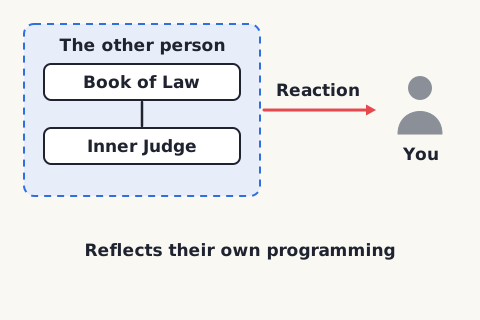
Governed by Personal Book of Law
Every person is governed by their own internal Judge and Book of Law, meaning their reactions to you reflect their own mental programming.
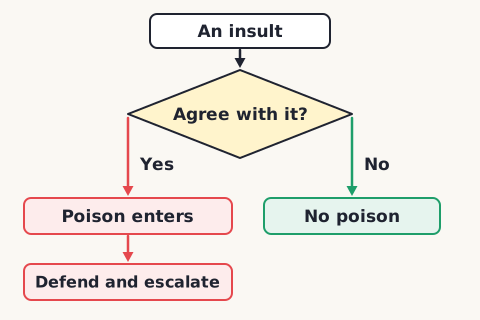
Agreeing With an Insult
An insult can only poison you if you first accept its premise and agree with it — the moment you do, the emotional poison enters your system and you become trapped in the other person's dream of hell. From there, you feel compelled to defend your position, build counter-arguments, and escalate a conflict that was never actually about you.
Emotional Hooks
Provocative comments dangled by others to snag your attention; if you take them personally, you bite the hook and become vulnerable to manipulation.
The Extreme Gun Metaphor
Even if someone points a gun at your head, that extreme violence is not personal; it is an expression of their own severe despair and conditioning.

Safety Without Taking It Personally
Taking practical steps to protect your physical safety and taking someone's violence personally are two separate matters — you can do the first fully without doing the second at all. Toltec teaching holds that even the most extreme act says nothing about your worth, so guarding your safety never requires carrying personal hatred or reading the act as proof you deserved it.
Self-Opinions as Conditioned Judgments
Even the negative opinions you hold about yourself are usually untrue, representing the conditioned biases of your Inner Judge.
The 75 Percent Rule
According to Don Miguel Ruiz, practicing the first two agreements together — being impeccable with your word and not taking things personally — breaks roughly seventy-five percent of the small, habitual agreements that keep a person trapped in suffering.
Freedom From Defending Yourself
Once you accept that everyone lives inside their own dream, you can step outside the exhausting arena of personal defense altogether. You stop spending your energy justifying decisions, arguing with critics, or demanding that others validate your worth — because you no longer need their agreement to know who you are.
Emotional Immunity: Walking Through Hell
Mastering the Second Agreement grants what Ruiz calls total Emotional Immunity — an unshakeable inner equanimity that lets you navigate the world with an open, fearless heart. Armed with it, you can walk through a toxic workplace, an angry family gathering, or public criticism and come out unharmed, responding with clarity instead of reacting with anger.

Praise Is Just as Dangerous
Many people believe they've overcome the need for approval simply because they can shrug off insults — but they remain desperately addicted to compliments and accolades. Depending on others to tell you that you're good, smart, or successful makes you a slave to their opinions, because the moment their praise stops or turns to disapproval, your self-esteem collapses with it.
Warrior Self-Worth Anchored in Divine Connection
The spiritual warrior requires no external validation because self-worth is anchored in direct self-acceptance and connection with the divine.
Wonderful or Disgusting: Same Response
Don Miguel Ruiz frames the goal plainly: if someone tells you that you're the most wonderful person in the world, don't take it personally — and if they tell you that you're the most disgusting person on earth, don't take that personally either. When you truly know who you are, nothing anyone says about you can alter that reality in either direction.
Two Agreements, One Open Heart
Because you know that nothing others do is truly about you, you no longer need to build walls around your heart to feel safe — you can love freely, forgive effortlessly, and act courageously without fear of judgment. Combining the First Agreement (Be Impeccable with Your Word) with the Second (Don't Take Anything Personally) dismantles the foundational scaffolding of emotional suffering.
Freedom from Jealousy and Resentment
Recognizing that other people's behavior reflects their own conditioning dissolves the root causes of jealousy, anger, and resentment.
Respecting Sovereign Dreams
Every person possesses the sacred right to live their own dream, make their own mistakes, and learn their own lessons without our control.
Neutralizing Emotional Hooks
A provocative comment is a hook dangled to catch your attention — the move is to recognize it as one, breathe, and refuse to bite by taking it personally. Let the statement slide off your awareness while maintaining sovereign neutrality, rather than fighting back or absorbing it.
Preserving Peace in Volatile Settings
Practicing non-attachment protects the practitioner from absorbing toxicity when interacting with difficult personalities.
Matched pairs
Each item on the left goes with the one on the right.
- External Insult or Flattery
- Speaker's Internal Emotional Projection
- The Movie Metaphor
- You are the Star of Your Film and a Secondary Actor in Others'
- Another's Hostile Insult
- Confession of Their Own Internal Wounds
- Second Agreement Mastery
- Eliminating the Need to Control Others
Step by step
Protocol for Neutralizing Emotional Hooks
- Recognize when a provocative statement or insult is intended as an emotional hook.
- Breathe deeply and refuse to bite the hook by taking the statement personally.
- Allow the statement to slide off your awareness while maintaining sovereign neutrality.
Self-test
Answer each question from memory, then check your work against the answer key.
1. Which Toltec concept names the egocentric belief that everything revolves around 'me'?
- ABook of Law
- BInner Judge
- CPersonal Importance
- DEmotional Immunity
2. Personal Importance leads people to falsely believe they are the ___ in everyone else's play.
- ASilent witness
- BInvisible bystander
- CPassive spectator
- DCentral character
3. Taking an insult personally and defending your position creates interpersonal ___.
- AClarity
- BDrama
- CDiplomacy
- DConsensus
4. Non-attachment frees you from justifying decisions and arguing with detractors, so you stop demanding others validate your ___.
- AWorth
- BIdentity
- CAchievements
- DOpinions
5. Don Miguel Ruiz says practicing the first two agreements together — not just giving up taking things personally — eliminates roughly what share of the small agreements that trap you in suffering?
- A90 percent
- B25 percent
- C75 percent
- D50 percent
6. Which term names the unshakeable calm gained by refusing to take praise or blame personally?
- ABook of Law
- BEmotional Immunity
- CPersonal Importance
- DImpeccable Spiritual Warrior
7. Depending on others' approval to feel worthy makes you an emotional ___ to their opinions.
- AServant
- BHostage
- CPrisoner
- DSlave
8. Knowing that others' actions aren't about you removes the need to build defensive ___ around your heart.
- AWalls
- BFences
- CShields
- DBarriers
9. With the armor of the Second Agreement, you can walk through the center of ___ and remain completely unharmed.
- AHell
- BConflict
- CFire
- DChaos
10. Which emotion is NOT specifically named in the lesson as dissolved by Emotional Immunity?
- AJealousy
- BResentment
- CFear
- DGrief
Go deeper
- ReadThe Four Agreements by Don Miguel Ruiz · on Amazon ↗
- StudyThe Four Agreements in the FlashFeed app
These are affiliate links: if you buy a book through one, FlashFeed may earn a small commission at no extra cost to you. The commission helps pay for FlashFeed's servers.
As an Amazon Associate we earn from qualifying purchases.
Answer key
- 1. C Personal ImportancePersonal Importance is defined as the belief the universe revolves around you. Emotional Immunity is the freedom from that belief, not the belief itself.
- 2. D Central characterWe "erroneously believe that we are the central character in everyone else's play" — the core symptom of Personal Importance.
- 3. B DramaDefending against a perceived insult escalates conflict into drama, not calm outcomes like diplomacy or consensus.
- 4. A WorthNon-attachment stops you from "justifying your decisions, arguing with detractors, or demanding that others validate your worth."
- 5. C 75 percentRuiz ties this 75% figure to practicing the first two agreements together (being impeccable with your word, plus not taking things personally) — not to the Second Agreement in isolation.
- 6. B Emotional ImmunityEmotional Immunity is the equanimity from not taking praise or criticism personally; Personal Importance is the opposite belief that fuels taking things personally.
- 7. D SlaveThe exact word is 'slave' — once praise stops or turns to disapproval, a praise-dependent person's self-esteem collapses.
- 8. A WallsThe exact phrase is 'walls' — you can love freely and act courageously without needing defensive walls.
- 9. A HellYou "can walk through the center of hell and remain completely unharmed" once Emotional Immunity is achieved.
- 10. D GriefThe lesson names fear, jealousy, resentment, and anger as dissolved by Emotional Immunity — grief isn't specifically mentioned.
Sources
- The Four Agreements — Don Miguel Ruiz
- The Four Agreements, Chapter 3: The Second Agreement (Don't Take Anything Personally)
Image credits
- Governed by Personal Book of Law: FlashFeed original diagram · CC-BY-4.0
- Agreeing With an Insult: FlashFeed original diagram · CC-BY-4.0
- Safety Without Taking It Personally: Dietmar Rabich · CC BY-SA 4.0 — commons.wikimedia.org/wiki/File:L%C3%BCdinghausen,_Naturschutzgebiet_Borkenberge_--_2020_--_0245.jpg
- Praise Is Just as Dangerous: zeevveez from Jerusalem, Israel · CC BY 2.0 — commons.wikimedia.org/wiki/File:Puppet_on_Strings_(8046726691).jpg

