
The Psychology of Money study guide · Lesson 4 of 6
The True Value of Wealth: Autonomy and Invisible Capital
Freedom, Time Autonomy, and the Highest Dividend · The Man in the Car Paradox & Invisible Wealth
Unofficial study guide for The Psychology of Money: Timeless lessons on wealth, greed, and happiness by Morgan Housel. FlashFeed is not affiliated with the author or publisher.
This is the lesson's study guide from the FlashFeed app, plus its key facts and a self-test.
What you'll be able to do
- Explain why Housel calls control over your time money's highest dividend, citing Angus Campbell's study and Pillemer's survey of 1,000 elderly Americans.
- Explain the Man in the Car Paradox, why spending to look rich leaves you with less money (Rihanna), and why invisible wealth is capital compounding quietly.
Lesson 4: The True Value of Wealth: Autonomy and Invisible Capital
Welcome to Lesson 4 of The Psychology of Money. This lesson explores the ultimate intrinsic dividend of wealth—time autonomy—and contrasts outward status signaling with authentic, invisible financial capital.
Freedom, Time Autonomy, and the Highest Dividend
The highest form of wealth is the ability to wake up every morning and say: "I can do whatever I want today."
In 1981, psychologist Angus Campbell published a landmark study titled The Sense of Well-Being in America based on research conducted at the University of Michigan. Campbell surveyed thousands of Americans across all demographic groups to determine what factors reliably produce human happiness. His primary conclusion was striking: having a strong sense of controlling your life is a more dependable predictor of positive well-being than any objective condition.
Having control over your time has a greater positive impact on daily happiness than salary level, house square footage, luxury car brand, or career prestige. Doing what you love on a schedule you cannot control can feel just as draining as doing something you hate.
Consider John D. Rockefeller, the founder of Standard Oil. Rockefeller was a recluse who deliberately said little, even in meetings. A refinery worker who occasionally had his ear once remarked, "He lets everybody else talk, while he sits back and says nothing." His real work was invisible: his job was not to drill wells, load trains, or move barrels, but to think clearly and make high-stakes capital allocation decisions. Rockefeller practiced radical schedule autonomy.
The modern economy has created a subtle psychological crisis for knowledge workers. In the 1950s, most jobs were industrial or administrative: when a factory worker clocked out at 5:00 PM, their physical tools remained on the factory floor and their workday was over. Modern knowledge workers, by contrast, carry their tools inside their brains and smartphones. Cognitive workers carry work-related mental fatigue into evenings, weekends, and vacations unless strict personal boundaries and financial independence are established.
Accumulating liquid savings buys you the flexibility to wait for a great job rather than accepting the first toxic offer out of desperation. Having an emergency reserve gives you the freedom to take time off when sick, care for aging parents, or pivot careers without existential panic.
In 30 Lessons for Living, gerontologist Karl Pillemer surveyed 1,000 elderly Americans about what they valued most looking back over their lives. Not a single person said happiness came from working harder to buy more luxury consumer goods or having more money than peers. Instead, the elderly universally valued quality friendships, participating in causes greater than themselves, and spending unhurried, unstructured time with their children.
Money's greatest intrinsic value—and its highest dividend—is its ability to grant you control over your time and autonomy over your daily calendar. Aligning your personal spending with the explicit goal of buying back your time transforms money from a source of stress into an engine of freedom.
Schedule Autonomy and Cognitive Knowledge Work
In modern knowledge economies, the value of Time Autonomy has become the primary determinant of personal well-being. Unlike physical manufacturing labor, where physical fatigue stops the moment machinery is shut down, knowledge work is inherently unbounded. Because creative problem-solving, strategic thinking, and analytical synthesis occur inside the brain, cognitive workers without financial buffers often feel perpetually on call, experiencing chronic stress and burnout.
Accumulating liquid financial reserves transforms this dynamic by providing the ultimate asset: Schedule Independence. Having six months, a year, or two years of living expenses in liquid savings grants you the leverage to establish healthy workplace boundaries, decline toxic management demands, and take unhurried sabbaticals when life requires. Money's highest dividend is not the ability to purchase luxury consumer goods; it is the freedom to wake up each morning and dictate the structure of your own day.
The Man in the Car Paradox & Invisible Wealth
Chapters 8 and 9 examine the fundamental confusion between outward status signaling and authentic personal wealth.
Housel introduces the Man in the Car Paradox, drawn from his years working as a valet at a luxury hotel in Los Angeles. When people see someone driving an expensive car like a Ferrari, they rarely think the driver is admirable. Instead, they picture themselves in the driver's seat, imagining how cool and admired they would look.
This paradox reveals that people purchase expensive luxury goods to gain respect and admiration from others. But the observers do not admire the owner; they use the luxury good merely as a benchmark for their own fantasy of being admired. True respect, affection, and admiration cannot be bought with expensive metal or designer labels; they are earned through humility, kindness, intelligence, and empathy.
Chapter 9 establishes the vital distinction between being Rich and being Wealthy. Spending money to show people how much money you have is the fastest, most direct way to have less money.
Rich is current income spent visibly on assets and lifestyle: luxury sports cars, designer clothing, expensive dinners, and massive mortgages. Rich is visible, loud, and easy to see.
Wealth, by contrast, is what you do not see. Wealth is unspent income, retained liquidity, and optionality. Wealth is the sports cars not purchased, the first-class tickets declined, the diamonds not bought, and the capital left compounding quietly in investment accounts.
In 2012, pop superstar Rihanna sued her former accountants (the firm Berdon LLP), alleging their mismanagement had cost her millions of dollars. In reply, as Housel retells it, her financial team said: "Was it really necessary to tell her that if you spend money on things, you will end up with the things and not the money?"
Society idolizes visible consumption because outward spending is easy to see, while invisible wealth accumulating in investment accounts is quiet and concealed. It is easy to find role models who are visibly rich, but much harder to find role models who are genuinely wealthy because their financial assets remain private.
Housel compares personal finance to fitness: spending money to get rich is like eating thousands of calories to lose weight; true wealth requires the dietary restraint of unspent savings. Living below your means is not a sacrifice of enjoyment; it is an active purchase of future freedom, resilience, and independence. Cultivating comfort with invisible wealth frees you from the exhausting rat race of status signaling and competitive consumerism.
The Psychological Liberation of Invisible Wealth
The profound difference between being Rich (current high income visibly consumed) and being Wealthy (unspent capital retained for future freedom) explains why so many high-earning professionals remain financially fragile. When an individual equates self-worth with visible status display—luxury automobiles, designer apparel, expensive country club memberships—every increase in salary is instantly consumed by new luxury commitments, leaving zero retained liquidity.
Understanding the Man in the Car Paradox shatters this status trap. When you realize that passersby do not admire the driver of a luxury sports car, but merely daydream about how cool they would look in it, the urge to spend hard-earned money on outward status symbols evaporates. True financial peace comes from recognizing that unspent wealth—held in index funds, cash reserves, and debt-free equity—provides quiet confidence, resilience, and genuine freedom that no luxury consumer item can ever deliver.
Key terms
- The Campbell Well-Being Finding
- The 1981 University of Michigan study proving that controlling your life is a more dependable predictor of happiness than any objective condition.
- The Pivot Cushion
- The liquid capital reserve that allows individuals to take sabbaticals, care for sick family, or switch careers without financial panic.
- The Autonomy Dividing Line
- The true dividing line of wealth: owning your time versus letting an employer's demands dictate every waking hour of your life.
- Unpurchasable Respect
- The reality that authentic admiration cannot be bought with luxury goods; it is earned through kindness, humility, and empathy.
- The Financial Diet Analogy
- Spending money to get rich is like eating thousands of calories to lose weight; true wealth requires the dietary restraint of unspent savings.
Key facts
The Primacy of Time Control Over Income
Control over your daily calendar has a greater positive impact on life satisfaction than salary level, house square footage, or luxury cars.
1950s Industrial Labor
Factory labor ended physically at the factory gate at 5 PM, whereas knowledge workers carry mental fatigue constantly inside their smartphones.
The Modern Knowledge Work Trap
Cognitive workers never truly leave their jobs in digital economies unless they establish financial independence and firm boundaries.
Money's Highest Dividend
Money's greatest intrinsic value—and its highest dividend—is its ability to grant you control over your time and daily calendar.
The High-Income Burnout Trap
Earning a massive salary while sacrificing 80 hours a week to work you dislike creates high consumption paired with low life satisfaction.
Independence as a Life Shock Absorber
Wealth provides independence, which is the ultimate buffer against life's inevitable surprises, economic downturns, and career disruptions.
The Status Symbol Illusion
People spend money on luxury status symbols to gain respect, yet observers use the goods merely as benchmarks for their own fantasies.
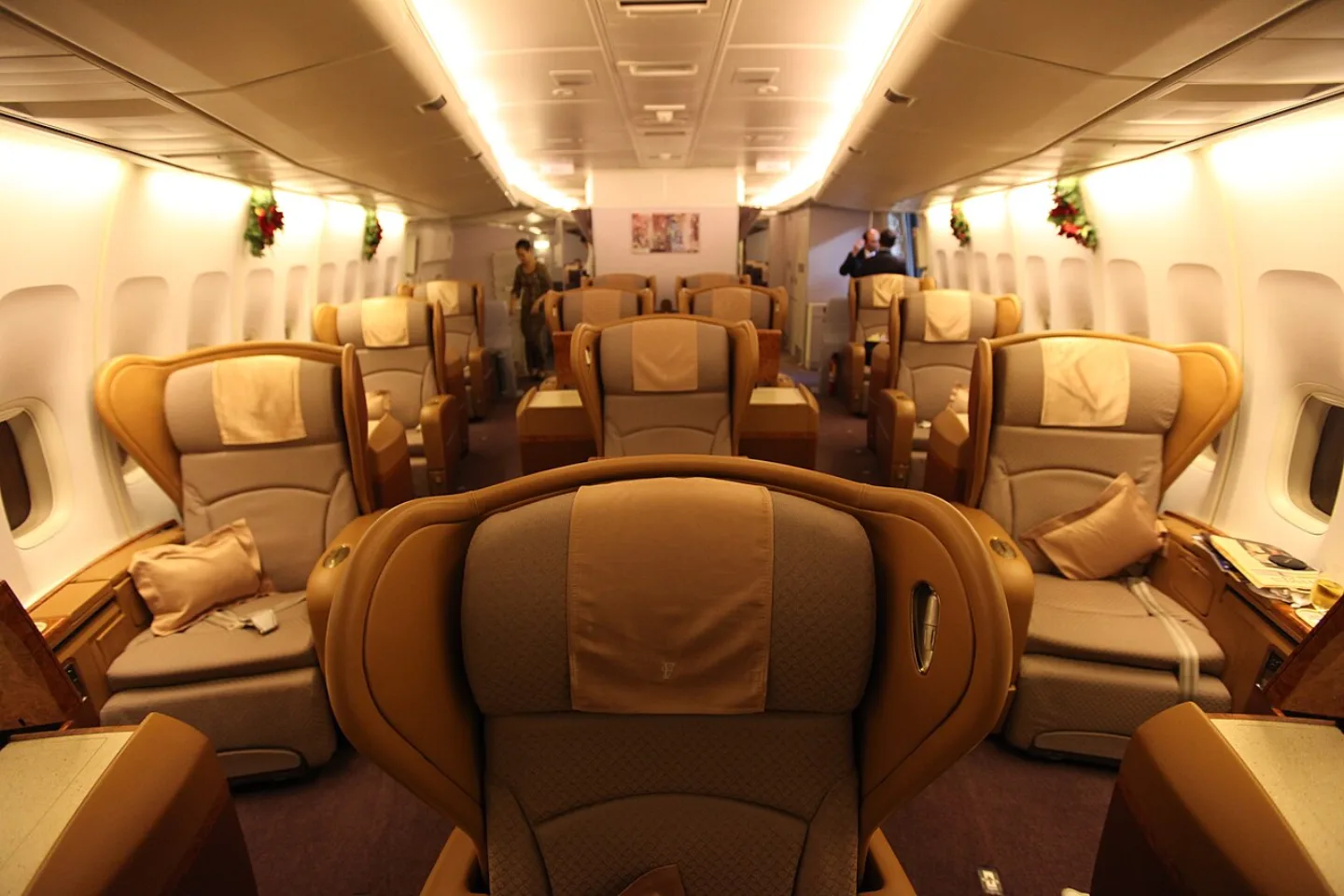
Wealth is What You Do Not See
Wealth is unspent income: the sports cars not purchased, first-class upgrades declined, and capital left compounding in investment accounts.
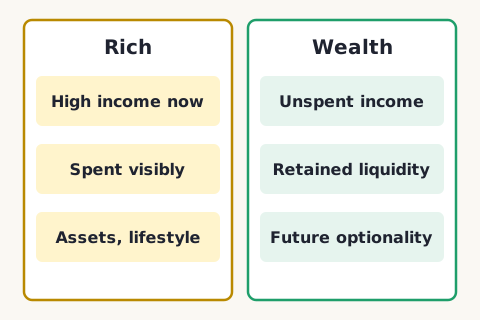
Rich
Rich is current high income spent visibly on assets and lifestyle, whereas Wealth is unspent income, retained liquidity, and future optionality.
The Visibility Bias of Wealth
Society idolizes visible consumption because outward spending is easy to see, while invisible wealth compounding in accounts remains hidden.
The Scarcity of Wealthy Role Models
It is easy to find role models who are visibly rich, but difficult to find role models who are genuinely wealthy because wealth is private.
Living Below Your Means as a Purchase of Freedom
Living below your means is not a sacrifice of enjoyment; it is an active purchase of future freedom, resilience, and independence.
Quiet Wealth vs. Insecure Display
Conspicuous consumption is often an insecure cry for validation, whereas quiet wealth provides internal calm without needing approval.
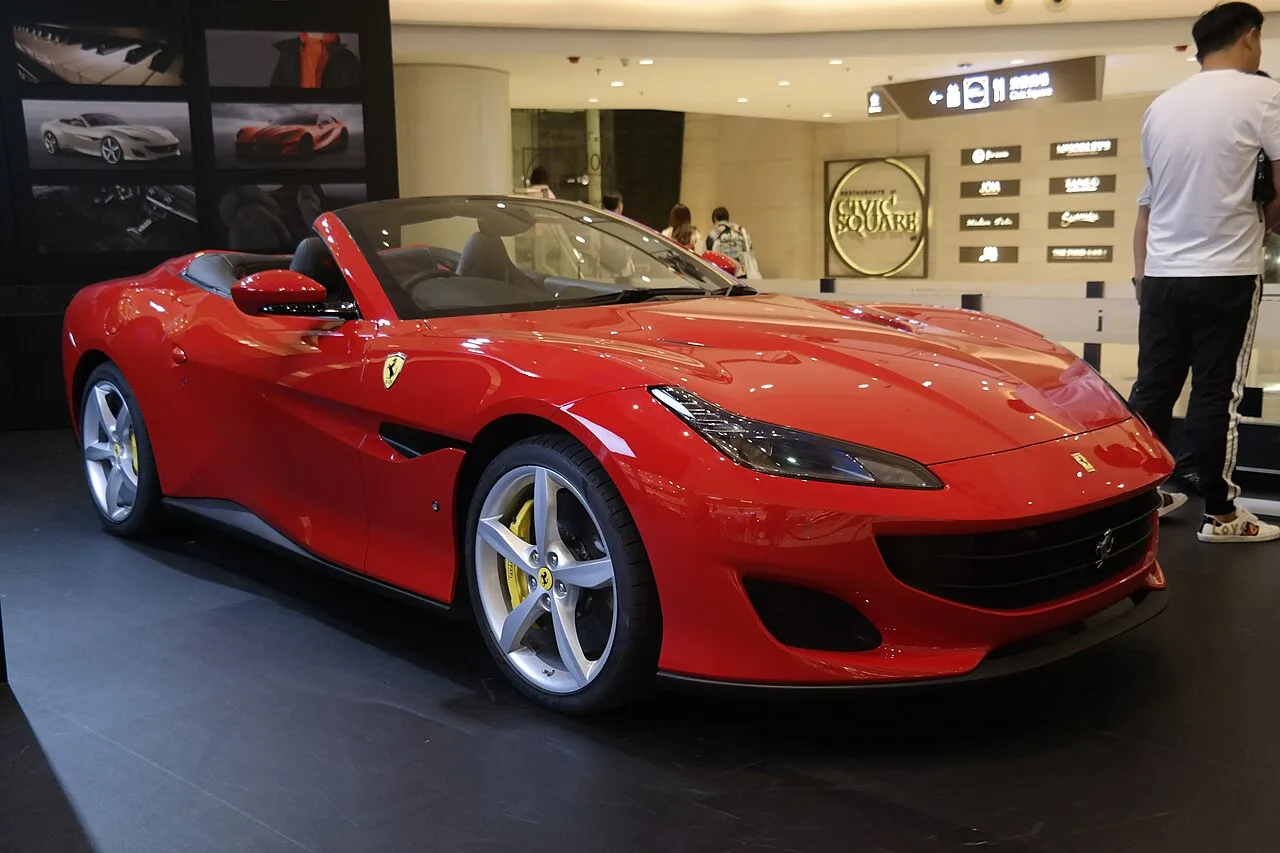
The Indifference of Strangers
Luxury spending is frequently driven by an insecure urge to signal status to strangers who are largely indifferent to the spender.
Step by step
Aligning Spending with Time Autonomy
- Calculate your true hourly baseline cost of living and overhead commitments
- Eliminate recurring luxury expenses that fail to deliver tangible daily well-being
- Direct freed-up cash flow into liquid reserves and low-cost compounding investments
- Utilize accumulated financial independence to negotiate schedule flexibility and project autonomy
Cultivating Invisible Wealth in Daily Life
- Deconstruct the impulse to buy luxury items by identifying the desire for external validation
- Celebrate unspent money in bank and brokerage accounts as stored freedom and future resilience
- Automate transfers to long-term investment accounts immediately upon receiving income
- Take pride in quiet financial independence rather than outward material display
Self-test
Answer each question from memory, then check your work against the answer key.
1. Angus Campbell's 1981 study on well-being was conducted at which university?
- AHarvard University
- BStanford University
- CUniversity of Chicago
- DUniversity of Michigan
2. The lesson identifies money's 'highest dividend' as what?
- AAccess to prestige and status
- BControl over time and calendar
- CAbility to grow investments
- DAbility to buy luxury goods
3. How did a refinery worker describe John D. Rockefeller's behavior in meetings?
- APublicly praised employee ideas
- BDominated meetings with orders
- CLet others talk, said nothing
- DDelegated decisions to staff
4. In Karl Pillemer's survey of 1,000 elderly Americans, how many cited buying luxury goods as a source of happiness?
- AZero people
- BAbout 50 people
- CNearly all of them
- DAbout 200 people
5. Which scenario best demonstrates 'time autonomy'?
- ACEO working eighty-hour weeks
- BFactory worker with big mortgage
- CFreelancer fearing lost income
- DRetiree with flexible schedule
6. What does Housel call the phenomenon where onlookers ignore a luxury car's driver and imagine themselves in it instead?
- AThe Man in the Car Paradox
- BThe Visibility Bias
- CThe Status Symbol Illusion
- DUnpurchasable Respect
7. Which pop superstar sued her former accountants in 2012, alleging their mismanagement had cost her millions of dollars?
- ABeyoncé
- BMariah Carey
- CRihanna
- DBritney Spears
8. According to Chapter 9, being 'Rich' is best defined as what?
- AUnspent income and liquidity
- BIncome spent visibly on assets
- COptionality for future choices
- DCapital compounding in accounts
9. Spending to show how much money you have is the fastest way to end up with what?
- AThe same amount of money
- BMore money
- CLess money
- DNo money at all
10. Which of these best describes invisible wealth?
- ACapital compounding quietly in accounts
- BIncome spent visibly on lifestyle
- CStatus signaling through visible consumption
- DSalary consumed by new luxury commitments
Go deeper
- ReadThe Psychology of Money by Morgan Housel · on Amazon ↗
- StudyThe Psychology of Money in the FlashFeed app
These are affiliate links: if you buy a book through one, FlashFeed may earn a small commission at no extra cost to you. The commission helps pay for FlashFeed's servers.
As an Amazon Associate we earn from qualifying purchases.
Answer key
- 1. D University of MichiganCampbell's landmark 1981 study, The Sense of Well-Being in America, was based on research at the University of Michigan.
- 2. B Control over time and calendarMoney's greatest intrinsic value is granting control over your time and daily calendar, not luxury goods, returns, or prestige.
- 3. C Let others talk, said nothingThe worker said Rockefeller 'lets everybody else talk, while he sits back and says nothing,' reflecting his quiet, deliberate style.
- 4. A Zero peopleNot a single one of the 1,000 elderly Americans surveyed said happiness came from buying more luxury consumer goods.
- 5. D Retiree with flexible scheduleTime autonomy means controlling your own schedule; the retiree does this, while the others are bound by income pressure or long hours.
- 6. A The Man in the Car ParadoxHousel names this the Man in the Car Paradox: passersby don't admire the driver, they daydream about themselves being admired.
- 7. C RihannaRihanna sued her former accountants in 2012; in reply, as Housel retells it, they said that spending money on things leaves you with the things, not the money.
- 8. B Income spent visibly on assetsRich is current income spent visibly on assets and lifestyle; the other options describe Wealth, which is unspent and retained.
- 9. C Less moneySpending to display wealth is the fastest, most direct way to have less money.
- 10. A Capital compounding quietly in accountsWealth is capital left compounding quietly, unseen; the other options all describe visible spending or status signaling, which is 'Rich,' not Wealth.
Sources
- The Psychology of Money — Morgan Housel
- Rolling Stone, "Rihanna Sues Former Accountants" (2012) — www.rollingstone.com/music/music-news/rihanna-sues-former-accountants-242667/
- Morgan Housel, The Psychology of Money, Chapter 7
- Morgan Housel, The Psychology of Money, Chapter 8
- Morgan Housel, The Psychology of Money, Chapter 9
- Morgan Housel, The Psychology of Money, Chapter 3
Image credits
- Wealth is What You Do Not See: https://www.flickr.com/photos/richardmoross · CC BY 2.0 — commons.wikimedia.org/wiki/File:SQ_First_Class_747_cabin.jpg
- Rich: FlashFeed original diagram · CC-BY-4.0
- The Indifference of Strangers: David290 · CC BY-SA 4.0 — commons.wikimedia.org/wiki/File:Red_Ferrari_sports_car_in_HK_20190608_191418_A.jpg

