
The Complete Volkswagen GTI study guide · Lesson 2 of 13
The Birth of the GTI
A Secret Project in Wolfsburg · The First GTI Goes Public
This is the lesson's study guide from the FlashFeed app, plus its key facts and a self-test.
What you'll be able to do
- Explain the secret 'Sport Golf' skunkworks project and the people who created and approved it.
- Describe the first GTI's engineering recipe: the Audi-sourced 1.6L, ~110 hp, a light body, and a small planned run.
- Recall the Mk1 GTI's 1975 Frankfurt debut, its sales, performance figures, and what 'GTI' stands for.
- Identify the Mk1 GTI's signature cues: red grille stripe, tartan seats, golf-ball knob, and lip spoiler.
A Secret Project in Wolfsburg
In 1974, a handful of VW engineers spent their off-hours building a performance Golf that nobody at the top had asked for. What they produced in secret became the car that defined an entire segment.
The Sport Golf Skunkworks
The project had no official name on any org chart, so the team gave it one themselves: the Sport Golf. Starting in 1974, no more than half a dozen VW engineers and enthusiasts worked evenings and weekends at the Wolfsburg factory, using whatever parts and floor time they could quietly commandeer. Management had issued no mandate and allocated no budget. The project existed because a small group believed the Golf platform deserved something better than its ordinary trim levels, and they were willing to spend personal time proving it.
Löwenberg and Konrad
Every skunkworks has a ringleader. Here it was Alfons Löwenberg, a young engineer who supplied the vision and kept the project coherent. He recruited Anton Konrad, a VW press officer, and a tight circle of like-minded colleagues. Their informal structure was part of what kept the project alive — there was no official line to cut, no budget meeting to cancel it at. When the prototype was eventually shown to Toni Schmücker, VW's chairman at the time, he recognized what he was looking at and approved it for production. Without Schmücker's backing the Sport Golf would have stayed a Wolfsburg footnote.
The Key Insight
The engineering logic was straightforward. Take the 1.6-liter fuel-injected engine sourced from Audi — rated at 110 hp — and fit it into the Golf body, which weighed barely over 1,800 lbs. No exotic materials, no bespoke platform. The insight was that the Golf's lightness did most of the work: modest power in a light shell produces a car that feels genuinely fast, turns eagerly, and rewards the driver without demanding race-circuit bravado. Management, once convinced, initially pencilled in a production run of 5,000 units — a number that would prove wildly conservative.
The First GTI Goes Public
The Sport Golf prototype moved from a Wolfsburg skunkworks to the world stage in under a year. What followed vindicated the engineers who had quietly built it on their own time.
Frankfurt, September 1975
The Golf GTI Mk1 made its public debut at the Frankfurt International Motor Show in September 1975 and went on sale in the summer of 1976. Management's initial production ceiling of 5,000 units proved almost comically wrong: before the Mk2 arrived to replace it, a total of 461,690 Mk1 GTIs had been sold — nearly 100 times the planned run. Performance figures were modest by later standards — a top speed of 113 mph and a 0–60 time of around 9 seconds — but in the context of everyday family hatchbacks those numbers felt transformative, and the driving character impressed well beyond the raw specs.
What GTI Stands For
The badge that would anchor the car's identity for fifty years reads GTI, officially short for Gran Turismo Injection. The alternative reading, Grand Tourer Injection, has its advocates, and the true origin of the initialism remains debated even within VW. What is not debated is the effect: three letters that instantly communicated something apart from the standard Golf range, placed on a car whose reputation then made the badge mean something permanent.
The Iconic Package
Speed alone does not make a car a cultural object. The Mk1 GTI became one partly because of what surrounded the engine. The exterior carried a front lip spoiler that separated it visually from any base Golf, and a red stripe running across the front grille that became the GTI's single most recognizable visual signature. Inside, the seats were trimmed in "Clark" tartan plaid fabric — now a collector touchstone — and the gear lever was topped with a golf ball–shaped gear knob, a piece of self-aware wit that cemented the car's personality. In Munich, London, and Paris, a black GTI was the car to be seen in.
Key terms
- Sport Golf
- The unofficial internal name for the spare-time project that became the GTI, built by a small VW team without management approval.
- Toni Schmücker
- The VW chairman who was shown the Sport Golf project and approved it for production.
Key concepts
The Sport Golf
- The unofficial name a handful of VW engineers gave a performance hatchback they built off the clock starting in 1974.
- No more than half a dozen enthusiasts developed it evenings and weekends at Wolfsburg, with no budget and no mandate.
- Chairman Toni Schmücker recognized its potential and approved the skunkworks car for production.
The golf ball gear knob
- A witty, self-aware interior touch that gave the Mk1 GTI's cabin its personality.
- It topped the shift lever with a shape borrowed from a certain sport.
The "Clark" tartan
- The Mk1 GTI's seat upholstery, now a prized collector touchstone.
- A checkered plaid cloth pattern that trimmed the sport seats of the earliest cars.
The red grille stripe
- The single most recognizable visual signature of the GTI, sitting right at the nose.
- A bold colored band, famous for its hue, running across the front of the car and absent on any base Golf.
Key facts
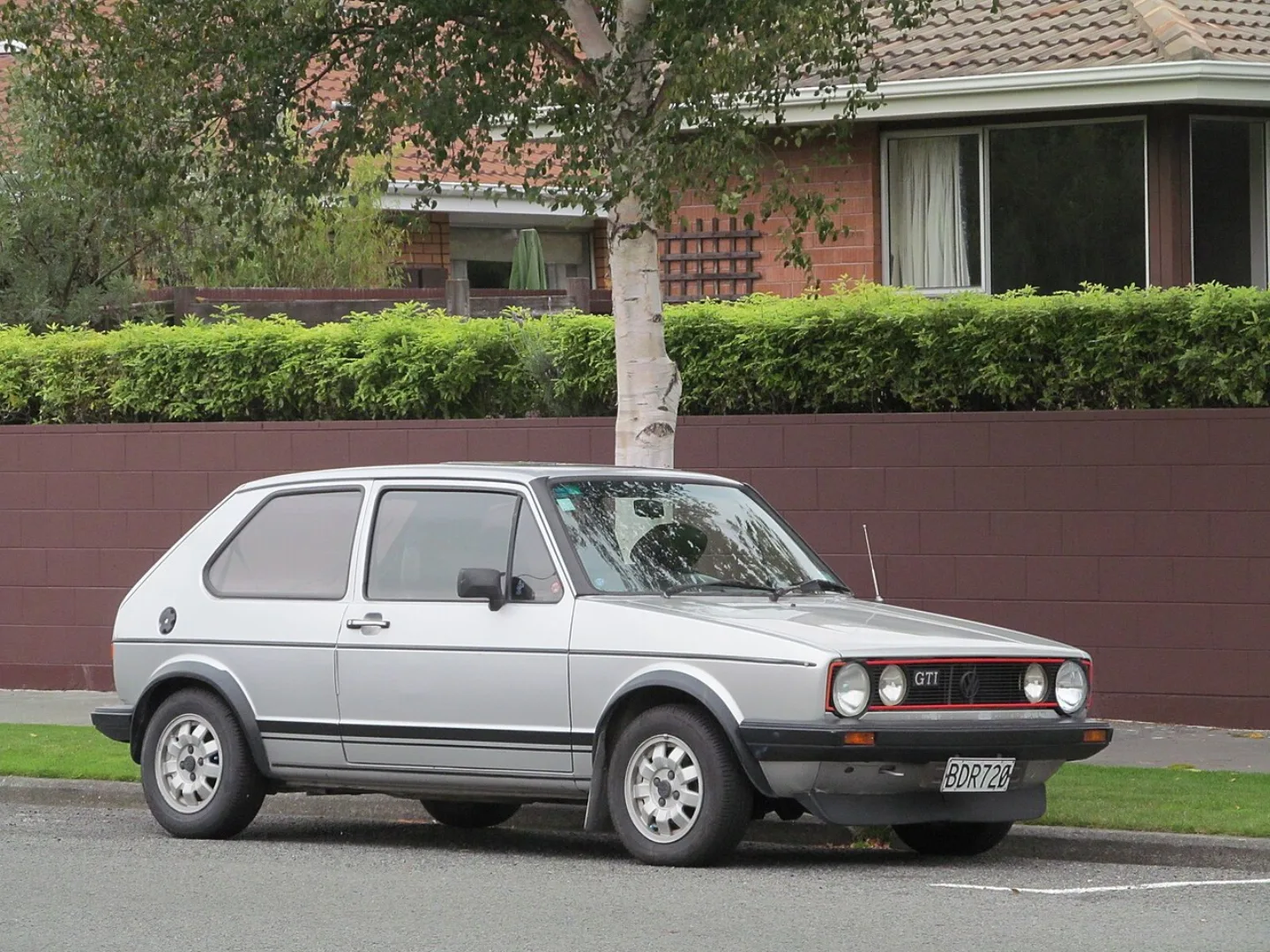
Löwenberg and Konrad
The ringleader was Alfons Löwenberg, a young engineer with a vision for a quicker Golf. He was joined by press officer Anton Konrad and a small circle of like-minded colleagues. With no official mandate and no budget, the group simply built the car they believed the world needed.
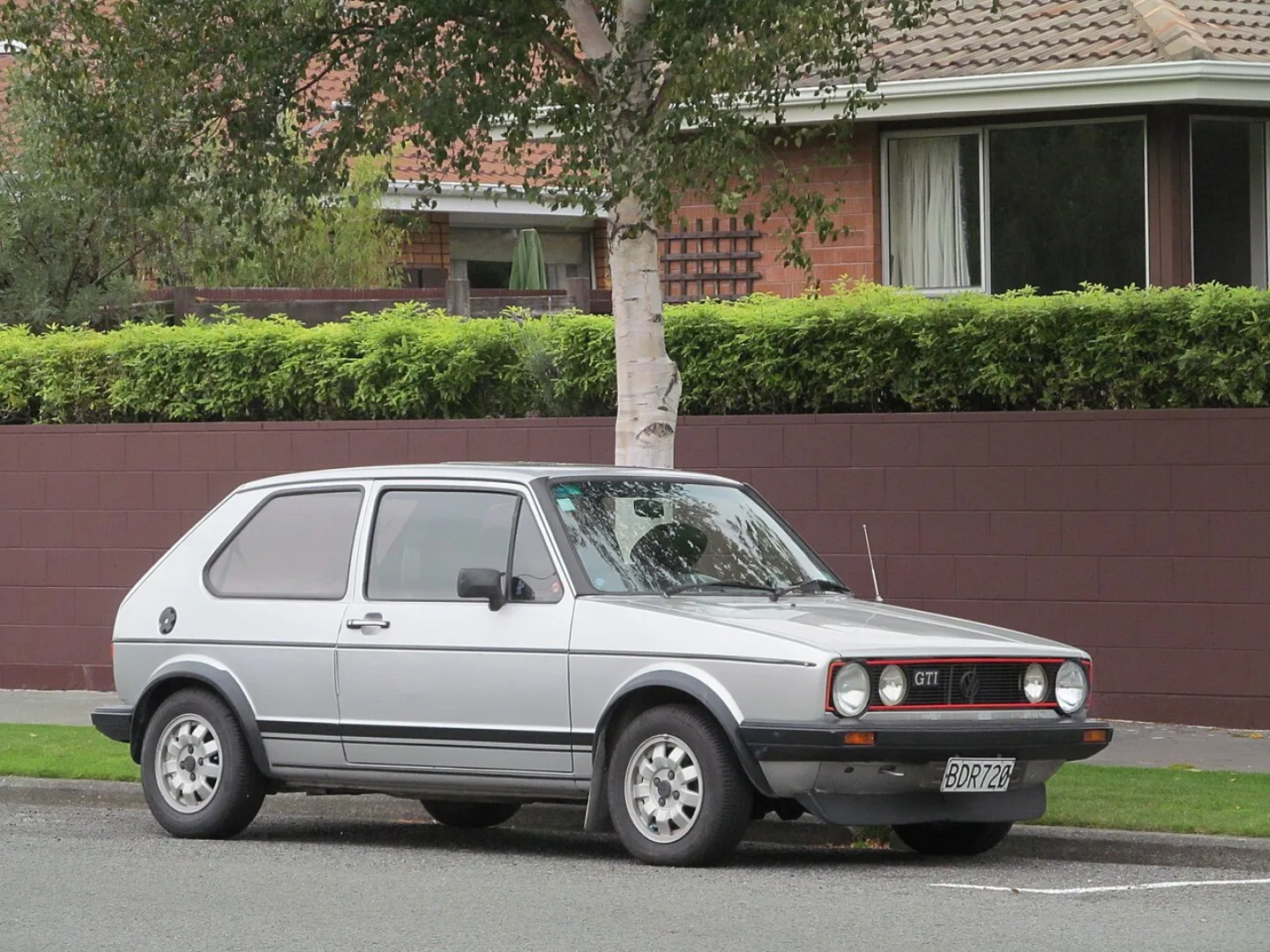
The Key Insight
Their idea was elegantly simple: drop the 1.6-liter fuel-injected engine from Audi — producing 110 horsepower — into the featherweight Golf body. With the car weighing barely over 1,800 pounds, even modest power translated into genuine excitement. Light car plus a willing engine: the recipe every hot hatch has copied since.
Schmücker's Green Light
VW chairman Toni Schmücker was shown the secret Sport Golf prototype and recognized its promise, approving it for production.
The Audi-Sourced Heart
The first GTI drew its punch from an Audi-sourced 1.6-liter fuel-injected engine rated at 110 hp — modest today, but enough to make the light Golf body feel genuinely quick.
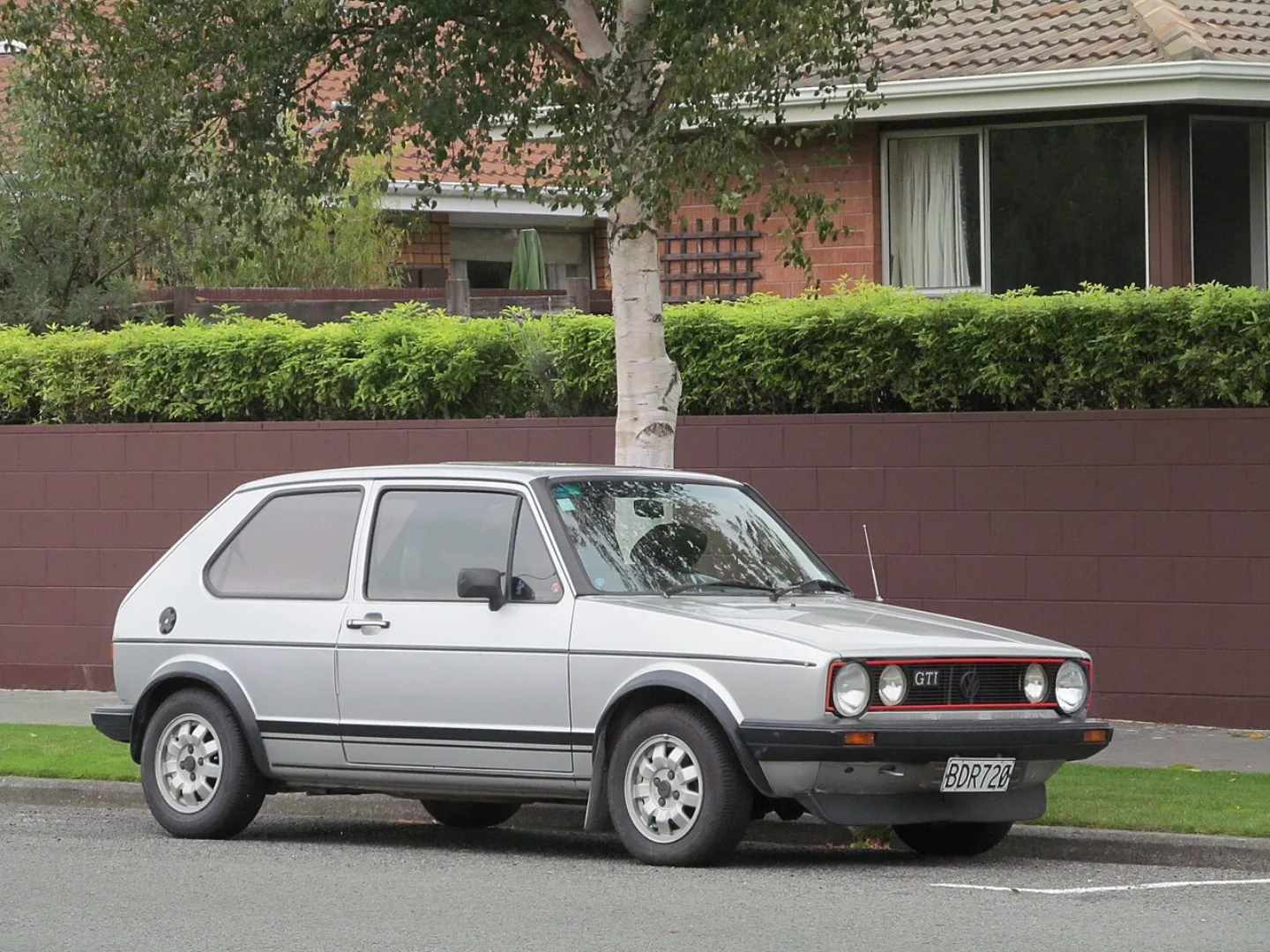
Frankfurt, September 1975
The Golf GTI Mk1 debuted at the Frankfurt International Motor Show in September 1975 and went on sale in the summer of 1976. Management had planned a mere 5,000 units. The car instead became a sensation that would define an entire class of vehicle.
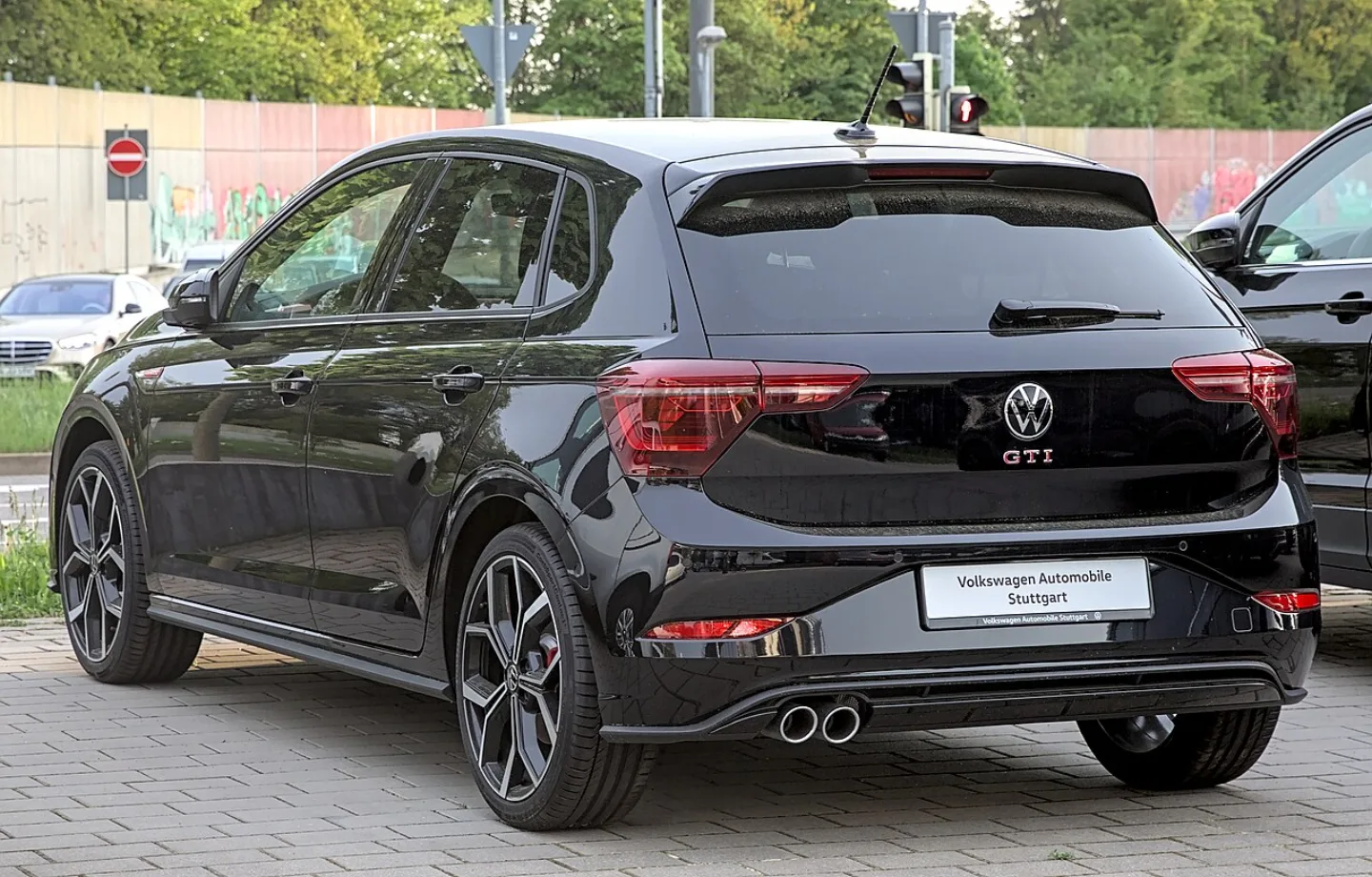
What GTI Stands For
The GTI name officially stands for Gran Turismo Injection — though some argue for Grand Tourer Injection, and the true origin remains debated. Either way, the three letters instantly communicated something special, and they have stayed on the badge for fifty years.
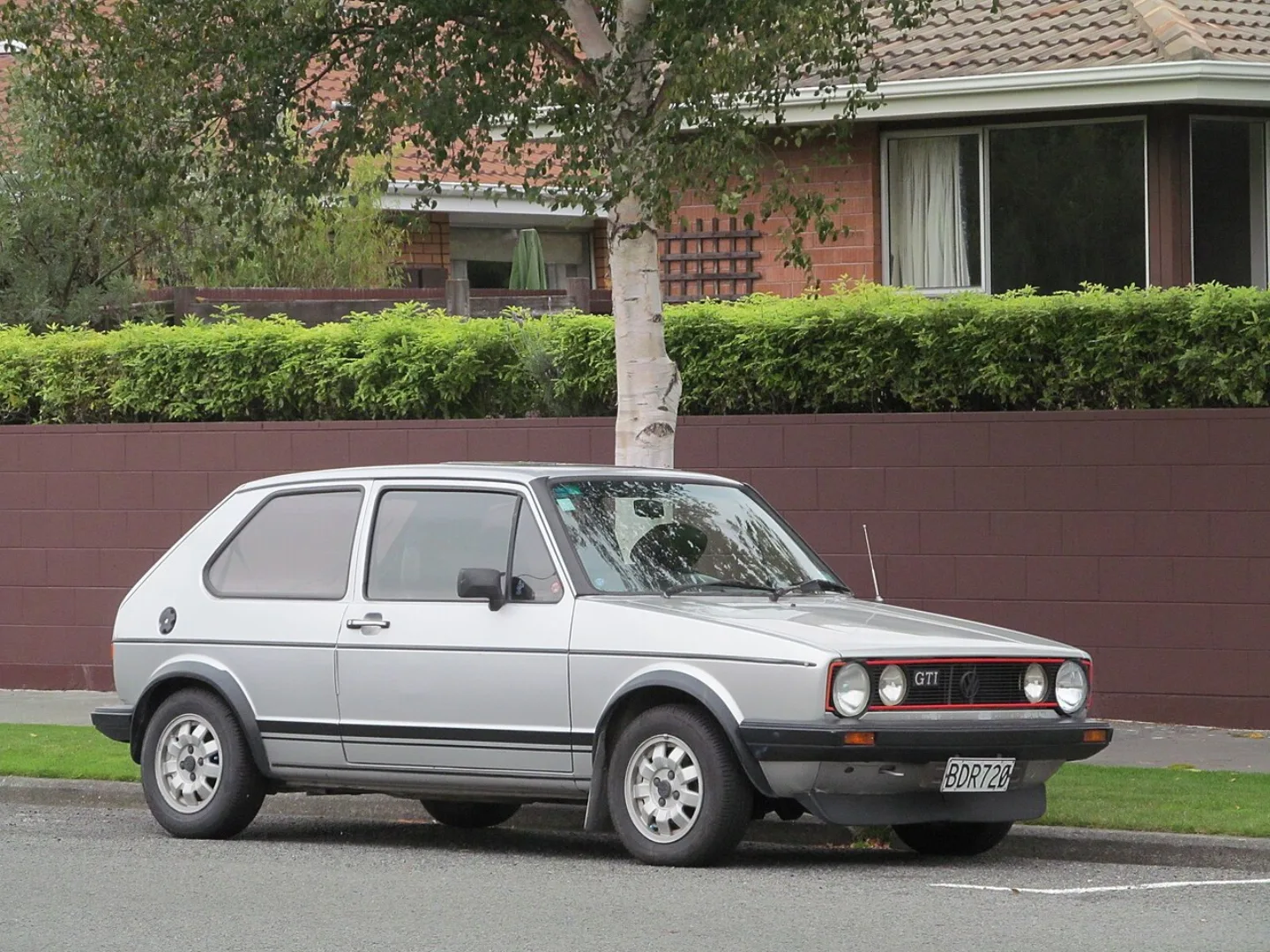
Nearly 100x The Plan
VW originally planned a production run of just 5,000 GTIs. By the time the Mk2 replaced it, the Mk1 had sold 461,690 units — nearly a hundred times that estimate.
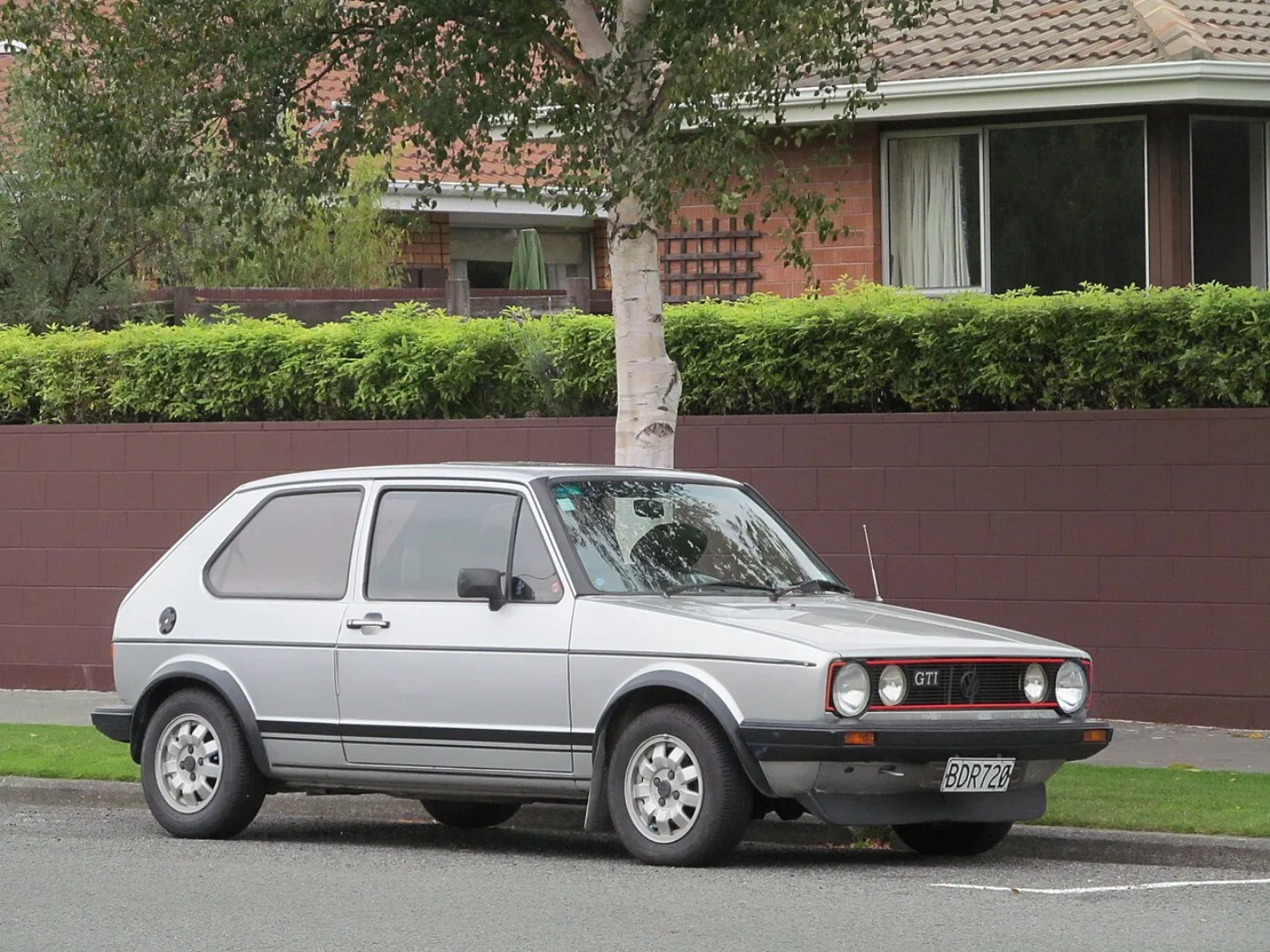
Fast For Its Era
The Mk1 GTI topped out at 113 mph — unremarkable by modern standards, but genuinely transformative for an everyday family hatchback in the mid-1970s.
By the numbers
- Power output of the Audi-sourced 1.6L engine in the first GTI
- 110 hp
- Approximate curb weight of the Mk1 GTI
- 1800 lbs
- Number of units management initially planned to build
- 5000 units
- Top speed of the Mk1 GTI
- 113 mph
- Approximate 0-60 mph time of the Mk1 GTI
- 9 seconds
- Total Mk1 GTIs sold before the Mk2 arrived
- 461690 units
Matched pairs
Each item on the left goes with the one on the right.
- Red grille stripe
- The GTI's signature visual cue, running across the front grille
- "Clark" tartan seats
- The plaid seat fabric that became a GTI trademark
- Golf ball gear knob
- The dimpled shift knob shaped like a golf ball
- Front lip spoiler
- The sporty chin spoiler distinguishing the GTI from a base Golf
Self-test
Answer each question from memory, then check your work against the answer key.
1. Who was the young engineer who supplied the vision behind the secret 'Sport Golf' project that became the GTI?
- AHeinz Nordhoff
- BToni Schmücker
- CAlfons Löwenberg
- DAnton Konrad
2. In what year did the small group of VW engineers begin building the secret 'Sport Golf'?
- A1969
- B1976
- C1972
- D1974
3. Which VW leader was shown the Sport Golf prototype and approved it for production?
- AAnton Konrad
- BToni Schmücker
- CAlfons Löwenberg
- DHeinz Nordhoff
4. What role did Anton Konrad, recruited to the Sport Golf project, hold at Volkswagen?
- APress officer
- BChief engineer
- CBoard chairman
- DFactory foreman
5. How large was the team that secretly developed the Sport Golf on evenings and weekends?
- ANo more than half a dozen
- BOver two hundred staff
- CA single lone engineer
- DAbout fifty engineers
6. Who was the young engineer who conceived and led the secret Sport Golf project?
- AToni Schmücker
- BAnton Konrad
- CAlfons Löwenberg
- DHeinz Nordhoff
7. In what year did Alfons Löwenberg's team begin building the secret Sport Golf after hours?
- A1976
- B1970
- C1975
- D1974
8. How much power did the Audi-sourced 1.6-liter fuel-injected engine in the first GTI produce?
- A75 hp
- B110 hp
- C145 hp
- D90 hp
9. From which brand did the engineers source the 1.6-liter fuel-injected engine for the first GTI?
- APorsche
- BBMW
- CBosch
- DAudi
10. Roughly how much did the light Mk1 GTI body weigh — the key to making modest power feel fast?
- AAbout 1,200 lbs
- BAbout 1,800 lbs
- CAbout 3,400 lbs
- DAbout 2,600 lbs
11. After being convinced, how many units did management initially pencil in for the production run?
- A2,500
- B10,000
- C5,000
- D40,000
12. What was the core engineering insight behind the first GTI?
- AA light body makes modest power feel genuinely fast
- BOnly a very large engine could move the Golf
- CA whole new racing platform had to be built
- DExotic materials were essential to the performance
13. How many Mk1 GTIs were sold before the Mk2 replaced it?
- A1.2 million
- B50,000
- C5,000 — exactly as planned
- D461,690 — nearly 100x the planned 5,000
14. Where did the Golf GTI Mk1 make its public debut in September 1975?
- AFrankfurt International Motor Show
- BDetroit Auto Show
- CParis auto show, held biennially
- DGeneva Motor Show
15. What does the 'GTI' badge officially stand for?
- AGran Turismo Iniezione
- BGolf Turbo Injection
- CGran Turismo Injection
- DGrand Touring International
16. What was the Mk1 GTI's top speed?
- A130 mph
- B113 mph
- C145 mph
- D99 mph
17. Approximately how long did the Mk1 GTI take to accelerate from 0 to 60 mph?
- AAbout 17 seconds
- BAbout 6 seconds
- CAbout 9 seconds
- DAbout 13 seconds
18. Which exterior detail became the GTI's single most recognizable visual signature?
- AA red stripe across the front grille
- BA gold pinstripe along the doors
- CA green-tinted removable roof panel
- DA chrome hood ornament
19. What distinctive seat fabric trimmed the interior of the Mk1 GTI?
- AAlcantara suede
- BHoundstooth wool
- C"Recaro" smooth leather
- D"Clark" tartan plaid
20. The Mk1 GTI's gear lever was topped with a knob shaped like what?
- AA cube of dice
- BA golf ball
- CA soccer ball
- DA skull
21. Which front feature visually separated the GTI from a base Golf?
- AA rear roof wing
- BA hood air scoop
- CA front lip spoiler
- DWide side skirts
22. Which of the following was NOT one of the Mk1 GTI's signature cues?
- ARed grille stripe
- BChrome hood ornament
- C"Clark" tartan seats
- DGolf ball gear knob
23. Which exterior styling cue set the Mk1 GTI apart at the front of the car?
- AA front lip spoiler
- BTartan-trimmed sun visors
- CA rear diffuser
- DA red grille stripe
24. The Mk1 GTI's front lip spoiler was one of several cues that did what?
- AQualified it for Group A rally rules
- BReduced curb weight by 200 lbs
- CIncreased its top speed to 130 mph
- DSeparated it visually from a base Golf
Go deeper
Answer key
- 1. C Alfons LöwenbergAlfons Löwenberg originated and kept the after-hours Sport Golf project coherent. He recruited press officer Anton Konrad; chairman Toni Schmücker later approved it for production. Nordhoff was an earlier VW director.
- 2. D 1974The after-hours Sport Golf project began in 1974. The finished GTI later debuted in 1975 and went on sale in 1976, but the skunkworks work started in 1974.
- 3. B Toni SchmückerChairman Toni Schmücker recognized the prototype's promise and approved it for production. Löwenberg supplied the vision and Konrad was the press officer he recruited; Nordhoff was an earlier VW director.
- 4. A Press officerAnton Konrad was a VW press officer whom Löwenberg brought into the informal team. Schmücker was the chairman; Löwenberg supplied the engineering vision.
- 5. A No more than half a dozenBy most accounts no more than half a dozen VW engineers and enthusiasts worked on the project in their spare time, with no official mandate or budget.
- 6. C Alfons LöwenbergAlfons Löwenberg was the young engineer who supplied the vision and led the after-hours Sport Golf team that became the GTI.
- 7. D 1974Starting in 1974, Löwenberg and no more than half a dozen colleagues built the Sport Golf evenings and weekends at Wolfsburg.
- 8. B 110 hpThe 1.6-liter fuel-injected engine was rated at 110 hp — modest by later standards, but enough to make the light Golf body feel genuinely fast.
- 9. D AudiThe 1.6-liter fuel-injected engine was sourced from Audi. Bosch supplied fuel-injection technology of the era but was not the engine's origin; Porsche and BMW were unrelated.
- 10. B About 1,800 lbsThe Golf weighed barely over 1,800 lbs. Its lightness did most of the work: modest power in a light shell produced a car that felt genuinely quick.
- 11. C 5,000Management initially planned just 5,000 units — a figure that proved wildly conservative once the Mk1 became a sensation (461,690 eventually sold).
- 12. A A light body makes modest power feel genuinely fastNo exotic materials or bespoke platform were used. The insight was that the Golf's lightness let a modest 110 hp engine produce a car that felt fast and turned eagerly.
- 13. D 461,690 — nearly 100x the planned 5,000By the time the Mk2 arrived, 461,690 Mk1 GTIs had been sold — almost a hundred times the originally planned production run.
- 14. A Frankfurt International Motor ShowThe Mk1 GTI debuted at the Frankfurt International Motor Show in September 1975, then went on sale in the summer of 1976.
- 15. C Gran Turismo InjectionGTI officially stands for Gran Turismo Injection. Grand Tourer Injection is a debated alternative reading, but the other options are not the recognized expansion.
- 16. B 113 mphThe Mk1 GTI reached a top speed of 113 mph — modest by later standards but transformative for an everyday family hatchback of the mid-1970s.
- 17. C About 9 secondsThe Mk1 GTI managed roughly a 9-second 0–60 time. Unremarkable today, but the light, eager car felt far quicker than the figure suggests.
- 18. A A red stripe across the front grilleThe red stripe running across the front grille became the GTI's single most recognizable visual signature, distinguishing it at a glance from any base Golf.
- 19. D "Clark" tartan plaidThe Mk1 GTI's seats were trimmed in 'Clark' tartan plaid fabric, now a collector touchstone and a signature of the car's personality.
- 20. B A golf ballThe gear lever was topped with a golf ball–shaped gear knob — a piece of self-aware wit that cemented the car's personality.
- 21. C A front lip spoilerThe GTI carried a front lip spoiler that set it apart from any base Golf. The other features were not part of the Mk1 GTI's signature package.
- 22. B Chrome hood ornamentThe Mk1 GTI's signature cues were the red grille stripe, golf ball gear knob, Clark tartan seats, and front lip spoiler. A chrome hood ornament was never part of the package.
- 23. A A front lip spoilerThe Mk1 GTI added a front lip spoiler at the nose, a styling cue distinct from the red grille stripe, tartan seats, and golf-ball knob that completed the package.
- 24. D Separated it visually from a base GolfThe front lip spoiler separated the Mk1 GTI visually from any base Golf, alongside the red stripe, tartan seats, and golf-ball knob.
Sources
- ECS Tuning — The History of the GTI — blog.ecstuning.com/the-history-of-the-gti/
Image credits
- Löwenberg and Konrad: Riley from Christchurch, New Zealand · CC BY 2.0 — commons.wikimedia.org/wiki/File:1982_Volkswagen_Golf_GTi_(Mk1)_(14072934454).jpg
- The Key Insight: Riley from Christchurch, New Zealand · CC BY 2.0 — commons.wikimedia.org/wiki/File:1982_Volkswagen_Golf_GTi_(Mk1)_(14072934454).jpg
- Frankfurt, September 1975: Riley from Christchurch, New Zealand · CC BY 2.0 — commons.wikimedia.org/wiki/File:1982_Volkswagen_Golf_GTi_(Mk1)_(14072934454).jpg
- What GTI Stands For: Alexander Migl · CC BY-SA 4.0 — commons.wikimedia.org/wiki/File:Volkswagen_Polo_VI_GTI_(2021)_1X7A0343.jpg
- Nearly 100x The Plan: Riley from Christchurch, New Zealand · CC BY 2.0 — commons.wikimedia.org/wiki/File:1982_Volkswagen_Golf_GTi_(Mk1)_(14072934454).jpg
- Fast For Its Era: Riley from Christchurch, New Zealand · CC BY 2.0 — commons.wikimedia.org/wiki/File:1982_Volkswagen_Golf_GTi_(Mk1)_(14072934454).jpg

