
The Complete Volkswagen GTI study guide · Lesson 4 of 13
The Mk4 GTI: Design, Engines & Editions
Platform and Engines · Transmissions and Special Editions
This is the lesson's study guide from the FlashFeed app, plus its key facts and a self-test.
What you'll be able to do
- Explain the Mk4's 1J platform and distinguish its two transmission options.
- Characterize the Mk4 1.8T turbo engine — K03 turbo, 1,781 cc, 20-valve head — and its US/EU output figures.
- Explain why the Mk4 1.8T's port injection avoids the intake-valve carbon buildup of direct-injection engines.
- Identify VW's narrow-angle VR6 six-cylinder and V5 five-cylinder engines and their specifications.
- Detail the Mk4 GTI 337 and 20th Anniversary special editions and their 6-speed exclusivity.
Platform and Engines
The Mk4 GTI arrived on the 1J platform as a deliberate reset after the Mk3's bloat — cleaner sheetmetal, a genuinely premium cabin, and a powertrain menu centered on a turbocharged four that became one of the most modified engines in VW history.
The Mk4 Returns to Form
The fourth-generation GTI carried internal project code 1J and launched in Europe in 1997, reaching North American showrooms for the 2000 model year. After the Mk3's weight gain and divisive styling, the Mk4 arrived with flush, organic surfaces and an interior that finally matched European compact-luxury standards of the era. Build quality improved markedly — soft-touch plastics, a tight body, and noticeably reduced road noise. Critical reception among enthusiasts was mixed: purists called it too polished and too aimed at the US buyer; everyone else appreciated a GTI you could actually live with daily. Well-preserved examples have begun appreciating as the "refined" generation gets reappraised.
Platform Cousins
The 1J platform was an early, large-scale expression of VW Group's parts-bin strategy, sharing underpinnings with the Mk1 Audi A3 and the Mk4 Jetta. That commonality accelerated development timelines and lowered warranty costs — the architecture's rigidity and NVH characteristics benefited from Audi co-engineering investment. In the US specifically, VW made an unusual branding call: the performance variant was sold simply as the Volkswagen GTI, dropping the "Golf" prefix entirely. The Golf nameplate continued for the standard hatchback, but the GTI stood alone on the window sticker.
The 1.8T — The Tuner's Darling
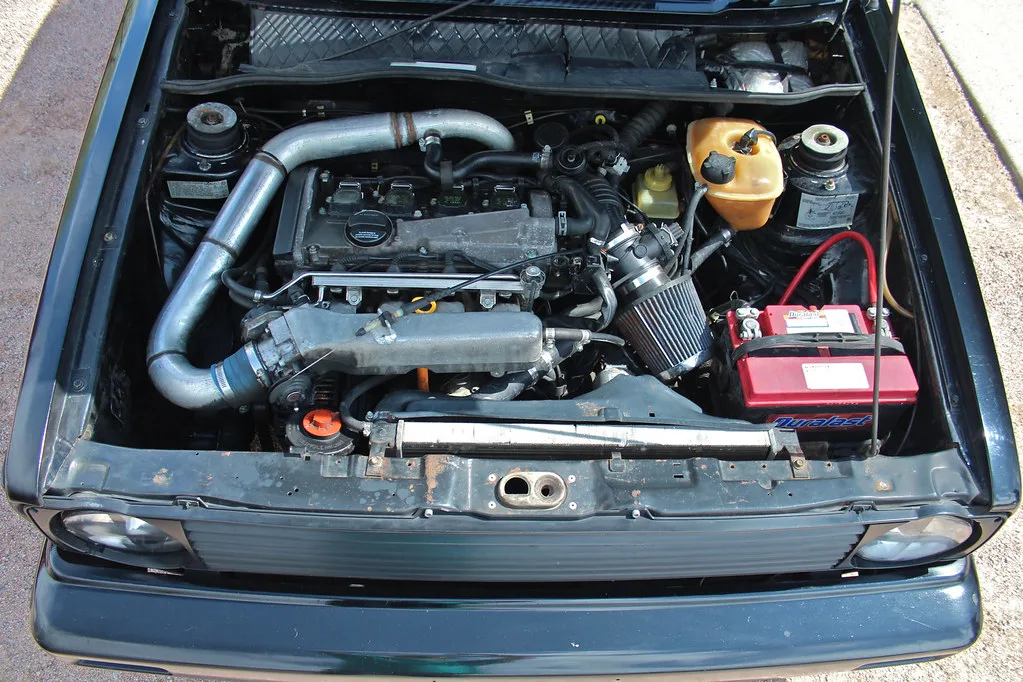
The 1.8T (engine codes AGU and AWP) is a 1,781 cc inline-four with a 20-valve head — five valves per cylinder (three intake, two exhaust) — fed by a K03 turbocharger. In early US trim (2000–2001) it produced 150 hp at 5,700 rpm and 155 lb-ft of torque across a broad 1,750–4,600 rpm plateau, that wide band making the car feel more flexible in traffic than the power figure suggests. The European 25th Anniversary variant pushed to 180 hp, a level US cars also reached partway through the 2002 model year. Critically, the 1.8T used port injection — fuel delivered upstream of the intake valve — which keeps the intake valves washed by fuel and largely free of the carbon buildup that is a common nuisance on later direct-injection engines. The K03 responds well to software; the K04 swap is a documented step-two upgrade.
The Narrow-Angle Sixes
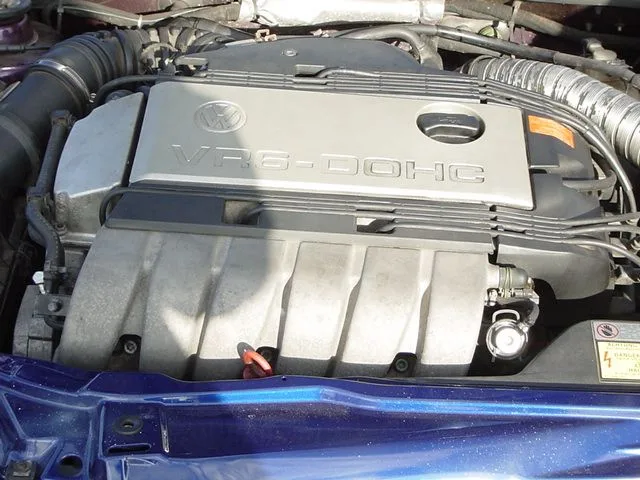
Where the 1.8T chased flexibility and tuning potential, the 2.8L VR6 (and the European 2.3L V5) delivered character. VW's VR6 design packs six cylinders with one shared cylinder head at a narrow vee angle — tight enough to mount transversely in a Golf's engine bay, a packaging feat a conventional V6 can't match. Output on the 12-valve engines landed around 170–174 hp, naturally aspirated (a later 24-valve version reached about 200 hp), with linear power delivery and a gravelly exhaust note that remains the defining Mk4 sound for many owners. Tuning ceiling is lower than the 1.8T, but the VR6 has a reputation for durability and mechanical refinement that keeps a loyal following — the engine for drivers who'd rather service it than modify it.
Transmissions and Special Editions
The Mk4 GTI's gearbox options divided cleanly by buyer type, and two US-market special editions defined by the 6-speed manual became the most sought-after cars of the generation — the first time a transmission choice carried genuine collector significance for the nameplate.
Three Gearboxes, One Right Answer
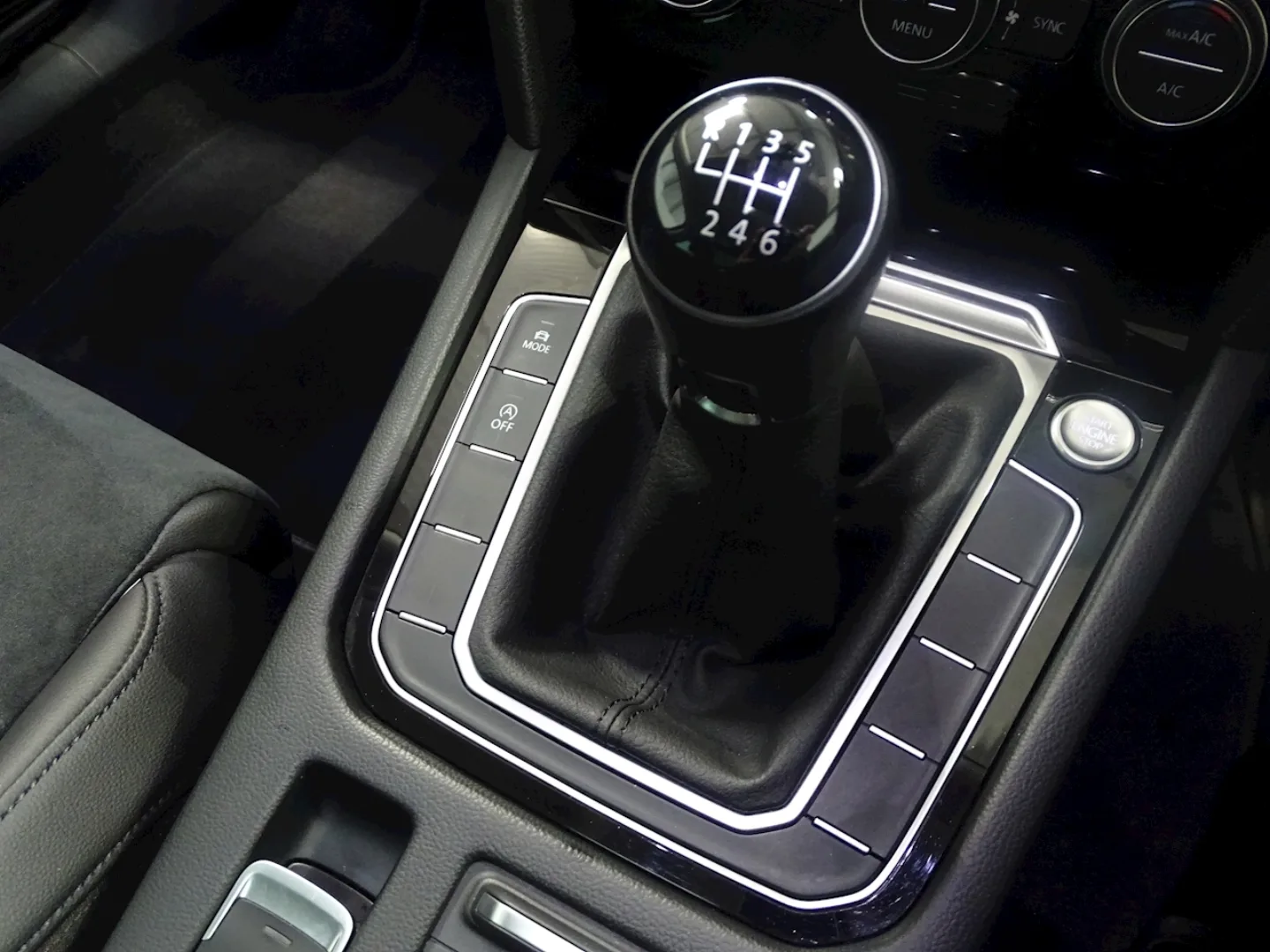
Three transmission choices came with the Mk4 GTI. The 5-speed manual (code 02J) is the standard-issue enthusiast option: robust, well-weighted, and easy to source parts for. The 4-speed automatic (code 01M) is widely regarded as the generation's weak point — slow to respond, not well-suited to modified power levels, and prone to wear. Both were available across the regular lineup. The 6-speed manual is the anomaly: it was a rarity on the 1.8T, appearing on the 337 and 20th Anniversary editions in the US market. That rarity is a large part of why both editions command a premium.
The GTI 337 Edition (2002)
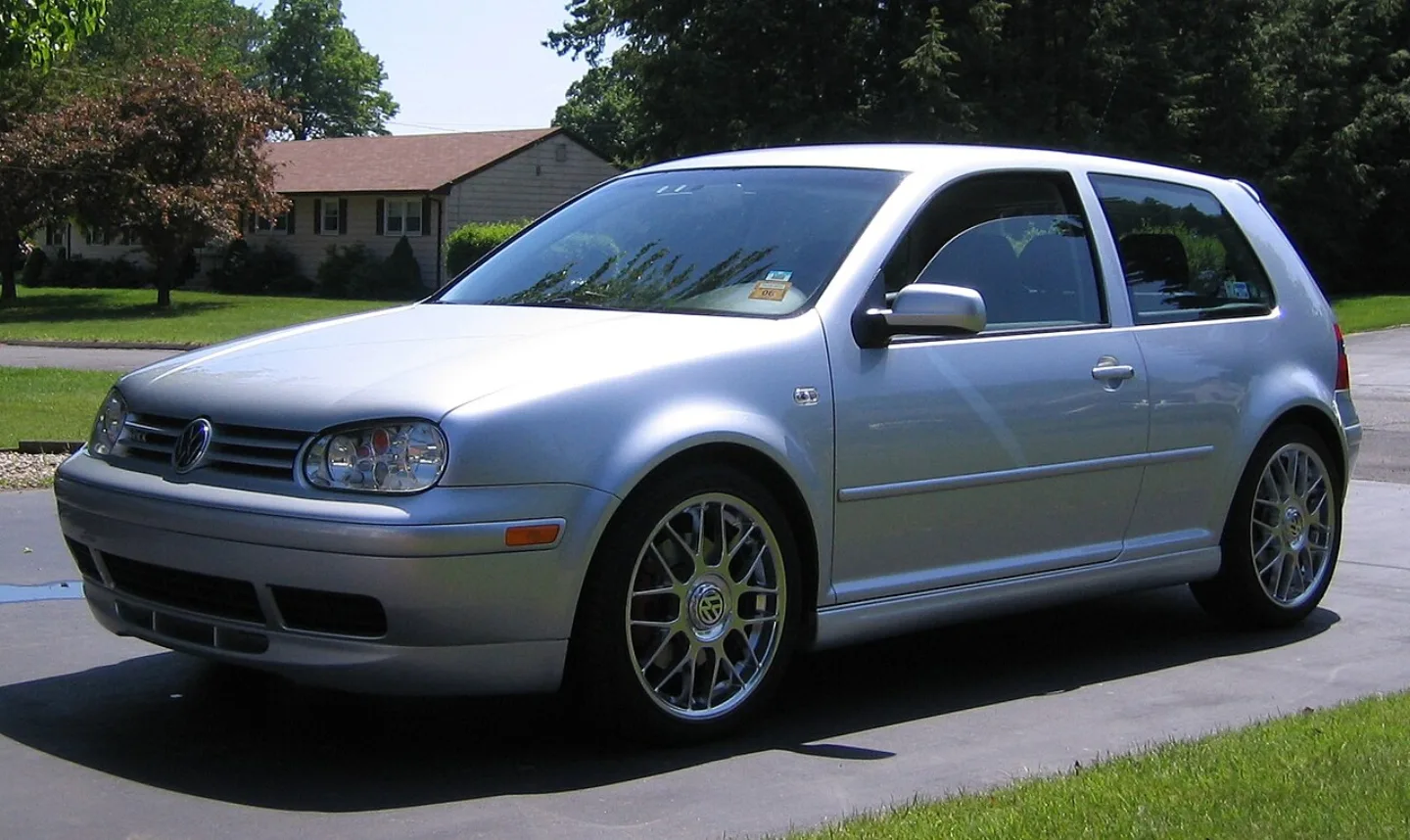
The 337 takes its name from EA337, the original Golf development project code. VW USA built approximately 1,500 units for 2002 — all finished in silver — as the American market's counterpart to the European 25th-Anniversary GTI. Power came from the 180 hp 1.8T, the same elevated tune as the European anniversary car. Beyond the engine, the spec was exceptional for the price: 18-inch BBS alloys, Recaro sport seats, red brake calipers, and chin and rear spoilers were all standard. The 337 was also the first US-market GTI ever offered with a 6-speed manual — a milestone that made it the reference point for every Mk4 discussion that followed. Launch price: $22,225.
The 20th Anniversary Edition (2003)
A year after the 337, VW released the 20th Anniversary Edition to mark two decades of the GTI in the US. It shared the 337's mechanical core — 180 hp 1.8T, 6-speed manual, the same BBS/Recaro package — while expanding the color palette beyond silver-only to include options such as yellow and blue. Together the pair combine the 180 hp 1.8T, the 6-speed manual, and cosmetics specific to these editions.
Key terms
- 1J
- The internal project code for the Mk4 Golf/GTI platform, shared with the Mk1 Audi A3 and Mk4 Jetta. Visible in the VIN of NA cars.
- K03 turbocharger
- The small factory turbo on the Mk4 1.8T — the limiting factor for stock power, commonly swapped for a larger K04 in serious builds.
- VR6
- VW's narrow-angle six-cylinder — cylinders share one head at a tight vee angle, packaging a six in a transverse four's footprint. Smooth and durable.
- GTI 337 Edition
- 2002 US special edition (~1,500 silver cars), named for the EA337 Golf project code; first US GTI with a 6-speed, BBS wheels, Recaros.
Key concepts
The 1.8T
- The Mk4 GTI's headline engine and one of the most tunable, most modified motors in VW history.
- Known by codes AWP and AGU, it paired a 20-valve head and a K03 turbo with port injection that kept its intake valves largely free of carbon buildup.
- Early US trim (2000–2001) made 150 hp; the European 25th Anniversary version pushed it to 180 hp, a level US cars also reached from 2002.
The 2.8L VR6
- The Mk4 engine for drivers who'd rather service a motor than modify it, prized above all for its durability.
- A narrow-angle six-cylinder sharing one head across two offset banks, fitting six pots into a four-cylinder bay.
- Naturally aspirated at 170–174 hp, with a gravelly note many owners call the defining Mk4 sound.
The 2.3L V5
- A European-only Mk4 engine, the odd sibling of the more familiar narrow-angle six.
- It applied VW's narrow-angle packaging trick to an unusual five-cylinder layout.
The GTI 337 Edition
- A 2002 Mk4 special, roughly 1,500 built, every single car finished in silver.
- Named after the Golf's original development project code, it was the first US-market hot hatch in the line offered with a 6-speed manual.
- Standard kit: the 180 hp 1.8T, 18-inch BBS wheels, Recaro seats, red brake calipers; launch price $22,225.
The 20th Anniversary Edition
- A 2003 Mk4 GTI special built to mark two decades of the nameplate in America.
- It shared the 337's core — 180 hp 1.8T, the only 6-speed, the BBS/Recaro package — but added colors like yellow and blue beyond silver.
Key facts
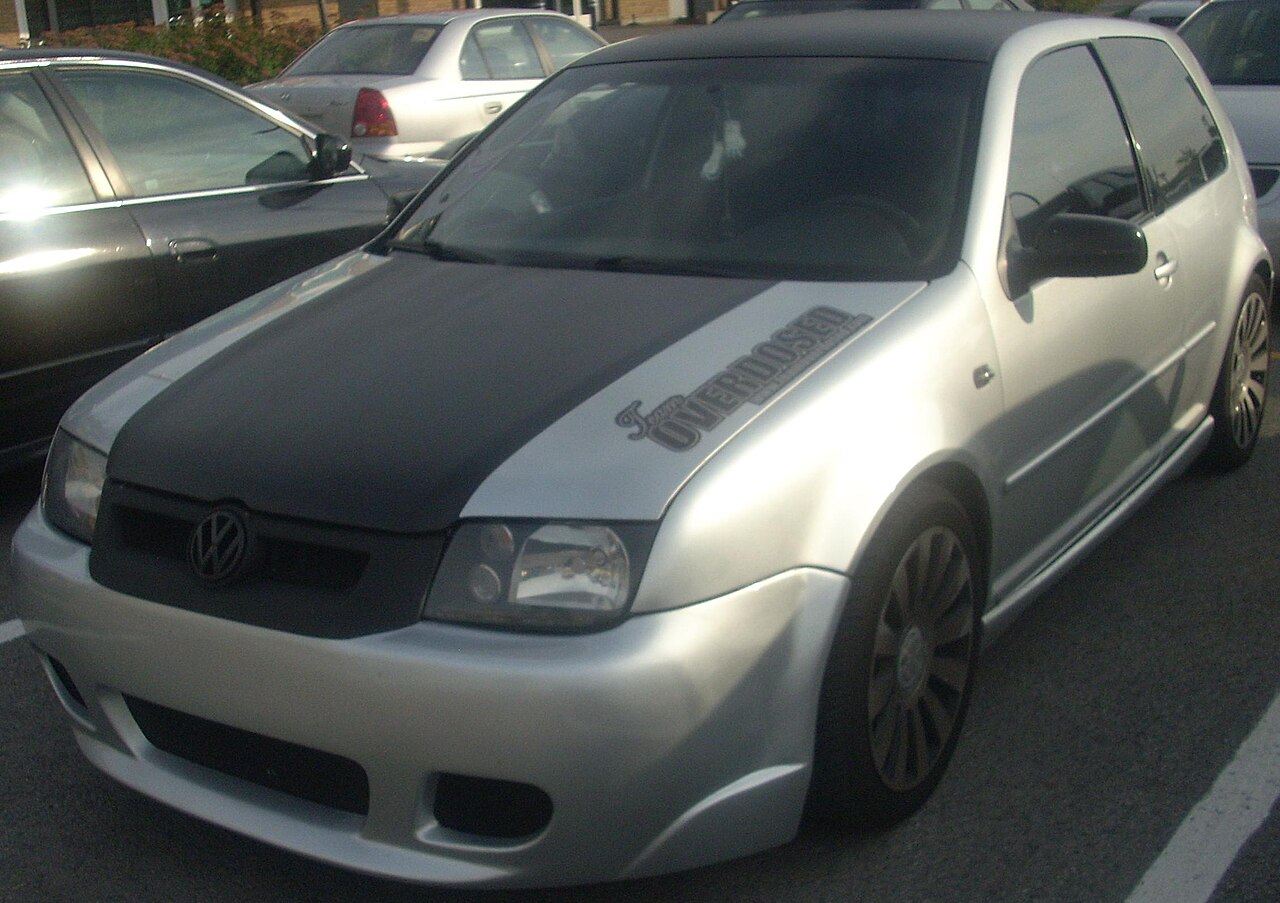
The Mk4 Returns to Form
The fourth-generation GTI (project code 1J) launched in Europe in 1997 and reached North America for the 2000 model year. After the controversial, porky Mk3, the Mk4 dragged the GTI back to relevance with a dramatically cleaner, more premium look — smoother surfaces, far better materials, and a cabin that genuinely felt upscale. It's the most emotionally polarizing GTI: derided by some as too soft and "American," loved by others as uniquely refined. Clean examples are now creeping up in value.
Platform Cousins
The Mk4 shared its underpinnings with the Mk1 Audi A3 and the Mk4 Jetta — the early days of VW Group's parts-sharing strategy paying dividends in build quality. One US-specific quirk: VW dropped the "Golf" name for the performance model in America, marketing it simply as the Volkswagen GTI rather than the Golf GTI.
The 1.8T — The Tuner's Darling
The headline engine was the 1.8T (codes AWP / AGU): a 1,781 cc inline-four, turbocharged and 20-valve (five valves per cylinder). Early US cars (2000–2001) made 150 hp at 5,700 rpm; European "25th Anniversary" trim made 180 hp, a level US cars also reached partway through 2002. Torque on the 150 hp version was 155 lb-ft across a wide 1,750–4,600 rpm plateau. It breathed through a small K03 turbocharger (upgradeable to a K04) and used port injection — no direct injection on this generation.
The Narrow-Angle Sixes
The alternative was VW's signature narrow-angle layout: the 2.8L VR6 and, elsewhere in the European Mk4 Golf range (not the GTI), the 2.3L V5. Carried over in spirit from the Mk3, these made around 170–174 hp in their original form, naturally aspirated, with smooth, linear delivery and a distinctively gravelly exhaust note. They're less tunable than the 1.8T but beloved for durability and refinement — the choice for drivers who'd rather not chase boost.
An Oddly Specific Number
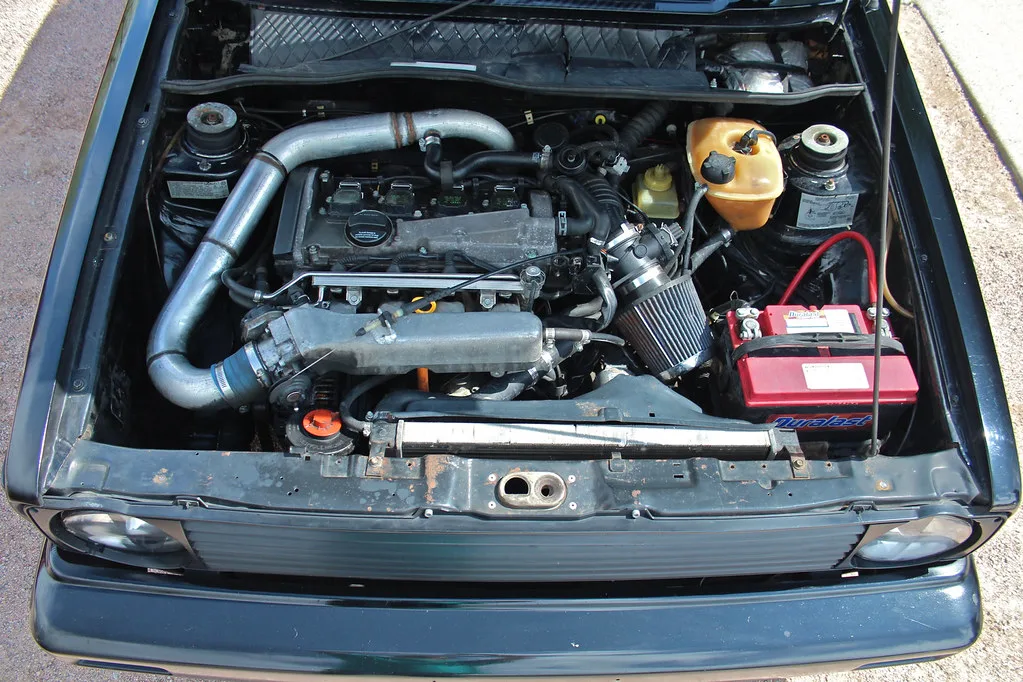
The Mk4 GTI's 1.8T is a turbocharged inline-four engine displacing exactly 1,781 cc — the figure behind its "1.8" name.
Rabbit Becomes Golf
American buyers first got a GTI badged 'Rabbit,' not 'Golf.' The Mk2 (1984-1992) became the first US GTI to wear the Golf name — though the later Mk4 oddly dropped it again, selling simply as 'GTI.'
Three Gearboxes, One Right Answer
The Mk4 GTI came three ways. The 5-speed manual (02J) is robust, well-liked, and the default enthusiast pick. The 6-speed manual was rare on the 1.8T cars — it appeared on the 337 and 20th Anniversary editions and was a genuine milestone in US GTI history. The 4-speed automatic (01M) is the one to avoid: sluggish, fragile, and not recommended for any tuned application.
The 20th Anniversary Edition (2003)
The following year brought the 20th Anniversary Edition — essentially a 337 companion, sharing the 180 hp 1.8T and the 6-speed manual, but offered in additional colors including yellow and blue rather than silver-only.
The Weak Link
The Mk4 GTI's 4-speed automatic, code 01M, is widely regarded as the generation's weak point — sluggish, fragile, and especially ill-suited to a modified engine.
A Deliberately Small Run
VW USA built roughly 1,500 units of the GTI 337 Edition for 2002, and every single one left the factory finished in silver.
By the numbers
- Horsepower of the original US-market Mk4 GTI 1.8T (2000–2001 model years)
- 150 hp
- Horsepower of the European Mk4 1.8T in 180 PS / 25th Anniversary trim
- 180 hp
- Peak torque of the original (150 hp) US Mk4 1.8T
- 155 lb-ft
- Approximate number of GTI 337 Edition units produced
- 1500 units
- Launch price of the GTI 337 Edition
- 22225 USD
Matched pairs
Each item on the left goes with the one on the right.
- 1.8T (AWP/AGU)
- 1,781 cc turbo 20v, K03 turbo
- 2.8 VR6 / 2.3 V5
- narrow-angle, ~170-174 hp, NA
- Mk4 1.8T fueling
- Port injection (no direct injection)
- 02J gearbox
- 5-speed manual, the enthusiast favorite
- 01M gearbox
- 4-speed automatic, generally avoided
Self-test
Answer each question from memory, then check your work against the answer key.
1. What internal project code identifies the Mk4 Golf/GTI platform?
- A1J
- BA2
- C1H
- D1K
2. The 1J platform shared its underpinnings with which two vehicles?
- AAudi TT and Mk3 Jetta
- BAudi A4 and VW Passat
- CMk1 Audi A3 and Mk4 Jetta
- DMk2 Audi A3 and Mk5 Jetta
3. Which gearbox code identifies the Mk4 GTI's 4-speed automatic, widely regarded as the generation's weak point?
- A02J
- B02M
- C09G
- D01M
4. The 02J gearbox, the default enthusiast pick, is which type of transmission?
- A6-speed manual
- B5-speed manual
- C4-speed automatic
- DDual-clutch
5. Which of these was NOT one of the three Mk4 GTI transmission choices?
- A4-speed automatic
- B7-speed dual-clutch DSG
- C6-speed manual
- D5-speed manual
6. What is the displacement of the Mk4 GTI's 1.8T engine?
- A1,781 cc
- B2,792 cc
- C1,984 cc
- D1,595 cc
7. How many valves does the 1.8T's cylinder head have?
- A12 valves
- B24 valves
- C20 valves
- D16 valves
8. Which turbocharger fed the factory Mk4 1.8T?
- AKKK K26
- BK04 turbocharger
- CGarrett GT28
- DK03 turbocharger
9. How much horsepower did the original US-market Mk4 GTI 1.8T (2000–2001) produce?
- A170 hp
- B200 hp
- C180 hp
- D150 hp
10. The European 25th Anniversary 1.8T was uprated to how much horsepower?
- A210 hp
- B162 hp
- C180 hp
- D150 hp
11. What is the displacement of the Mk4 GTI's 1.8T engine?
- A1,781 cc
- B1,896 cc
- C1,984 cc
- D1,595 cc
12. How many valves does the Mk4 1.8T's cylinder head use?
- A16 valves
- B20 valves
- C24 valves
- D12 valves
13. The Mk4 1.8T used port injection instead of direct injection. What practical advantage did that give it?
- AHigher peak boost pressure levels
- BIntake valves free of carbon buildup
- CLower fuel consumption at cruise
- DBetter cold-weather starting
14. What type of fuel injection did the Mk4 1.8T use?
- ADirect injection
- BCarbureted fueling
- CPort injection
- DThrottle-body injection
15. In a port-injection engine like the 1.8T, where is fuel delivered?
- AUpstream of the intake valve
- BInto the exhaust port
- CDirectly into the combustion chamber
- DAt the turbocharger inlet
16. Port injection prevents carbon buildup on which components?
- AThe turbo bearings
- BThe fuel injectors
- CThe spark plugs
- DThe intake valves
17. The intake-valve carbon buildup that the 1.8T avoids is a common nuisance on which engines?
- ADirect-injection engines
- BNaturally-aspirated engines
- CRotary engines
- DCarbureted engines
18. What defines VW's VR6 engine layout?
- AAn inline-six, common in BMW engines
- BA flat-six boxer
- CA conventional 90-degree V6
- DA narrow-angle six-cylinder sharing one head
19. What is the displacement of the Mk4 GTI's VR6 engine?
- A2.3L
- B2.8L
- C2.0L
- D3.2L
20. The European narrow-angle five-cylinder alternative was what displacement?
- A2.5L V5
- B1.8L V5
- C2.3L V5
- D2.8L V5
21. Roughly how much horsepower did the original 12-valve, naturally-aspirated VR6 six-cylinder make?
- A150 hp
- B190 hp
- C174 hp
- D210 hp
22. What packaging advantage does the narrow-angle VR6 offer over a conventional V6?
- AIt mounts transversely in a compact engine bay
- BIt uses two separate cylinder heads for easier cooling
- CIt is mounted longitudinally to leave room for the front wheels
- DIt has a lower center of gravity than a flat engine
23. What milestone did the GTI 337 Edition mark for the US market?
- AFirst US GTI with a direct-injection engine
- BFirst US GTI with a 6-speed manual
- CFirst US GTI with all-wheel drive
- DFirst US GTI with a dual-clutch gearbox
24. The GTI 337 Edition takes its name from which source?
- AThe EA888 engine code
- BThe 1J platform code shared with Mk4
- CThe EA113 engine code
- DThe Golf's original development project code
25. Approximately how many GTI 337 Edition units did VW USA build?
- AAbout 800
- BAbout 25,000
- CAbout 1,500
- DAbout 5,000
26. Every GTI 337 Edition came in which single exterior color?
- ARed
- BSilver
- CBlue
- DYellow
27. What was the launch price of the GTI 337 Edition?
- A$22,225
- B$18,995
- C$30,100
- D$26,500
Go deeper
Answer key
- 1. A 1JThe Mk4 carried the internal project code 1J, visible in the VIN of North American cars.
- 2. C Mk1 Audi A3 and Mk4 JettaThe 1J architecture was VW Group's early parts-sharing effort, shared with the Mk1 Audi A3 and the Mk4 Jetta.
- 3. D 01MThe 01M is the 4-speed automatic — sluggish, fragile, and ill-suited to modified power. The 02J is the 5-speed manual.
- 4. B 5-speed manualThe 02J is the robust, well-weighted 5-speed manual — the standard-issue enthusiast option across the lineup.
- 5. B 7-speed dual-clutch DSGThe Mk4 offered a 5-speed manual, a 6-speed manual, and a 4-speed automatic. DSG did not arrive until later generations.
- 6. A 1,781 ccThe 1.8T is a 1,781 cc turbocharged inline-four. The other figures correspond to unrelated VW displacements.
- 7. C 20 valvesThe 1.8T uses a 20-valve head — five valves per cylinder (three intake, two exhaust) across four cylinders.
- 8. D K03 turbochargerThe stock 1.8T used the small K03 turbo — the limiting factor for stock power. The K04 is the documented step-two upgrade.
- 9. D 150 hpThe original US 1.8T made 150 hp at 5,700 rpm; US output rose to 180 hp partway through the 2002 model year, matching the European 25th Anniversary tune.
- 10. C 180 hpThe European 25th Anniversary variant pushed the 1.8T to 180 hp, versus 150 hp in the original 2000–2001 US trim.
- 11. A 1,781 ccThe 1.8T (engine codes AWP/AGU) displaces 1,781 cc, fed by a K03 turbocharger and topped with a 20-valve head.
- 12. B 20 valvesThe 1.8T uses a 20-valve head — five valves per cylinder across its inline-four, separate from its K03 turbo hardware.
- 13. B Intake valves free of carbon buildupPort injection sprays fuel upstream of the intake valve, washing it clean — so the 1.8T avoids the intake-valve carbon buildup that plagues later direct-injection-only engines.
- 14. C Port injectionThe 1.8T used port injection, delivering fuel upstream of the intake valve rather than directly into the cylinder.
- 15. A Upstream of the intake valvePort injection sprays fuel upstream of the intake valve, washing it clean — unlike direct injection, which sprays into the cylinder.
- 16. D The intake valvesBecause fuel washes over the intake valves, port injection avoids the intake-valve carbon buildup common on direct-injection engines.
- 17. A Direct-injection enginesDirect-injection engines spray fuel into the cylinder, so nothing cleans the intake valves — leading to the carbon buildup port injection avoids.
- 18. D A narrow-angle six-cylinder sharing one headThe VR6 packs six cylinders at a tight vee angle sharing a single cylinder head, letting it mount transversely where a conventional V6 can't.
- 19. B 2.8LThe Mk4 GTI's narrow-angle six was the 2.8L VR6. The 2.3L was the European V5; 3.2L VR6s came in later cars such as the R32.
- 20. C 2.3L V5Europe offered a 2.3L V5 alongside the 2.8L VR6 — both used VW's narrow-angle design.
- 21. C 174 hpThe original 12-valve narrow-angle sixes made around 170 to 174 hp naturally aspirated, with linear delivery and a gravelly exhaust note.
- 22. A It mounts transversely in a compact engine bayThe tight vee angle lets the VR6 fit transversely in a Golf's engine bay — a packaging feat a wider conventional V6 can't match.
- 23. B First US GTI with a 6-speed manualThe 337 introduced the 6-speed manual to the US GTI for the first time; the Mk4 1.8T was port-injected and FWD, and DSG didn't arrive until later generations.
- 24. D The Golf's original development project codeThe 337 is named after EA337, the original Golf development project code.
- 25. C About 1,500VW USA built roughly 1,500 units of the 337 for 2002, all finished in silver.
- 26. B SilverAll 337 units were silver. The following year's 20th Anniversary Edition expanded the palette to include yellow and blue.
- 27. A $22,225The 337 launched at $22,225 — an exceptional spec for the price, with BBS wheels, Recaros, and red calipers standard.
Sources
- Car & Driver — Volkswagen GTI 337 Edition — www.caranddriver.com/news/a15136751/volkswagen-gti-337-edition-auto-shows/
- Wikipedia — Volkswagen Golf Mk4 — en.wikipedia.org/wiki/Volkswagen_Golf_Mk4
Image credits
- The Mk4 Returns to Form: Wikimedia Commons · Bull-Doser · Public domain — commons.wikimedia.org/wiki/File:Tuned_Volkswagen_Golf_GTI_Mk4_3-Door.jpg
- The 1.8T — The Tuner's Darling: The Pug Father (Openverse) · by 2.0 — www.flickr.com/photos/76929828@N00/6878734536
- The Narrow-Angle Sixes: Wikimedia Commons · A.Weber (Andy-Corrado/corradofreunde.de) · Copyrighted free use — commons.wikimedia.org/wiki/File:2.9VR6_140kW_ABV_Corrado.jpg
- An Oddly Specific Number: The Pug Father (Openverse) · by 2.0 — www.flickr.com/photos/76929828@N00/6878734536
- Three Gearboxes, One Right Answer: 21C117 · CC BY-SA 4.0 — commons.wikimedia.org/wiki/File:Volkswagen_Passat_Estate_B8_6-speed_gear_shifter.jpg
- A Deliberately Small Run: GoldenboyCT at English Wikipedia · CC BY 2.5 — commons.wikimedia.org/wiki/File:VW_GTI_337.jpg


