
World History: Turning Points of Human Civilization study guide · Lesson 3 of 13
Classical Imperial Integrations: Rome, Han, and Maurya
Bureaucratic Statehood, Road Networks, and Imperial Order · Trade Arteries: The Silk Road and Monsoon Maritime Networks
This is the lesson's study guide from the FlashFeed app, plus its key facts and a self-test.
What you'll be able to do
- Describe how Confucian civil-service recruitment, road infrastructure, and diplomatic statecraft organized the Han, Roman, and Mauryan empires.
- Describe the commercial mechanisms of the Silk Road and Indian Ocean monsoon trade, alongside the development of Roman civil jurisprudence.
Between 300 BCE and 300 CE, vast agrarian empires consolidated power across Eurasia, constructing standardized bureaucratic institutions, continental road networks, and intercontinental commercial arteries. The Han Dynasty in China and the Roman Empire in the Mediterranean established durable paradigms of imperial administration, while the Mauryan Empire in India demonstrated sophisticated statecraft.
Bureaucratic Statehood, Road Networks, and Imperial Order
In 221 BCE the State of Qin conquered Qi, the last of the rival Warring States, and unified China. Following the brief, hyper-centralized Qin Dynasty under Qin Shi Huang—who unified weights, measures, script, and axle widths and was entombed with the subterranean Terracotta Army—the Han Dynasty (202 BCE – 220 CE) synthesized Legalist state structures with Confucian moral legitimacy. Under Emperor Wu of Han (Han Wudi), the state established the Imperial Academy (Taixue) to train civil servants in the Confucian classics, laying the groundwork for what became imperial China's Civil Service Examination system, often called the world's first meritocratic one.
In the Mediterranean, the collapse of the Roman Republic gave way to the Principate under Augustus (27 BCE – 14 CE), inaugurating two centuries of internal stability known as the Pax Romana. Imperial cohesion was underpinned by unprecedented engineering feats: over 80,000 kilometers of paved highways such as the Appian Way, hydraulic Roman Aqueducts like the Pont du Gard, and monumental civic arenas including the Colosseum (Flavian Amphitheatre), constructed using volcanic pozzolanic concrete (Opus Caementicium). In South Asia, the Arthashastra, a treatise traditionally attributed to the Mauryan minister Kautilya (Chanakya), set out ruthless realpolitik, taxation, and espionage statecraft; tradition links it to imperial consolidation under Chandragupta Maurya, though many scholars date the surviving text much later. Its mandala ("circle of kings") theory holds that a state's immediate neighbor is its natural enemy and that the neighbor of an enemy is a natural friend.
Trade Arteries: The Silk Road and Monsoon Maritime Networks
Continental integration stimulated the Silk Road, a trans-Eurasian network of overland caravan routes linking the Han capital of Chang'an through the oasis hubs of Central Asia (including Dunhuang) to Antioch, Alexandria, and Rome. Chinese silk, lacquerware, and iron flowed westward in exchange for Roman glassware, gold bullion, and Central Asian warhorses. Around 138 BCE, Emperor Wu sent the envoy Zhang Qian west into Central Asia, a mission that opened Han contact with the region. Merchants from Sogdia in Central Asia served as the main middlemen of this caravan trade, and by the 4th century CE their Sogdian language had become a common tongue of Asian commerce. Ideas traveled with the goods: in Gandhara (today's northwest Pakistan and eastern Afghanistan), Buddhist sculptors of the Kushan era gave the Buddha Greek-style drapery, wavy hair and realistic anatomy, in some of the earliest human images of him. In 105 CE, Han court official Cai Lun standardized the manufacture of papermaking from mulberry bark, rags, and hemp, dramatically reducing administrative recording costs and accelerating literary transmission.
Concurrently, the Indian Ocean Monsoon Maritime Trade expanded dramatically following Mediterranean navigators' mastery of seasonal monsoon wind shifts (hippalus). As documented in the Greek mariner guide Periplus of the Erythraean Sea, Roman merchant fleets sailed annually from Red Sea ports to southern Indian emporia such as Muziris, trading Mediterranean wine, coral, and silver for Indian black pepper, pearls, and malabathrum. Roman law began with the Twelve Tables (c. 450 BCE) and was later compiled in the Corpus Juris Civilis (529–534 CE, under the Eastern emperor Justinian), a body of civil law covering property, contracts, and legal personhood.
Key terms
- Pax Romana
- The approximately two-hundred-year period of relative internal peace, commercial prosperity, and administrative stability across the Roman Empire from Augustus to Marcus Aurelius.
- Caravanserai
- A roadside inn and fortified commercial compound along major Eurasian trade routes providing secure shelter, water, and fodder for merchant caravans and pack animals.
Key concepts
Terracotta Army
- An estimated 8,000 or more life-sized clay warrior figures buried near Xi'an around 210 BCE
- Discovered by local farmers in 1974 equipped with real bronze weapons and battle chariots
- Demonstrated unprecedented mass-production standardization under Qin Legalist administration
Pax Romana
- Two-century era of relative imperial stability and commercial prosperity from 27 BCE to 180 CE
- Initiated by Augustus following the bloody civil wars of the late Roman Republic
- Facilitated urban construction, uniform currency circulation, and legal standardization
Arthashastra
- Ancient Sanskrit manual on statecraft, economic policy, and military strategy attributed to Kautilya
- Advocates pragmatic realpolitik, state intelligence networks, and dynamic diplomatic alliances
- Formulated the 'Mandala theory' of foreign relations (my neighbor is my enemy, my neighbor's neighbor is my friend)
Opus Caementicium (Roman Concrete)
- Revolutionary hydraulic building material combining volcanic pozzolana ash with lime mortar and aggregate
- Enabled Roman architects to cast colossal freestanding domes, barrel vaults, and underwater harbors
- Underpinned monumental structures like the Pantheon and the Baths of Caracalla
Silk Road
- Overland network of trans-Eurasian trade routes linking Chang'an to the Mediterranean basin
- Operated via relay trade through Sogdian, Bactrian, and Parthian merchants and desert caravanserais
- Transported high-value commodities such as silk, jade, porcelain, Roman glassware, and frankincense
Monsoon Winds (Trade)
- Predictable seasonal wind patterns that reverse direction between summer (southwest) and winter (northeast)
- Enabled trans-oceanic sailing across the Arabian Sea and Bay of Bengal connecting Egypt, India, and Southeast Asia
- Anchored cosmopolitan merchant colonies in classical-era port cities like Muziris, Barygaza, and Arikamedu
Corpus Juris Civilis
- Fundamental body of Roman civil jurisprudence codified under Byzantine Emperor Justinian I
- Comprises the Code (*Codex*), Digest (*Pandects*), Institutes, and Novels (*Novellae*)
- Served as the foundational legal source for modern civil law codes throughout continental Europe and Latin America
Periplus of the Erythraean Sea
- 1st-century CE Greek manuscript describing navigation and trading opportunities along Red Sea and Indian Ocean ports
- Enumerates commercial harbors, anchorages, import duties, and trade goods from Egypt to Southern India
- Provides invaluable historical testimony of ancient maritime commercial globalization
Key facts
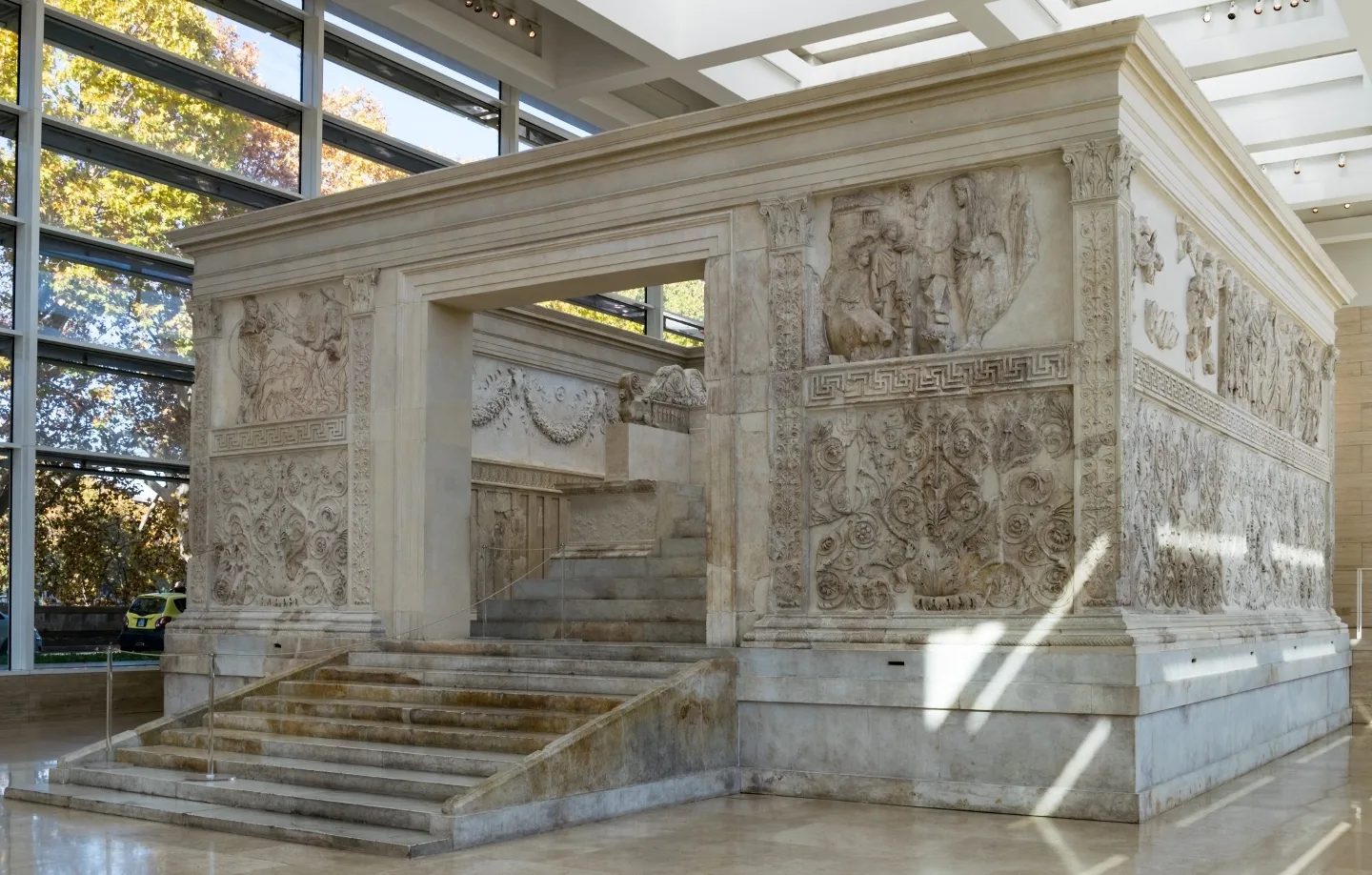
Augustan Principate and the Pax Romana
Augustus established the Roman Principate in 27 BCE, initiating two centuries of imperial peace and administrative integration across the Mediterranean basin.
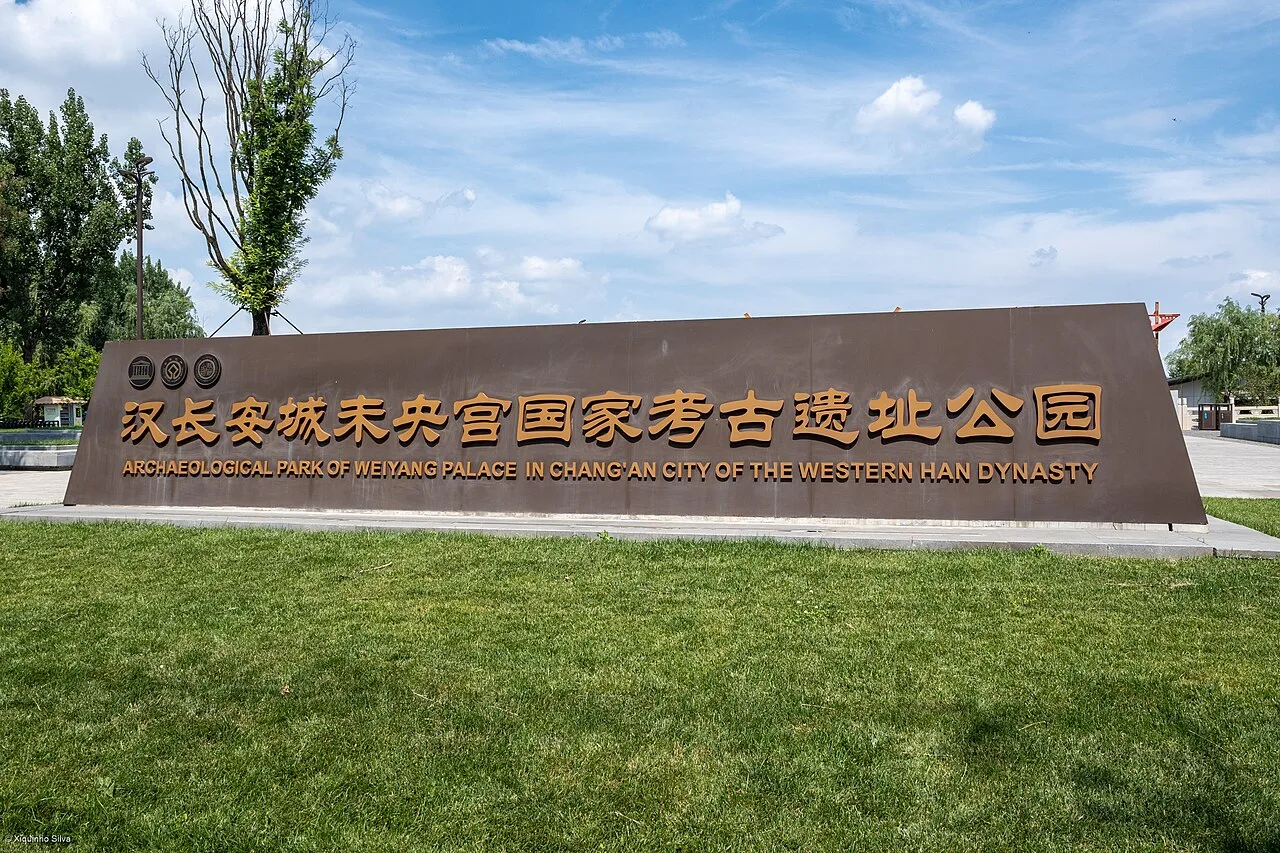
Han Imperial Academy and Meritocratic Bureaucracy
Emperor Wu of Han established the Imperial Academy in 124 BCE, creating a merit-based examination curriculum to staff imperial administrative offices with Confucian scholars.
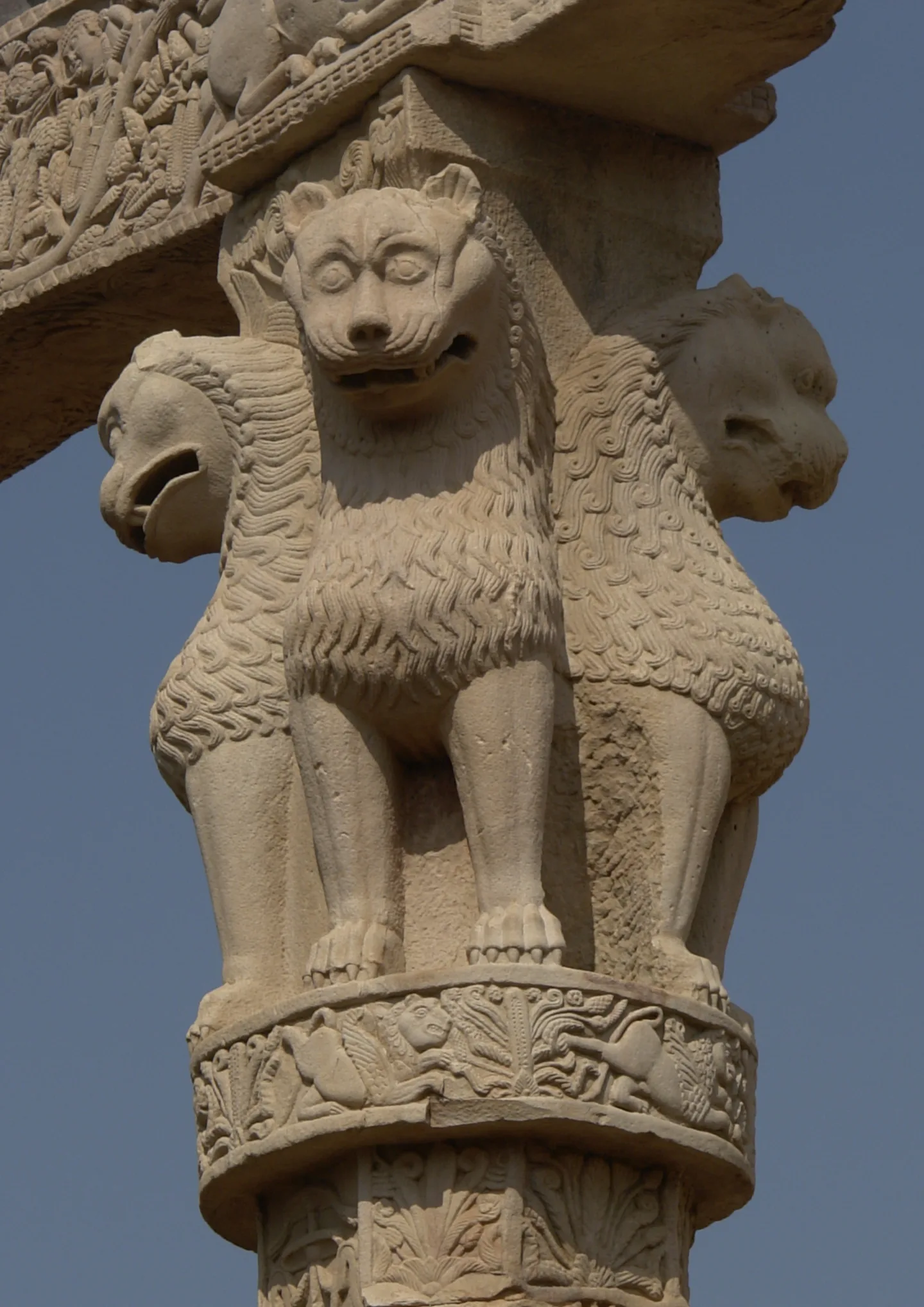
Kautilya's Codification of Political Realpolitik
The Arthashastra, a treatise traditionally attributed to the Mauryan minister Kautilya, set out blueprints for imperial statecraft, state monopolies, judicial law, foreign policy, and undercover surveillance networks.
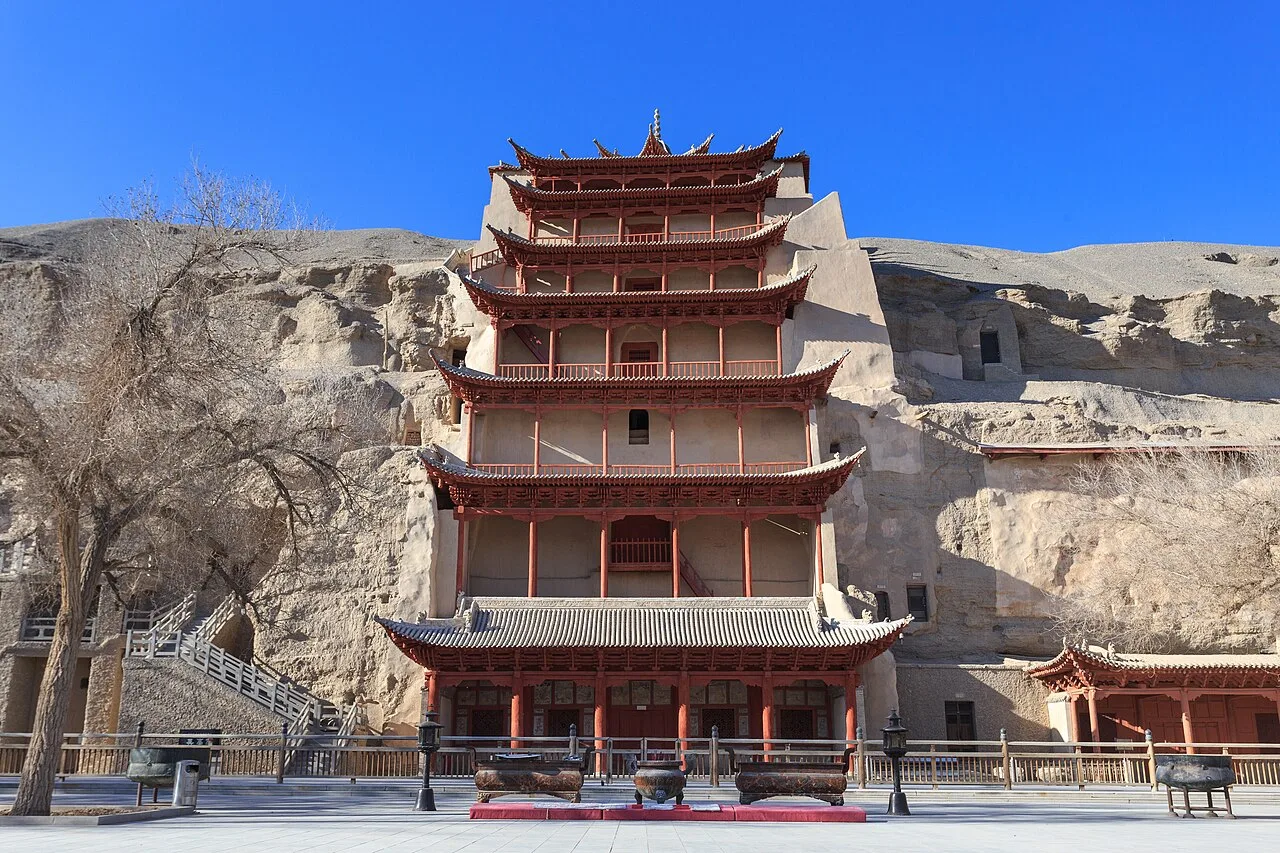
Trans-Eurasian Commerce Along the Silk Road
The Silk Road connected Han China, Central Asian kingdoms, Parthian Persia, and the Roman Mediterranean, fostering the exchange of silk, glass, spices, and religious ideas.
The Standardization of Papermaking by Cai Lun
In 105 CE, Han court official Cai Lun standardized the manufacture of paper using plant fibers and rags, revolutionizing global writing technology and administrative recording.
Monsoon Navigation in the Periplus of the Erythraean Sea
The 1st-century CE Greek navigational guide documented seasonal monsoon sailing routes connecting Roman Egypt to Arabian, Persian, and Indian trading ports like Muziris.
Roman Civil Law and the Corpus Juris Civilis
Roman jurisprudence evolved from the ancient Twelve Tables into a comprehensive legal system that established foundational concepts of contracts, property rights, and judicial evidence.
Roman Imperial Coin Drainage to India for Luxury Spices
Pliny the Elder lamented that India, China, and Arabia together drained an estimated 100 million sesterces in gold and silver from Rome annually, with Indian black pepper and pearls, alongside Chinese silk routed through Indian ports, accounting for much of that luxury trade.
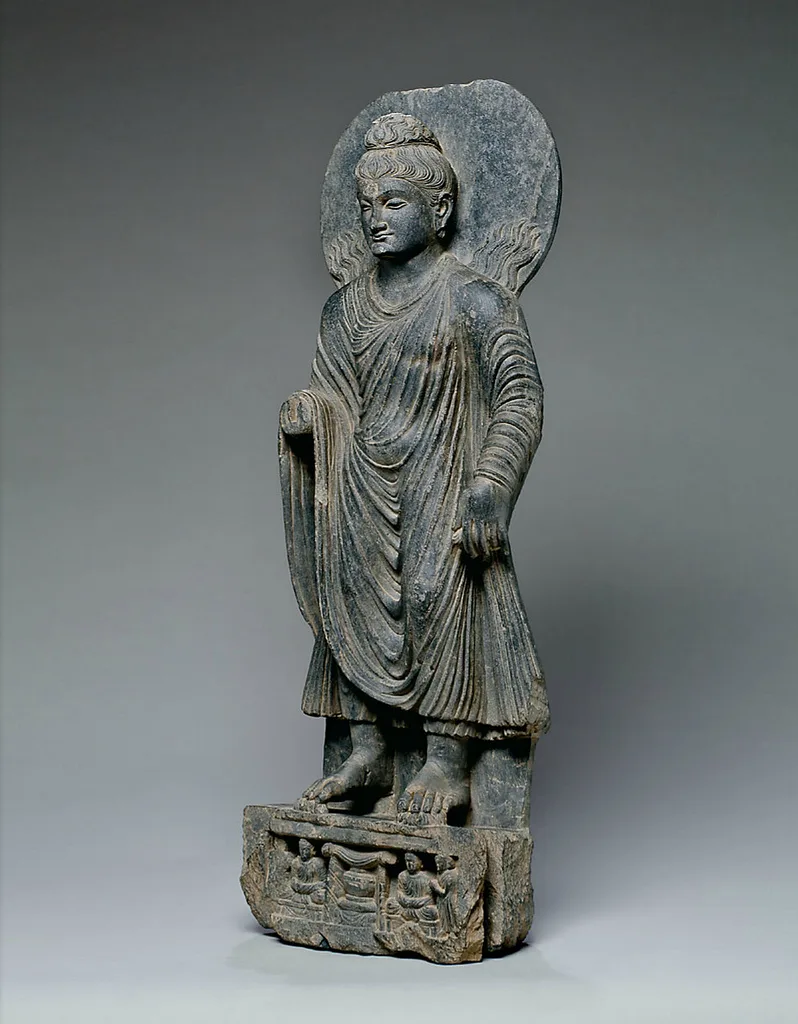
Greco-Buddhist Cultural Synthesis in Gandhara
In Gandhara (modern Pakistan and Afghanistan), Hellenistic sculptural aesthetics fused with Indian Buddhist devotion, producing some of the earliest known human figurative statues of the Buddha, though scholars still debate whether Gandhara or Mathura produced the very first anthropomorphic Buddha images.
By the numbers
- In what year BCE did Qin Shi Huang complete the military conquest and unification of China?
- 221 BCE
- In what year BCE did the Roman Senate bestow the title Augustus upon Octavian, marking the start of the Roman Empire?
- 27 BCE
- In what year CE did Cai Lun officially report his standardized papermaking invention to the Han imperial court?
- 105 CE
- Around what year BCE was Zhang Qian dispatched on his pioneering diplomatic mission into Central Asia by Emperor Wu?
- 138 BCE
Matched pairs
Each item on the left goes with the one on the right.
- Qin Terracotta Legion
- Over eight thousand life-sized earthenware soldiers, archers, and horses interred in burial pits to guard a royal mausoleum
- Pont du Gard Aqueduct
- A monumental limestone arcade spanning the Gardon river valley engineered to transport fresh spring water across fifty kilometers
- Dunhuang Mogao Grottoes
- A complex of hundreds of rock-cut temple shrines adorned with Buddhist murals and manuscripts in the Gansu desert corridor
- Periplus of Erythraean Sea
- An ancient maritime manual documenting harbor anchorages, monsoon navigation routes, and luxury cargo ports from Egypt to India
Self-test
Answer each question from memory, then check your work against the answer key.
1. How did the Han Dynasty synthesize Qin administrative mechanisms with Confucian philosophy?
- ABy abolishing all written laws and returning to unwritten feudal kinship obligations
- BBy selecting regional governors exclusively through hereditary Spartan military trials
- CBy retaining centralized bureaucratic command while adopting Confucian moral virtue as the state ideology
- DBy banishing all Confucian scholars to agricultural labor camps in the Gobi desert
2. How did Augustus disguise his monarchical transformation of the Roman state following the Republic's collapse?
- ABy maintaining Republican constitutional facades while consolidating supreme tribunician and proconsular powers
- BBy formally declaring himself divine Pharaoh of Egypt and abolishing the Roman Senate
- CBy dissolving all Roman legions and relying on foreign Numidian mercenary cavalry
- DBy burning the Roman Forum and moving the imperial capital to Carthage
3. What primary strategic objective drove the extensive construction of paved Roman military roads?
- ATo give private merchant guilds exclusive trade corridors
- BTo mark sacred boundaries of conquered land for rites
- CTo serve mainly as toll roads raising revenue for the Senate
- DTo move troops and imperial couriers quickly to frontiers
4. What core premise governs Kautilya's 'Mandala' geopolitical theory in the Arthashastra?
- AIslands across the Indian Ocean should be granted total imperial sovereignty
- BImmediate neighbors are natural adversaries, while states beyond them are natural allies
- CMilitary conflict is strictly prohibited under international Brahmin spiritual law
- DAll neighboring kingdoms are naturally friendly and bound by eternal fraternal oaths
5. Why was volcanic pozzolana ash essential to the architectural revolution of Roman concrete?
- AIt allowed concrete to set and cure underwater and formed exceptionally strong chemical bonds
- BIt dissolved instantly when exposed to rainwater, allowing buildings to be easily recycled
- CIt reacted chemically with lime to tint Roman concrete a brilliant marble-white for temples
- DIt made the concrete brittle, causing structures to crumble within just a few years of construction
6. What sweeping administrative standardization did Qin Shi Huang impose across unified China?
- AMaking Confucianism the official doctrine for all officials
- BImposing one spoken dialect on every province
- CApplying the Zhou fief system uniformly to every region
- DUnifying script, coinage, measures, and axle widths
7. What long-term institutional precedent was established by the Han Imperial Academy (*Taixue*)?
- AGranting absolute hereditary rule to regional military warlords without imperial oversight
- BOutsourcing state tax collection to nomadic Xiongnu tribal chieftains
- CRecruiting civil administrators through official nomination followed by testing on mastery of the Confucian classics
- DMandating that only ordained Buddhist monks could serve as imperial chancellors
8. Which approach to statecraft did the Arthashastra set out?
- ADirect assembly voting by all adult citizens
- BRealpolitik backed by taxation and espionage
- CCivil service examinations in the Confucian classics
- DNon-striving Daoist rule that avoids state action
9. Which Mauryan ruler's imperial consolidation does tradition link to Kautilya's Arthashastra?
- ABindusara
- BChandragupta
- CAshoka
- DBrihadratha
10. How was commerce along the overland Eurasian Silk Road primarily conducted?
- AThrough direct monsoon sea voyages shipping goods straight from Rome to Chang'an
- BBy individual merchants traveling the entire 8,000-kilometer distance from Rome to Chang'an on foot
- CThrough intermediate relay trade where goods were exchanged across successive regional oasis markets
- DThrough a single state-chartered trading company holding exclusive rights over the entire route
11. What economic and intellectual impact resulted from the invention and standardization of paper in Han China?
- AIt made stone monument carving the sole legal method of government communication
- BIt was prohibited from export outside the imperial palace under penalty of death
- CIt led to the immediate destruction of all traditional Confucian libraries and archives
- DIt drastically lowered the cost of writing materials compared to silk cloth and heavy bamboo strips
12. What primary export commodity from Southern India was most eagerly purchased by Roman merchants?
- ABlack pepper and fine spices sourced from the Malabar coast
- BWar elephants captured in the Kerala forests
- CWarhorses bred in the Tamil country for Roman cavalry
- DTin ingots mined in the Kerala hills
13. What lasting contribution did Roman jurisprudence make to later law?
- AChurch canon law governing clergy and church property
- BCivil law on property, contracts, and legal personhood
- CCase-by-case common law resting on binding precedent
- DUnwritten tribal custom enforced by village elders alone
14. How did Gandharan sculptors depict the Buddha?
- AThe Buddha wears Greek-style drapery and wavy hair
- BThe Buddha is carved in Egyptian-style rigid frontal poses
- CThe Buddha appears only as symbols, never in human form
- DThe Buddha wears Chinese-style layered court robes
15. What role did Sogdian merchants play along the Silk Road during the Classical and early Medieval eras?
- AThey sold Han China's silk directly to buyers in Rome
- BThey ran the monsoon spice trade from Malabar ports
- CThey served as commercial and linguistic middlemen
- DThey ran the Han state's salt and iron monopoly
16. What did Mediterranean navigators master that let Roman merchant fleets sail annually from Red Sea ports to southern India?
- ASeasonal calms that let oared galleys row across the sea
- BStrong ocean currents that carried ships out of the Red Sea
- CSteady trade winds that blew toward India in every season
- DThe seasonal reversal of the Indian Ocean monsoon winds
Go deeper
- WatchRoads of Empire Over 80,000 kilometers of paved roads, like the Appian Way, tied the Roman Empire together.
- WatchSilk and Monsoon The Silk Road ran from Chang'an, the Han capital, through oases like Dunhuang, to Antioch, Alexandria and Rome.
- WatchAn Army of Clay Farmers near Xi'an uncovered an army of clay in 1974.
- StudyWorld History: Turning Points of Human Civilization in the FlashFeed app
Answer key
- 1. C By retaining centralized bureaucratic command while adopting Confucian moral virtue as the state ideologyThe Han maintained the efficient centralized administrative machinery of the Qin but replaced Legalist brutality with Confucian moral legitimacy.
- 2. A By maintaining Republican constitutional facades while consolidating supreme tribunician and proconsular powersAugustus ruled as *Princeps* ('first citizen'), maintaining the Senate and traditional magistracies while holding supreme autocratic authority.
- 3. D To move troops and imperial couriers quickly to frontiersThe paved road network allowed Roman legions and official imperial couriers (*cursus publicus*) to travel rapidly to quell uprisings or defend borders.
- 4. B Immediate neighbors are natural adversaries, while states beyond them are natural alliesThe Mandala ('circle of kings') theory posits that a kingdom's immediate border neighbor is a natural rival, making the state bordering that rival a natural ally.
- 5. A It allowed concrete to set and cure underwater and formed exceptionally strong chemical bondsPozzolanic ash reactively formed calcium aluminosilicate hydrates, allowing Roman concrete (*opus caementicium*) to harden underwater and support colossal unreinforced domes.
- 6. D Unifying script, coinage, measures, and axle widthsThe Qin state eliminated regional variations by standardizing the Small Seal script, bronze Ban Liang coins, linear and volume measures, and vehicle axle widths.
- 7. C Recruiting civil administrators through official nomination followed by testing on mastery of the Confucian classicsThe Imperial Academy established the principle that officials could be selected for demonstrated mastery of Confucian texts — via nomination and testing — rather than birth alone, laying groundwork for the fully competitive examination system later formalized under the Sui and Tang dynasties.
- 8. B Realpolitik backed by taxation and espionageThe Arthashastra, traditionally attributed to Kautilya, set out taxation policy and espionage-based political realism.
- 9. B ChandraguptaTradition links the Arthashastra's taxation and espionage doctrines to imperial consolidation under Chandragupta, founder of the Mauryan Empire.
- 10. C Through intermediate relay trade where goods were exchanged across successive regional oasis marketsTrade functioned as a relay system: Sogdian and Central Asian merchants transported goods between oasis waystations without individual travelers traversing the entire route.
- 11. D It drastically lowered the cost of writing materials compared to silk cloth and heavy bamboo stripsPaper was vastly cheaper, lighter, and more flexible than carved bamboo slats or expensive silk rolls, accelerating literacy and imperial administrative efficiency.
- 12. A Black pepper and fine spices sourced from the Malabar coastIndian black pepper (*Piper nigrum*) was in immense demand across Roman culinary and medical markets, commanding enormous outflows of Mediterranean specie.
- 13. B Civil law on property, contracts, and legal personhoodRoman law, from the Twelve Tables to Justinian's Corpus Juris Civilis, formalized civil rules on property, contracts, and legal personhood that underlie continental European civil law.
- 14. A The Buddha wears Greek-style drapery and wavy hairGreco-Buddhist art in Gandhara fused Greek Hellenistic drapery folds, wavy hair, and realistic anatomy with traditional Indian Buddhist iconography.
- 15. C They served as commercial and linguistic middlemenSogdians from Transoxiana established trading colonies and dominated trans-Eurasian caravan logistics, translation, and diplomatic communications.
- 16. D The seasonal reversal of the Indian Ocean monsoon windsMastery of the seasonal reversal of the monsoon winds let Roman merchant fleets sail annually from Red Sea ports to southern Indian emporia such as Muziris; the Periplus of the Erythraean Sea credits the pilot Hippalus with the direct route across the ocean.
Sources
- Rajamandala — Wikipedia — en.wikipedia.org/wiki/Rajamandala
- Sogdia — Wikipedia; Étienne de la Vaissière, Sogdian Traders: A History — en.wikipedia.org/wiki/Sogdia
- Terracotta Army — Wikipedia; Sima Qian, Records of the Grand Historian — en.wikipedia.org/wiki/Terracotta_Army
- Augustus, Res Gestae Divi Augusti
- Pont du Gard — Wikipedia; Vitruvius, De Architectura — en.wikipedia.org/wiki/Pont_du_Gard
- Hans Bielenstein, The Bureaucracy of Han Times
- Keith Hopkins and Mary Beard, The Colosseum (2005)
- Kautilya, The Arthashastra (trans. L.N. Rangarajan); Kautilya, The Arthashastra — en.wikipedia.org/wiki/Arthashastra
- Edward Gibbon, The Decline and Fall of the Roman Empire — en.wikipedia.org/wiki/Pax_Romana
- Vitruvius, De Architectura — en.wikipedia.org/wiki/Roman_concrete
- Hans Bielenstein, The Bureaucracy of Han Times — en.wikipedia.org/wiki/Han_dynasty
- Tacitus, The Annals of Imperial Rome; Suetonius, The Twelve Caesars — en.wikipedia.org/wiki/Augustus
- Vitruvius, De Architectura — en.wikipedia.org/wiki/Roman_roads
- Vitruvius, De Architectura — en.wikipedia.org/wiki/Pantheon,_Rome
- Sima Qian, Records of the Grand Historian — en.wikipedia.org/wiki/Qin_dynasty
- Hans Bielenstein, The Bureaucracy of Han Times — en.wikipedia.org/wiki/Imperial_examination
- Sima Qian, Records of the Grand Historian — en.wikipedia.org/wiki/Qin_Shi_Huang
- Keith Hopkins, Conquerors and Slaves — en.wikipedia.org/wiki/Appian_Way
- Hans Bielenstein, The Bureaucracy of Han Times — en.wikipedia.org/wiki/Discourses_on_Salt_and_Iron
- Benjamin Schwartz, The World of Thought in Ancient China — en.wikipedia.org/wiki/Legalism_(Chinese_philosophy)
- Peter Frankopan, The Silk Roads: A New History of the World
- Tsien Tsuen-hsuin, Written on Bamboo and Silk
- Lionel Casson, The Periplus Maris Erythraei
- Peter Stein, Roman Law in European History
- Pliny the Elder, Naturalis Historia
- Susan Whitfield, Life Along the Silk Road
- Peter Frankopan, The Silk Roads — en.wikipedia.org/wiki/Silk_Road
- Lionel Casson, The Periplus Maris Erythraei — en.wikipedia.org/wiki/Monsoon
- Peter Stein, Roman Law in European History — en.wikipedia.org/wiki/Corpus_Juris_Civilis
- Lionel Casson, The Periplus Maris Erythraei; Periplus of the Erythraean Sea (Wikipedia) — en.wikipedia.org/wiki/Periplus_of_the_Erythraean_Sea
- Tsien Tsuen-hsuin, Written on Bamboo and Silk — en.wikipedia.org/wiki/History_of_paper
- Lionel Casson, The Periplus Maris Erythraei — en.wikipedia.org/wiki/Indo-Roman_trade_relations
- Roman law (Wikipedia) — en.wikipedia.org/wiki/Roman_law
- Susan Whitfield, Life Along the Silk Road — en.wikipedia.org/wiki/Greco-Buddhist_art
- Tsien Tsuen-hsuin, Written on Bamboo and Silk — en.wikipedia.org/wiki/Cai_Lun
- Peter Frankopan, The Silk Roads; Sima Qian, Records of the Grand Historian — en.wikipedia.org/wiki/Zhang_Qian
- Lionel Casson, The Periplus Maris Erythraei — en.wikipedia.org/wiki/Muziris
- Susan Whitfield, Life Along the Silk Road — en.wikipedia.org/wiki/Mogao_Caves
- Peter Frankopan, The Silk Roads — en.wikipedia.org/wiki/Caravanserai
- Peter Frankopan, The Silk Roads — en.wikipedia.org/wiki/Sino-Roman_relations
Image credits
- Augustan Principate and the Pax Romana: Wikimedia Commons · Rabax63 · CC BY-SA 4.0 — commons.wikimedia.org/wiki/File:Ara_Pacis_(SW).jpg
- Han Imperial Academy and Meritocratic Bureaucracy: xiquinhosilva · CC BY 2.0 — commons.wikimedia.org/wiki/File:Historic_Site_of_Weiyang_Palace_2024.jpg
- Kautilya's Codification of Political Realpolitik: Yann (talk) (Openverse) · by-sa 4.0 — commons.wikimedia.org/wiki/File:Lion_Capital_of_Ashoka_2.jpg
- Trans-Eurasian Commerce Along the Silk Road: Wikimedia Commons · Zhangzhugang · CC BY-SA 4.0 — commons.wikimedia.org/wiki/File:Dunhuang_Mogao_Ku_2013.12.31_12-30-18.jpg
- Greco-Buddhist Cultural Synthesis in Gandhara: Cea (Openverse) · by 2.0 — commons.wikimedia.org/wiki/File:Buddha_performs_miracle_of_Sravasti_Gandhara.jpg


