
World History: Turning Points of Human Civilization study guide · Lesson 5 of 13
Medieval Crossroads and Afro-Eurasian Exchange
Feudal Structures, Manorialism, and the Song Economic Revolution · Trans-Saharan Gold-Salt Networks, Swahili Coast, and Mesoamerican Urbanism
This is the lesson's study guide from the FlashFeed app, plus its key facts and a self-test.
What you'll be able to do
- Analyze European feudal manorialism and contrast it with the market commercialization, paper currency, and technology of Song China.
- Describe the trans-Saharan gold-salt trade, the Swahili Coast's trading cities, and Classic Maya urban agriculture.
Between 800 CE and 1300 CE, dynamic regional economic networks expanded across Europe, East Asia, Africa, and the Americas. The post-classical era witnessed profound institutional adaptations—from European manorialism and feudal vassalage to China's sophisticated commercial revolution under the Song Dynasty, prosperous trans-Saharan gold routes, and complex Mesoamerican urban states.
Feudal Structures, Manorialism, and the Song Economic Revolution
In Western Europe following the disintegration of the Carolingian Empire founded by Charlemagne, political instability and Viking, Magyar, and Saracen incursions catalyzed the decentralized Feudal System. Monarchs granted tracts of land (Fiefs) to noble vassals in exchange for oaths of military fealty (homage). At the agricultural base, Manorialism organized economic production: unfree Serfs were legally tied to the lord's estate, providing compulsory agricultural labor in exchange for physical protection. Agrarian productivity rose significantly after 1000 CE through the adoption of the heavy wheeled plow (carruca), the padded horse collar, and the Three-Field System of crop rotation, which reduced fallow land from one-half to one-third.
As towns grew during the High Middle Ages, merchants and craftsmen organized guilds. These associations regulated trade, upheld product quality and protected their members' economic interests, often setting rules on prices, hours of trading and the number of apprentices a master could train.
In contrast to European decentralization, Song Dynasty China (960–1279 CE) experienced what some historians call a commercial revolution. Fueled in part by high-yield, drought-resistant Champa rice from Vietnam alongside other agricultural and commercial advances, China's population grew to over 100 million. Domestic and inter-regional commerce boomed along the Grand Canal, and in Sichuan, where heavy iron coins were the local currency, the Song government issued Jiaozi, the world's first government-backed Paper Money. Technological dynamism accelerated: Bi Sheng invented Movable Clay Type around 1040 CE; maritime navigators deployed the magnetic Mariner's Compass; and chemical engineers refined military Gunpowder weapons.
Movable type nonetheless never displaced Woodblock Printing (xylography), in which the text of a whole page is carved into a single wooden block. Historians generally attribute this to cost: wherever Chinese characters were used, a full set of type needed more than 200,000 individual pieces, so carving whole pages usually stayed cheaper than making and sorting that much type. Even in later centuries, when the imperial printing house in Beijing's Forbidden City sponsored movable type, it never used the technique for more than 10 percent of its printed materials.
Trans-Saharan Gold-Salt Networks, Swahili Coast, and Mesoamerican Urbanism
In West Africa, the introduction of the camel revolutionized trans-Saharan caravan trade. The Kingdom of Ghana and its successor, the Mali Empire, controlled vital trans-shipment hubs exchanging sub-Saharan gold and ivory for North African rock salt. Salt is essential to human health, and the gold-rich West African states needed it: rock salt mined in the Sahara at sites such as Taghaza was carried to the market of Timbuktu, where it was reportedly bartered for gold. In 1324 CE, the devout Muslim emperor Mansa Musa undertook his legendary pilgrimage to Mecca (Hajj), distributing so much gold in Cairo that the price of gold there reportedly fell and had still not recovered twelve years later, though some historians think the drop was within normal price fluctuation. Under Mali rule in Mansa Musa's era, Timbuktu grew as a trade and Islamic center, and its scholarship later peaked around the Sankore Madrasah and its library collections.
Along the East African littoral, Bantu-speaking populations fused with Arab and Persian merchants to forge the cosmopolitan Swahili Coast civilization. Independent maritime city-states like Kilwa Kisiwani, Mombasa, and Zanzibar dominated Indian Ocean trade networks, exporting gold, ivory, and iron in exchange for Chinese porcelain and Indian textiles. In the southern African interior, the kingdom of Great Zimbabwe erected massive dry-stone monumental enclosures without mortar, demonstrating advanced architectural engineering.
In the Americas, complex indigenous civilizations flourished independently. The Classic Maya civilization farmed rain-fed plots, but these alone could not feed its dense cities, so in some areas farmers added hillside terraces and engineered raised wetland fields to expand farmland. The Maya also built towering limestone temple-pyramids such as Tikal Temple I. The Maya developed a sophisticated logo-syllabic script and calculated complex astronomical cycles using the Calendar Round and Long Count systems.
Key terms
- Feudal Homage
- The formal medieval ceremony in which a prospective vassal knelt before a lord and pledged personal loyalty, military service, and submission in exchange for land.
- Milpa
- A traditional Mesoamerican agricultural system based on polyculture intercropping of maize, beans, and squash to maintain soil fertility.
Key concepts
Jiaozi (Paper Money)
- First government-issued paper banknote developed in 11th-century Song Dynasty Sichuan
- Originated from private merchant deposit certificates to eliminate heavy strings of iron and bronze coins
- Standardized by the imperial state with anti-counterfeiting seals and specified redemption values
Manorialism
- Economic organization of the Middle Ages vesting legal and economic power in a local lord of the manor
- Based on peasant and serf labor obligations cultivating the lord's demesne lands
- Operated as a largely self-sufficient agrarian productive unit with communal village open fields
Magnetic Mariner's Compass
- Navigational instrument utilizing a suspended magnetized iron needle aligned with Earth's magnetic poles
- First described by Shen Kuo in his 1088 Dream Pool Essays as a geomancer's tool; the earliest explicit record of its use for maritime navigation is Zhu Yu's Pingzhou Table Talks (c. 1111–1117)
- Revolutionized long-distance trans-oceanic navigation across the Indian Ocean and South China Sea
Three-Field System
- Agricultural regime dividing arable land into three sections: autumn plantings, spring legumes/oats, and fallow
- Replaced the classical two-field system, reducing uncultivated fallow land from 50% to 33%
- Enriched soil nitrogen through legume cultivation while providing oats for draft horses
Mansa Musa
- 14th-century ruler (*Mansa*) of the Mali Empire, widely considered one of the wealthiest individuals in history
- Conducted a famous 1324 pilgrimage to Mecca accompanied by tens of thousands of retainers and camels laden with gold
- Is credited with commissioning the Djinguereber Mosque in Timbuktu
Trans-Saharan Gold-Salt Trade
- Caravan commercial network connecting North Africa and the Mediterranean with West African savannah empires
- Depended on camel caravans (*caravans*) traversing thousands of kilometers across desert routes
- Facilitated the diffusion of Islam, literacy, Islamic jurisprudence, and architectural styles across West Africa
Great Zimbabwe
- Medieval dry-stone walled city located in the southeastern hills of modern Zimbabwe
- Capital of the Kingdom of Zimbabwe, flourishing from the 11th to 15th centuries as a gold trading hub
- Constructed with curved granite stone walls up to 11 meters high assembled entirely without mortar
Maya Calendar Round
- Interlocking 52-year calendrical cycle combining the 260-day sacred *Tzolk'in* and 365-day solar *Haab'*
- Supplements the non-repeating Long Count calendar which tracked elapsed days from a mythic starting date in 3114 BCE
- Guided civic planning, agricultural planting, and religious bloodletting ceremonies
Key facts
The Innovation of Jiaozi Government Paper Money
In the 11th century CE, the Song Dynasty issued Jiaozi in Sichuan, creating the world's first state-backed paper banknote system to support booming commercial trade.
The Magnetic Compass in Song Maritime Navigation
Song Dynasty mariners deployed the magnetized needle compass for open-ocean seafaring, enabling accurate navigation independent of celestial visibility.
Manorial Labor Obligations and Serfdom in Feudal Europe
European manorialism bound unfree serfs to noble estates, requiring agricultural labor corvées and portion payments of harvest yields in exchange for lordly protection.
Bi Sheng's Invention of Movable Ceramic Type
Around 1040 CE, artisan Bi Sheng invented movable type printing using individually carved and fired ceramic clay characters set in an iron frame.
The European Three-Field Crop Rotation System
Medieval European farmers adopted three-field rotation (planting spring crops, autumn wheat, and leaving one field fallow), reducing the share of land left fallow each year from one-half to one-third and lifting overall output.
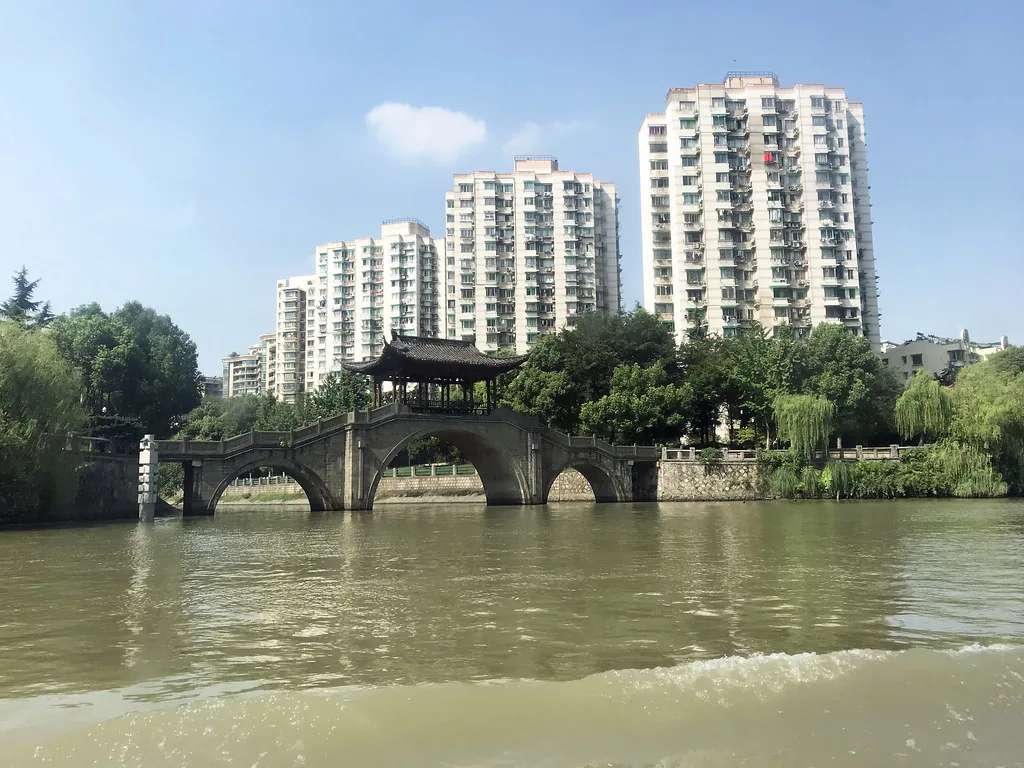
The Grand Canal as an Economic Artery of Imperial China
The Grand Canal connected the agricultural grain basket of the Yangtze River delta to northern administrative capitals, transporting millions of bushels of grain annually.
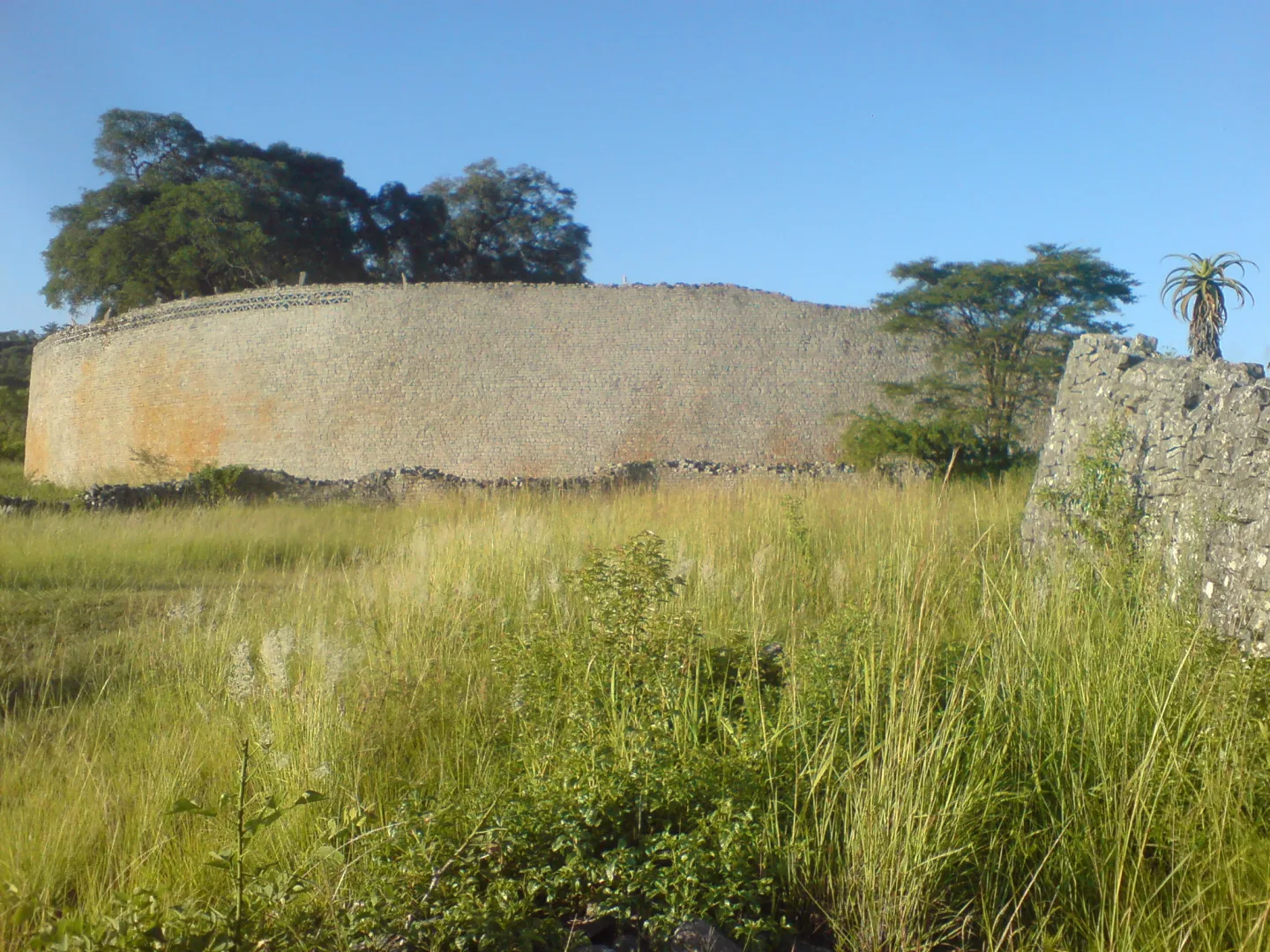
Monumental Dry-Stone Architecture of Great Zimbabwe
Between the 11th and 15th centuries CE, the Kingdom of Zimbabwe constructed massive dry-stone granite walls without mortar, anchoring gold and cattle trade in Southern Africa.
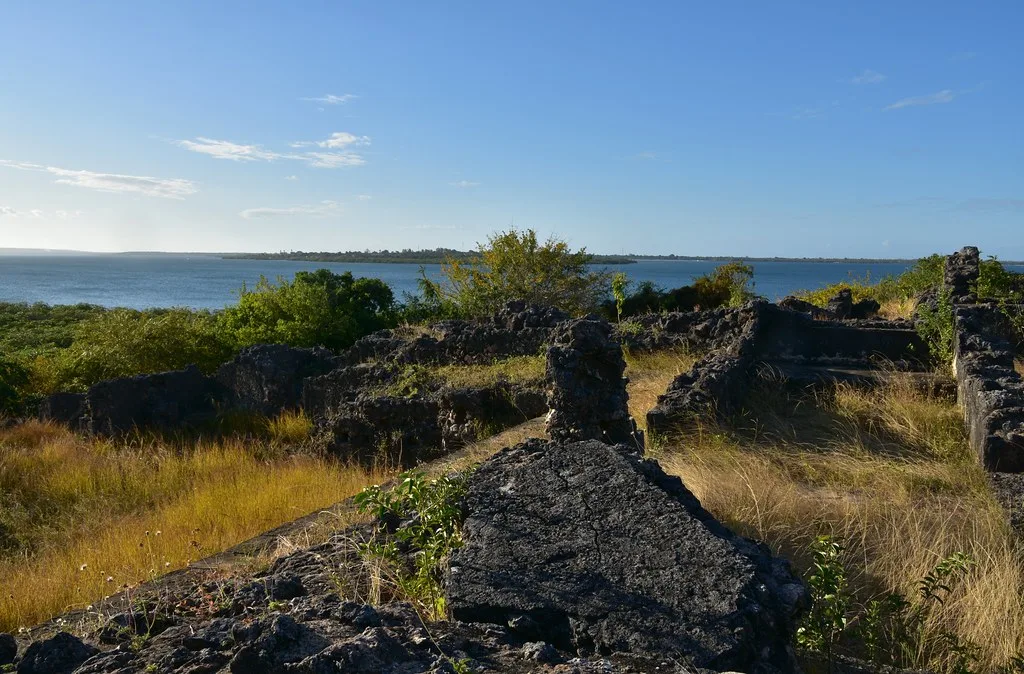
Cosmopolitan Coral Stone Palaces of Kilwa Kisiwani
The Swahili seaport of Kilwa Kisiwani commanded the southern monsoon gold trade from Sofala, building grand coral rag palaces like Husuni Kubwa.
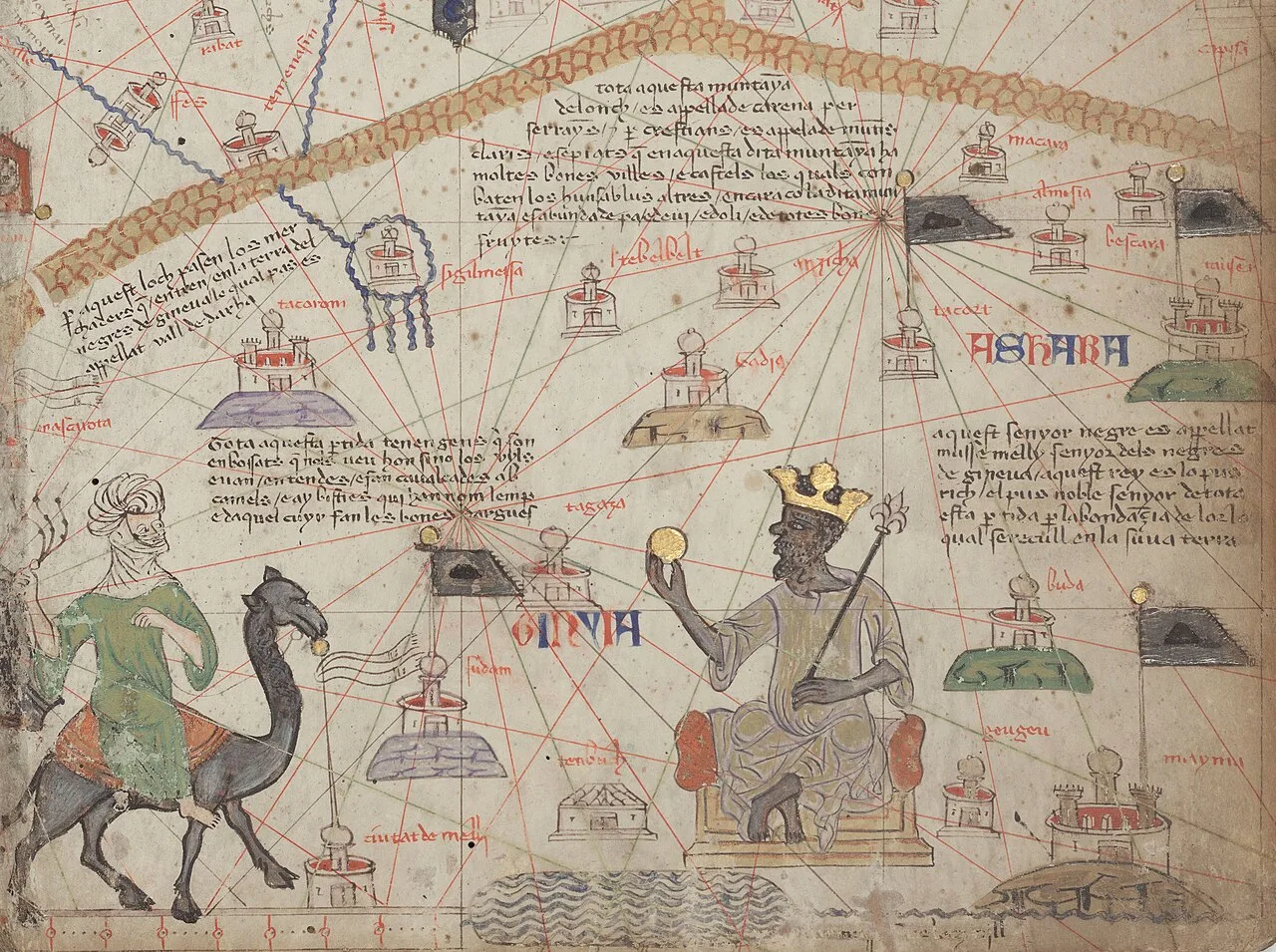
The Gold-Salt Symbiosis of the Trans-Saharan Trade
Caravans traversed the Sahara using camels, exchanging Saharan slab rock salt mined at Taghaza for alluvial gold dust from the Bambuk and Bure goldfields.
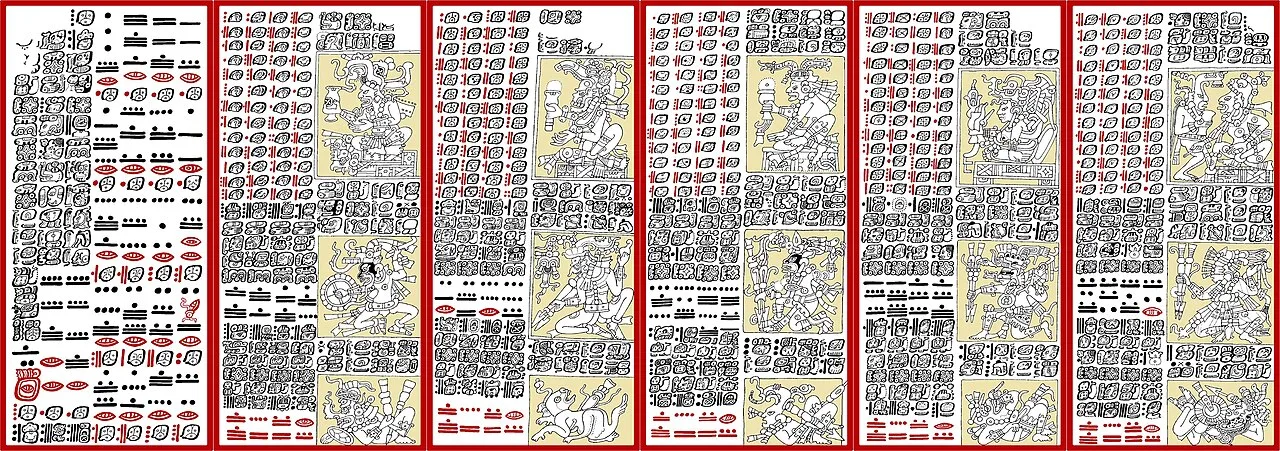
Maya Astronomical Observation and the Long Count Calendar
Maya priest-astronomers developed sophisticated mathematical tables predicting solar eclipses and tracking the synodic cycles of Venus recorded in bark-paper codices.
By the numbers
- Around what year CE did Bi Sheng invent movable clay type printing in China?
- 1040 CE
- In what year CE was Charlemagne crowned Emperor of the Romans by Pope Leo III on Christmas Day?
- 800 CE
- In what year CE did Emperor Mansa Musa of Mali embark on his famous pilgrimage to Mecca?
- 1324 CE
- Around what year CE did the Classic Maya civilization begin to experience widespread urban depopulation and temple abandonment?
- 800 CE
Matched pairs
Each item on the left goes with the one on the right.
- Jiaozi Imperial Note
- The world's earliest state-backed paper currency, developed in Sichuan to replace heavy strings of iron and bronze coins
- Feudal Manorial Serf
- An unfree agrarian peasant legally bound to an estate requiring agricultural service in exchange for physical security
- Great Zimbabwe Monument
- A medieval sub-Saharan stone complex built with curving perimeter walls constructed without mortar
- Tikal Temple One
- A steep limestone stepped structure rising above the Guatemalan jungle canopy to memorialize an 8th-century royal ruler
Self-test
Answer each question from memory, then check your work against the answer key.
1. Why did the Song government officially standardize and issue Jiaozi paper currency?
- ATo facilitate large-scale commercial trade without transporting thousands of pounds of heavy copper and iron coins
- BTo completely abolish and outlaw all bronze and iron coinage empire-wide
- CTo fund the relocation of the imperial capital to a fortress city in the western mountains
- DTo finance a permanent standing army garrisoned along the Silk Road
2. What reciprocal obligation formed the fundamental core of European feudal vassalage?
- AThe lord paid daily silver wages in exchange for the vassal working in domestic kitchens
- BThe lord could seize back the vassal's fief at any time without cause or compensation
- CThe lord granted land (a fief) and physical protection, while the vassal pledged military service and counsel
- DThe vassal paid the lord a fixed annual grain tribute but received no land in return
3. How did the heavy wheeled iron plow (*carruca*) transform Northern European agriculture?
- AIt was essentially a scaled-down version of the Mediterranean scratch plow (ard) built for shallow topsoil
- BIt had no wheels at all and had to be dragged directly across furrows by hand
- CIt used a curved iron blade that skimmed the topsoil without ever turning the soil over
- DIt allowed farmers to cut and turn over the dense, nutrient-rich clay soils of northern Europe
4. What agricultural innovation sparked the demographic surge of Song Dynasty China?
- AThe introduction of a slow-ripening rice variety that yielded only one harvest every two years
- BThe introduction of fast-ripening, drought-resistant Champa rice allowing two harvests a year
- CA strict government ban on transporting harvested rice across provincial borders
- DThe complete replacement of southern rice paddies with wheat imported from the Byzantine Empire
5. Why was woodblock printing (*xylography*) often favored over movable type in traditional China?
- ABecause imperial law forbade printing books with movable type
- BMovable type was dismissed because the technique had originally been invented in Korea
- CBecause individual movable type pieces frequently went missing or were stolen between uses
- DBecause the vast number of distinct Chinese logographic characters made setting movable type labor-intensive
6. What primary economic function was served by medieval European merchant and craft guilds?
- AEncouraging completely unrestricted price wars and deregulation among workshop owners
- BAbolishing all master-apprentice hierarchies in favor of direct state employment
- CRegulating product quality, fixing prices, limiting competition, and training apprentices
- DFunding private privateer navies to raid transatlantic spice galleons
7. What chemical mixture was developed by Chinese Daoist alchemists during the Tang-Song era?
- AGunpowder, a mix of saltpeter, sulfur, and charcoal
- BLaudanum, a tincture of opium in alcohol
- CSoap, made from animal fat and wood-ash lye
- DConcrete, a mix of lime, volcanic ash, and rubble
8. What economic consequence was reported in Cairo after Mansa Musa's lavish gold spending during his 1324 pilgrimage?
- AIt prompted the Mamluk treasury to mint a new, lower-purity gold dinar to offset the price collapse
- BThe influx of gold depressed the price of gold there for over a decade
- CIt forced the Mamluk Sultan to ban all foreign pilgrims from entering Mecca
- DIt bankrupted the Egyptian treasury and caused an immediate collapse of all Nile shipping
9. Why was rock salt in such demand in the trans-Saharan trade network?
- ASalt was the standard currency of the Mediterranean world
- BSalt was the main preservative for exporting fish to Europe
- CSalt was essential to health and scarce south of the Sahara
- DSalt was prized as a luxury spice at Mediterranean courts
10. How did the Swahili language and civilization emerge along the East African coast?
- AThrough the total military conquest and colonization of East Africa by Mongol horse archers
- BThrough the complete forced relocation of all Nile valley peasants to Madagascar
- CAs an imported Celtic dialect spoken exclusively by Venetian spice traders
- DAs an indigenous Bantu grammatical foundation heavily enriched by Arabic vocabulary from merchant contact
11. What agricultural strategy enabled the Maya to support dense populations in the tropical rainforest environment?
- ATerraced hillsides, raised wetland fields, and milpa polyculture of maize, beans, and squash
- BImporting surplus grain every year from highland Andean terraces via llama caravan
- CExtensive dry-farming of wheat and barley on irrigated desert terraces, as used in the Fertile Crescent
- DSlash-and-burn monoculture of a single imported wheat strain across cleared jungle
12. What distinctive engineering technique was used to build the monumental walls of Great Zimbabwe?
- AFired clay bricks bound together with lime mortar imported from the Swahili coast
- BDry-stone masonry of tightly fitted and carefully dressed granite blocks
- CMassive timber log palisades carved with Egyptian hieroglyphic symbols
- DSun-dried mudbricks coated in waterproofing natural bitumen plaster
13. What kind of writing system did the ancient Maya develop in Pre-Columbian Mesoamerica?
- AA sophisticated logo-syllabic script combining phonetic syllables with whole-word glyphs
- BA purely consonantal 22-letter phonetic alphabet borrowed from Phoenician sailors
- CAn undeciphered system of abstract geometric triangles with no spoken language equivalents
- DA knotted string accounting system with zero written or carved characters
14. What was the renown of the city of Timbuktu during the Mali and Songhai empires?
- AA Swahili Coast seaport exporting gold and ivory
- BThe Saharan site where rock salt was mined for caravans
- CA royal city of massive dry-stone enclosures without mortar
- DA center of Islamic scholarship with famed libraries
15. What specific farming technique allowed the Classic Maya to support dense populations in tropical wetlands?
- AAndean-style terrace farming on mountain slopes
- BRain-fed monoculture maize fields without irrigation
- CEngineered raised-field, chinampa-style wetland cultivation
- DLarge-scale nomadic pastoral cattle herding
16. Why did Classic Maya farmers add engineered raised wetland fields to their rain-fed plots?
- ATo replace maize with a wetland-only staple crop
- BTo expand farmland and help feed dense populations
- CTo cut the labor of farming compared with rain-fed plots
- DTo replace hillside terraces after they were abandoned
Go deeper
- WatchWhy Woodblocks Won Over 100 million people lived in Song China. It had the world's first true commercial revolution.
- WatchSalt for Gold Camels opened trade across the Sahara. West African gold and ivory went north. Rock salt came south.
- WatchOne Field in Three Half the farmland went uncultivated every year. Under the old two-field system, that half lay fallow.
- StudyWorld History: Turning Points of Human Civilization in the FlashFeed app
Answer key
- 1. A To facilitate large-scale commercial trade without transporting thousands of pounds of heavy copper and iron coinsCopper and iron coinage was too bulky and heavy for massive commercial transactions; paper Jiaozi allowed merchants to settle vast debts effortlessly.
- 2. C The lord granted land (a fief) and physical protection, while the vassal pledged military service and counselFeudalism was a contractual relationship among nobility: lords granted landed fiefs and security in return for oaths of loyalty (*fealty*) and knightly military duty.
- 3. D It allowed farmers to cut and turn over the dense, nutrient-rich clay soils of northern EuropeUnlike the Mediterranean scratch plow (*ard*), the heavy wheeled *carruca* sliced through deep clay river valleys, opening fertile new agricultural land.
- 4. B The introduction of fast-ripening, drought-resistant Champa rice allowing two harvests a yearChampa rice from Vietnam matured in about 60 days per harvest, enabling double-cropping that helped feed — alongside other Song-era advances — a population that grew past 100 million.
- 5. D Because the vast number of distinct Chinese logographic characters made setting movable type labor-intensiveA full set of type for a script using Chinese characters needed more than 200,000 pieces, so carving each page onto one wooden block usually stayed cheaper than making and sorting that much type.
- 6. C Regulating product quality, fixing prices, limiting competition, and training apprenticesGuilds maintained monopolies over urban trades, setting standardized quality benchmarks, controlling consumer prices, and managing training stages (apprentice, journeyman, master).
- 7. A Gunpowder, a mix of saltpeter, sulfur, and charcoalDaoist alchemists searching for elixirs of immortality formulated gunpowder (*huoyao*), which over the following centuries was adapted for fireworks, fire lances, and early artillery.
- 8. B The influx of gold depressed the price of gold there for over a decadeMansa Musa spent and gave away so much gold in Cairo that a mithqal of gold reportedly fell from 25 to under 22 silver dirhams, a drop of about 12% that had not recovered twelve years later; some historians think the drop was within normal fluctuation.
- 9. C Salt was essential to health and scarce south of the SaharaSalt is essential to human health, and gold-rich West African states needed it; rock salt mined in the Sahara, as at Taghaza, was carried to Timbuktu and reportedly bartered for gold.
- 10. D As an indigenous Bantu grammatical foundation heavily enriched by Arabic vocabulary from merchant contactSwahili (*Kiswahili*) is a Bantu language with substantial Arabic loanwords, reflecting centuries of trade between indigenous African communities and Indian Ocean mariners.
- 11. A Terraced hillsides, raised wetland fields, and milpa polyculture of maize, beans, and squashThe Maya engineered complex water reservoirs, terraced hillside slopes, and raised, chinampa-style canal beds, cultivating nutrient-complementary maize, beans, and squash (milpa).
- 12. B Dry-stone masonry of tightly fitted and carefully dressed granite blocksThe monumental Great Enclosure walls of Great Zimbabwe were constructed using precisely dressed granite blocks fitted tightly without mortar or cement.
- 13. A A sophisticated logo-syllabic script combining phonetic syllables with whole-word glyphsThe Maya script was a fully developed logo-syllabic writing system capable of recording spoken language through combinations of phonetic syllables and logograms.
- 14. D A center of Islamic scholarship with famed librariesUnder Mali and later Songhai rule, Timbuktu became a renowned center of Islamic learning, with scholarship centered on the Sankore Madrasah and its library collections.
- 15. C Engineered raised-field, chinampa-style wetland cultivationThe Classic Maya engineered raised, chinampa-style wetland fields to farm productively despite poor rainforest soils.
- 16. B To expand farmland and help feed dense populationsAlongside rain-fed milpa plots and hillside terraces, the Classic Maya engineered raised wetland fields to expand farmland and help feed dense populations in some areas.
Sources
- Guild — Wikipedia; Carlo M. Cipolla, Before the Industrial Revolution — en.wikipedia.org/wiki/Guild
- Trans-Saharan trade — Wikipedia; E.W. Bovill, The Golden Trade of the Moors — en.wikipedia.org/wiki/Trans-Saharan_trade
- Salt — Wikipedia — en.wikipedia.org/wiki/Salt
- History of printing — Wikipedia; Tsien Tsuen-hsuin, Science and Civilisation in China — en.wikipedia.org/wiki/History_of_printing
- Mark Elvin, The Pattern of the Chinese Past
- Joseph Needham, Science and Civilisation in China
- Marc Bloch, Feudal Society (1939)
- Tsien Tsuen-hsuin, Science and Civilisation in China
- Georges Duby, Rural Economy and Country Life in the Medieval West
- Mark Elvin, The Pattern of the Chinese Past — en.wikipedia.org/wiki/Jiaozi_(currency)
- Marc Bloch, Feudal Society — en.wikipedia.org/wiki/Manorialism
- Joseph Needham, Science and Civilisation in China — en.wikipedia.org/wiki/History_of_the_compass
- Georges Duby, Rural Economy and Country Life — en.wikipedia.org/wiki/Three-field_system
- Mark Elvin, The Pattern of the Chinese Past — en.wikipedia.org/wiki/Song_dynasty
- Marc Bloch, Feudal Society — en.wikipedia.org/wiki/Feudalism
- Georges Duby, Rural Economy and Country Life — en.wikipedia.org/wiki/Carruca
- Mark Elvin, The Pattern of the Chinese Past — en.wikipedia.org/wiki/Champa_rice
- Joseph Needham, Science and Civilisation in China — en.wikipedia.org/wiki/History_of_gunpowder
- Marc Bloch, Feudal Society — en.wikipedia.org/wiki/Fief
- Tsien Tsuen-hsuin, Science and Civilisation in China — en.wikipedia.org/wiki/Bi_Sheng
- Einhard, Life of Charlemagne — en.wikipedia.org/wiki/Charlemagne
- Marc Bloch, Feudal Society — en.wikipedia.org/wiki/Serfdom
- Marc Bloch, Feudal Society — en.wikipedia.org/wiki/Homage_(feudal)
- Mansa Musa — Wikipedia; Nehemia Levtzion, Ancient Ghana and Mali — en.wikipedia.org/wiki/Mansa_Musa
- Peter Garlake, Great Zimbabwe
- Mark Horton, The Swahili
- Michael D. Coe, The Maya
- Nehemia Levtzion, Ancient Ghana and Mali
- Simon Martin, Chronicle of the Maya Kings and Queens
- Peter Garlake, Great Zimbabwe — en.wikipedia.org/wiki/Great_Zimbabwe
- Michael D. Coe, The Maya — en.wikipedia.org/wiki/Maya_calendar
- Mark Horton, The Swahili — en.wikipedia.org/wiki/Swahili_culture
- Michael D. Coe, The Maya — en.wikipedia.org/wiki/Maya_civilization
- Simon Martin, Chronicle of the Maya Kings and Queens — en.wikipedia.org/wiki/Maya_script
- Sankore Madrasah (Wikipedia) — en.wikipedia.org/wiki/Sankore_Madrasah
- Michael D. Coe, The Maya — en.wikipedia.org/wiki/Tikal
- Mark Horton, The Swahili — en.wikipedia.org/wiki/Kilwa_Kisiwani
- Simon Martin, Chronicle of the Maya Kings and Queens — en.wikipedia.org/wiki/Classic_Maya_collapse
- Michael D. Coe, The Maya — en.wikipedia.org/wiki/Milpa
Image credits
- The Grand Canal as an Economic Artery of Imperial China: flashpacker-travelguide.de (Openverse) · by-sa 2.0 — commons.wikimedia.org/wiki/File:Kaiserkanal_Grand_Canal_Hangzhou_China_(45133988404).jpg
- Monumental Dry-Stone Architecture of Great Zimbabwe: Jens Klinzing (Openverse) · by 3.0 — commons.wikimedia.org/wiki/File:Wall_of_the_great_enclosure_(far),_Great_Zimbabwe.JPG
- Cosmopolitan Coral Stone Palaces of Kilwa Kisiwani: Wikimedia Commons · Richard Mortel · CC BY 2.0 — commons.wikimedia.org/wiki/File:Husuni_Kubwa,_ruins_of_early_14th_cent._sultan%27s_palace_on_Kilwa_Kisiwani_(1)_(28454335443).jpg
- The Gold-Salt Symbiosis of the Trans-Saharan Trade: attributed to Abraham Cresques · Public domain — commons.wikimedia.org/wiki/File:Catalan_Atlas_BNF_Sheet_6_Western_Sahara.jpg
- Maya Astronomical Observation and the Long Count Calendar: Lacambalam · CC BY-SA 4.0 — commons.wikimedia.org/wiki/File:Codex_Dresdensis,_Venus_(Lacambalam).jpg


