
World History: Turning Points of Human Civilization study guide · Lesson 6 of 13
The Mongol World Empire and the Black Death
Nomadic Military Synergy, the Pax Mongolica, and Eurasian Connectivity · The Fourteenth-Century Demographic Catastrophe and Feudal Dissolution
This is the lesson's study guide from the FlashFeed app, plus its key facts and a self-test.
What you'll be able to do
- Describe how Mongol military strategy, the Yam communication system, and the Pax Mongolica linked Eurasian commerce and governance.
- Analyze the demographic catastrophe of the Black Death and how severe labor shortages catalyzed the breakdown of European serfdom.
The thirteenth and fourteenth centuries witnessed unprecedented continental integration followed by catastrophic biological shock. The rapid military conquests of the Mongol Empire unified Eurasia from the Pacific Ocean to the Danube, establishing the Pax Mongolica. However, this hyper-connected commercial network inadvertently served as the transmission conduit for the Black Death, which decimated populations and catalyzed the dissolution of European feudalism.
Nomadic Military Synergy, the Pax Mongolica, and Eurasian Connectivity
Under the charismatic leadership of Temüjin, proclaimed Genghis Khan at the 1206 Kurultai, nomadic pastoral tribes were welded into a formidable fighting force. Genghis Khan abolished tribal lineage distinctions, reorganizing the army along strict decimal units (arban, jagun, mingghan, tumen of 10,000 warriors). Mongol warfare combined extraordinary horse mobility, the composite reflex bow, feigned retreats, and psychological terror with Chinese and Persian siege engineering.
Following the empire's division into four successor khanates (the Yuan Dynasty in China under Kublai Khan, the Golden Horde in Russia, the Chagatai Khanate in Central Asia, and the Ilkhanate in Persia), the Pax Mongolica ("Mongol Peace") established unprecedented security across Eurasian trade routes. The Mongol rulers generally tolerated the religions of their subjects, patronizing Buddhist, Daoist, Christian, and Muslim clergy and often exempting them from taxes. The empire created the Yam (Örtöö)—an extensive relay postal system spanning thousands of kilometers with horse stations situated every 40 to 50 kilometers. Official travelers and accredited merchants carried bronze or silver passport tablets (Paiza), granting them immunity, provisions, and horses. This trans-continental stability facilitated cosmopolitan travelers, including Venetian merchant Marco Polo, Moroccan jurist Ibn Battuta, and Franciscan diplomat William of Rubruck, while easing the westward exchange of Chinese technologies and knowledge, such as printing and gunpowder weapons.
In 1258 the Mongol prince Hulagu (Hulegu), whose realm became the Ilkhanate, besieged and sacked Baghdad, executing the caliph al-Musta'sim and ending Abbasid rule from the city. In China, Kublai Khan moved the Mongol capital from Karakorum in Mongolia to a new city, Dadu (modern Beijing), and in 1271 proclaimed the Yuan Dynasty in the traditional Chinese imperial style.
The Fourteenth-Century Demographic Catastrophe and Feudal Dissolution
In the 1340s, the epidemiological consequences of Eurasian integration materialized with devastating virulence. Originating in the steppe rodent reservoirs of Central Asia, the bacterium Yersinia pestis—the causative agent of the Black Death—spread along Mongol caravan tracks and Black Sea maritime galleys. It was traditionally thought to pass to humans through the bites of rat fleas (Xenopsylla cheopis), though researchers debate how much human fleas and lice also spread it. According to the traditional account, after the 1346 Mongol siege of the Genoese trading port of Kaffa in Crimea, infected ships carried the pandemic to Constantinople and Sicily in 1347 and to Genoa and Venice in 1348, spreading it across Western Europe and the Islamic world.
Between 1346 and 1353 CE, the pandemic killed an estimated 30% to 60% of Europe's population and tens of millions across Eurasia and North Africa. In Florence, chronicler Giovanni Boccaccio described societal breakdown in the Decameron, as traditional religious and civic institutions failed to halt the contagion.
The demographic collapse produced profound socioeconomic structural transformations. Acute labor shortages gave surviving peasants and artisans unprecedented bargaining leverage. When European landed elites attempted to freeze wages through legislative edicts such as the Statute of Laborers (1351) in England, widespread unrest culminated in massive popular rebellions, notably the English Peasants' Revolt of 1381 led by Wat Tyler and preacher John Ball. Feudal serfdom disintegrated across Western Europe as lords converted labor dues into cash wages and tenant leases, laying the groundwork for mobile agrarian wage labor.
Farming changed as well. With far fewer people to feed and to work the land, many untended fields became pasture, grain farming gave way to less labor-intensive livestock and sheep raising, and in many regions abandoned fields reverted to woodland. In England, more than 1,300 villages were deserted between 1350 and 1500.
Key terms
- Pax Mongolica
- The era of trans-continental political stability, unhindered commercial exchange, and communication across Eurasia enforced by the Mongol Empire in the 13th and 14th centuries.
- Quarantine
- A public health isolation measure first imposed as a 30-day waiting period in 14th-century Ragusa (Dubrovnik) and extended to forty days by 15th-century Venetian law (*quaranta giorni*, Italian for 'forty days,' the origin of the term), mandating that arriving ships and travelers wait before entering port to prevent infectious contagion.
Key concepts
Pax Mongolica
- Period of relative peace and commercial security across 13th- and 14th-century Eurasia under Mongol hegemony
- Kept Silk Road travel unusually safe through the Yam relay posts and paiza passes, cutting banditry along the routes
- Accelerated the transfer of technology, cartography, medicine, and administrative personnel across Eurasia, above all between China and Persia
Yam (Postal Relay System)
- Imperial communications network established by Ögedei Khan across the Mongol Empire
- Maintained staging post houses (*örtöö*) every 25–30 miles stocked with fresh horses and provisions
- Allowed royal messengers wearing bells to ride up to 200 miles a day carrying urgent state decrees
Genghis Khan
- Born Temüjin, founder and Great Khan of the Mongol Empire who unified the warring steppe clans in 1206
- Instituted the *Yassa* legal code, religious freedom, meritocratic promotion, and decimal military organization
- Conquered the Khwarazmian Empire and Western Xia and began the conquest of the Jin Dynasty (completed in 1234, after his death), founding what became the largest contiguous land empire
Paiza
- Tablet of authority carried by Mongol officials and recognized envoys to demand horses and food
- Cast in silver, bronze, gold, or wood, often inscribed with curses warning that anyone disobeying would be executed
- Served as an imperial passport enabling frictionless travel across the four Mongol successor khanates
Black Death
- Bubonic and pneumonic plague pandemic that swept across Afro-Eurasia between 1346 and 1353 CE
- Caused by the bacterium *Yersinia pestis*, spread along commercial trade routes and traditionally thought to reach humans through rat-flea bites
- Killed an estimated 75 to 200 million people, transforming European socioeconomic structures and wages
Yersinia Pestis
- Gram-negative rod-shaped coccobacillus bacterium that causes bubonic, septicemic, and pneumonic plague
- Endemic in wild burrowing rodent reservoirs in Central Asia, the Caucasus, and East Africa
- Forms biofilms in the digestive tract of the rat flea, starving the flea and forcing it to bite hosts repeatedly
English Peasants' Revolt of 1381
- Major popular uprising across southeastern England triggered by the 1381 poll tax and repressive labor legislation
- Led by Wat Tyler and radical cleric John Ball ('When Adam delved and Eve span, who was then a gentleman?')
- Rebels stormed London, burned records of feudal bondage, and demanded the complete elimination of serfdom
Statute of Laborers (1351)
- Parliamentary law enacted in England under King Edward III to suppress post-plague wage increases
- Reinforced the 1349 Ordinance of Laborers, which required able-bodied people under 60 without land or a trade to work for the wages customary around 1346
- Made breaking wage caps or leaving employers punishable by imprisonment, generating widespread peasant fury
Key facts
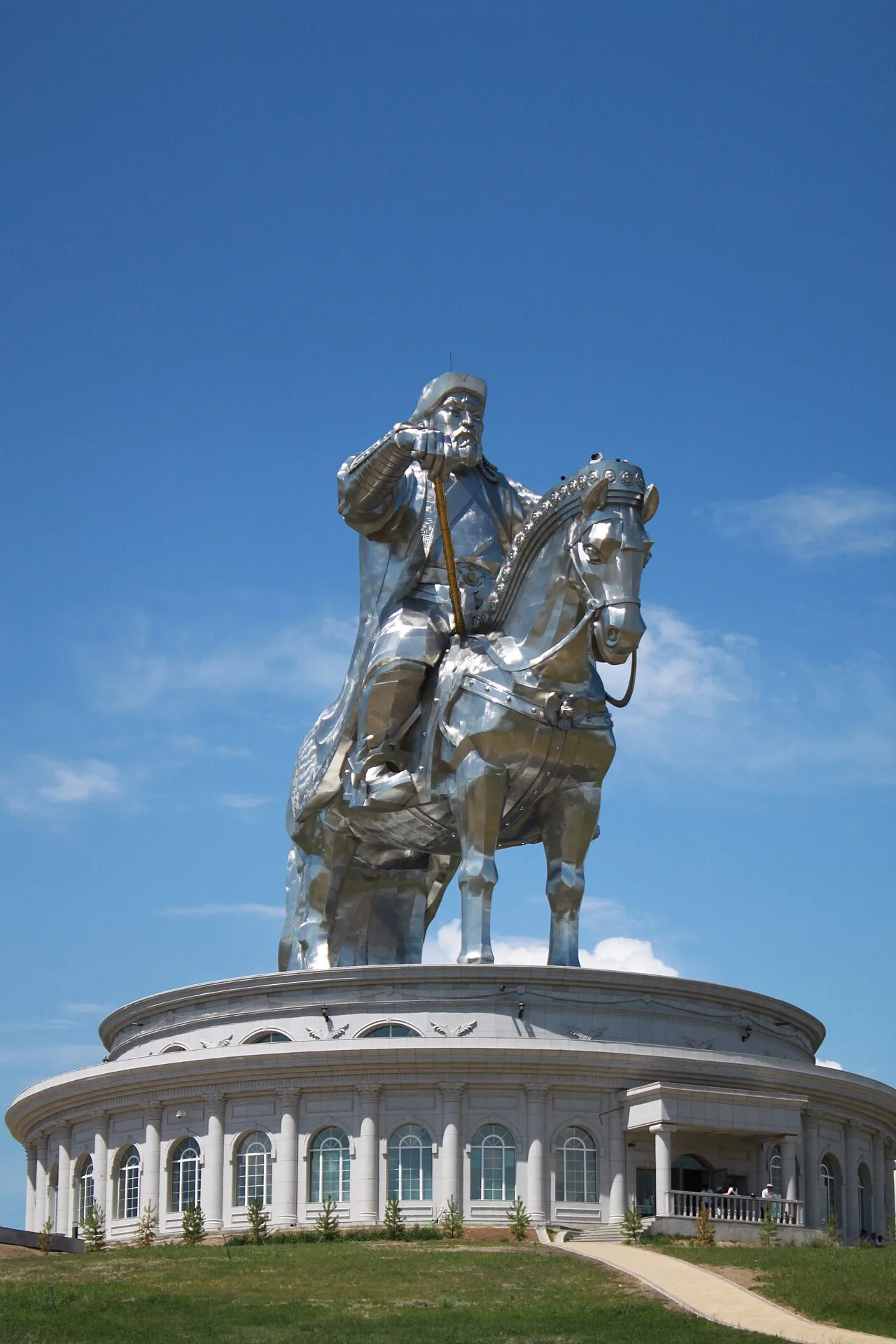
Genghis Khan's Decimal Military Reorganization
At the 1206 Kurultai, Genghis Khan united the steppe nomadic clans into a disciplined decimal army organized into tumens of 10,000 mobile mounted warriors.
The Yam Trans-Continental Postal Relay Network
The Mongol Empire engineered the Yam postal relay system, maintaining thousands of horse-changing stations across Eurasia to transmit royal intelligence in days.
The Paiza Official Passport and Diplomatic Immunity
Mongol authorities issued Paiza metal tablets — inscribed in Mongolian, Persian, or (from 1269) Phags-pa script — guaranteeing accredited ambassadors and merchants provisions, fresh horses, and safe passage.
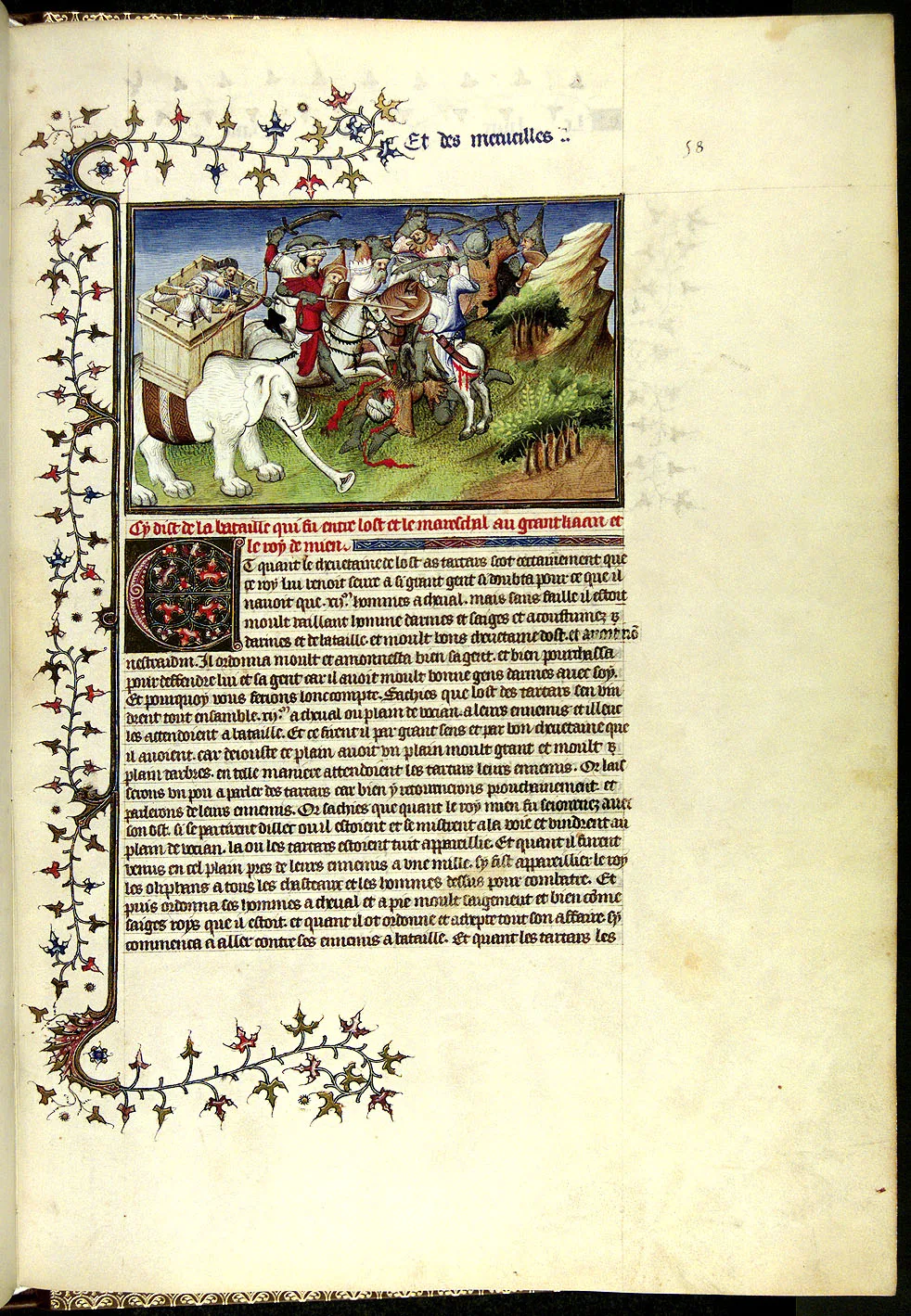
Marco Polo's Eyewitness Account of Mongol Asia
Venetian merchant Marco Polo served in Kublai Khan's court for 17 years, introducing European readers to Asian coal usage, paper money, and postal infrastructure.
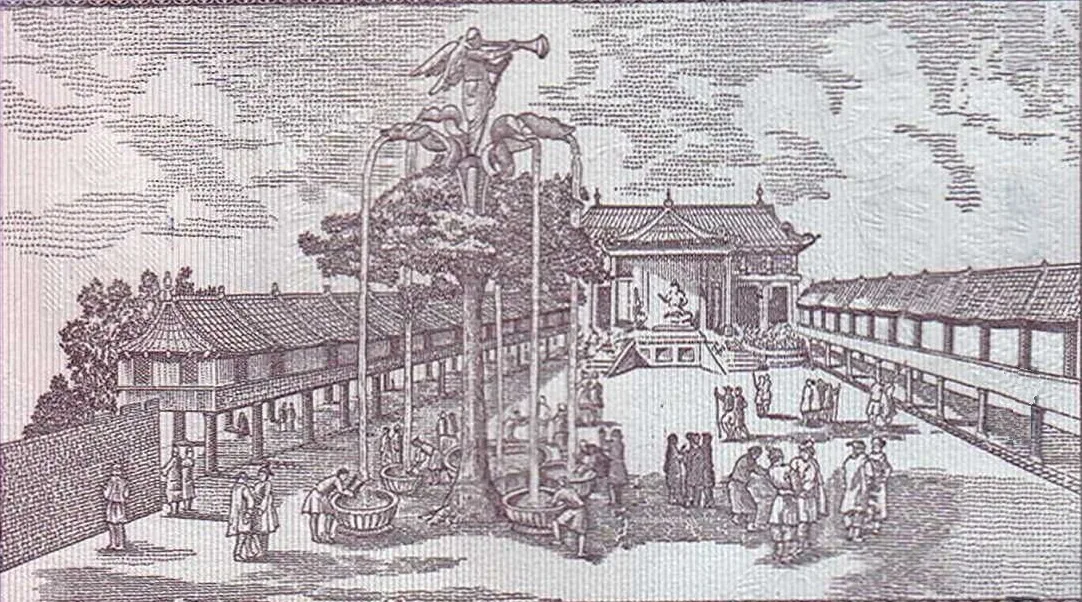
Cosmopolitan Craftsmen at the Mongol Capital of Karakorum
Founded in the Orkhon Valley, the Mongol imperial capital of Karakorum gathered captured Persian silversmiths, Chinese engineers, and European artisans.
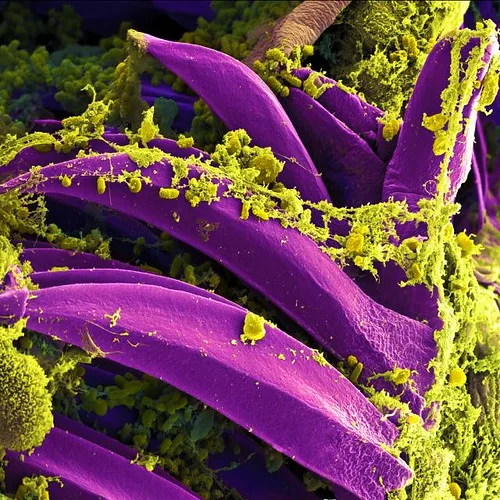
Yersinia pestis as the Causative Agent of the Black Death
The Black Death was caused by the bacterium Yersinia pestis, traditionally thought to have passed from infected rodents to humans through flea bites; researchers debate how much rat fleas versus human fleas and lice spread it.
The Siege of Kaffa and Maritime Pandemic Transmission
In 1346 CE, the Golden Horde army besieged the Genoese Crimean trading port of Kaffa. A widely repeated but contested medieval account holds that the besiegers catapulted plague corpses into the city; the story rests on a single secondhand chronicler, and most historians now attribute the disease's spread to renewed Black Sea trade, including grain shipments, once the siege ended.
Labor Scarcity and the English Statute of Laborers
Acute agricultural labor shortages following the plague let surviving peasants demand higher wages; in response, the English Parliament passed the Statute of Laborers (1351) attempting to freeze wages at pre-plague levels. The statute was poorly enforced, and English farm wages roughly doubled only gradually, over the following century.
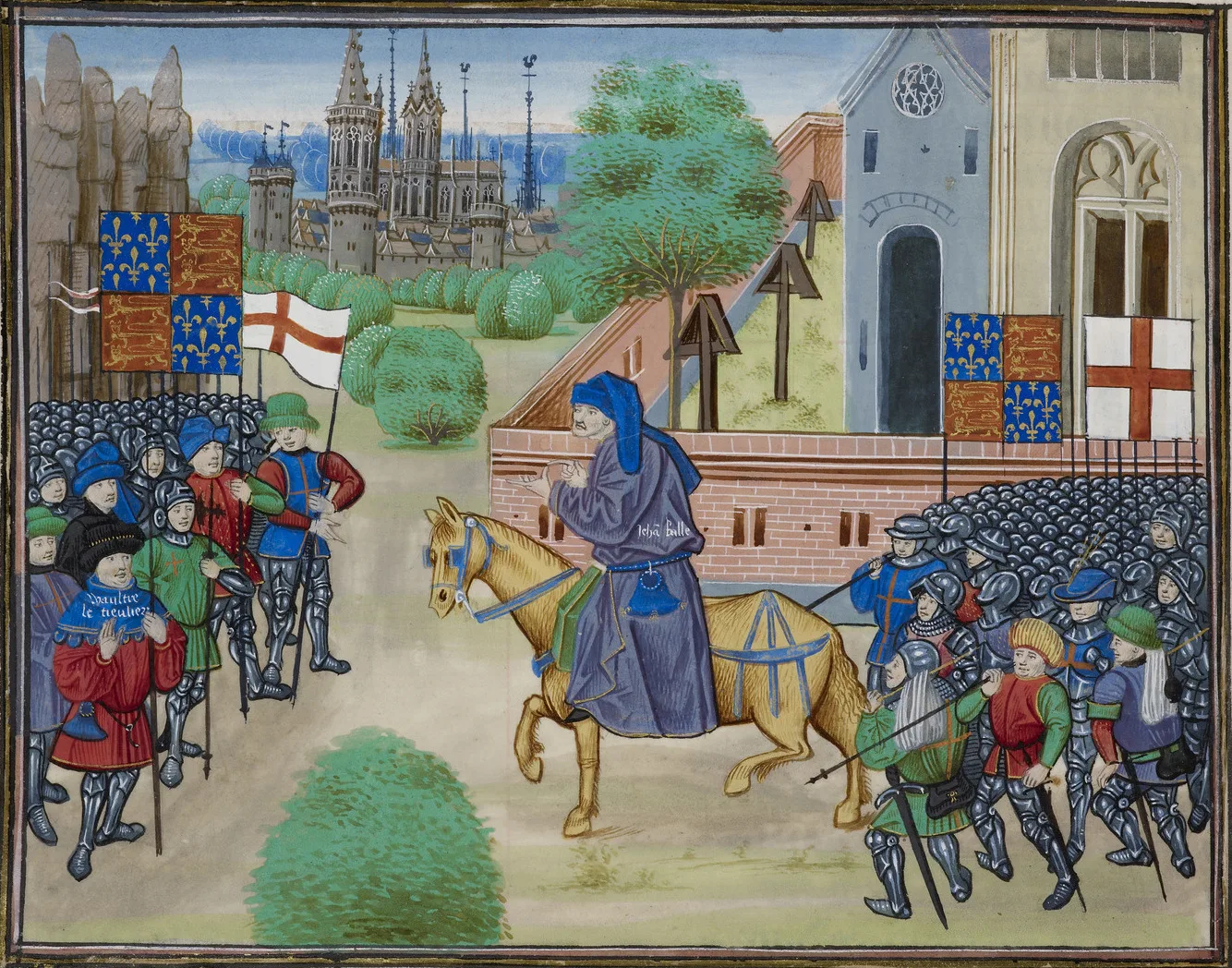
The English Peasants' Revolt of 1381
Resentment over poll taxes and wage caps sparked the 1381 Peasants' Revolt led by Wat Tyler and radical priest John Ball, who demanded the total abolition of serfdom.
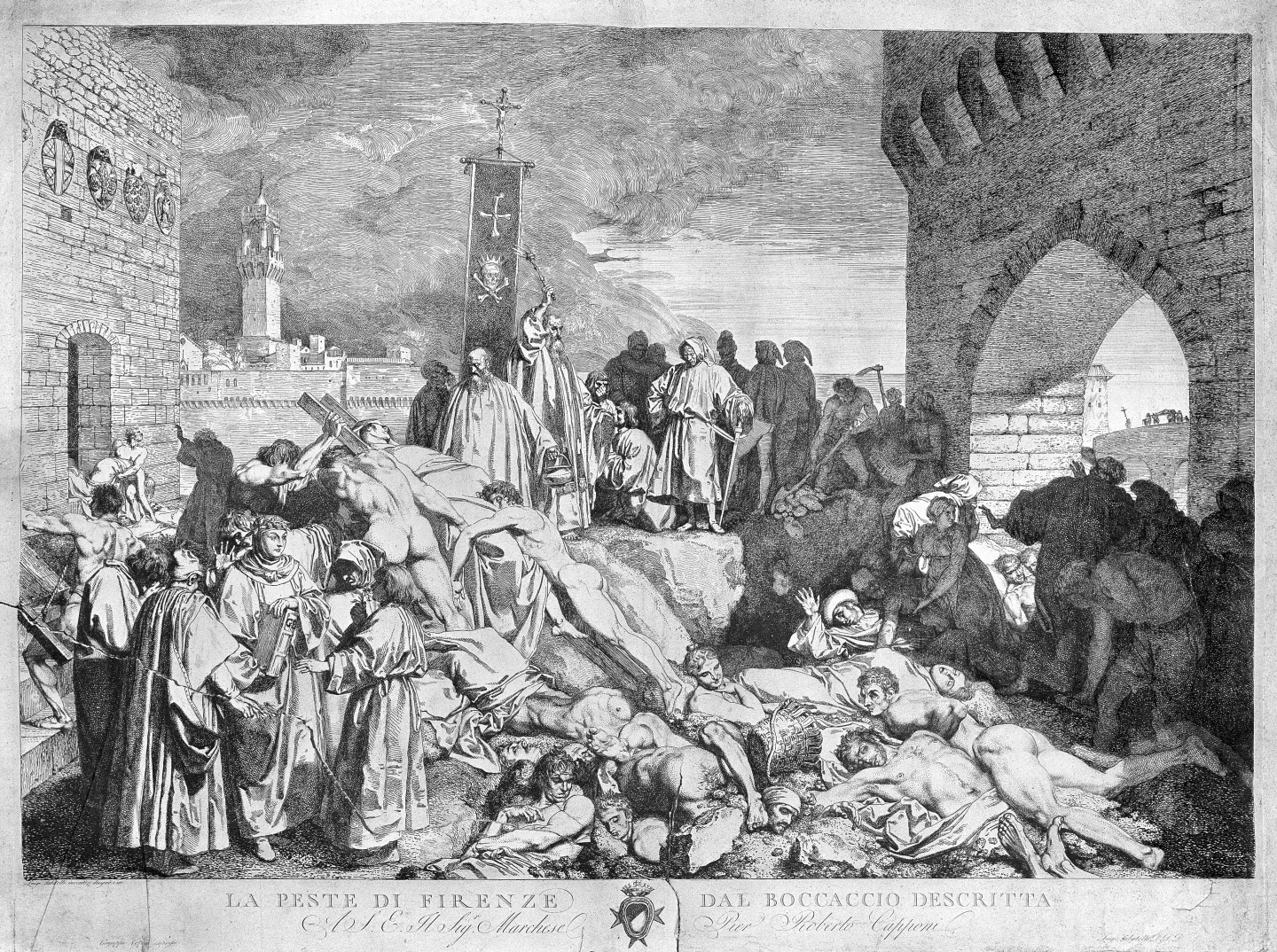
Boccaccio's Description of Plague Society in The Decameron
In Florence, Giovanni Boccaccio authored The Decameron, chronicling how the sheer terror of the contagion caused the total collapse of civic laws, medical care, and burial customs.
By the numbers
- In what year CE was Temüjin proclaimed Genghis Khan at the Kurultai on the Onon River?
- 1206 CE
- In what year CE did the Mongol army of Hulagu Khan sack Baghdad and terminate the Abbasid Caliphate?
- 1258 CE
- In what year CE did the Black Death first arrive in Mediterranean European ports such as Messina in Sicily?
- 1347 CE
- In what year CE did the English Peasants' Revolt march on London to demand the abolition of serfdom?
- 1381 CE
Matched pairs
Each item on the left goes with the one on the right.
- Mongol Paiza Tablet
- A metal authority credential worn by authorized envoys to secure fresh mounts, provisions, and immunity across Eurasian territories
- Karakorum Capital Site
- A cosmopolitan administrative hub in the Orkhon Valley where diverse craftspeople, clerics, and ambassadors gathered under the Great Khans
- Statute of Laborers Act
- A parliamentary decree passed under Edward the Third attempting to force agricultural workers to accept pre-pandemic compensation rates
- Boccaccio Decameron Manuscript
- A celebrated prose narrative chronicling ten citizens who withdrew to a countryside villa to escape civic contagion
Self-test
Answer each question from memory, then check your work against the answer key.
1. What core military tactical advantage enabled Mongol armies to defeat far larger sedentary armies?
- ARefusal to adopt any siege technology developed by conquered peoples
- BExtraordinary horse mobility, composite bow archery, and coordinated feigned retreats
- CExclusive reliance on wooden catapults with zero cavalry regiments
- DMassed phalanxes of heavy bronze infantry armed with eighteen-foot pikes
2. What was the official policy of the Mongol Empire regarding religious practice among subject peoples?
- AMandatory forced conversion of all conquered populations to traditional Tengrist shamanism
- BThe destruction of all religious mosques, churches, and Buddhist temples across Eurasia
- CImmediate capital execution of any subject found practicing monotheism
- DBroad religious toleration and tax exemptions for Christian, Muslim, Buddhist, and Daoist clergy
3. How did the Pax Mongolica accelerate global technological and cultural diffusion?
- ABy making Eurasian travel secure for artisans and scholars
- BBy limiting all trade to caravans owned by the khans
- CBy shifting all Eurasian trade onto Indian Ocean sea lanes
- DBy creating a single currency used in all four khanates
4. How did Kublai Khan establish Mongol rule over China as the Yuan Dynasty?
- AConverted the entire Mongol court to Tibetan Buddhism exclusively
- BAbolished the Mongol military entirely to please Confucian scholars
- CMoved the capital to Dadu and adopted Chinese dynastic rituals
- DRelocated the capital to Karakorum to preserve steppe traditions
5. What enabled Moroccan traveler Ibn Battuta to win appointments as a judge (qadi) in places as far apart as the Delhi Sultanate and the Maldives in the 14th century?
- AHis widely valued training in Islamic law
- BA diplomatic mandate from the sultan of Morocco
- CInitiation into a Sufi order that granted safe passage
- DLetters of authority from the Abbasid caliph in Cairo
6. What event in 1258 CE ended the Abbasid Caliphate's rule from Baghdad?
- AThe total destruction of the city by an internal revolt of Frankish crusaders
- BThe siege and destruction of Baghdad by the Mongol army commanded by Hulagu Khan
- CThe peaceful voluntary surrender of Baghdad to the Byzantine Emperor
- DA catastrophic earthquake that leveled the city's mosques, palaces, and irrigation canals
7. How was the Mongol Empire eventually organized for governance after its conquests?
- ARuled as one unified state from Karakorum for centuries
- BAnnexed outright and ruled from Constantinople
- CSplit into four successor khanates across Eurasia
- DDissolved instantly with no successor states at all
8. What was the primary function of the Mongol Empire's Yam (Örtöö) system?
- AA standardized silver coinage minted across the khanates
- BAn elite palace guard unit trained for close combat
- CCollecting agricultural taxes from Yuan China
- DHorse relay stations every 40-50 km for rapid couriers
9. What did the bronze or silver Paiza tablet grant to travelers within the Mongol Empire?
- APermanent exemption from future military conscription
- BOwnership rights to conquered agricultural land
- CImmunity, provisions, and fresh horses at Yam relay stations
- DAuthority to negotiate treaties on the Great Khan's behalf
10. How did the demographic collapse caused by the Black Death accelerate the decline of European serfdom?
- AThe Pope issued a papal bull abolishing all private land ownership across Christendom
- BGuild price-fixing agreements kept all peasant wages exactly the same despite the population loss
- CEmergency wage-freeze laws successfully forced surviving peasants back into full serfdom
- DSevere labor shortages empowered surviving peasants to demand higher cash wages and lower land rents
11. According to the traditional account, what was the main biological transmission vector of bubonic plague in the 14th-century pandemic?
- AFleas on black rats that bit humans once the rats died
- BMosquitoes breeding in stagnant marshes and ditches
- CTicks carried by sheep, cattle, and other livestock
- DBiting flies drawn to unburied corpses
12. According to the traditional account, how did the Black Death initially spread from Crimea into Mediterranean Europe?
- AMongol horsemen carried it overland through the Balkans
- BShips from Kaffa carried it to Constantinople and Sicily
- CSilk Road caravans carried it overland to Venice
- DPilgrim caravans carried it overland from Crimea to Rome
13. What did Giovanni Boccaccio's Decameron describe about plague-stricken Florence?
- AThe collapse of civic laws, medical care, and burial customs
- BThe permanent abandonment of Florence by all its residents
- CA swift municipal recovery aided by new hospital construction
- DA citywide festival celebrating survival after the plague ended
14. Which leader, together with the preacher John Ball, led the English Peasants' Revolt of 1381?
- AJack Cade
- BRobert Kett
- CWat Tyler
- DSimon de Montfort
15. How did English landed elites initially respond to labor shortages after the Black Death?
- AThey invited foreign laborers from India to replace lost workers
- BThey passed a statute to freeze wages at pre-plague levels
- CThey disbanded Parliament and let each manor set its own new laws
- DThey abolished all rents and gave peasants outright land ownership
16. What ecological and economic shift occurred in European agriculture as a direct consequence of population decline?
- AMarginal uplands were brought under the plow to make up lost output, while livestock grazing declined across the countryside
- BLords shifted to labor-intensive crops such as flax and vegetables, since surviving peasants accepted low pay for field work
- CCultivated land stayed almost unchanged, as survivors took over the empty holdings and kept growing the same grain crops
- DMarginal farm lands were abandoned and reverted to forest, while remaining agriculture shifted toward livestock grazing
Go deeper
- WatchThe Mongol Relay In 1206, Temüjin was named Genghis Khan. He built his army from units of ten. The biggest held 10,000 warriors.
- WatchAfter the Black Death In 1346, the Mongols besieged Kaffa, in Crimea. Then infected ships carried the plague to Europe.
- WatchThe Empty Villages Whole villages emptied. In England, more than 1,300 villages were deserted between the years 1350 and 1500.
- StudyWorld History: Turning Points of Human Civilization in the FlashFeed app
Answer key
- 1. B Extraordinary horse mobility, composite bow archery, and coordinated feigned retreatsMongol warriors possessed multiple sturdy horses per rider, mastered firing composite reflex bows at full gallop, and lured enemy formations into ambushes using feigned retreats.
- 2. D Broad religious toleration and tax exemptions for Christian, Muslim, Buddhist, and Daoist clergyMongol khans practiced pragmatism and religious tolerance, patronizing Islamic scholars, Buddhist lamas, Nestorian Christians, and Daoist masters alike.
- 3. A By making Eurasian travel secure for artisans and scholarsMongol rule across most of Eurasia let Chinese gunpowder and printing techniques travel westward, while Persian astronomy and medicine reached Yuan China.
- 4. C Moved the capital to Dadu and adopted Chinese dynastic ritualsKublai moved the Mongol capital from Karakorum to a new city, Dadu (modern Beijing), and in 1271 proclaimed the Yuan Dynasty in the traditional Chinese imperial style.
- 5. A His widely valued training in Islamic lawIbn Battuta's training in Islamic law qualified him as a qadi (judge), letting him secure judicial posts in the Delhi Sultanate and the Maldives, and later in Morocco.
- 6. B The siege and destruction of Baghdad by the Mongol army commanded by Hulagu KhanIn 1258 a Mongol army under the prince Hulagu (Hulegu) besieged and sacked Baghdad, the Abbasid capital, and executed the caliph al-Musta'sim.
- 7. C Split into four successor khanates across EurasiaAfter Genghis Khan's line expanded the empire, it split into four successor khanates: the Yuan Dynasty in China, the Golden Horde in Russia, the Chagatai Khanate in Central Asia, and the Ilkhanate in Persia.
- 8. D Horse relay stations every 40-50 km for rapid couriersThe Yam was a relay postal system with horse stations spaced roughly 40 to 50 kilometers apart, enabling rapid communication across the empire.
- 9. C Immunity, provisions, and fresh horses at Yam relay stationsThe Paiza passport tablet granted official travelers and merchants immunity, provisions, and horses at Yam relay stations across the empire.
- 10. D Severe labor shortages empowered surviving peasants to demand higher cash wages and lower land rentsBecause land was abundant while agricultural workers were scarce, peasants could abandon oppressive lords and negotiate freedom, higher wages, and tenant leases.
- 11. A Fleas on black rats that bit humans once the rats diedPlague is spread mainly by flea bites; the traditional account blames fleas (*Xenopsylla cheopis*) leaving dead black rats, though researchers debate how much human fleas and lice also spread the 14th-century epidemic.
- 12. B Ships from Kaffa carried it to Constantinople and SicilyAccording to the traditional account, after the 1346 siege of the Genoese port of Kaffa in Crimea, ships carried the plague to Constantinople and Sicily in 1347, then to Genoa and Venice, from where it spread across Western Europe.
- 13. A The collapse of civic laws, medical care, and burial customsBoccaccio's Decameron, written in Florence, chronicled how terror over the contagion caused the breakdown of civic laws, medical care, and burial customs.
- 14. C Wat TylerThe English Peasants' Revolt of 1381 was led by Wat Tyler and the preacher John Ball, after wage-freeze laws such as the 1351 Statute of Laborers.
- 15. B They passed a statute to freeze wages at pre-plague levelsEngland's Statute of Laborers (1351) tried to freeze wages at pre-plague rates after labor shortages let surviving peasants demand higher pay and better terms.
- 16. D Marginal farm lands were abandoned and reverted to forest, while remaining agriculture shifted toward livestock grazingWith fewer mouths to feed, poor marginal soils were abandoned to regenerate as woodlands, while landowners converted arable land into profitable sheep pastures.
Sources
- Siege of Baghdad (1258) — Wikipedia — en.wikipedia.org/wiki/Siege_of_Baghdad
- Yuan dynasty — Wikipedia; Morris Rossabi, Khubilai Khan — en.wikipedia.org/wiki/Yuan_dynasty
- Black Death — Wikipedia; Black Death — Wikipedia (estimates range widely; Benedictow, The Black Death, argues for about 60%); Ole J. Benedictow, The Black Death — en.wikipedia.org/wiki/Black_Death
- Consequences of the Black Death — Wikipedia; Consequences of the Black Death (Wikipedia) — en.wikipedia.org/wiki/Consequences_of_the_Black_Death
- Timothy May, The Mongol Art of War
- David Morgan, The Mongols (2nd ed.)
- Thomas T. Allsen, Culture and Conquest in Mongol Eurasia
- Morris Rossabi, Khubilai Khan: His Life and Times
- Marco Polo, The Travels of Marco Polo
- David Morgan, The Mongols
- David Morgan, The Mongols; Thomas T. Allsen, Culture and Conquest in Mongol Eurasia — en.wikipedia.org/wiki/Pax_Mongolica
- David Morgan, The Mongols — en.wikipedia.org/wiki/Yam_(route)
- Timothy May, The Mongol Conquests in World History — en.wikipedia.org/wiki/Genghis_Khan
- Thomas T. Allsen, Culture and Conquest in Mongol Eurasia — en.wikipedia.org/wiki/Paiza
- Timothy May, The Mongol Art of War — en.wikipedia.org/wiki/Mongol_military_tactics_and_organization
- David Morgan, The Mongols — en.wikipedia.org/wiki/Religion_in_the_Mongol_Empire
- Ibn Battuta, The Travels of Ibn Battuta — en.wikipedia.org/wiki/Ibn_Battuta
- David Morgan, The Mongols — en.wikipedia.org/wiki/Siege_of_Baghdad_(1258)
- Charles J. Halperin, Russia and the Golden Horde — en.wikipedia.org/wiki/Golden_Horde
- Timothy May, The Mongol Conquests in World History — en.wikipedia.org/wiki/Kurultai
- Timothy May, The Mongol Art of War — en.wikipedia.org/wiki/Tumen_(unit)
- David Morgan, The Mongols — en.wikipedia.org/wiki/Yassa
- David Morgan, The Mongols — en.wikipedia.org/wiki/Karakorum
- Ole J. Benedictow, The Black Death 1346–1353: The Complete History
- Mark Wheelis, Biological Warfare at the 1346 Siege of Caffa
- E.B. Fryde, Peasants and Landlords in Later Medieval England
- Rodney Hilton, Bond Men Made Free: Medieval Peasant Movements; Rodney Hilton, Bond Men Made Free — en.wikipedia.org/wiki/Peasants%27_Revolt
- Giovanni Boccaccio, The Decameron (1353); Giovanni Boccaccio, The Decameron — en.wikipedia.org/wiki/The_Decameron
- Ole J. Benedictow, The Black Death — en.wikipedia.org/wiki/Yersinia_pestis
- E.B. Fryde, Peasants and Landlords in Later Medieval England — en.wikipedia.org/wiki/Statute_of_Labourers_1351
- Rodney Hilton, Bond Men Made Free — en.wikipedia.org/wiki/Wat_Tyler
- Ole J. Benedictow, The Black Death — en.wikipedia.org/wiki/Quarantine
Image credits
- Genghis Khan's Decimal Military Reorganization: Chinneeb · CC BY 4.0 — commons.wikimedia.org/wiki/File:Genghis_Khan_Equestrian_Statue_2011.jpg
- Marco Polo's Eyewitness Account of Mongol Asia: Wikimedia Commons · Maître de la Mazarine et al. · Public domain — commons.wikimedia.org/wiki/File:Marco_Polo_-_Battle_of_the_King_of_Burma_against_the_Mongols.jpg
- Cosmopolitan Craftsmen at the Mongol Capital of Karakorum: Bank of Mongolia · Public domain — commons.wikimedia.org/wiki/File:Karakorum_Silver_Tree.jpg
- Yersinia pestis as the Causative Agent of the Black Death: National Institutes of Health (NIH) (Openverse) · pdm 1.0 — www.flickr.com/photos/132318516@N08/20674230762
- The English Peasants' Revolt of 1381: Wikimedia Commons · British Library, Royal MS 18 E I (Froissart) · CC0 — commons.wikimedia.org/wiki/File:The_Peasants%27_Revolt_-_Froissart,_Chroniques_de_France_et_d%27Angleterre,_Book_II_(c.1460-1480),_f.165v_-_BL_Royal_MS_18_E_I.jpg
- Boccaccio's Description of Plague Society in The Decameron: wellcomecollection.org · Luigi Sabatelli · CC BY 4.0 — wellcomecollection.org/works/awnp6vyq


