
World History: Turning Points of Human Civilization study guide · Lesson 7 of 13
The Printing Press and the Scientific Revolution
Movable Type, Vernacular Literacy, and the Information Shock · The Scientific Revolution, Empirical Observation, and Institutional Science
This is the lesson's study guide from the FlashFeed app, plus its key facts and a self-test.
What you'll be able to do
- Describe how Gutenberg's movable type press reduced book production costs, spurred vernacular literacy, and amplified the Protestant Reformation.
- Analyze the transition to heliocentrism, Newtonian universal gravitation, and institutional empirical science in early modern Europe.
Between 1450 and 1700 CE, Western Europe underwent an unprecedented epistemological transformation. The invention of movable metal type printing created an Information Shock, drastically reducing book production costs, democratizing literacy, and fueling the Protestant Reformation. Concurrently, natural philosophers overthrew scholastic dogma in favor of mathematical modeling and empirical observation, inaugurating the Scientific Revolution.
Movable Type, Vernacular Literacy, and the Information Shock
Around 1450 CE in Mainz, Germany, goldsmith Johannes Gutenberg mechanized printing by combining an adjustable hand mold for casting durable lead-tin-antimony Movable Metal Type, oil-based printer's ink, and an adapted wooden screw press, printing on rag paper already made in Europe. Gutenberg's masterpiece—the 42-line Gutenberg Bible—demonstrated that mechanized print could rival the aesthetics of illuminated manuscript calligraphy at a fraction of the cost. Within fifty years, printing presses spread to over 250 European cities, producing an estimated 20 million incunabula volumes, and book prices fell dramatically as printed output surged.
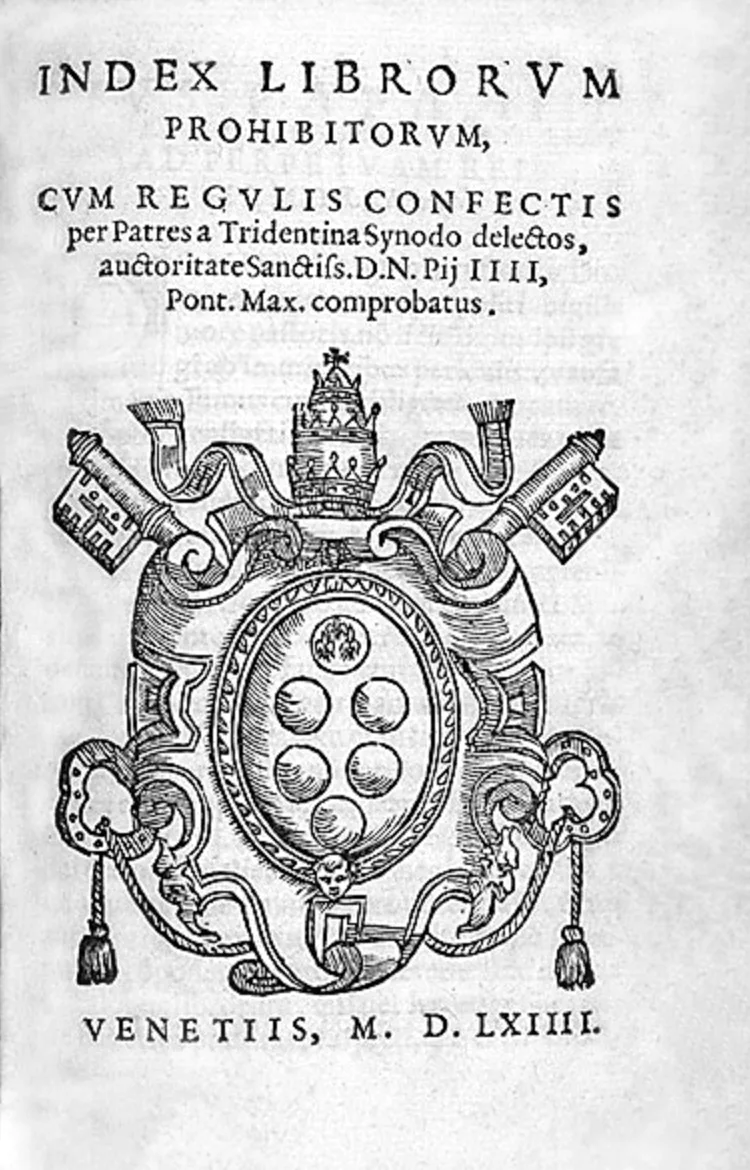
Print technology fundamentally altered religious and political authority. In 1517, German theologian Martin Luther sparked the Protestant Reformation by publishing the Ninety-Five Theses against papal indulgences in Wittenberg. Translated rapidly into German and circulated via mass-printed broadside pamphlets and woodcut caricatures, Luther's critique undermined Church authority. Luther's vernacular German translation of the New Testament helped standardize the German language, and Luther championed the theological principles of Sola Scriptura (scripture alone) and Sola Fide (faith alone): sinners are justified through faith, apart from good works. The Catholic Church responded during the Counter-Reformation by tightening institutional censorship through the Index Librorum Prohibitorum (Index of Forbidden Books) in 1559.
Political scientist Benedict Anderson later tied print to the rise of nations. In Imagined Communities (1983) he described print-capitalism: publishers printed books in vernacular languages rather than Latin to widen their markets, so speakers of different dialects came to share one printed language. Readers of the same print-language could imagine themselves as members of one community, and in Anderson's account the first European nation-states formed around these national print-languages.
The Scientific Revolution, Empirical Observation, and Institutional Science
The spread of print and the accumulation of navigation data helped drive the Scientific Revolution. In 1543, Polish astronomer Nicolaus Copernicus published De revolutionibus orbium coelestium, proposing the Heliocentric Model—that Earth and the planets revolve around the stationary Sun, challenging the Ptolemaic-Aristotelian geocentric orthodoxy. In the same year, Flemish anatomist Andreas Vesalius published De humani corporis fabrica, basing human anatomy on direct dissection of human bodies and correcting many errors in the ancient authority Galen, whose anatomy rested largely on animal dissection. In 1609, German mathematician Johannes Kepler refined heliocentrism in Astronomia nova, demonstrating that planets move in elliptical orbits with variable speeds, the start of his three laws of planetary motion (the third followed in 1619).
In Italy, Galileo Galilei aimed the newly invented astronomical telescope at the heavens in 1609. In Sidereus Nuncius (Starry Messenger, 1610), Galileo revealed craters on the Moon, four orbiting moons of Jupiter, and countless previously invisible stars. The Moon's rough, mountainous surface was evidence against the Aristotelian teaching that heavenly bodies were perfect. His sunspot observations followed and were published in 1613. Galileo's public advocacy of heliocentrism led to his 1633 trial and condemnation by the Roman Inquisition.
The synthesis of mathematical physics culminated in 1687 with the publication of Isaac Newton's Philosophiae Naturalis Principia Mathematica. Newton formulated the three universal laws of motion and the law of Universal Gravitation (F = G·m₁m₂/r²), demonstrating that the same physical mathematical principles govern terrestrial mechanics and celestial orbits. Institutional scientific inquiry was formalized through state-chartered academies such as the Royal Society of London (founded in 1660, motto Nullius in verba—"Take nobody's word for it") and by the inductive, experiment-based method championed by Francis Bacon in Novum Organum (1620), an influential early statement of what became the Scientific Method.
Key terms
- Incunabulum
- A pamphlet, book, or broadside printed in Europe from the invention of movable type around 1450 until the year 1501.
- Inductive Reasoning
- A method of logical scientific inquiry that derives general empirical principles and laws from the systematic accumulation of specific observed instances.
Key concepts
Gutenberg Printing Press
- Mechanical printing device combining movable metal alloy type, adjustable hand molds, and screw press mechanics
- Invented in Mainz, Germany c. 1450, enabling uniform, mass-produced textual reproduction
- Eliminated the labor bottlenecks of handwritten scribal scriptoria and catalyzed the Scientific Revolution
Protestant Reformation
- 16th-century religious and political upheaval that fractured Western European Catholic Christendom
- Initiated by Martin Luther's critique of indulgences, papal supremacy, and scholastic church authority
- Promoted justification by faith alone (*Sola Fide*), scriptural authority (*Sola Scriptura*), and national vernacular churches
Ninety-Five Theses
- Academic propositions for theological debate drafted by Martin Luther in October 1517
- Critiqued the sale of papal indulgences for the remission of purgatorial punishment as spiritually corrupt
- Circulated across German states in printed Latin and German editions, igniting international religious reform
Vernacular Print Culture
- The commercial publishing of books, pamphlets, and newspapers in regional spoken languages (German, English, French)
- Replaced Latin as the exclusive medium of scholarly, administrative, and theological discourse
- Standardized regional dialects into national languages and fostered modern national consciousness
Heliocentrism
- Astronomical model positioning the Sun at the center of the universe or solar system with planets orbiting around it
- Revived as a full mathematical model by Copernicus in 1543 (first proposed by Aristarchus of Samos), refined by Kepler, and supported by Galileo's telescopic observations
- Replaced the ancient geocentric Ptolemaic-Aristotelian paradigm, triggering the Scientific Revolution
Principia Mathematica
- Landmark 1687 Latin treatise by Sir Isaac Newton establishing the foundations of classical mechanics
- Articulated the three laws of motion and mathematical formulation of the universal law of gravitation
- Demonstrated that the same physical mathematical principles govern falling apples and planetary orbits
Empiricism
- Epistemological theory asserting that knowledge arises primarily from sensory experience and experimental observation
- Championed in Francis Bacon's inductive method and the Royal Society's experimental philosophy
- Contrasted with scholastic deduction by demanding repeatable physical evidence over authoritative dogma
Scientific Revolution
- Transformative intellectual movement spanning the 16th and 17th centuries in Europe
- Shifted inquiry from scholastic textual commentary to mathematical modeling, experimentation, and instrumentation
- Led by Copernicus, Kepler, Galileo, Bacon, Descartes, and Newton, establishing modern natural science
Key facts

Martin Luther and the Ninety-Five Theses
In October 1517, Martin Luther circulated the Ninety-Five Theses attacking papal indulgences, which was rapidly translated into vernacular German and mass-printed across Europe.
Collapse of Book Production Costs and Democratization of Print
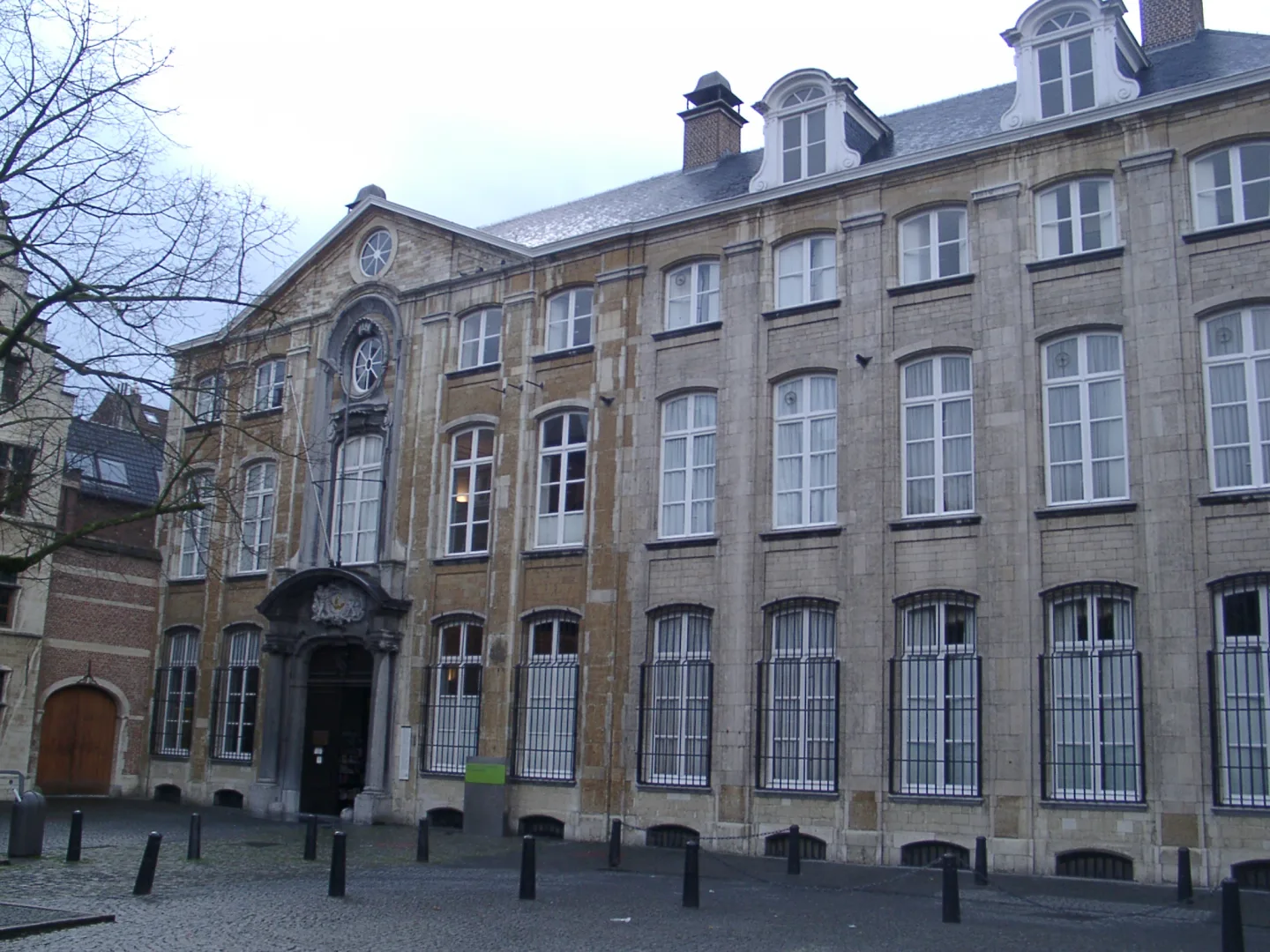
Within fifty years of Gutenberg's invention, book prices fell dramatically as print output surged, transforming book ownership from an exclusive aristocratic luxury into a broad public commodity.

The Luther Bible and Vernacular Language Standardization
Martin Luther translated the New Testament from Greek into vernacular German at the Wartburg Castle, helping to standardize written German.
The Papal Index of Forbidden Books
In 1559, Pope Paul IV promulgated the Index Librorum Prohibitorum, tightening Catholic censorship of heretical and Protestant printed publications.
Broadside Woodcuts as Mass Propaganda Media
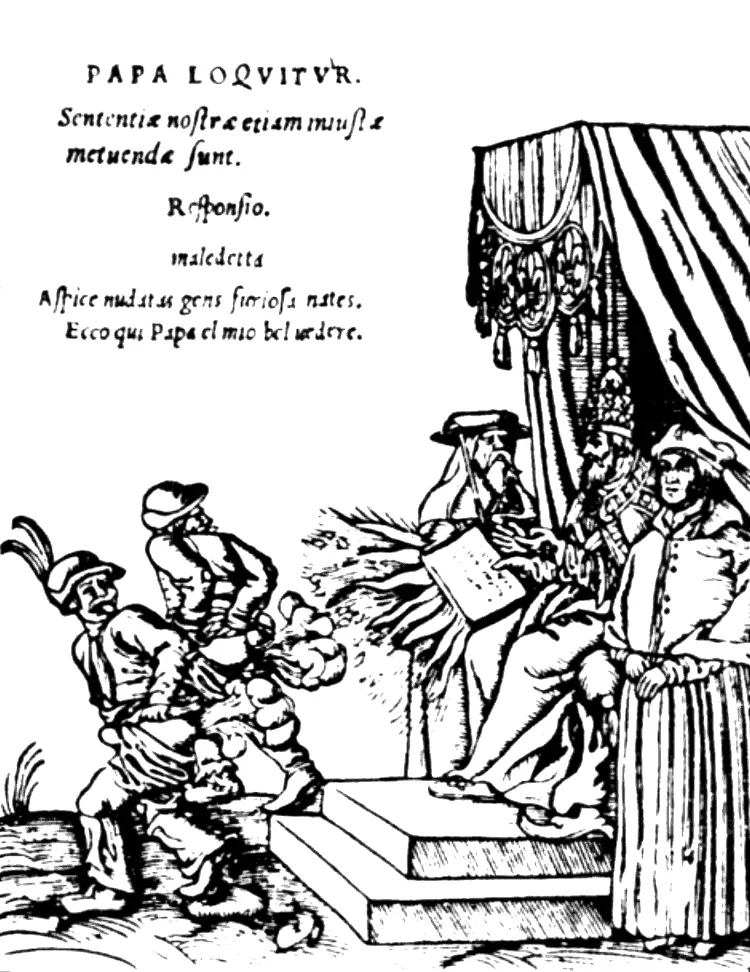
Protestant and Catholic propagandists mass-printed illustrated single-sheet broadsides and woodcuts by artists like Lucas Cranach to mobilize illiterate populations.
Copernicus and the Heliocentric Revolution
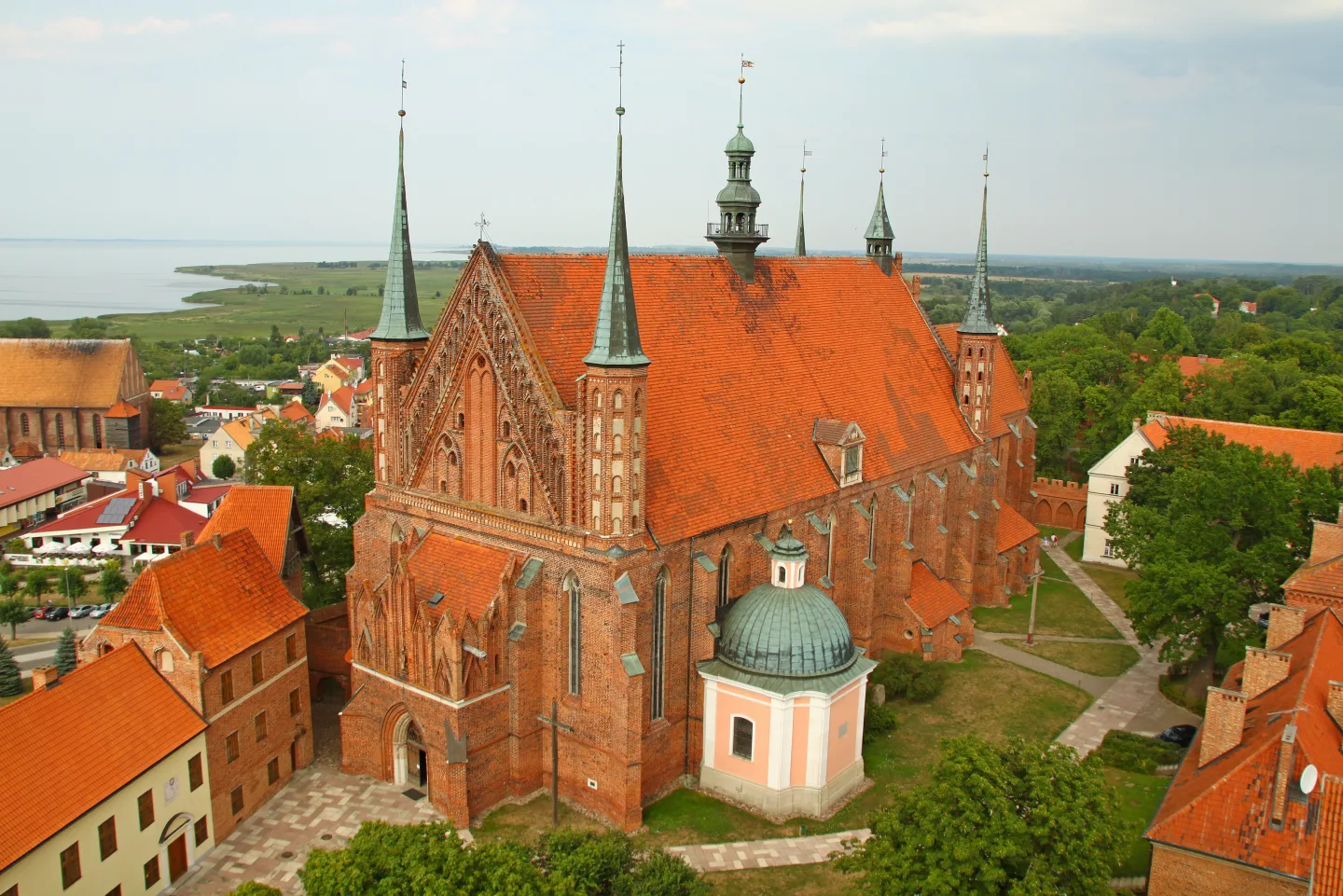
In 1543, Nicolaus Copernicus published De revolutionibus, proposing a mathematical model in which the Earth and planets orbit the Sun, challenging Ptolemaic geocentrism.
Galileo's Telescopic Discoveries in Sidereus Nuncius
In Sidereus Nuncius (1610), Galileo Galilei reported telescope discoveries of lunar craters, the four largest moons of Jupiter, and countless new stars; the Moon's rough surface was evidence against Aristotelian celestial perfection.
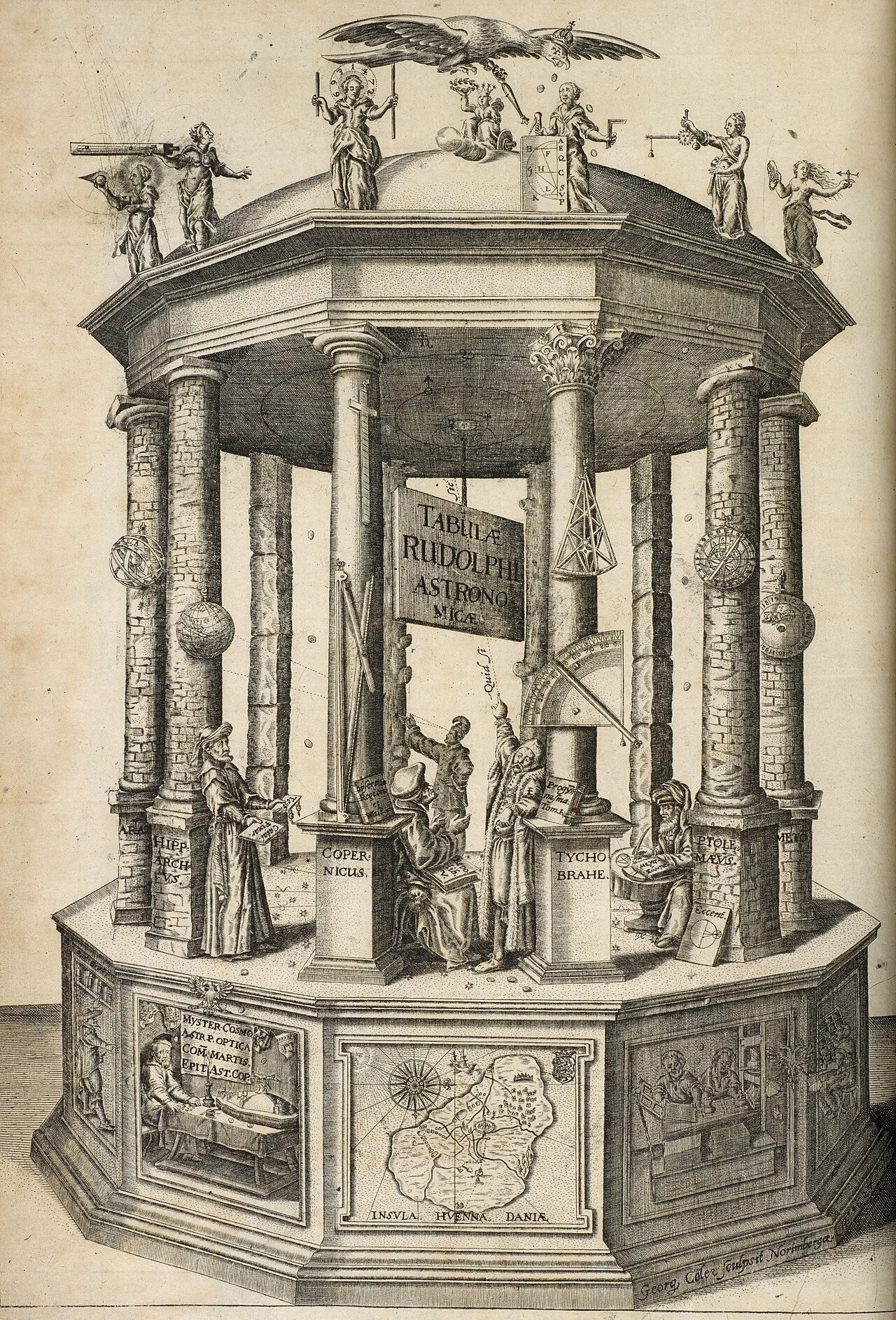
Kepler's Laws of Elliptical Planetary Motion
Using Tycho Brahe's precise observational data, Johannes Kepler proved that planets orbit the Sun in ellipses rather than perfect circles, with orbital speeds varying by distance.
The Royal Society and the Institutionalization of Empiricism
Founded in London in 1660 with the motto Nullius in verba, the Royal Society advanced experimental validation over scholastic authority; its journal Philosophical Transactions began in 1665.
By the numbers
- In what year CE did Martin Luther publish his Ninety-Five Theses against indulgences in Wittenberg?
- 1517 CE
- Around what year CE did Johannes Gutenberg complete the printing of his landmark 42-line Bible in Mainz?
- 1455 CE
- In what year CE was Copernicus's landmark heliocentric work *De revolutionibus* published — according to tradition, delivered to him on his deathbed?
- 1543 CE
- In what year CE was Isaac Newton's masterwork *Principia Mathematica* published in London?
- 1687 CE
Matched pairs
Each item on the left goes with the one on the right.
- Gutenberg Typeset Bible
- A masterwork of mechanized print produced with durable metal alloy characters on rag paper and vellum
- Index of Forbidden Books
- An official ecclesiastical register prohibiting the printing, reading, and possession of unauthorized theological and natural philosophical treatises
- Newton Principia Treatise
- A foundational three-volume Latin work formulating the laws of motion and the inverse-square law of gravitation
- Galileo Observation Telescope
- A wood and leather tube fitted with convex objective and concave ocular glass lenses used to observe lunar topographies and Jovian moons
Self-test
Answer each question from memory, then check your work against the answer key.
1. What technological breakthrough made Gutenberg's movable type printing economically viable?
- AThe reusable adjustable hand mold allowing rapid casting of interchangeable metal type pieces
- BMelting down cathedral bells to cast single full-page printing plates
- CPowering the printing press with a water-driven mill wheel instead of a hand crank
- DAdapting Chinese woodblock printing plates for use on European paper
2. What core theological doctrine did Martin Luther champion regarding Christian salvation?
- ASalvation is attained exclusively by paying annual gold taxes to the Archbishop of Mainz
- BJustification by faith alone (*Sola Fide*) rather than through purchasing indulgences or performing good works
- COnly individuals who enter monastic seclusion can avoid eternal damnation
- DSalvation is determined by public recitation of Aristotle's logical syllogisms
3. How did Protestant reformers use print media to reach illiterate and semi-literate audiences?
- ABy commissioning expensive hand-illuminated manuscript Bibles for wealthy noble patrons
- BBy hiring town criers to read the theses aloud in Latin at rural markets
- CBy stamping short polemical slogans onto the reverse of coins for public circulation
- DBy circulating illustrated broadsheet woodcuts pairing simple polemical imagery with short rhyming verses
4. What was the objective of the Roman Catholic Church in establishing the *Index Librorum Prohibitorum*?
- ATo subsidize independent printing workshops
- BTo mandate that every European citizen purchase a printed Latin Bible annually
- CTo prevent the spread of theological heresy and unauthorized scientific ideas by banning specific books
- DTo fix the retail market price of printing press equipment across Europe
5. How did the standardization of print directly benefit the development of European science?
- ABy preventing any scientist from publishing findings that contradicted Church dogma
- BBy allowing astronomical charts, anatomical diagrams, and mathematical tables to be reproduced with exact fidelity
- CBy replacing all mathematical numbers with mystical Latin poetry
- DBy making scientific books so expensive that only monarchs could read them
6. What sociopolitical impact did Benedict Anderson attribute to the rise of 'print-capitalism'?
- AThe permanent decline of literacy rates across urban manufacturing centers
- BThe complete centralization of all European publishing houses under the King of Spain
- CThe formation of modern national consciousness as readers shared standardized national languages
- DEliminating internal customs barriers between adjacent sovereign principalities
7. How rapidly and widely did movable-type printing spread across Europe after Gutenberg's invention around 1450?
- AOver 250 cities had presses within 50 years, ~20M books
- BOnly Church monasteries were licensed to own a press
- CFewer than 1,000 books were printed before 1500 in total
- DPrinting remained confined to Mainz for over a century
8. What ancient cosmological model did Nicolaus Copernicus challenge in *De revolutionibus*?
- AThe Pythagorean model with Earth circling a central fire
- BA flat Earth ringed by a cosmic ocean, as in Babylonian maps
- CThe atomist picture of countless worlds in an infinite void
- DThe Ptolemaic model with a stationary Earth at the center
9. Why was Galileo's discovery of the four moons of Jupiter in 1610 devastating to geocentrism?
- AIt proved that planets move in perfect circles at constant speeds
- BIt proved that celestial bodies could orbit a center of motion other than the Earth
- CIt proved that Jupiter itself was in fact a second, smaller sun
- DIt confirmed the ancient belief that the Moon's surface was perfectly smooth and unblemished
10. What major correction did Johannes Kepler introduce to Copernicus's heliocentric planetary model?
- AEvery planet orbits the Earth on nested crystal spheres
- BPlanets move faster the farther they are from the Sun
- CPlanets orbit in ellipses, not perfect circles
- DPlanets circle the Sun at constant speed on perfect orbits
11. What was the revolutionary philosophical insight of Isaac Newton's law of Universal Gravitation?
- AThe exact same mathematical force governs an apple falling to Earth and planets orbiting the Sun
- BHeavy objects fall faster than light objects because they contain more fire atoms
- CThe spacing of planetary orbits is fixed by the five nested Platonic solids
- DInvisible whirlpools of cosmic matter, not a shared force, sweep the planets along
12. What epistemological stance is expressed by the Royal Society of London's motto *Nullius in verba* ('Take nobody's word for it')?
- AAll natural phenomena must be explained through allegorical biblical metaphors
- BScientific claims can be established through pure logical deduction alone, without physical experiments
- CTruth about nature is best settled by deferring to ancient authorities such as Aristotle
- DScientific truth must be verified through empirical experimentation and evidence, not authoritative decree
13. What did Galileo Galilei's telescope reveal about the Moon and stars in Sidereus Nuncius (1610)?
- AThe Milky Way as a continuous band of cloud, not stars
- BThe Moon shining with its own light, like a star
- CA smooth, perfect Moon and no stars beyond those seen by eye
- DCraters on the Moon and countless previously unseen stars
14. What did Newton formulate in the 1687 Principia Mathematica, alongside universal gravitation?
- AThree universal laws of motion for all moving bodies
- BA universal rule that heavier objects always fall faster than lighter ones, as Aristotle had taught
- CSeven classical planetary spheres of Ptolemy's cosmos
- DFive nested Platonic solids ordering the planetary spheres
Go deeper
- WatchThe Information Shock Around 1450, in Mainz, Johannes Gutenberg combined four inventions: metal type, oil-based ink, rag paper and a screw press.
- WatchOne Law for the Sky In 1543, Nicolaus Copernicus proposed a Sun-centered model. Earth and the planets circle a still Sun.
- WatchTake Nobody's Word for It The ancient authority on the human body had largely dissected animals. His name was Galen.
- StudyWorld History: Turning Points of Human Civilization in the FlashFeed app
Answer key
- 1. A The reusable adjustable hand mold allowing rapid casting of interchangeable metal type piecesGutenberg's crucial metallurgical breakthrough was the adjustable hand mold, which permitted the casting of thousands of uniform, durable metal type letters rapidly.
- 2. B Justification by faith alone (*Sola Fide*) rather than through purchasing indulgences or performing good worksLuther argued that humans are justified freely through divine grace accepted in faith (*Sola Fide*), rejecting the efficacy of purchased papal indulgences.
- 3. D By circulating illustrated broadsheet woodcuts pairing simple polemical imagery with short rhyming versesReformers utilized visual woodcut broadsheets by artists like Cranach, using stark caricatures to communicate anti-papal messages to the illiterate majority.
- 4. C To prevent the spread of theological heresy and unauthorized scientific ideas by banning specific booksThe Index list was an instrument of Counter-Reformation censorship, forbidding Catholics from reading, printing, or possessing banned theological and scientific texts.
- 5. B By allowing astronomical charts, anatomical diagrams, and mathematical tables to be reproduced with exact fidelityHand-copied manuscripts inevitably accumulated scribal copy errors; print allowed identical mathematical tables, anatomical plates, and star charts to be cross-checked globally.
- 6. C The formation of modern national consciousness as readers shared standardized national languagesPrint-capitalism created mass vernacular reading markets, allowing dispersed populations reading the same national language to imagine themselves as members of a unified nation.
- 7. A Over 250 cities had presses within 50 years, ~20M booksWithin fifty years of Gutenberg's invention, presses operated in more than 250 European cities and produced an estimated 20 million incunabula volumes.
- 8. D The Ptolemaic model with a stationary Earth at the centerCopernicus challenged the Ptolemaic geocentric model, arguing that planetary retrograde motion is an apparent effect of viewing the planets from a moving Earth.
- 9. B It proved that celestial bodies could orbit a center of motion other than the EarthGeocentrism claimed that all celestial bodies orbit the Earth; observing four moons revolving around Jupiter provided direct physical evidence of non-Earth-centered orbital motion.
- 10. C Planets orbit in ellipses, not perfect circlesKepler's First Law states that planetary orbits are ellipses with the Sun at one focus, and his Second Law (equal areas in equal times) means orbital speed varies, removing the need for the circles and epicycles of earlier models.
- 11. A The exact same mathematical force governs an apple falling to Earth and planets orbiting the SunNewton abolished the ancient Aristotelian dichotomy between terrestrial physics and celestial physics, proving that universal mathematical laws govern all matter everywhere.
- 12. D Scientific truth must be verified through empirical experimentation and evidence, not authoritative decree*Nullius in verba* encapsulates the scientific rejection of dogma: scientific assertions must withstand repeatable experimental verification rather than relying on scholastic authority.
- 13. D Craters on the Moon and countless previously unseen starsGalileo's telescope revealed lunar craters and mountains and vastly more stars than visible to the naked eye, undermining the Aristotelian belief in perfect heavens.
- 14. A Three universal laws of motion for all moving bodiesNewton's Principia laid out three universal laws of motion together with the law of gravitation, unifying terrestrial and celestial mechanics under one mathematical framework.
Sources
- Print capitalism (Benedict Anderson, Imagined Communities) — Wikipedia; Benedict Anderson, Imagined Communities — en.wikipedia.org/wiki/Print_capitalism
- Sola fide — Wikipedia — en.wikipedia.org/wiki/Sola_fide
- Johannes Gutenberg — Wikipedia; Elizabeth L. Eisenstein, The Printing Revolution in Early Modern Europe; Johannes Gutenberg (Wikipedia) — en.wikipedia.org/wiki/Johannes_Gutenberg
- Martin Luther, Ninety-Five Theses (1517); Martin Luther, Ninety-Five Theses — en.wikipedia.org/wiki/Ninety-five_Theses
- Elizabeth L. Eisenstein, The Printing Press as an Agent of Change — en.wikipedia.org/wiki/Printing_press
- Heiko A. Oberman, Luther: Man Between God and the Devil — en.wikipedia.org/wiki/Luther_Bible
- J.M. De Bujanda, Index Librorum Prohibitorum; Index Librorum Prohibitorum (Wikipedia) — en.wikipedia.org/wiki/Index_Librorum_Prohibitorum
- Andrew Pettegree, Brand Luther: How an Unheralded Monk Turned His Small Town into a Center of Publishing — en.wikipedia.org/wiki/Broadside_(printing)
- Diarmaid MacCulloch, The Reformation: A History; Elizabeth L. Eisenstein, The Printing Revolution — en.wikipedia.org/wiki/Reformation
- Benedict Anderson, Imagined Communities — en.wikipedia.org/wiki/Vernacular_literature
- Diarmaid MacCulloch, The Reformation — en.wikipedia.org/wiki/Theology_of_Martin_Luther
- Andrew Pettegree, Brand Luther — en.wikipedia.org/wiki/History_of_propaganda
- Elizabeth L. Eisenstein, The Printing Press as an Agent of Change; Steven Shapin, The Scientific Revolution — en.wikipedia.org/wiki/Scientific_Revolution
- Elizabeth L. Eisenstein, The Printing Revolution — en.wikipedia.org/wiki/Global_spread_of_the_printing_press
- Elizabeth L. Eisenstein, The Printing Revolution — en.wikipedia.org/wiki/Gutenberg_Bible
- Diarmaid MacCulloch, The Reformation — en.wikipedia.org/wiki/Sola_scriptura
- Elizabeth L. Eisenstein, The Printing Revolution — en.wikipedia.org/wiki/Mainz
- Elizabeth L. Eisenstein, The Printing Revolution — en.wikipedia.org/wiki/Incunabulum
- Nicolaus Copernicus, De revolutionibus orbium coelestium (1543); Thomas S. Kuhn, The Copernican Revolution; Nicolaus Copernicus, De revolutionibus — en.wikipedia.org/wiki/De_revolutionibus_orbium_coelestium
- Galileo Galilei, Sidereus Nuncius (1610); Galileo Galilei, Sidereus Nuncius — en.wikipedia.org/wiki/Sidereus_Nuncius
- Johannes Kepler, Astronomia Nova (1609); Johannes Kepler, Astronomia Nova — en.wikipedia.org/wiki/Kepler%27s_laws_of_planetary_motion
- Isaac Newton, Philosophiae Naturalis Principia Mathematica (1687); Isaac Newton, Principia Mathematica — en.wikipedia.org/wiki/Philosophi%C3%A6_Naturalis_Principia_Mathematica
- Thomas Sprat, History of the Royal-Society of London (1667) — en.wikipedia.org/wiki/Royal_Society
- Andreas Vesalius, De humani corporis fabrica (1543) — en.wikipedia.org/wiki/De_humani_corporis_fabrica_libri_septem
- Thomas S. Kuhn, The Copernican Revolution — en.wikipedia.org/wiki/Heliocentrism
- Empiricism (Wikipedia) — en.wikipedia.org/wiki/Empiricism
- Galileo Galilei, Sidereus Nuncius — en.wikipedia.org/wiki/Moons_of_Jupiter
- Isaac Newton, Principia Mathematica — en.wikipedia.org/wiki/Newton%27s_law_of_universal_gravitation
- Steven Shapin, The Scientific Revolution — en.wikipedia.org/wiki/Nullius_in_verba
- Isaac Newton, Principia Mathematica — en.wikipedia.org/wiki/Isaac_Newton
- Nicolaus Copernicus, De revolutionibus — en.wikipedia.org/wiki/Nicolaus_Copernicus
- Galileo Galilei, Sidereus Nuncius — en.wikipedia.org/wiki/Galileo%27s_telescope
- Francis Bacon, Novum Organum — en.wikipedia.org/wiki/Inductive_reasoning
- Dava Sobel, Galileo's Daughter — en.wikipedia.org/wiki/Galileo_affair
Image credits
- Martin Luther and the Ninety-Five Theses: Wikimedia Commons · Horst Pomplun · CC BY-SA 4.0 — commons.wikimedia.org/wiki/File:Schlosskirche_Wittenberg_I.jpg
- Collapse of Book Production Costs and Democratization of Print: Wikimedia Commons · Klaus Graf · CC BY 2.5 — commons.wikimedia.org/wiki/File:Plantin_antwerp_07.jpg
- The Luther Bible and Vernacular Language Standardization: Wikimedia Commons · Dick107 · CC BY-SA 3.0 — commons.wikimedia.org/wiki/File:Luther_Room-Wartburg-Eisenach.jpg
- The Papal Index of Forbidden Books: Wikimedia Commons · Unknown author (Venice edition, 1564) · Public domain — commons.wikimedia.org/wiki/File:Index_Librorum_Prohibitorum_1.jpg
- Broadside Woodcuts as Mass Propaganda Media: Lucas Cranach the Elder · Public domain — commons.wikimedia.org/wiki/File:The_Papal_Belvedere.jpg
- Copernicus and the Heliocentric Revolution: Wikimedia Commons · Pankrzysztoff · CC BY-SA 3.0 pl — commons.wikimedia.org/wiki/File:Frombork_Katedra1.jpg
- Kepler's Laws of Elliptical Planetary Motion: Johannes Kepler · Public domain — en.wikipedia.org/wiki/Rudolphine_Tables


